At Soekarno-Hatta's Terminal 3 international departure zone, Marugame Udon delivers the Japanese chain's signature self-service udon format to travellers mid-transit. The concept, built around freshly made noodles and customisable broths, occupies a recognisable niche in airport dining: fast, filling, and more considered than the surrounding fast-food options. For passengers with time between gates, it reads as one of the more practical stops in the terminal.
Pearl is the En Primeur Club membership app — saves, bookings, and concierge access live there. Same editors, same standards.
- Address
- Soekarno–Hatta International Airport, Terminal 3, International Departure Zona 2 A, RT.001/RW.010, Pajang, Kec. Benda, Kota Tangerang, Banten 15126, Indonesia
- Phone
- +62 811-3466-908
- Website
- marugameudon.co.id
- Directions
- Get directions
 Saves & bookings on Pearl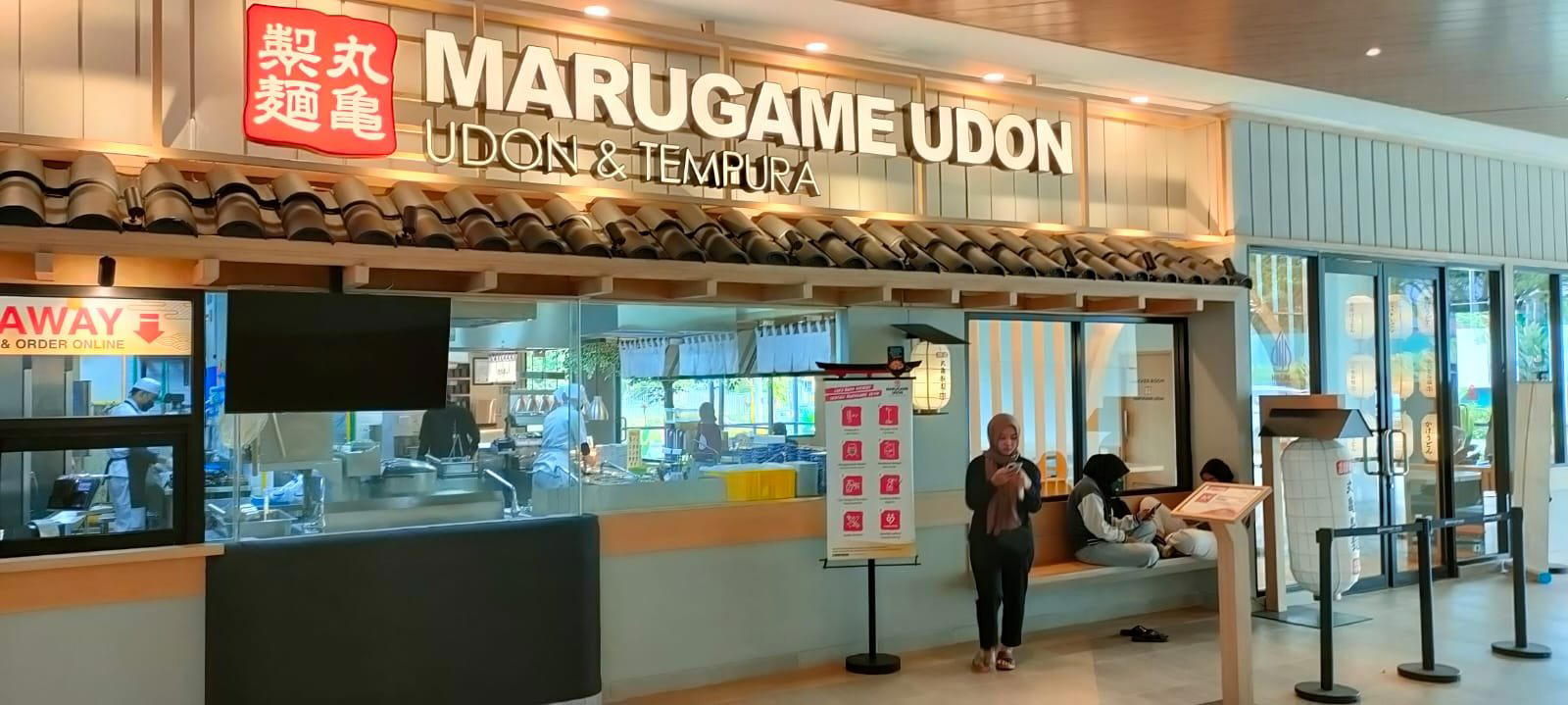
A Bowl in the Departure Hall
Airport dining in Southeast Asia often splits between fast-food chains and sit-down restaurants that demand more time than most transit itineraries allow. Terminal 3 at Soekarno-Hatta is one of Indonesia's busiest international gateways, and its food offering has expanded accordingly over the past decade. Marugame Udon occupies a specific slot in that expansion: a recognisable Japanese chain format that delivers a consistent, noodle-centred meal without requiring either a reservation or a long wait.
The physical environment of a large international departure hall shapes the dining experience before the food arrives. Fluorescent overhead light, the ambient percussion of rolling luggage, departure board announcements overlapping in multiple languages, these are the fixed conditions of eating at Terminal 3. Marugame Udon's self-service counter format is calibrated to this context. Trays move along a line; bowls are assembled in view; tempura and side items sit under warming lights in clear display cases. The transparency of the format is one reason the chain has replicated across high-traffic locations across Asia.
The Chain's Position in Japanese Noodle Culture
Marugame Udon is a large-format Japanese restaurant group built around Sanuki-style udon, the thick, chewy wheat noodle associated with Kagawa Prefecture in Shikoku. The Sanuki tradition prioritises noodle texture above broth complexity: the wheat dough is worked to produce a specific elasticity, and the broth, typically a dashi base, is secondary to that textural experience. This is a different hierarchy than ramen, where broth development and fat content are the primary differentiators.
As a chain, the restaurant has scaled this format into a service model where noodles are made in-house at each location rather than shipped pre-cooked. That production commitment distinguishes it from convenience-tier noodle options and is a key part of the brand's positioning across its Asian network. In the context of airport dining, where most food is prepared off-site and reheated, that on-location production is worth noting as a structural difference.
For travellers familiar with the chain from Japan or from locations in other Southeast Asian cities, the Terminal 3 outpost operates on the same framework. For those encountering it for the first time, the self-service mechanics are intuitive: join the queue, select a base udon, add tempura or sides, and pay at the end of the line. The format is designed to work for people who are not sure what they want until they can see it.
What This Means for the Terminal 3 Dining Context
Tangerang's food scene tends to be discussed in relation to the greater Jakarta dining ecosystem. The more considered restaurants in the area, places like Butler's Steak and Bianco Sapori D'Italia, are located in commercial and residential corridors away from the airport, positioned for destination dining rather than transit eating. The airport's internal dining offer, by contrast, is almost entirely driven by format practicality: speed, accessibility, and familiarity.
Within that constrained environment, the self-service udon format occupies the same functional tier as the dim sum counters and burger concepts elsewhere in Terminal 3. The difference is category: udon as a format is warm, relatively light, and sits well before a long flight in a way that heavier fried options typically do not. Travellers departing on long-haul routes often make that distinction consciously.
For travellers with longer layovers in the Jakarta area, the options extend outward. August in Jakarta represents the city's more ambitious modern cooking, while Tangerang itself has a growing mid-range dining scene anchored by places like Deem Saam - Passion for Dimsum and Hwang Fu Dimsum for Chinese-Indonesian formats. Five Monkeys Burger in Gading Serpong represents a more casual end of the local spectrum. For those travelling elsewhere in Indonesia, Locavore NXT in Ubud and Jungle Fish Bali represent a different tier of considered dining at the destination end. See our full Tangerang restaurants guide for broader orientation.
Reading the Airport Noodle Format Against Regional Peers
Airport dining across Southeast Asia's major hubs, Changi, Suvarnabhumi, KLIA2, has moved toward including chain-format Japanese noodle and rice concepts as a reliable mid-tier option. The logic is consistent across markets: Japanese food carries quality associations that translate across cultures, the formats are familiar to both regional and international travellers, and self-service mechanics reduce labour dependency in high-turnover environments. The restaurant fits this regional pattern precisely.
The comparison set for Terminal 3 udon is not the broader Tangerang restaurant scene, nor is it the kind of destination-driven Japanese dining found in Jakarta's better neighbourhoods. The relevant comparison is other airport noodle and rice concepts operating under similar time and format constraints. Within that set, a freshly made udon with visible production and customisable sides is a reasonable option, and for travellers familiar with the chain's format elsewhere in Asia, the Terminal 3 location will read as consistent with that experience.
For high-end Japanese dining context by contrast, counter omakase, serious ramen, or precision kaiseki, venues like Atomix in New York City or Kita Restaurant and Bar in Menteng occupy an entirely different register. The airport format is not competing in that space, nor should it be evaluated against it.
Planning Your Visit
The restaurant is located within the international departure zone of Terminal 3 at Soekarno-Hatta International Airport, Tangerang, and access requires a valid boarding pass for an international departure through that terminal. No reservation is required. The location is airside, so timing is determined by security clearance and gate requirements. Travellers on Asia-Pacific routes departing from Terminal 3 will pass through the relevant zone; the udon counter is positioned in Zona 2 A of the international departure area. Peak meal times around midday and early evening can produce longer queue lines. Other dining options across the wider Indonesian dining scene, from Chongqing Liuyishou Hotpot in South Jakarta to Hai Di Lao in Central Jakarta, are worth considering if your itinerary allows for pre-airport dining.
Comparable Options
Comparable venues nearby, for context on price, style, and recognition.
| Venue | Cuisine | Price | Notes |
|---|---|---|---|
| Marugame UdonThis venue — the venue you are viewing | Japanese Udon Noodles | $$ | Not listed |
| Hwang Fu Dimsum | Chinese Dim Sum | $$ | BSD City |
| Bianco Sapori D'Italia | Authentic Italian with Asian Fusion | $$$ | Gading Serpong |
| IKEA Restaurant Alam Sutera | Swedish Cafeteria | $ | Alam Sutera |
| Pepper Lunch | Japanese DIY Teppanyaki Steakhouse | $$ | BSD City |
| Butler's Steak | Signature US Prime Steakhouse | $$$ | BSD City |
Continue exploring
More in Tangerang
Restaurants in Tangerang
Browse all →
Bars in Tangerang
Browse all →

At a Glance
- Lively
- Modern
- Casual Hangout
Current opening hours
- Monday
- 5 AM–11 PM
- Tuesday
- 5 AM–11 PM
- Wednesday
- 5 AM–11 PM
- Thursday
- 5 AM–11 PM
- Friday
- 5 AM–11 PM
- Saturday
- 5 AM–11 PM
- Sunday
- 5 AM–11 PM
Hours can change for holidays and private events. Last verified .
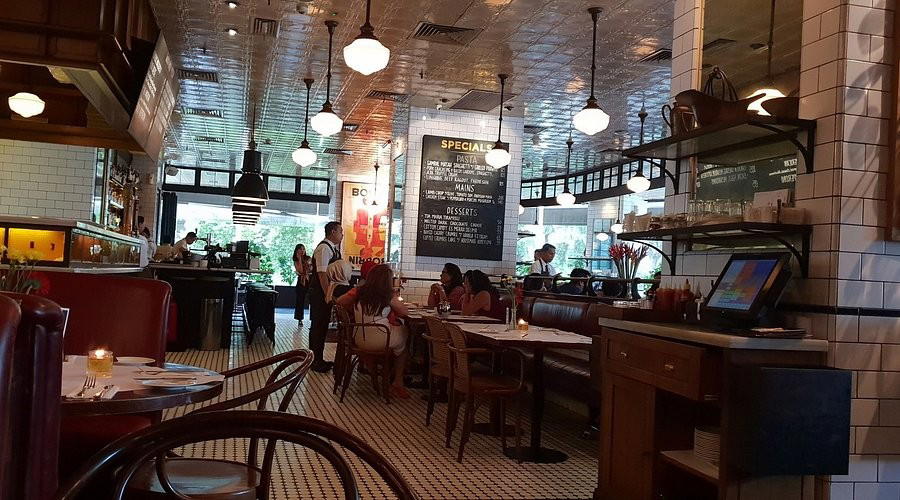
Bright, bustling fast-food atmosphere with quick service and mall energy.