Marlboro
Our verdict
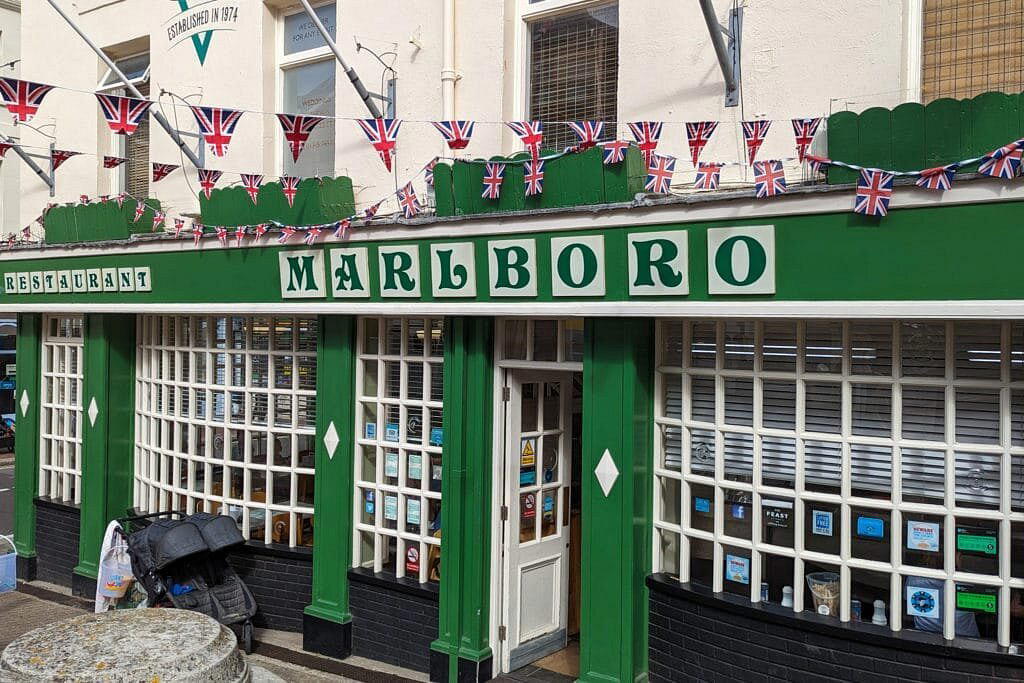
Marlboro sits on St Thomas Street in Weymouth, a Dorset harbour town where proximity to some of England's most productive coastal waters shapes what ends up on local plates. With the Fleet Lagoon and West Bay fishing grounds within reach, the town's dining scene rewards those who follow the seasonal catch rather than the set menu. Marlboro is part of that Weymouth story.

Pearl is the En Primeur Club membership app — saves, bookings, and concierge access live there. Same editors, same standards.
- Address
- 46 St Thomas St, Weymouth DT4 8AW, United Kingdom
- Phone
- +44 1305 785700
- Hours
- Daily 11:30 AM–9 PM
- Website
- marlbororestaurant.co.uk
- Directions
- Get directions
The menu
What to order
- Haddock, chips and mushy peas
Where Dorset's Coastline Meets the Plate
Weymouth occupies a particular position in the English coastal dining picture. It is not a city restaurant scene attempting to import sophistication from elsewhere; it is a working harbour town where the supply chain for seafood is short, seasonal, and subject to weather. St Thomas Street, where Marlboro sits at number 46, runs through the older commercial fabric of Weymouth rather than along the tourist-facing esplanade, which places it in the part of town that locals use across the year rather than only in summer.
That distinction matters more than it might appear. Dorset's coastline produces oysters from the Fleet Lagoon, crab and lobster from West Bay, and Portland crab that has supplied British tables for generations. Restaurants positioned away from the seasonal visitor trade tend to calibrate their menus toward regulars, which in a harbour town like Weymouth typically means a closer relationship with day-boat suppliers. The logic of that supply chain, short distance from water to kitchen, is what gives Dorset coastal restaurants a structural advantage over inland counterparts chasing the same ingredients.
The Ingredient Argument Along the Dorset Coast
The sourcing question is where Weymouth's dining scene makes its most coherent argument. Across England, restaurants at every price point now invoke local provenance as a marketing position, but in a town where fishing vessels operate out of the same harbour that frames the dining room view, the claim carries more weight. The distance between catch and kitchen is not a brand narrative here; it is a logistical fact.
This is the context that defines Weymouth's better dining addresses. Catch at The Old Fishmarket has built its identity around that proximity directly, operating from a site with obvious historical connection to the fish trade. Crab House Café draws from the Fleet oyster beds to a degree that makes it a reference point for anyone mapping Dorset's ingredient-led dining. These addresses, and Marlboro among them, exist within a scene that measures itself against the water rather than against metropolitan benchmarks. Our full Weymouth restaurants guide maps this scene in more detail for those planning a visit around the table rather than around the beach.
The broader British coastal restaurant tradition has accelerated in the past decade. Operations like hide and fox in Saltwood have demonstrated that coastal Kent can support fine dining built around local sourcing without requiring a London postcode for credibility. Further southwest, the Dorset model follows similar principles at a different register: fewer formal dining rooms, more direct relationships with producers, and a seasonal menu discipline that is imposed by supply rather than by chef philosophy.
Weymouth in the Context of British Regional Dining
It is worth placing Weymouth within the broader map of British regional cooking before narrowing to the street level. The country's most decorated kitchens currently operate out of addresses that would have seemed improbable two decades ago: L'Enclume in Cartmel, Moor Hall in Aughton, Ynyshir Hall in Machynlleth. What each of those destinations shares is a sourcing model that treats geography as a constraint and a resource simultaneously. London's top tier, from CORE by Clare Smyth to Restaurant Sat Bains in Nottingham, pursues the same sourcing logic but operates in a higher-cost environment that pushes price points upward.
Weymouth operates at a different register entirely. The town does not aim at that tier, and its dining character is stronger for not pretending otherwise. What it offers instead is access to genuinely local product at prices that reflect a local economy rather than a destination dining premium. Internationally, the comparison might be with port towns that have resisted the pressure to inflate their offer for visitor markets: the kind of place where Le Bernardin in New York City would source its inspiration if it were looking for an English counterpart, not because the cooking is equivalent, but because the ingredient story is equally serious.
St Thomas Street and the Year-Round Weymouth
The seasonal gap between summer Weymouth and winter Weymouth is significant. The town's population swells considerably between June and September as visitors arrive for the beach and the harbour. Restaurants that depend on that traffic tend to operate on a model that prioritises throughput over depth. Addresses on St Thomas Street occupy a different position, serving a more consistent year-round trade. That consistency tends to produce better cooking over time: kitchen teams that stay together across seasons develop tighter supply relationships and more confident menus.
For visitors arriving outside the peak summer window, this creates a genuine opportunity. The late autumn and early spring months, when Portland crab season and local oyster production are in good form, often represent the strongest moment to eat well along the Dorset coast. The Fleet Lagoon oysters, grown in one of England's most sheltered and unpolluted tidal lagoons, are available through much of the cooler months and are among the most credible English oysters on the market. Any Weymouth kitchen with a serious approach to sourcing will have a relationship with that supply.
For those interested in how Dorset coastal cooking compares with other parts of England's fine dining map, the southwest peninsula has its own reference points. Gidleigh Park in Chagford anchors Devon's upper tier with a different sourcing tradition built around moor and river rather than coast. Moving east, Hand and Flowers in Marlow and Midsummer House in Cambridge demonstrate what regional English cooking looks like when it earns national recognition. Restaurant Andrew Fairlie in Auchterarder and Le Manoir aux Quat' Saisons in Great Milton represent the country house end of that spectrum, while Opheem in Birmingham shows how regional cities are building credible fine dining identities independent of London. Weymouth belongs to none of those categories, which is exactly what makes it worth understanding on its own terms.
Planning a Visit to Marlboro
Marlboro is at 46 St Thomas Street, Weymouth, DT4 8AW, in the town centre rather than on the waterfront. Weymouth railway station sits a short walk from St Thomas Street, with direct services from London Waterloo taking approximately two and a half hours, and connections from Bristol and Bournemouth making it accessible for a day trip or weekend from much of southern England. Given the seasonal character of the Dorset coast, visiting between September and April offers a different and often quieter experience than the peak summer months, with the sourcing calendar for local shellfish and day-boat fish typically in strong form through the autumn and early winter.
Frequently asked questions
Is Marlboro child-friendly?
The venue data does not confirm a formal children's menu or dedicated facilities, so it is worth contacting Marlboro directly before visiting with young children. The St Thomas Street address puts it in Weymouth town centre, which is generally accessible and family-frequented, particularly during summer months when the town's visitor numbers climb sharply.
How would you describe the vibe at Marlboro?
Marlboro sits on St Thomas Street in Weymouth's town centre rather than on the waterfront, which tends to set it apart from the seasonal tourist trade that dominates the harbour strip. That inland position points toward a more neighbourhood-facing atmosphere, serving Weymouth residents as much as visitors, though the specific format and room character are best confirmed ahead of a visit.
Is Marlboro open year-round or only during the summer season?
Weymouth's dining trade splits sharply between a busy summer period and a quieter off-season, with many venues adjusting hours or closing between October and March. Marlboro's address on St Thomas Street in the town centre, rather than the waterfront, suggests it serves the year-round local population rather than operating as a purely seasonal proposition, though operating hours should be confirmed directly with the venue at 46 St Thomas Street, DT4 8AW.
Quick Comparison
Comparable venues nearby, for context on price, style, and recognition.
| Venue | Cuisine | Price | Awards | Notes |
|---|---|---|---|---|
| MarlboroThis venue — the venue you are viewing | Award-Winning Fish & Chips | $10–20 | Not listed | Not listed |
| Crab House Café | Fresh Local Seafood | $20–30 | Not listed | Wyke Regis |
| Catch at The Old Fishmarket | Modern Seafood Tasting | Not listed | Michelin Plate · SquareMeal UK Top 100 Restaurants #81 | Weymouth Harbour |
| Spicer & Cole, Clifton Village | British Cafe Brunch | $10–20 | Not listed | Clifton |
| Poco | British Seasonal Tapas | $30–50 | We're Smart World 3 Radishes | Ashley |
| The Sheppey | Modern British Gastropub | Not listed | Not listed | Lower Godney |
Continue exploring
More in Weymouth
Restaurants in Weymouth
Browse all →
Bars in Weymouth
Browse all →

Hotels in Weymouth
Browse all →

Details
- Classic
- Casual Hangout
- Family
- Waterfront
- A La Carte
Current opening hours
- Monday
- 11:30 AM–9 PM
- Tuesday
- 11:30 AM–9 PM
- Wednesday
- 11:30 AM–9 PM
- Thursday
- 11:30 AM–9 PM
- Friday
- 11:30 AM–9 PM
- Saturday
- 11:30 AM–9 PM
- Sunday
- 11:30 AM–9 PM
Hours can change for holidays and private events. Last verified .
Casual classic British fish and chip shop atmosphere.