Market Table
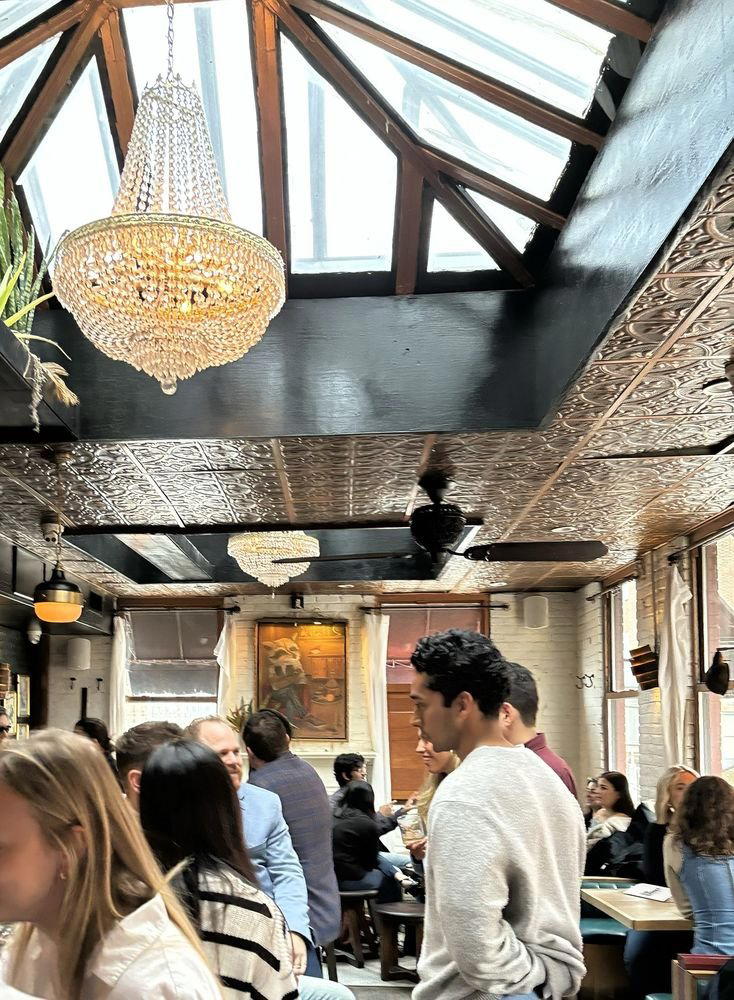
"This great neighborhood spot, care of the team behind The Little Owl, is one of our favorite spots for lunch. The American fare is simple and delicious, meaning the turkey sandwich is well-suited, and the burgers are pretty great, too. "
Pearl is the En Primeur Club membership app — saves, bookings, and concierge access live there. Same editors, same standards.
- Address
- 54 Carmine St, New York, NY 10014
- Phone
- +1 212 255 2100
- Website
- markettablenyc.com
- Directions
- Get directions
 Saves & bookings on Pearl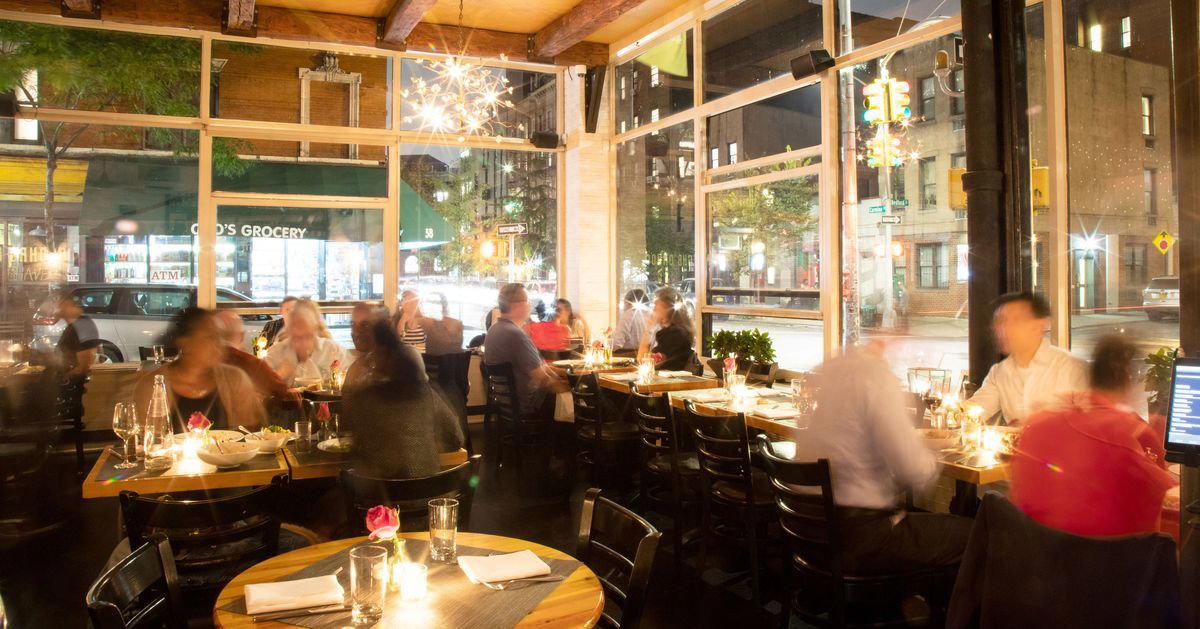
Greenwich Village and the Case for Market-Driven American Cooking
Carmine Street has been one of the more quietly consistent addresses in Greenwich Village's dining life for longer than most neighborhood restaurants manage to survive New York's commercial real estate pressures. Market Table, at number 54, sits within a tradition that predates the farm-to-table branding wave by enough years that the approach feels less like a positioning statement and more like an operating habit. In the Village, where the dining character has historically skewed toward neighborhood loyalty over destination traffic, that kind of durability carries its own credential.
The broader context matters here. American cooking in New York went through a sustained period of European-technique borrowing, French classical foundations, Italian simplicity, before a more recent generation of kitchens began treating regional producers as the starting point rather than the supporting cast. What that shift produced, at its more considered end, is a style that applies precise imported methods to whatever the market yields: the global technique, the local ingredient. Market Table operates in that mode, on a block that has seen enough restaurant turnover to make any long-running operation worth understanding on its own terms.
The Intersection of Technique and Produce
The approach that defines this tier of American restaurant cooking is easier to see than to describe. It is not a cuisine in the traditional sense, it does not belong to a national tradition or a regional canon. Instead, it applies the organizational logic of French mise en place, the precision of classical European timing, and the seasonal discipline that American chefs absorbed from multiple sources over the past thirty years, then directs all of that toward whatever the greenmarket or a trusted local purveyor is offering that week.
In practical terms, this means that the menu at a kitchen operating in this mode is a moving target. What regulars return for is less a specific dish and more a reliable execution style applied to ingredients that shift. This is not a weakness, it is the point. The skill lies in maintaining consistency of technique while the raw material changes around it. For the diner, it creates a kind of trust relationship with the kitchen: you are not coming back because the same dish will be there, you are coming back because the kitchen's judgment about what to do with what is in season has proved sound before.
Greenwich Village has long supported this kind of dining. The neighborhood's mix of long-term residents, NYU faculty, and the steady traffic from the West Village and SoHo adjacency creates an audience that tends to reward substance over novelty. It is a different competitive environment from, say, the tasting-menu corridors of the Upper East Side or the hospitality-focused dining rooms of Tribeca. Down here, a restaurant earns its repeat business by being genuinely useful to the people who live nearby, not just to those who have planned a destination evening.
Where Market Table Sits in the Village's Dining Pattern
The dining options within a few blocks of Carmine Street span a wide range. Dirty French, further east, occupies a different tier entirely, louder, larger, more deliberately theatrical. The Long Island Bar in Cobble Hill represents the neighborhood-anchor model taken to its most refined expression. The restaurant's register is closer to the latter: a place that functions as a genuine local restaurant first, with the quality markers to support a wider audience when that audience finds its way there.
That positioning is worth being clear-eyed about. It means the experience is not built around spectacle. There is no chef's counter with a performance element, no multicourse tasting format that requires a two-hour commitment and advance planning several weeks out. The format is closer to what an experienced diner would call an honest restaurant: one where the investment goes into the plate rather than the production around it.
For drinks, the Village's surrounding options are worth mapping. Amor y Amargo on East Sixth Street has built one of the city's most focused amaro and bitters programs. Angel's Share in the East Village operates a more formal Japanese-influenced cocktail format. Attaboy NYC on Eldridge Street continues to set the benchmark for the bespoke, guest-preference approach. Superbueno offers a different angle entirely, with a Latin-inflected cocktail program in a higher-energy room. Each represents a distinct strand of what serious cocktail culture in New York looks like in 2024, and any of them could function as a natural pre- or post-dinner stop depending on what the evening calls for.
Beyond New York, the same orientation toward thoughtful, produce-anchored cooking and serious bar programs appears in a cluster of independently operated rooms across American cities. Kumiko in Chicago applies Japanese technique to a drinks program that mirrors the local-ingredient philosophy in its own medium. Jewel of the South in New Orleans connects historically grounded cocktail making to a room with genuine culinary ambition. Julep in Houston and ABV in San Francisco each demonstrate that the leading independently operated American hospitality tends to cluster around a similar set of values, regardless of geography. Internationally, Bar Leather Apron in Honolulu, Allegory in Washington, D.C., and The Parlour in Frankfurt on the Main represent the same tendency operating across different cultural contexts.
Planning a Visit
The restaurant is at 54 Carmine Street in Greenwich Village. The address is walkable from the West 4th Street and Christopher Street subway stops, and the block sits in the denser residential stretch of the Village where foot traffic is local rather than tourist-heavy. For the fullest view of what the kitchen is doing with current seasonal produce, midweek visits tend to offer a quieter room without meaningfully reducing the range of what is available. For a broader sense of New York's dining scene beyond this single address, the full New York City restaurants guide covers the city's major culinary categories with the same editorial approach.
What It’s Closest To
Comparable venues nearby, for context on price, style, and recognition.
| Venue | Cuisine | Price | Notes |
|---|---|---|---|
| Market TableThis venue — the venue you are viewing | Dining | Not listed | Not listed |
| Pies ’n’ Thighs | Southern Fried Chicken & Pies | $$ | Prospect Heights |
| La Bella Vita | Authentic Italian | $$ | SoHo-Little Italy-Hudson Square |
| Da Nico Ristorante | Traditional Northern & Southern Italian | $$ | SoHo-Little Italy-Hudson Square |
| Dorado | Baja-Style Mexican Tacos & Quesadillas | $$ | Greenwich Village |
Continue exploring
More in New York City
Restaurants in New York City
Browse all →
Bars in New York City
Browse all →
Hotels in New York City
Browse all →







At a Glance
Current opening hours
- Monday
- Closed
- Tuesday
- 11 AM–10 PM
- Wednesday
- 11 AM–10 PM
- Thursday
- 11 AM–10 PM
- Friday
- 11 AM–10 PM
- Saturday
- 10 AM–10 PM
- Sunday
- 10 AM–10 PM
Hours can change for holidays and private events.