

Macarfi 7.5 Food Rating
Our verdict
Positioned on Málaga's Muelle Uno waterfront, Marisqueria Godoy has climbed the Opinionated About Dining Casual Europe rankings three consecutive years, reaching #546 in 2024 and #642 in 2025. The format is classic marisqueria: shellfish and seafood sourced close to the Andalusian coast, served through a long midday-to-midnight window that suits the city's unhurried pace.

Pearl is the En Primeur Club membership app, where members save venues, book tables and use the concierge.
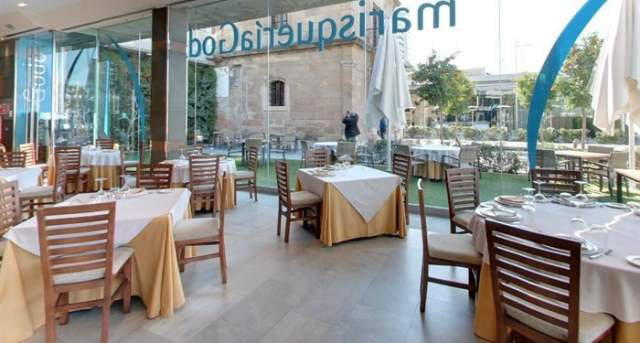
Where the Harbour Frames the Meal
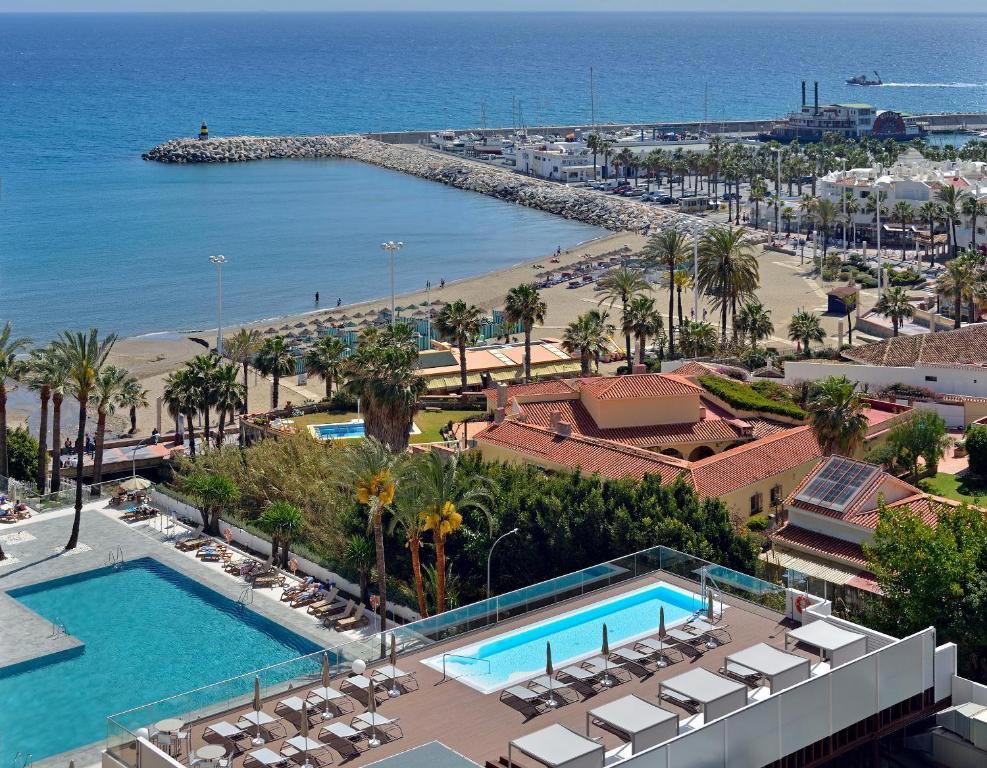
Málaga's Muelle Uno is a reclaimed port promenade that redirected the city's relationship with its waterfront when it opened in the early 2010s. Before that transformation, the working docks kept the sea at arm's length from the old centre. Now the quay runs parallel to the historic grid, and the restaurants along it operate with a clear view of container traffic, leisure yachts, and the Alcazaba ridge behind the roofline. Marisqueria Godoy sits within this stretch, and the physical setting does something useful for a seafood house: it keeps the origin of the product visible rather than abstract. The Alboran Sea begins more or less where the terrace ends.
Marisqueria as a format has a specific logic. Unlike a carta-heavy Spanish restaurant or a tasting-menu house such as Kaleja, the marisqueria concentrates on shellfish and crustacea, usually sourced fresh and handled with minimal intervention. The point is proximity to the coast and the daily catch, not technique for its own sake. That format has deep roots along Spain's Atlantic and Mediterranean edges, from the Galician rias, where Botafumeiro in Barcelona built its reputation on Galician shellfish shipped south, to the Lisbon tradition represented by Cervejaria Ramiro, which queues stretch down the block for barnacles and tiger prawns. In Málaga, the tradition draws on local anchovy culture, Almería prawns, and the warmer Alboran catch, making it distinct from the colder-water shellfish grammar of the northwest.
Consistency and Recognition
The critical signal worth noting is the trajectory on Opinionated About Dining's Casual Europe list. OAD's methodology aggregates assessments from a defined set of frequent diners rather than relying on a single inspector, which gives it particular weight for restaurants operating below the tasting-menu tier. Marisqueria Godoy received a Recommended designation in 2023, climbed to #546 in 2024, and was ranked #642 in 2025, a year in which the list expanded and competition at that level intensified. Three consecutive appearances signal that the cooking holds across seasons rather than peaking once. Within Málaga's dining scene, that kind of sustained external recognition is shared by very few addresses. The city's other OAD-listed properties skew toward contemporary Andalusian formats, making a casual shellfish house at this level somewhat anomalous, which is worth factoring into any comparative reading of Málaga's restaurant scene. For broader Málaga context, our full Málaga restaurants guide maps where Godoy sits relative to the wider field.
The Sustainability Dimension of Marisqueria Cooking
Spain's coastal seafood tradition and the question of sustainability now intersect in ways that were less visible a decade ago. The Alboran Sea, technically a semi-enclosed basin where Atlantic and Mediterranean waters meet, faces pressure from overfishing, warming surface temperatures, and bycatch inefficiency. How a marisqueria responds to that pressure tends to show up not in policy statements but in sourcing decisions: which species appear on the menu, which are absent, and whether the supply chain runs through certified lonja (fish market) channels that enforce size and quota rules.
The broader movement in Spanish coastal gastronomy has been toward shorter, more legible supply chains. Aponiente in El Puerto de Santa María, the three-Michelin-star operation that has built an entire cooking philosophy around underused marine species and zero-discard practice, sits at the most extreme end of that spectrum. A casual marisqueria like Godoy operates in a different register, but the underlying question of sourcing ethics applies equally: are the gambas from certified Almería fisheries, are the bivalves from clean-water beds with traceability, and is the menu calibrated to avoid species under known pressure in the Alboran basin?
Seasonality is itself a form of environmental discipline. The classic Andalusian seafood calendar means that certain shellfish are available for specific windows, and a kitchen that respects those windows is, by default, working against year-round homogeneity of supply. Málaga's summer brings different catch pressures than autumn, and a marisqueria that rotates its offering accordingly is implicitly making a sourcing choice that aligns with sustainable harvest cycles.
Positioning in Málaga's Dining Spectrum
Málaga has developed a more layered dining scene over the past decade than its beach-resort reputation once suggested. The city now holds multiple contemporary Andalusian addresses at the higher price tiers, including Aire and Alaparte, alongside more experimental formats such as Blossom. Marisqueria Godoy occupies a different register from all of those: the format is casual, the logic is product-first rather than technique-first, and the proposition depends on the quality of what comes off the boat rather than on kitchen transformation. That is not a lesser proposition; it is simply a different one, closer in spirit to the marisqueria tradition than to the contemporary tasting-menu circuit represented nationally by houses like Arzak, El Celler de Can Roca, DiverXO, Quique Dacosta, or Azurmendi.
Chef Natalia Godoy leads the kitchen. Her role within the broader marisqueria tradition aligns with a format that foregrounds product selection and supply relationships over elaborate preparation. In a category where the sourcing decision is the primary creative act, the person making those calls daily is the key variable. The OAD recognition, which reflects the experience of repeat visitors rather than a single review cycle, suggests those calls have been made consistently well.
The nearby Marisqueria Jacinto provides the most direct local point of comparison, operating in the same format and neighbourhood tier. Both address the same demand for serious shellfish cooking in a port setting, and a reader planning an extended visit to Málaga's seafood scene would reasonably evaluate both.
Planning a Visit
The restaurant operates daily from noon to midnight across all seven days, which gives it a flexibility unusual among the more tightly scheduled contemporary restaurants in the city. The long service window means it accommodates both the traditional Andalusian lunch (two to four in the afternoon, when the kitchen is at its busiest) and late evening arrivals that would close out kitchens elsewhere. The address is Puerto de Málaga, Paseo del Muelle Uno, putting it on the pedestrianised quay within walking distance of the historic centre and the Picasso Museum quarter. No booking method is listed in available data, so confirming table availability directly before a visit on peak-season weekends, particularly July and August when the waterfront draws the highest foot traffic, is advisable. For accommodation and further city planning, our Málaga hotels guide, bars guide, wineries guide, and experiences guide cover the broader city programme.
What Regulars Order
What the marisqueria format and the OAD Casual recognition together imply is that the shellfish selection is the anchor, with the sourcing quality carrying more weight than preparation complexity. In the classic Andalusian marisqueria grammar, prawns from the Almería coast, local clams, sea anemones (ortiguillas), and seasonal bivalves tend to anchor the offering. Given that the cuisine type is listed simply as marisqueria and the awards skew toward casual recognition, the expectation is a menu built on what arrived from the lonja that morning rather than a fixed repertoire. At peer-level addresses in this format, the standard sequence runs cold shellfish first, followed by grilled or plancha preparations, with bread and local wine as the supporting framework. Arriving with appetite and letting the day's catch guide the order, rather than planning around specific dishes, is the appropriate approach for this category.
Frequently asked questions
Where exactly is Marisqueria Godoy?
Marisqueria Godoy is located at Puerto de Málaga, P.º del Muelle Uno, Distrito Centro, 29001 Málaga, Spain, Málaga.
Is Marisqueria Godoy Michelin-listed?
Marisqueria Godoy has received recognition including: Opinionated About Dining Casual in Europe Ranked #642 (2025); Opinionated About Dining Casual in Europe Ranked #546 (2024); Opinionated About Dining Casual in Europe Recommended (2023).
What do regulars order at Marisqueria Godoy?
OAD's Casual Europe panel, which ranked Godoy #546 in 2024 and #642 in 2025 from a large field of peer-reviewed nominations, tends to flag venues where the catch-driven selection changes with availability rather than a fixed menu. At a harbour-side marisqueria on Muelle Uno, the practical advice is to ask staff what arrived that morning and order around it.
Same-City Peers
| Venue | Cuisine | Price | Awards | Notes |
|---|---|---|---|---|
| Marisqueria GodoyThis venue (the venue you are viewing) | Classic Spanish Marisquería | $50–100 | Macarfi 7.5 Food Rating | Not listed |
| Blossom | Modern Fusion Fine Dining | $100–150 | 1 Michelin Star · Guía Repsol 1 Sol | Chinese, Fusion |
| Kaleja | Modern Malagueño Fine Dining | $100–150 | 1 Michelin Star · Falstaff Restaurant - 95 Falstaff Points | Andalusian, Contemporary |
| José Carlos García | Contemporary Andalusian with Avant-Garde Techniques | $100–150 | 1 Michelin Star · La Liste Top Restaurants | Mallorcan, Creative |
| La Taberna de Mike Palmer | Modern Spanish Grill | $30–50 | Michelin Bib Gourmand · Macarfi 8 Food Rating | Mediterranean, Traditional Cuisine |
| Beluga | Modern Mediterranean Rice and Seafood | $50–100 | Michelin Plate · La Liste Top Restaurants | Russian - Caviar, Mediterranean Cuisine |
Recognition history
Dated appearances from independent guides and award organizations, with the underlying list record or original source where available.
Macarfi 7.5 Food Rating
Macarfi
Opinionated About Dining Casual in Europe Recommended
Opinionated About Dining
Full recognition history (5 entries)
Opinionated About Dining Casual in Europe Ranked #642
Opinionated About Dining
Opinionated About Dining Casual in Europe Ranked #546
Opinionated About Dining
Opinionated About Dining Casual in Europe Recommended
Opinionated About Dining
Continue exploring
More in Málaga
Restaurants in Málaga
All restaurants in Málaga →
Bars in Málaga
All bars in Málaga →

Details
- Classic
- Scenic
- Date Night
- Casual Hangout
- Terrace
- Waterfront
- Extensive Wine List
- Local Sourcing
- Sustainable Seafood
- Waterfront
- Street Scene
- A La Carte
- Small Plates
- Wine
- Gluten Free Options
Current opening hours
- Monday
- 12 PM–12 AM
- Tuesday
- 12 PM–12 AM
- Wednesday
- 12 PM–12 AM
- Thursday
- 12 PM–12 AM
- Friday
- 12 PM–12 AM
- Saturday
- 12 PM–12 AM
- Sunday
- 12 PM–12 AM
Hours can change for holidays and private events. Hours as of .
Terrace with lovely port views and relaxed atmosphere, though interior can feel cold in winter.