Our verdict
LULU sits on Hall Street in Bondi Beach, occupying a neighbourhood dining tier that sits between the suburb's casual beachside spots and Sydney's more formal restaurant circuit. Positioned within walking distance of the sand, it draws a crowd looking for considered cooking without the occasion-dress formality of the CBD. For comparable Sydney dining, see our full city guide.

Pearl is the En Primeur Club membership app, where members save venues, book tables and use the concierge.
The menu
What to order
- Scallop and prawn Hokkaido toast
- Kingfish sashimi
- Peking chicken
Hall Street After the Crowds Thin
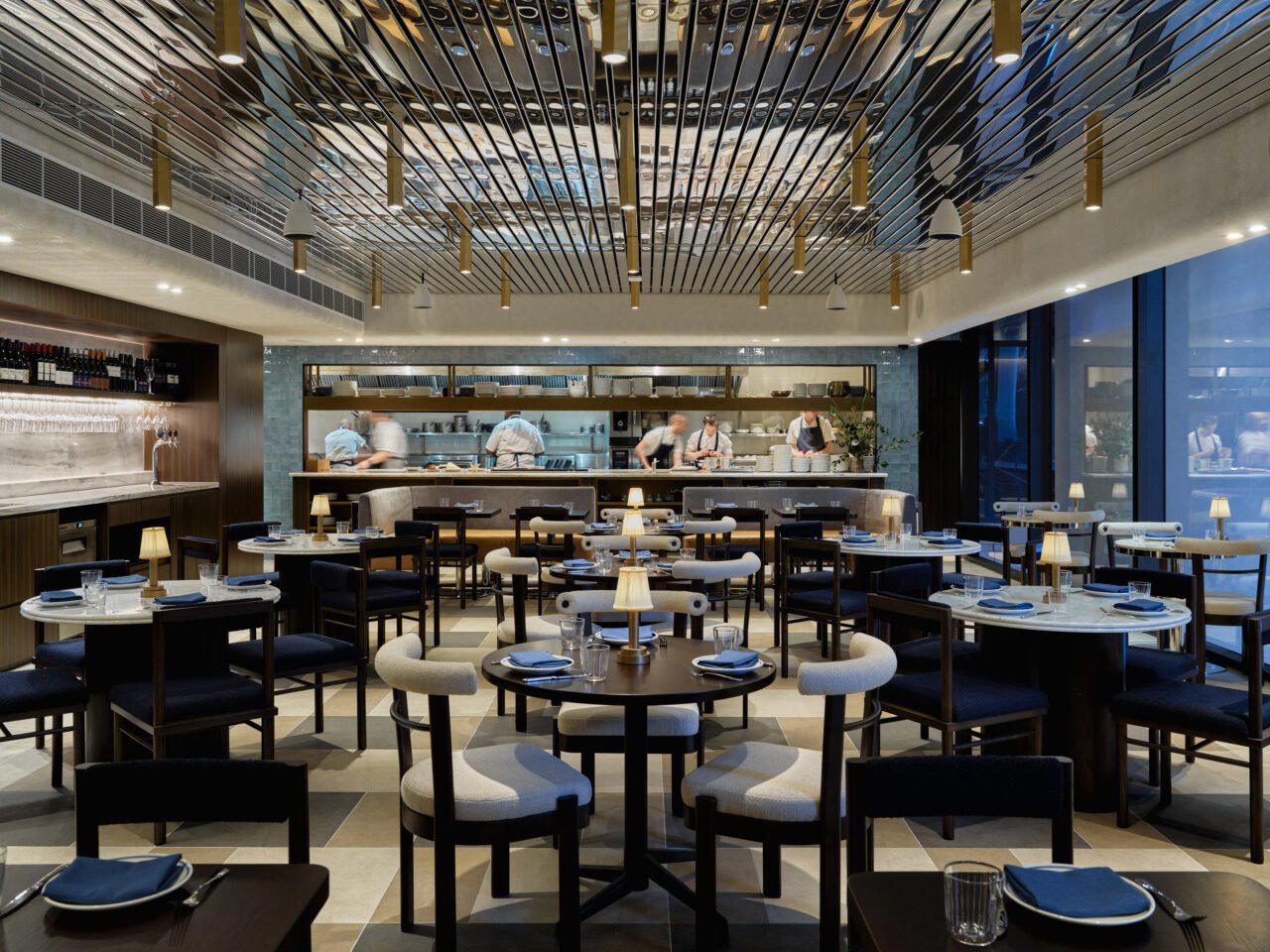
Bondi Beach's dining geography follows a predictable logic: the streets closest to the shore run loud and fast, built for volume and turnover, while Hall Street, one block removed from that current, has quietly accumulated a different kind of restaurant. The pitch here is less about spectacle and more about the meal itself. LULU sits at 2/75-79 Hall St, in that quieter register, positioned for a Bondi crowd that has moved past the obvious options and wants something more considered for the evening. Arriving from the beach end, the suburb's energy settles before you reach the door, a useful signal about what's inside.
This part of Sydney's eastern suburbs has seen a steady increase in restaurants operating at the middle-to-upper tier of the neighbourhood market, a bracket that exists in tension between the suburb's relaxed identity and the more demanding expectations of its wealthier residential base. LULU occupies that tension directly. It is not a fine-dining room in any formal sense, but it is not a beach café either. The format is closer to what French critics once called cuisine de marché, cooking shaped by what is available rather than by a fixed, seasonally stagnant menu, a mode that has become the dominant register for ambitious neighbourhood restaurants across Australian cities over the past decade.
The Arc of the Meal
The most instructive way to read a restaurant at this tier is through sequencing: how the kitchen builds a meal from arrival to close, and whether the progression has internal logic or just momentum. Bondi's better tables have generally learned to resist the Australian instinct toward informality as an excuse for looseness. At LULU, the experience is framed around progression rather than a series of disconnected plates, a structure that aligns it more closely with what Saint Peter does with seafood-forward tasting in Paddington, or what 10 William St delivers in its Neapolitan-inflected format in Paddington's wine bar circuit.
That approach to sequencing, lighter, more acidic preparations early, building toward richer, more assertive flavours, has become a reliable marker of kitchens that think in menus rather than dishes. It is a structure borrowed from longer tasting formats but compressed into something that works for a neighbourhood dining room where not everyone commits to a full evening. The better Bondi restaurants have absorbed this lesson; the weaker ones still treat every course as a standalone event, which flattens the experience and leaves the diner without a clear sense of where the meal was going.
For context on how Sydney's more formal tasting formats operate, Rockpool remains the reference point for Australian cuisine at the high end of the market, and Bayly's Bistro in Kirribilli represents the neighbourhood bistro format at a comparable but geographically distinct remove from the CBD. LULU's Hall Street position gives it a specific character that neither of those settings can replicate: it is beach-adjacent without being beach-casual, which is a harder editorial position to hold than it sounds.
Bondi in the Broader Sydney Context
Sydney's restaurant geography has never been tidy. The CBD and its immediate surrounds, CBD, Surry Hills, Paddington, claim most of the formal critical attention, while the eastern suburbs operate on a separate axis, evaluated more often by locals than by the national food press. That relative distance from institutional scrutiny can work in a restaurant's favour: it allows a kitchen to develop without the pressure of a constant review cycle, and it builds a base of regulars who return because the cooking earns it rather than because a guide told them to.
Bondi specifically has shed most of its early-2000s reputation as a suburb better for brunch than for dinner. The shift happened gradually, driven partly by demographic change in the eastern suburbs and partly by the arrival of chefs willing to work at a remove from the central hospitality precincts. bills in Bondi Beach was an early signal that the suburb could support cooking that travelled beyond its beach identity; the restaurants that followed in the decade after operated in the space that reputation opened up.
The comparison set for LULU is not Sydney's white-tablecloth tier, it is the cohort of neighbourhood-anchored rooms across Australian cities that have built their identity around seasonal sourcing, considered wine lists, and format discipline. Attica in Melbourne sits at the far end of that spectrum, where ambition and format have calcified into something closer to institution. Brae in Birregurra operates in a rural register that removes it from the neighbourhood category entirely. LULU's position is more compressed: a room operating at neighbourhood scale with aspirations that push against the limits of that format.
Internationally, the reference points for this tier of cooking are worth noting. Le Bernardin in New York City defines what technical precision at the top of the market looks like for seafood; Atomix in New York City represents the tasting-menu format's most controlled contemporary expression. Neither is a direct peer to a Bondi neighbourhood room, but both illustrate the broader arc that ambitious kitchens are navigating: toward restraint, toward sourcing transparency, away from theatrical excess.
Getting There and Planning the Visit
Hall Street runs parallel to Campbell Parade and sits within comfortable walking distance of the main beach precinct. From the CBD, the 333 and 380 bus routes serve Bondi Beach directly, with journey times around 30 to 40 minutes depending on traffic. The 333 from Circular Quay is generally the more reliable option during peak evening service. Parking in Bondi Beach during evening hours is constrained; the suburb's residential streets are metered, and the Hall Street strip sees high footfall on weekends.
Given the restaurant's position in a suburb that operates heavily on local trade, booking ahead is advisable for Friday and Saturday evenings. Bondi's dining rhythm tends to shift earlier than the CBD, tables at 7pm fill before those at 8:30pm, reversing the pattern you'd find in Surry Hills or Paddington. For broader Sydney planning, our full Sydney restaurants guide maps the city's dining tiers and neighbourhoods with comparative detail. Nearby alternatives worth considering include 1021 Mediterranean and 10 Pounds, both operating in adjacent Sydney precincts for different format needs.
Frequently asked questions
Where do I go for LULU?
LULU is located at 2/75-79 Hall St, Bondi Beach NSW 2026, Australia, Sydney.
How does LULU differ from other Bondi Beach restaurants?
LULU sits on Hall Street, which runs parallel to the beach strip and draws a different crowd than Campbell Parade, less tourist traffic, more repeat local custom. That address, at 2/75-79 Hall St in the 2026 postcode, puts the restaurant inside a cluster of Bondi venues that operate on merit rather than foot traffic, where the kitchen has to earn return visits rather than rely on beachfront visibility.
What dish is LULU famous for?
LULU's kitchen has built its reputation through careful sequencing rather than a single hero dish, the meal reads as a progression rather than a showcase of one standout item. Specific menu details aren't published in advance, which is consistent with how the restaurant positions itself on Hall Street, Bondi Beach, away from the high-turnover shorefront model.
Is LULU reservation-only?
Walk-ins are possible depending on the night, but Hall Street's quieter pocket means LULU draws a local following that fills tables on weekends without much notice. Booking ahead is the practical approach, particularly Thursday through Saturday.
What's the signature at LULU?
The signature is less a single dish and more an approach: the kitchen at 2/75-79 Hall St builds its menu around sequencing and restraint, reflecting a Bondi neighbourhood sensibility rather than shorefront volume dining. That positioning sets the tone for the whole meal.
Do they accommodate allergies at LULU?
Dietary requirements are best raised at the time of booking or on arrival at Hall Street, Bondi Beach. Kitchens operating at this neighbourhood tier in Sydney typically adapt where the menu structure allows, though confirming specifics directly with the venue is advisable.
Compact Comparison
Comparable venues nearby, for context on price, style, and recognition.
| Venue | Cuisine | Price | Notes |
|---|---|---|---|
| LULUThis venue (the venue you are viewing) | Modern Pan-Asian | $50–100 | Not listed |
| MOD. Dining | Modern Asian | Not listed | Sydney, Modern Asian |
| Frank Mac's | Irish Gin Bar & Gastropub | Not listed | The Rocks, Irish Gin Bar & Gastropub |
| Hemingway's Manly | French Bistro with Australian Influences | Not listed | Manly, French Bistro with Australian Influences |
| Brasserie@156 | Modern Australian Brasserie | $30–50 | Gladesville, Modern Australian Brasserie |
| Bondi Trattoria | Modern Italian Trattoria | Not listed | Bondi Beach, Modern Italian Trattoria |