Lou Cantoun

In the village of Cestayrols in the Tarn, Lou Cantoun occupies an old stone house where Bernard Giscquet cooks vegetables grown in his own kitchen garden. Inspectors from a leading red guide have called his cooking traditional but contemporary, tasty and colourful. It is a rare example of a rural French table where the source of the produce is literal, local, and visible.
 Discover on Pearl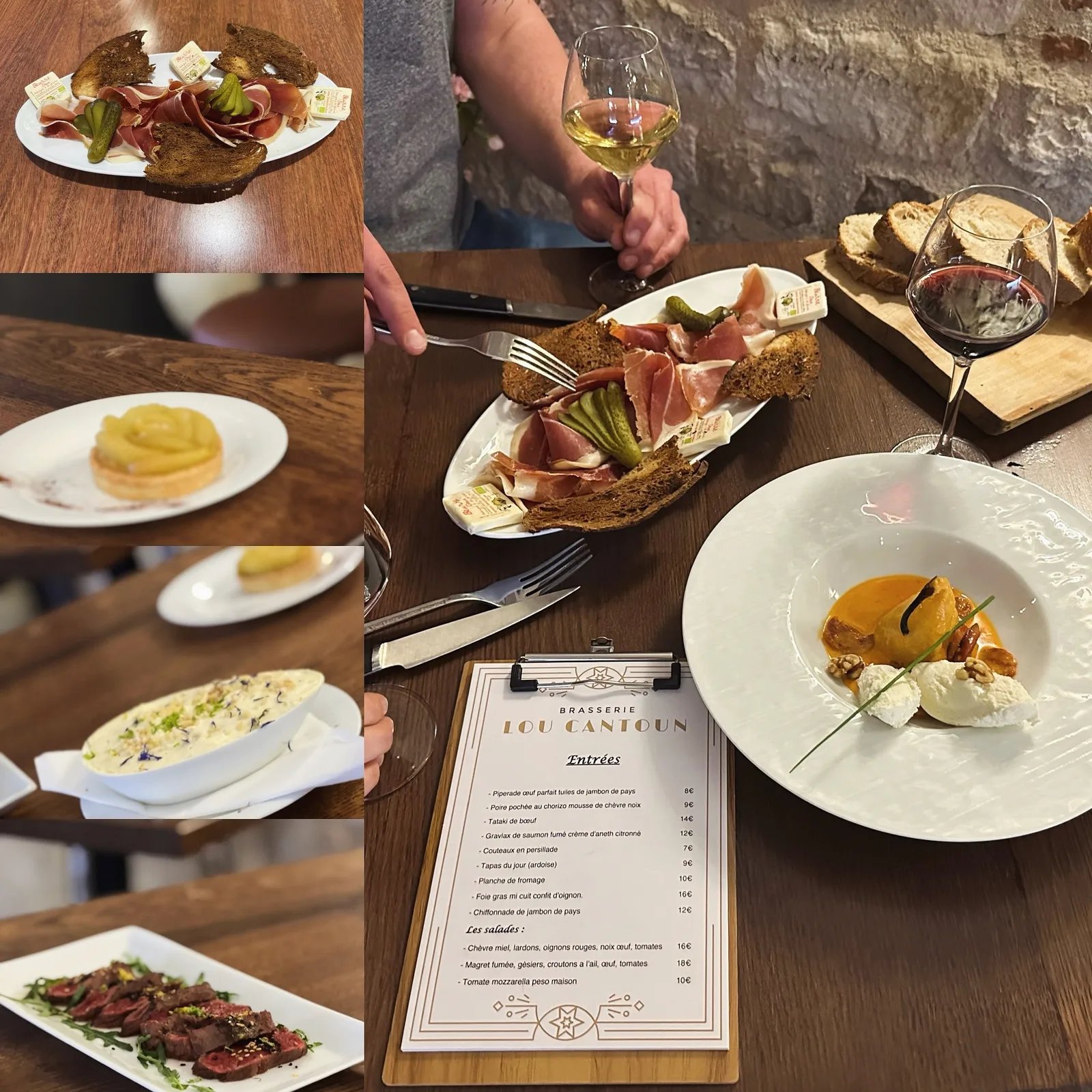
A Village House in the Tarn, and What Grows Behind It
The villages of the Tarn department sit in a stretch of southwestern France that most travellers pass through rather than stop in, moving between Toulouse and Albi without pausing for the smaller communes in between. Cestayrols is one of those communes: a few hundred residents, a church, ochre-stone facades, and the kind of quiet that makes a working kitchen garden feel less like a design statement and more like a practical necessity. Lou Cantoun operates inside this context. The restaurant occupies what was once a village house at 4 Route d'Albi, and the building wears that history without apology. Stone walls, a modest entrance, the proportions of domestic architecture rather than a purpose-built dining room. Arriving here, you are not walking into a stage set designed to suggest rural France. You are walking into rural France.
The Garden as the Menu's Starting Point
Across southern France, there is a category of restaurant where the kitchen garden is cited in marketing materials but functions as a decorative footnote. Herbs are grown on-site; everything else arrives by truck. Lou Cantoun sits in a different position. Bernard Giscquet grows vegetables from his own kitchen garden and cooks from them directly. That distinction matters because it shifts the logic of the menu. At a restaurant operating from its own plot, the seasonal calendar is not a curatorial choice but a physical constraint. What is ready is what is served. That discipline, when followed honestly, produces a different kind of cooking from tasting menus assembled around imported luxury ingredients.
The shortlist, unlocked.
Hard-to-book tables, cellar releases, and concierge-planned trips.
Get Exclusive Access →This is the model that defines a particular strand of regional French cooking, the kind practiced at a distance from the grands boulevards and three-star precincts. Consider the trajectory of ingredient-first cooking at the highest tier: Mirazur in Menton operates its own gardens across multiple plots on the Ligurian slope, and the menu changes according to what is harvested that morning. Bras in Laguiole built its identity around the flora of the Aubrac plateau. Auberge du Vieux Puits in Fontjoncouse draws from the garrigue and the surrounding countryside. These are multi-starred destinations with international reputations. Lou Cantoun operates at a different scale entirely, in a village that does not appear in most routing apps. But the underlying logic of the cooking shares a common principle: the sourcing precedes the menu, not the other way around.
What the Red Guide Inspectors Said
The shorthand description that Michelin inspectors applied to Giscquet's kitchen — traditional but contemporary, tasty and colourful — carries more information than it appears to at first reading. Traditional signals roots in regional technique and produce, the anchoring of the cooking in a specific place and culinary inheritance. Contemporary signals that the treatment is not museological; the cooking is alive and responsive rather than a recreation of fixed recipes. Tasty and colourful, the more plainspoken part of the assessment, points toward something that gets lost in discussion of high-concept restaurants: the food reads on the plate and delivers on the palate without requiring a briefing note. That combination is harder to sustain than it sounds. French regional cooking at its leading achieves exactly this, and the red guide's language suggests Lou Cantoun belongs to that tradition. For context on what Michelin recognition at various levels looks like in France, the spread runs from village tables like this one through to the three-star formality of Alléno Paris au Pavillon Ledoyen in Paris or the mountain precision of Flocons de Sel in Megève. Lou Cantoun occupies the quieter end of that spectrum, which is precisely where this kind of cooking belongs.
Cestayrols in Its Regional Frame
The Tarn sits between the better-publicised gastronomic corridors of the southwest. Toulouse has its cassoulet and its Michelin-starred dining rooms. Albi, twelve kilometres or so to the northeast, has the Toulouse-Lautrec museum and a cathedral that draws enough visitors to sustain a broader hospitality offer. Cestayrols draws neither tourist infrastructure nor food media attention in any significant volume. That obscurity works in the restaurant's favour. The pricing and ambitions of a village house kitchen do not need to justify themselves against urban benchmarks. The cooking answers to the garden, the season, and the region rather than to a metropolitan peer set of the kind that restaurants in Paris or Lyon must position against. See our full Cestayrols restaurants guide for the wider picture of what the village offers, and our full Cestayrols hotels guide if you are planning an overnight stay in the area.
The Broader Table: French Regional Cooking and Why It Still Matters
There is a version of the French fine dining conversation that focuses almost entirely on Paris and on the handful of destination restaurants in the Alps, Alsace, and the Mediterranean coast. Paul Bocuse at L'Auberge du Pont de Collonges, Auberge de l'Ill in Illhaeusern, Troisgros in Ouches, Assiette Champenoise in Reims , these are the names that appear in any structured account of French gastronomy's geography. But the country's cooking culture has always been sustained as much by its smaller, less famous rooms as by its grand destinations. Village restaurants anchored in their own produce, recognised quietly by guide inspectors, feeding locals as well as the occasional traveller who has done enough research to find them , this is a category that rarely generates long-form editorial coverage despite being fundamental to what French food culture actually is. Lou Cantoun fits that category. It is not in competition with AM par Alexandre Mazzia in Marseille or Au Crocodile in Strasbourg. It answers a different question entirely: what does good, honest cooking from a kitchen garden look like when the chef's ambition is calibrated to the scale of the village rather than the ambitions of a starred dining room?
Planning a Visit
Lou Cantoun sits at 4 Route d'Albi in Cestayrols, accessible by car from Albi. Phone and online booking details are not publicly confirmed in available records, so arriving with a reservation arranged directly through local contact is the prudent approach, particularly for weekend lunches when the room is most likely to be full. The restaurant's hours and current pricing are not published in our database, and given the scale of the operation, those details are leading confirmed before travelling. Cestayrols itself offers limited accommodation, so visitors staying overnight should consult our full Cestayrols hotels guide for nearby options, and our full Cestayrols bars guide, our full Cestayrols wineries guide, and our full Cestayrols experiences guide to build out the wider itinerary. The journey from Albi takes under twenty minutes and rewards those who make the detour from the city's better-signposted attractions.
The shortlist, unlocked.
Hard-to-book tables, cellar releases, and concierge-planned trips.
Get Exclusive Access →Frequently Asked Questions
A Quick Peer Check
These are the closest comparables we have in our database for quick context.
| Venue | Cuisine | Price | Awards | Notes |
|---|---|---|---|---|
| Lou Cantoun | In his restaurant, housed in an old village house, Bernard Giscquet cooks fresh… | This venue | ||
| Alléno Paris au Pavillon Ledoyen | Creative | €€€€ | Michelin 3 Star | Creative, €€€€ |
| Kei | Contemporary French, Modern Cuisine | €€€€ | Michelin 3 Star | Contemporary French, Modern Cuisine, €€€€ |
| L'Ambroisie | French, Classic Cuisine | €€€€ | Michelin 3 Star | French, Classic Cuisine, €€€€ |
| Le Cinq - Four Seasons Hôtel George V | French, Modern Cuisine | €€€€ | Michelin 3 Star | French, Modern Cuisine, €€€€ |
| Mirazur | Modern French, Creative | €€€€ | Michelin 3 Star | Modern French, Creative, €€€€ |
Need a table?
Our members enjoy priority alerts and concierge-led booking support for the world's most difficult tables.
Get Exclusive AccessThe shortlist, unlocked.
Hard-to-book tables, cellar releases, and concierge-planned trips.
Get Exclusive Access →