Red Earth, Open Sky, and a Table Set for the Desert There is a particular quality of light in the Red Centre of Australia that no other latitude replicates. At the hour before sunset, the sandstone monolith of Uluru shifts through amber, burnt...
Pearl is the En Primeur Club membership app — saves, bookings, and concierge access live there. Same editors, same standards.
- Address
- Yulara Drive, Yulara NT 0872, Australia
- Phone
- +61 2 9918 4355
- Website
- longitude131.com.au
- Directions
- Get directions
 Saves & bookings on Pearl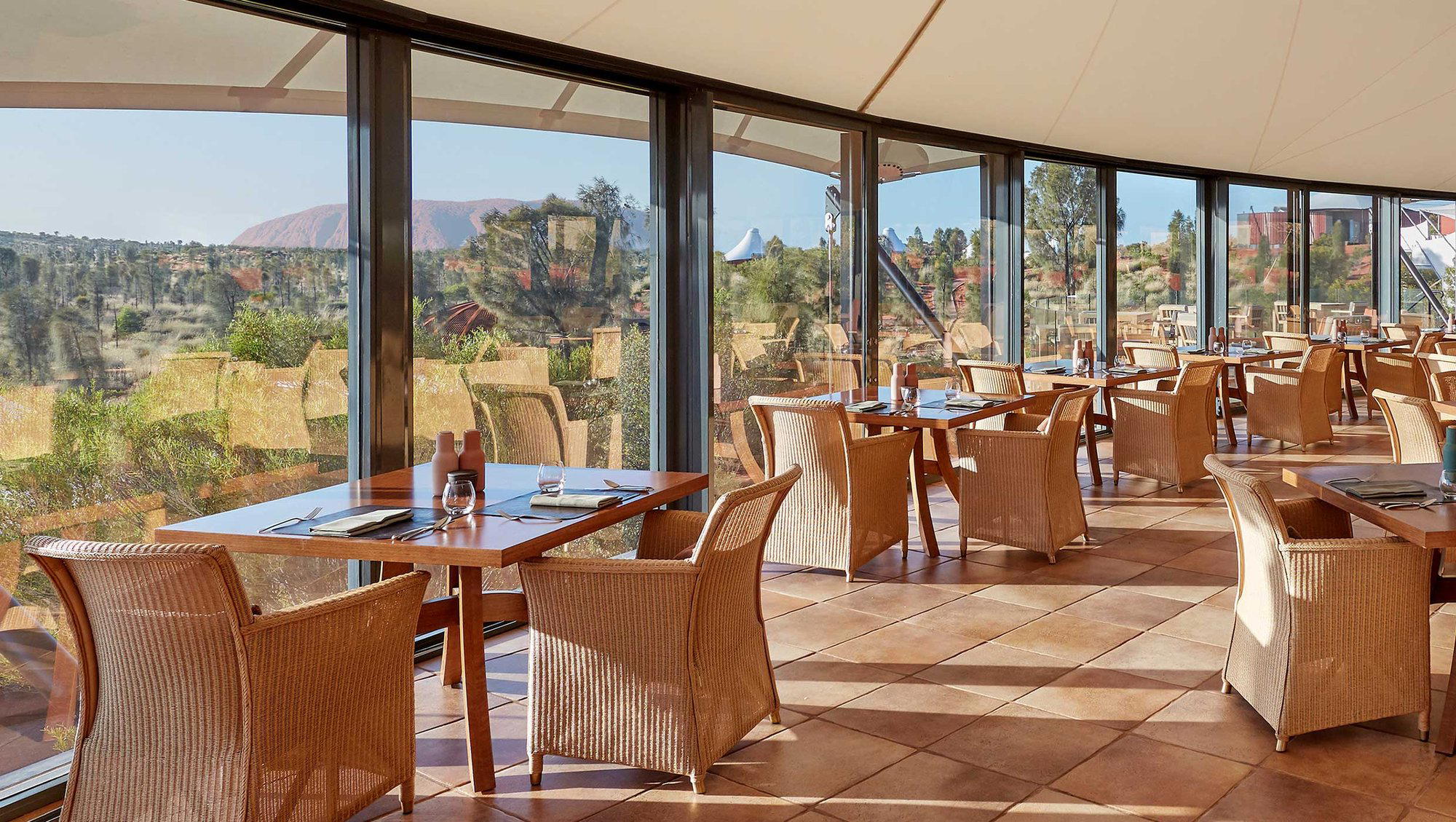
Red Earth, Open Sky, and a Table Set for the Desert
There is a particular quality of light in the Red Centre of Australia that no other latitude replicates. At the hour before sunset, the sandstone monolith of Uluru shifts through amber, burnt sienna, and deep ochre in a sequence that takes roughly twenty minutes and feels, to anyone watching from the right position, like the landscape is exhaling. Longitude 131 Dune House places guests at exactly that position. The tented pavilions sit on a low dune ridge within Ayers Rock Resort in Yulara, oriented so that the view from the camp is an unbroken read of the desert plain and, in the distance, the Rock itself. The arrival experience at properties in this category is rarely incidental to what follows at the table; here it is foundational.
This corner of the Northern Territory represents among the more challenging sourcing environments for serious hospitality anywhere in Australia. The nearest major city is Alice Springs, roughly 460 kilometres north. What exists instead is a culinary tradition that the country's most thoughtful desert-facing restaurants have been quietly developing for two decades: a cuisine built around native Australian ingredients, a handful of deeply regional suppliers, and a respect for the fact that the land around Uluru has supported human food culture for at least 60,000 years.
Sourcing at the Edge of the Supply Chain
In urban Australian dining, the conversation around indigenous ingredients has accelerated sharply since the mid-2010s. Restaurants like Attica in Melbourne and Brae in Birregurra have made native produce central to their editorial identity, placing wattleseed, native thyme, quandong, and finger lime in competitive conversation with European fine-dining frameworks. In the Red Centre, that same ingredient set is not an imported concept or a philosophical choice; it is geographic reality. The desert produces what the desert produces.
At a property like Longitude 131 Dune House, the sourcing imperative works outward from the site rather than inward from a chef's inspiration board. Bush tomato, a small dried fruit related to the nightshade family and carrying notes of tamarind and caramel, grows across the arid zone. Desert limes, smaller and more intense than their coastal relatives, are harvested from thorny shrubs that have adapted to low rainfall and high temperatures. These are not garnish-level references; they are ingredients that carry genuine flavour logic in dishes designed around their specific character. In a region where logistics mean that every component arriving on a plate has been considered weeks in advance, the edit is necessarily rigorous.
The broader Australian fine-dining conversation, visible in properties from Rockpool in Sydney to the casual-end innovators like Kulcha Restaurant Wollongong in Wollongong, has moved toward acknowledging that Australian cuisine is most coherent when it roots itself in what the continent actually grows. The Red Centre version of that argument is both more constrained and more direct: there is little option to default to European produce here, and the results tend to reflect it.
The Format and the Setting
Luxury tented camps occupy a specific tier in premium travel. The format, popularised across East Africa before migrating to South Asia and then Australia, makes a bargain with guests: accept the absence of urban amenity in exchange for access and atmosphere that no city hotel can replicate. One credible examples in the category are small, often between fifteen and thirty suites or tents, and priced at a level that reflects the full cost of operating in remote terrain. Longitude 131 Dune House fits that structural profile: remote location and a price point calibrated at about US$250 per person.
Dining at properties in this format is rarely separable from the physical context. Meals served under open desert skies, with temperatures dropping sharply after dark and the Southern Hemisphere's uncorrupted night sky overhead, belong to a different experiential register than equivalent food consumed in a metropolitan dining room. It is worth being clear about what that means: the food does not need to compete with Attica on plating precision or with Le Bernardin in New York City on technical refinement. It needs to be coherent, to use the setting as a genuine frame rather than a backdrop, and to honour the sourcing environment rather than import a generic luxury template. The leading desert camps globally have understood this. The question is whether the property's culinary program engages with that logic or simply drops a standard menu into a canvas tent.
Visiting: What to Know Before You Go
Yulara is a purpose-built resort town created specifically to house visitors to Uluru-Kata Tjuta National Park; there is no other reason for the settlement to exist. Access is via Ayers Rock Airport (AYQ), which receives direct flights from Sydney, Melbourne, and Alice Springs. The airport is roughly five kilometres from the resort precinct, making transfers direct. The park itself charges an entry fee and requires that visitors respect the sacred status of the site: photography restrictions apply in certain areas, and climbing the Rock has been permanently prohibited since October 2019 following decades of requests from the Anangu traditional owners.
Timing matters in the Red Centre. The shoulder seasons, April through June and September through October, offer particularly manageable temperatures: midday heat remains significant but does not reach the 45-degree peaks recorded in high summer. Sunrise and sunset activities, which is where the dining program's theatrical outdoor potential concentrates, are far more comfortable outside of the December-to-February heat window. The Australian school holiday periods compress availability at all Yulara properties, so booking several months ahead is consistent with what similar remote luxury camps worldwide require.
For travellers building a broader Australian itinerary, Yulara works well as a dedicated leg rather than a day excursion. Most guests allocate two to three nights, which allows for sunrise and sunset viewings from different vantage points, a guided cultural walk, and a full read of what the dining program offers across multiple sittings. Properties at this level tend to structure activities and meals as an integrated experience rather than offering à la carte elements. For urban Australian dining context before or after, consider how the native-ingredient thread running through restaurants like Barry Cafe in Northcote, Bar Carolina in South Yarra, or Akasiro in Collingwood connects to what the Red Centre kitchen is doing from the source end. Diners who have followed Australian Modern through destinations like Johnny Bird in Crows Nest, Bayly's Bistro in Kirribilli, bills in Bondi Beach, or further afield at Jaani Street Food in Ballarat, Hungry Wolfs Italian Restaurant in Newcastle, Lenzerheide Restaurant in Adelaide, or El Loco at Excelsior in Surry Hills will find the desert camp format a logical, if geographically extreme, extension of the same conversation.
Quick Comparison
Comparable venues nearby, for context on price, style, and recognition.
| Venue | Cuisine | Price | Notes |
|---|---|---|---|
| Longitude 131 Dune HouseThis venue — the venue you are viewing | Contemporary Australian Bush Tucker | $$$$ | Not listed |
| Automata | Modern Australian Fine Dining | $$$$ | Chippendale |
| Sara Dining | Farm-to-Table Fusion | $$$$ | Berry |
| Monsieur Paul | Classic French Fine Dining | $$$$ | Double Bay |
| Orson | Modern Australian | $$$ | Rosebud |
| Orana | Modern Australian Native Cuisine | $$$$ | Rundle Street |
Continue exploring
More in Yulara
Hotels in Yulara
Browse all →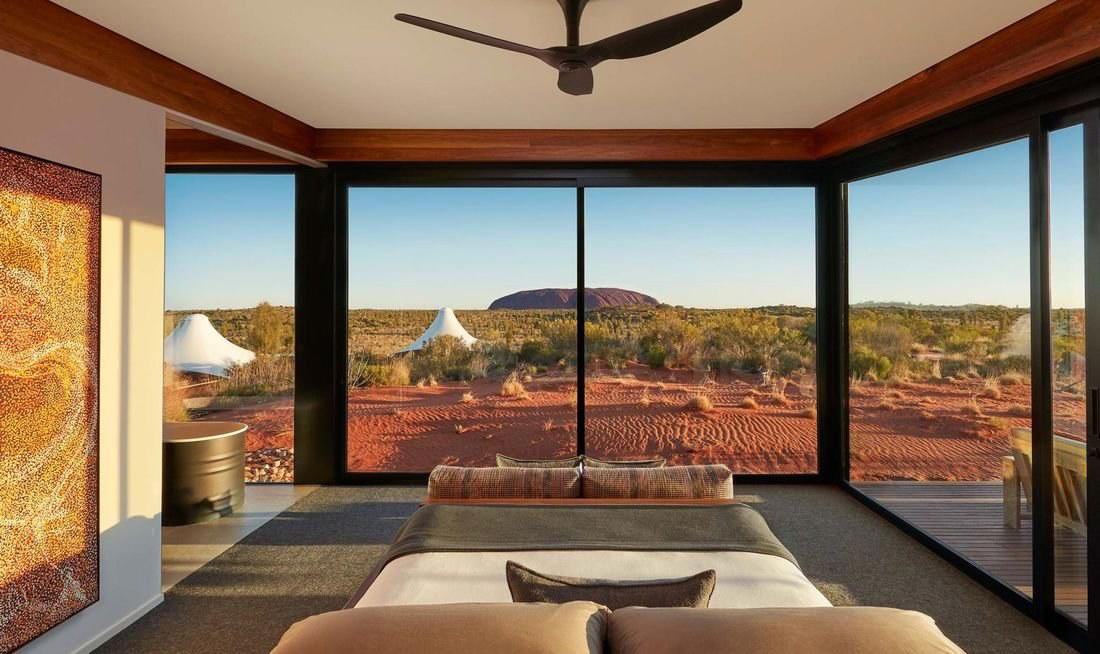
At a Glance
- Scenic
- Elegant
- Sophisticated
- Intimate
- Special Occasion
- Celebration
- Panoramic View
- Hotel Restaurant
- Open Kitchen
- Terrace
- Extensive Wine List
- Local Sourcing
- Sustainable Seafood
- Mountain
Cool and airy lounge with earth-toned interiors, Aboriginal art, and panoramic desert views creating a tranquil, stylish outback atmosphere.