




2 Michelin Keys · La Liste Top Hotels · Fodor's Most Incredible Hotels in the World
Sixteen tented pavilions set among the red dunes of Australia's Central Desert, each oriented toward Uluru across six miles of open desert floor. Recognized on the La Liste Top Hotels 2026 list with 96.5 points and named to the Tatler Best Hotels Asia-Pacific 2025, Longitude 131 operates at a tier where the landscape is the primary architecture. Rates begin at AUD 1,700 per night, with a two-night minimum stay.

Pearl is the En Primeur Club membership app — saves, bookings, and concierge access live there. Same editors, same standards.
Where the Desert Does the Design Work
In Australia's premium accommodation market, the defining tension is between properties that import a design vocabulary and those that let geography set the terms. Longitude 131 belongs firmly to the second category. Positioned four miles from Ayers Rock Airport in the Yulara township at the edge of Uluru-Kata Tjuta National Park, the camp's sixteen tented pavilions are arranged across red-rust dunes in a configuration that treats Uluru as the organizing element of every sightline. The monolith, rising roughly a thousand feet from the desert floor, sits approximately six miles from the pavilion windows — close enough to read its surface texture at dawn, far enough to understand its scale against the flat country surrounding it. You can see more about how Longitude 131 compares with other Australian wilderness properties in Wildman Wilderness Lodge in Marrakai and read our broader full Yulara guide for the wider context of what the Red Centre offers the serious traveller.
The Pavilion Architecture: Steel, Canvas, and Considered Restraint
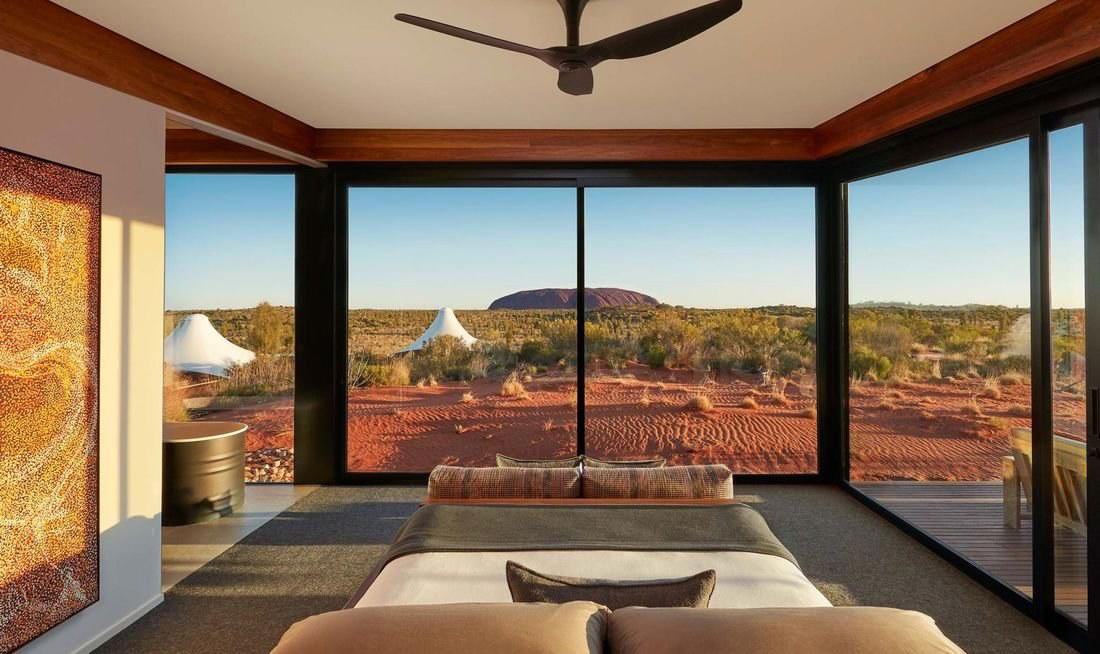
Each pavilion sits on steel stilts, raising the structure a foot or so above the fragile desert scrub. This is as much an ecological decision as an aesthetic one: guests are asked to keep to the designated paths to limit surface damage to the brush below, and the elevation allows air to circulate beneath the floors, keeping interiors temperate during daylight hours. The construction uses a canvas-and-frame tented format that has become the language of high-end safari camps globally, but the Red Centre iteration is calibrated to a specific set of conditions. Floor-to-ceiling windows face Uluru directly, removing any framing device between the interior and the landscape. Blinds and privacy screens are controlled remotely, so the first thing a guest does on waking is press a button and let the desert in — no curtain draw, no fumbled cord. It is a small design decision that makes a precise experiential point about the relationship between interior comfort and exterior vastness.
The interior aesthetic has been described as British Africa, a reference to the colonial expedition register that runs through the tented camp tradition, here grounded in Australian pioneer heritage. Each pavilion is themed around a different figure from Australian exploration history, with relevant memorabilia, letters, and photographs embedded in the décor. It is a framing that positions the stay inside a longer story of human engagement with this landscape, rather than presenting the camp as a freestanding luxury object. Works by local Indigenous artists are also present throughout, which grounds the property's relationship to Pitjantjatjara culture, the First Nations people for whom Uluru-Kata Tjuta National Park is a living spiritual center. The Australian government handed back management of the park to the Anangu people in 1985, and understanding that context shifts how a visitor reads the landscape visible through those floor-to-ceiling windows.
The Dune House: Gathering Point and Dining Room
The Dune House functions as the camp's social and culinary core. Adjacent to an outdoor swimming pool set among the dunes, it is designed as a convivial space for guests to exchange accounts of the day's guided excursions. The daily-changing dining menu draws on premium produce delivered to the Red Centre and combines it with bush ingredients, a format that positions the kitchen inside the broader Australian native ingredient movement that has gained serious traction in the country's restaurant culture over the past decade. The menu is built around contemporary Australian cooking, and the setting, facing across open desert toward Uluru, provides a backdrop that few city dining rooms can reasonably claim to compete with. See how Australia's urban luxury hotel dining scene operates at a different register with properties like Capella Sydney or The Calile in Brisbane.
Signature Table 131° experience takes this further: a private dining event set in the open desert, under stars, away from the camp's built footprint. It is the kind of format, low-capacity, location-dependent, tied to a specific moment in the landscape's day, that cannot be replicated at scale, and it has become the most-cited feature of the property in editorial coverage. The experience is included in the room tariff, as are a range of guided tours: the Uluru sunset, guided access to Walpa Gorge and Kata Tjuta, Bruce Munro's Field of Light installation, the Mutitjulu Meander, and the Mala Walk to Kantu Gorge. This all-inclusive structure places Longitude 131 in a specific pricing tier: rates begin at AUD 1,700 per night, with a two-night minimum stay, and the tariff absorbs experiences that would carry separate costs at other properties in the destination category. For comparison, other remote Australian luxury camps typically charge significantly for guided experiences on top of accommodation; the bundled model here shifts the value calculus.
Australia's luxury accommodation sector has consolidated around a small number of genuinely destination-specific properties, places where the rationale for the hotel's existence is inseparable from the geography it occupies. Longitude 131 sits at the top of that cohort for the Red Centre. The comparison with Southern Ocean Lodge is instructive: both properties operate on the premise that Australia's most compelling accommodation is tied to landscape access unavailable elsewhere, and both sit at a price point that prices against international luxury rather than domestic mid-market. Other regional comparisons worth noting for guests building an Australia itinerary include Cape Lodge in Wilyabrup for wine country immersion and Lake House in Daylesford for a cooler-climate retreat format. Urban alternatives for contrast include Crystalbrook Riley in Cairns and Bells at Killcare on the Central Coast.
Practical Planning
Longitude 131 is a fifteen-room property, sixteen pavilions, with one operating as a dedicated space, and does not accommodate guests under fifteen years of age. The two-night minimum is enforced, which reflects the logic of the place: the experience is structured around a rotating daily itinerary, and a single night would cut through the experiential arc rather than complete it. Ayers Rock Airport (Connellan Airport) serves direct flights from Sydney and Melbourne, and the camp provides complimentary transfers for the four-mile road journey. Rates begin at AUD 1,700 per night and are quoted on request, which is standard for this tier of remote luxury property in Australia. Booking requires direct contact with the reservations team rather than online instant confirmation, allowing the property to gather information needed to tailor the experiential itinerary before arrival. Tour schedules and experience timings shift with sunrise and sunset across seasons, so arrival date affects which activities run on which days of a stay. The library in the Dune House, stocked with maps, historical literature, and artefacts related to Australian exploration and First Nations heritage, is worth treating as pre-reading material rather than decoration.
How It Stacks Up
Comparable venues nearby, for context on price, style, and recognition.
| Venue | Cuisine | Price | Awards | Notes |
|---|---|---|---|---|
| Longitude 131This venue (the venue you are viewing) | Luxury glamping tents polished over desert dunes with bespoke explorer-themed interiors. | Not listed | 2 Michelin Keys · La Liste Top Hotels | Not listed |
| Thorngrove Manor | Gothic country manor with fantasy castle architecture | $1,000–1,500 | 2 Michelin Keys | Stirling |
| Nest & Nature | Sustainable off-grid eco-tourism retreat | $300–500 | Michelin Selected | Inman Valley |
| QT Gold Coast | High-rise beachside designer hotel with quirky luxury cabins. | $100–200 | Michelin Selected · Mr & Mrs Smith Seal of Approval | Surfers Paradise |
| Mondrian Gold Coast | Sculptural beachfront towers inspired by sand dunes and headland with open-air living spaces. | Not listed | Michelin Selected · Esquire Best New Hotels | Burleigh Heads |
| Silky Oaks Lodge | luxury rainforest eco-lodge with treehouse suites | Not listed | 2 Michelin Keys · La Liste Top Hotels | Daintree Rainforest |
Recognition history
Dated appearances from independent guides and award organizations, with the underlying list record or original source where available.
Michelin 2 Keys
Michelin
La Liste Top Hotels
La Liste
Fodor's Most Incredible Hotels in the World
Fodor's
Virtuoso Luxury Hotel Partner
Virtuoso
Tatler Listed in Best Hotels Asia-Pacific
Tatler
Full recognition history (6 entries)
Michelin 2 Keys
Michelin
Continue exploring
More in Yulara
Restaurants in Yulara
All restaurants in Yulara →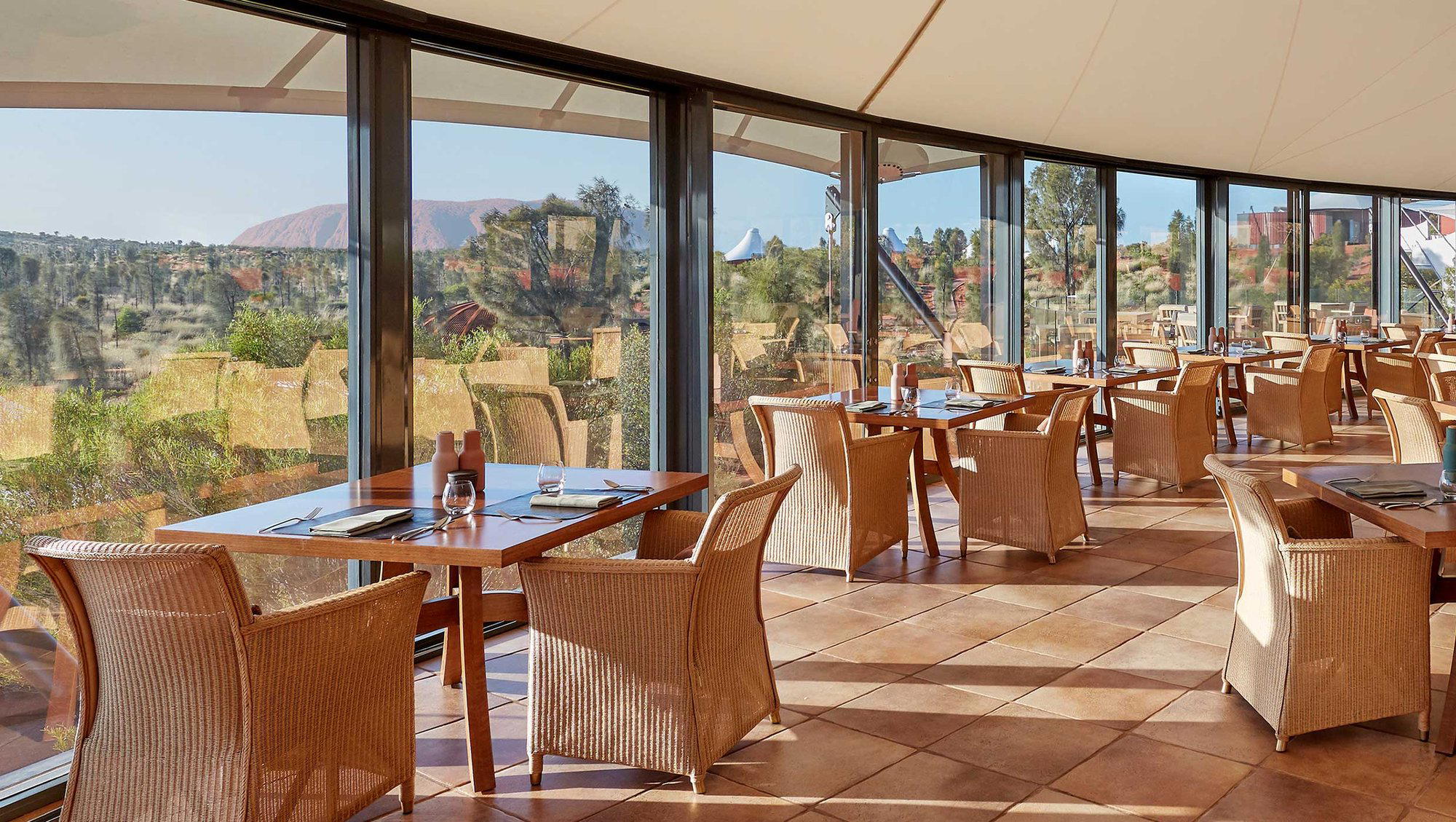
Details
- Romantic
- Scenic
- Elegant
- Sophisticated
- Ornate
- Intimate
- Honeymoon
- Romantic Getaway
- Anniversary
- Weekend Escape
- Panoramic View
- Pool
- Spa
- Wi Fi
- Room Service
- Concierge
- Restaurant
- Airport Transfer
- Mountain
- Wheelchair Accessible
- Step Free Entrance
Earthy elegance blending classic explorer touches with indigenous textures, warm communal spaces in Dune House, and serene starlit desert nights.