Lonchería María Isabel
A lonchería tucked into Polanco's commercial fringe on Avenida Emilio Castelar 14, Lonchería María Isabel represents the kind of neighbourhood kitchen that anchor districts like this one rarely retain. The format is casual and counter-driven, rooted in Mexican lunch tradition rather than the fine-dining circuit that surrounds it, a deliberate counterweight to Polanco's more polished dining tier.
Pearl is the En Primeur Club membership app — saves, bookings, and concierge access live there. Same editors, same standards.
- Address
- Av. Emilio Castelar 14-Local BCD, Polanco, Polanco IV Secc, Miguel Hidalgo, 11560 CDMX, Mexico
- Phone
- +52 55 5281 0866
- Website
- quesadillasmariaisabel.mx
- Directions
- Get directions
 Saves & bookings on Pearl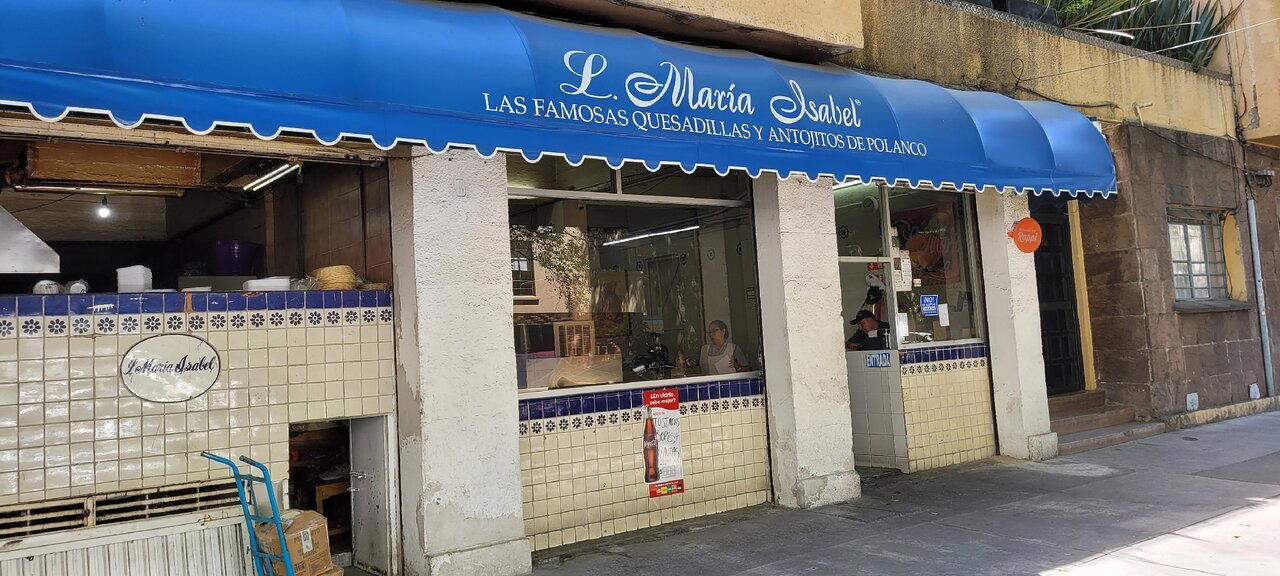
The Lonchería Format in Polanco's Fine-Dining Quarter
Polanco is Mexico City's most internationally legible dining district, home to the tasting-menu institutions, Pujol, Quintonil, Em, that place the capital on any serious conversation about global restaurant culture. Against that backdrop, the lonchería is a structurally different proposition. It is not an alternative to fine dining; it is a different category entirely. Where a tasting counter prices against experience and occasion, a lonchería prices against the daily rhythm of working lunch culture, serving food that tracks regional ingredient cycles rather than chef ambition. Lonchería María Isabel, at Avenida Emilio Castelar 14 in the commercial pocket of Polanco IV Sección, operates on those terms.
The form is worth understanding before you walk in. Loncherías are Mexico's midday-kitchen tradition: counter service or close to it, a menu that changes by availability, dishes built from whatever the market delivered that morning. The point is not novelty. The point is repetition, reliability, and sourcing discipline, the same suppliers, the same prep logic, day after day. That consistency is how neighbourhood kitchens of this type maintain their standing. It is also what separates them from the romanticised 'market stall' category that wealthier tourists tend to photograph and then leave.
Where the Ingredients Come From, and Why the Format Demands It
The lonchería's ingredient logic is tied directly to Mexico City's wholesale market infrastructure. The Central de Abasto, one of the largest food distribution hubs in the world, feeds both the city's starred restaurants and its neighbourhood loncherías, though via different intermediary layers. At the fine-dining end, places like Sud 777 or Rosetta, sourcing has become programmatic: dedicated farm relationships, written provenance notes, menu language that names the producer. At the lonchería end, sourcing is equally serious but differently expressed. The cook's market knowledge is the credential, not a printed list of suppliers.
This matters because it shapes what ends up on the plate. Lonchería cooking depends on the cook's ability to read seasonal availability and build a short, coherent daily menu from it. When squash blossoms are abundant, they appear. When the market is running heavy on chiles anchos or tomatillos, the guisos shift accordingly. The dish that a lonchería becomes known for, a particular arroz, a reliable sopa de lima, a guisado that regulars return for, is the result of years of that sourcing discipline compressing into muscle memory. Across Mexico, restaurants working at this register, from Levadura de Olla in Oaxaca to KOLI Cocina de Origen in Monterrey, have built reputations on similar sourcing-first logic, even when operating at higher price points and under international scrutiny.
Polanco's Dual Dining Register
The neighbourhood of Polanco holds an unusual dual character in Mexico City's dining structure. Its western blocks, especially around Presidente Masaryk and the streets feeding into Parque Lincoln, carry the highest concentration of internationally known restaurants in the country. Yet the commercial fabric of the district, the office corridors, the repair shops, the delivery infrastructure that supports it all, runs on a different kind of eating. Lonchería María Isabel sits in that second register, occupying a local-commercial address that has little to do with the tourist map and a great deal to do with how people who work in Polanco actually eat.
That positioning has become more, not less, significant as fine dining in the district has grown more formal and more expensive. The gap between a counter lunch at a lonchería and a tasting menu at the neighbourhood's reference restaurants is wider than it has ever been. That gap creates a specific role for kitchens like María Isabel: they serve a constituency that the higher tier is not designed to reach, and they do so with a cooking discipline that the higher tier sometimes gestures toward but rarely replicates on the same daily, uncommissioned basis.
For context on how Mexico's regional cooking is being interpreted at premium scale across the country, the range is broad: Animalón in Valle de Guadalupe works with Baja ingredients in an open-fire format; Alcalde in Guadalajara approaches regional sourcing through a tasting structure; Arca in Tulum draws on jungle-adjacent produce. The lonchería tradition that María Isabel represents is the foundational register from which many of those higher-profile formats draw their reference points, even when the restaurants themselves don't advertise it.
The Competitive Set and What It Tells You
Within Mexico City's casual lunch tier, the lonchería category occupies a different comparable set than comedores or taquerías. The price band sits roughly in line with Comedor Jacinta's accessible end of the market, the $$ range, though the format is more fixed-menu and less à la carte than a comedor. What loncherías share with the city's more design-conscious casual operators is the primacy of the guisado: slow-cooked preparations that require long lead times and cannot be faked with convenience product. That is the discipline the format rests on, and it is the basis on which regulars judge whether a lonchería has maintained its quality over time.
Internationally, the comparison that lands most cleanly is not with Mexico's own fine-dining tier but with the lunch-kitchen traditions of cities where daily-cook culture has remained intact despite surrounding restaurant inflation, Lyon's bouchons, Tokyo's teishoku counters, the working tavernas of Athens. The lonchería occupies that structural slot in Mexico City's food culture.
Planning a Visit
Lonchería María Isabel is at Avenida Emilio Castelar 14, Local BCD, in Polanco IV Sección, a short walk from the district's main restaurant corridor but clearly in its commercial rather than its destination-dining zone. The lonchería format is a midday operation by default; arriving before the main lunch rush, typically before 1:30 pm on weekdays, improves both seat access and dish availability, since popular guisos sell out rather than being restocked. No website or phone listing is publicly available for this address, which means walk-in is the working approach. Given the format, counter or close to it, a rotating daily menu, advance reservations are not a feature of this category. The practical expectation is a casual, low-cost lunch built around whatever the kitchen is running that day.
A Credentials Check
Comparable venues nearby, for context on price, style, and recognition.
| Venue | Cuisine | Price | Notes |
|---|---|---|---|
| Lonchería María IsabelThis venue — the venue you are viewing | Traditional Mexican Fried Quesadillas | $ | Not listed |
| Taqueria Gabriel | Traditional Mexican Taqueria | $ | Cuauhtemoc |
| El Rey del Suadero | Authentic Mexican Taqueria | $ | Chapultepec Morales |
| Con Vista al Mar Roma | Mexican Coastal Seafood | $$ | Centro Urbano Benito Juarez |
| El Peladito | Sinaloa-style Seafood | $$ | Narvarte Poniente |
| La Casa del Pastor | Authentic Mexican Taqueria | $$ | Polanco Chapultepec |
Continue exploring
More in Mexico City
Restaurants in Mexico City
Browse all →
Bars in Mexico City
Browse all →
At a Glance
- Classic
- Rustic
- Casual Hangout
- Family
- Brunch
- Historic Building
Current opening hours
- Monday
- 8 AM–10 PM
- Tuesday
- 8 AM–10 PM
- Wednesday
- 8 AM–10 PM
- Thursday
- 8 AM–10 PM
- Friday
- 8 AM–10 PM
- Saturday
- 9 AM–10 PM
- Sunday
- 9 AM–9 PM
Hours can change for holidays and private events. Last verified .
Casual, no-frills atmosphere with plastic chairs, bright lighting, and a bustling kitchen focus on quick traditional antojitos.