.png)
Formerly a gastronomic address on the heights of Namur, L'O à la Bouche has relocated to the banks of the Meuse in Wépion and shifted its format to a contemporary brasserie. The kitchen remains modern and inventive, with Michelin Plate recognition in both 2024 and 2025, and a Google rating of 4.6 across nearly 400 reviews. Pricing sits at the accessible end of the Walloon fine-dining spectrum.
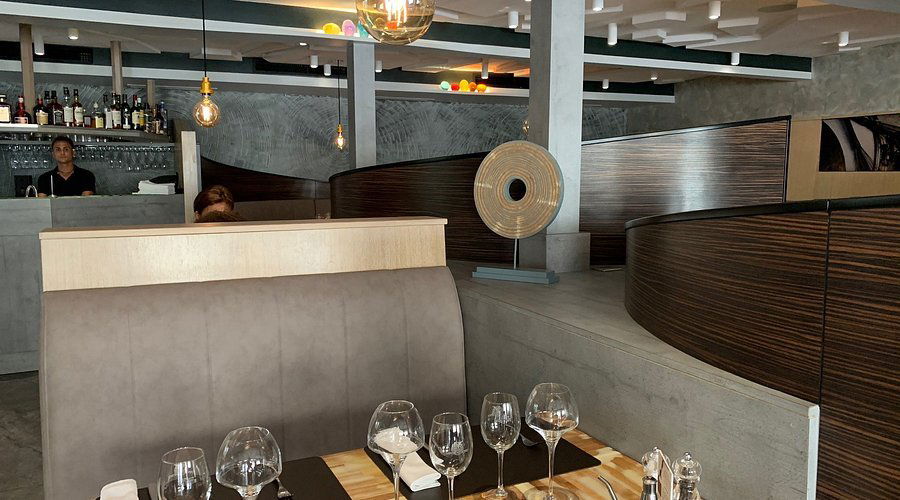
The Meuse Bank as Dining Address
The stretch of the Meuse running through Wépion has a particular quality in the late afternoon: the river carries light differently here than in the city proper, and the village sits close enough to Namur to draw a dinner crowd without the urban density. It is the kind of riverside location that Belgian brasserie culture has long understood how to use, pairing relaxed formality with cooking that asks to be taken seriously. L'O à la Bouche, now at Rue Armand de Wasseige 1, occupies that territory.
The address represents a deliberate repositioning. The kitchen originally operated on the heights above Namur, in Bioul, in a more explicitly gastronomic register. The move to the Meuse bank and the shift toward a contemporary brasserie format reflects a broader pattern visible across Belgium's mid-tier fine dining: the rigid separation between "gastronomique" and accessible has softened, and a number of kitchens are choosing formats where the cuisine can remain technically serious without the ceremony that once defined the category. For comparison, the €€€€ tier in Wallonia, represented by addresses like L'Eau Vive in Arbre and d'Eugénie à Emilie in Baudour, continues its own track. L'O à la Bouche operates at €€, which at the current standard places it among the more considered options in the Namur area without the price commitment those rooms require.
What Belgian Modern Brasserie Means in Practice
Contemporary brasserie format in Belgium is not a downgrade. It is a different contract between kitchen and guest. The expectation on both sides is that the cooking will show technique and creativity, that ingredients will be sourced with intent, but that the occasion does not need to be formal to justify the effort. This is partly a Walloon inheritance: the French-language dining tradition in Belgium has historically placed serious cooking inside more relaxed social settings than its Flemish counterpart, which has tended toward the structured tasting format now associated with addresses like Boury in Roeselare or Hof van Cleve in Kruishoutem.
Dishes documented from L'O à la Bouche speak to the gap between format and ambition. A lightly smoked mackerel paired with Holstein beef and a potato velouté with burnt pecan and pea shoots is not brasserie cooking in the shorthand sense. It involves multiple preparations, considered temperature contrast, and a willingness to cross protein categories within a single plate. Glazed veal sweetbread with a brunoise of raw vegetables follows the same logic: offal handled with precision, the rawness of the vegetables providing an acidic counterweight to the richness of the sweetbread. These are dishes that belong to a technical repertoire, deployed within a format that does not require a tasting menu to justify them.
Signature French toast with apple, caramel, and cream sits at the other end of the register. French toast, or wentelteefjes in Flemish, is a dish with deep roots in Belgian domestic cooking, and its presence on a menu that also runs refined offal preparations signals something about the kitchen's relationship to comfort and nostalgia. The Michelin guide's own award text flags it specifically, which is a reasonable indicator that it earns its place as a menu anchor rather than a concession to accessibility.
Recognition and Where It Sits
Michelin Plate recognition in both 2024 and 2025 confirms that the guide's inspectors consider the cooking here to meet a consistent standard of quality. The Plate sits below the star tier but represents a deliberate inclusion in the guide, not merely a listing. In Belgium, where the starred density is high relative to geographic size, the Plate category includes kitchens that are technically sound and editorially interesting without yet operating at the three-star level of Zilte in Antwerp or the sustained critical attention that surrounds Willem Hiele in Oudenburg.
A Google rating of 4.6 across 398 reviews adds a different kind of signal. At that volume, the score reflects repeat visitors and a local dining public rather than a narrow slice of food-press attention. The combination of Michelin Plate and a high-volume public rating across two consecutive years suggests the repositioning has worked: the kitchen retained its standards through the format change, and the new audience found it.
For a wider picture of Belgium's modern cuisine tier, the Bozar Restaurant in Brussels and Ralf Berendsen in Neerharen represent how differently the same broad category can be expressed across the country's regions. Internationally, the format has analogues at addresses like Frantzén in Stockholm and FZN by Björn Frantzén in Dubai, where technically serious cooking sits inside formats designed to be less ceremonially demanding than their starred predecessors.
The Namur and Wépion Context
Wépion is not a dining destination in the sense that a food traveller would plan a trip around it exclusively, but its proximity to Namur means it functions as part of the wider Namur dining orbit. The village is associated with strawberry cultivation — the Meuse valley microclimate has made it one of the more noted strawberry-producing areas in Belgium — and that agricultural proximity is the kind of geographic detail that tends to shape what a serious local kitchen reaches for seasonally.
Namur itself sits at the confluence of the Meuse and Sambre, historically a crossroads position that gave the region commercial and cultural range beyond its size. The dining scene is smaller than Liège or Brussels but has maintained a consistent standard in the modern cuisine category. For visitors approaching from the direction of Arbre or the further Walloon countryside, the Wépion address represents a logical stop rather than a detour. Those exploring more of what the region offers can consult our full Wépion restaurants guide, as well as dedicated guides for hotels, bars, wineries, and experiences in the area. For a different register entirely, Chez Chen Wépion represents the Chinese dining option in the village, while La Durée in Izegem and Bartholomeus in Heist illustrate how the €€€€ creative tier operates in other parts of Belgium.
Planning a Visit
L'O à la Bouche is located at Rue Armand de Wasseige 1, 5100 Namur, in the Wépion section of the commune. The pricing sits at the €€ level, making it one of the more accessible addresses in the Namur area that maintains recognised culinary standards. Current hours and booking availability are leading confirmed directly through the venue, as neither hours nor a booking method are confirmed in available records. The 4.6 rating across close to 400 Google reviews suggests consistent demand, so reservations in advance are advisable, particularly for weekend evenings.
What to Order at L'O à la Bouche
The Michelin guide's own documentation of the kitchen points to three dishes as representative anchors: the lightly smoked mackerel with Holstein beef and potato velouté, the glazed veal sweetbread with raw vegetable brunoise, and the French toast with apple, caramel, and cream. The sweetbread preparation demonstrates the kitchen's confidence with offal, a strand of French-Belgian cooking that requires precise heat management and a clear sense of accompaniment. The French toast is flagged in the guide text with particular enthusiasm, and at a kitchen where the savoury courses already carry technical weight, a dessert that earns that level of notice is worth ordering. These three dishes collectively sketch the range: contemporary technique, classical French-Belgian product choices, and a willingness to let a comfort reference close the meal.
A Pricing-First Comparison
Comparable options at a glance, pulled from our tracked venues.
| Venue | Price | Awards | Notes |
|---|---|---|---|
| L'O à la Bouche | €€ | 2 awards | This venue |
| Boury | €€€€ | Michelin 3 Star | Modern Frlemish, Creative French, €€€€ |
| Comme chez Soi | €€€€ | Michelin 1 Star, World's 50 Best | French - Belgian, Classic Cuisine, €€€€ |
| Hertog Jan at Botanic | €€€€ | Michelin 2 Star | Modern Flemish, Creative, €€€€ |
| La Paix | €€€€ | Michelin 2 Star | French, French - Japanese, Asian Influences, €€€€ |
| La Villa Lorraine by Yves Mattagne | €€€€ | Michelin 2 Star | Modern Cuisine, €€€€ |
Need a table?
Our members enjoy priority alerts and concierge-led booking support for the world's most difficult tables.
Access the Concierge