Little Water


Michelin Plate · James Beard Award Semi Finalist
Our verdict
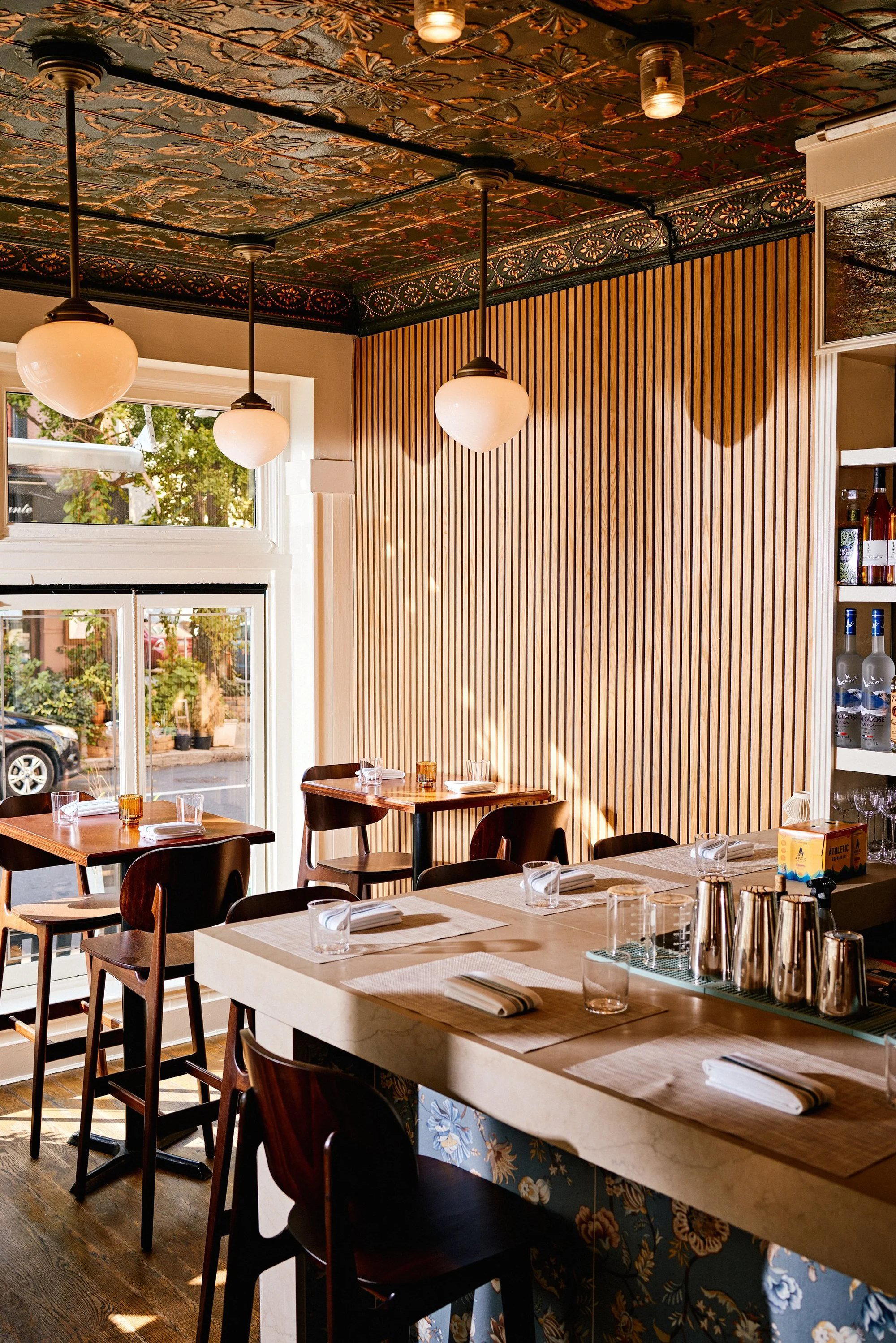
Little Water in Philadelphia presents contemporary coastal seafood led by James Beard–nominated Chef Randy Rucker. Must-try plates include the Seafood Gumbo with lobster, crab and Carolina Gold rice, Uni-Topped Scallops in yuzu kosho, and the Fried Oyster BLT. The restaurant pairs a tight, seasonal menu with a focused raw bar—oysters, shrimp cocktail and scallops—while a pressed tin ceiling, globe lights and well-worn wood floors create a warm, inviting atmosphere. Recognized by the Michelin Guide and praised across local press, Little Water offers chef-driven technique, regional sourcing and a seat-at-the-raw-bar experience for close-up service and theater-worthy plating.

Pearl is the En Primeur Club membership app, where members save venues, book tables and use the concierge.
The menu
What to order
- Swordfish Milanese
- Hash brown with peekytoe crab and uni
- Oyster BLT
- Whole fried black bass
- Mackerel with sweet potato ponzu
- Halibut with clams
Pressed Tin, Raw Bar, and the Case for Sourcing-First Seafood in Rittenhouse
Philadelphia's Rittenhouse Square corridor has long attracted restaurants that trade on neighborhood polish, but the more interesting kitchens in that zip code tend to make a quieter argument: that ingredient provenance, kept visible and uncluttered, does more work than technique alone. Little Water, at 261 S 20th Street, sits inside that tradition. The pressed tin ceiling, globe pendant lights, and well-worn wood flooring read as a room assembled with intention rather than styled for effect. It is the kind of interior that stops aging once it reaches a certain patina, and here it frames a seafood-focused menu that keeps its sourcing logic close to the surface.
Philadelphia's seafood dining scene is narrower than its New American peers might suggest. Across the city, restaurants from Fork to Friday Saturday Sunday handle fish well within broader menus, but few rooms are organized primarily around what arrives from the water. Little Water is. That specificity changes what the kitchen is measured against and, more practically, what ends up on the plate.
What the Raw Bar Signals About the Menu's Logic
The raw bar at the back of the room is the clearest statement of sourcing philosophy in the building. Oysters, shrimp cocktail, and scallops arrive with minimal intervention, which means the quality of each item is exposed rather than protected by sauce or preparation complexity. This is a particular kind of confidence. A raw bar that lacks provenance discipline fails in full view of the diner; one that sources carefully rewards the format.
The comparison point here is national. Counters like Le Bernardin in New York City operate on the principle that the product quality must justify absolute simplicity. Little Water operates at a different scale and price register, but the underlying logic is consistent: the raw bar is a commitment, not a starter section. The seat at the counter offers a direct sightline to chefs working the station, which turns what might be a passive dining experience into something more transparent. The sourcing argument is made visually as well as on the plate.
Carolina Gold Rice, Nori Caesar, and the Vocabulary of the Menu
Kitchen's ingredient sourcing is not limited to the raw bar format. The seafood gumbo, built with lobster and crab over Carolina Gold rice, draws on a specific regional grain identity. Carolina Gold has a documented recovery story in American food culture, reintroduced through preservation efforts in the South Carolina Lowcountry after near-extinction in the twentieth century. Its use here is not decorative. The rice carries a distinct flavor and texture profile that influences how the gumbo registers, and its presence signals awareness of the supply chain beyond what arrives from the ocean.
Caesar salad arrives with nori and toasted benne seeds, two ingredients that shift a familiar format toward coastal and Southern flavor references. Benne, the heirloom sesame of the Lowcountry, appears with increasing frequency in American restaurants that source thoughtfully from that region. Its appearance in a Caesar, alongside nori's oceanic depth, reflects a kitchen using pantry additions as sourcing signals rather than novelty garnishes. This is a more interesting move than it might first appear, and it connects the lighter sections of the menu to the same provenance logic that governs the raw bar.
Fried Oyster BLTs and the Heartier Tier
Menu's heartier section includes a fried oyster BLT and applewood-smoked steelhead trout. Both are dishes where sourcing decisions become particularly legible. A fried oyster BLT is a format that has migrated across American coastal restaurant menus over the past decade, but the version that works depends almost entirely on oyster quality. Steelhead trout, meanwhile, occupies an interesting position in American seafood: it is not as freighted with sustainability complexity as some salmon species, and its flavor profile is rich enough to carry a smoking treatment without becoming one-dimensional. Applewood smoke in particular runs warmer and fruitier than hickory, which keeps the trout readable as seafood rather than as barbecue.
For context on how American restaurants are currently handling smoke-forward seafood in ways that maintain delicacy rather than overwhelm it, the approach at Little Water sits within a broader national shift. What distinguishes the Philadelphia restaurants putting effort into this category is a willingness to treat smoke as a finishing note rather than a dominant one. Philadelphia's dining scene, which also includes destination-level cooking at spots like Mawn and ingredient-driven work at My Loup, has moved in recent years toward restraint in preparation and specificity in sourcing. Little Water fits that shift.
Where It Sits in Philadelphia's Dining Map
Rittenhouse Square is a walkable, well-established neighborhood for dinner, and Little Water's address on S 20th Street places it within easy reach of the square itself. The practical question for most diners is not how to get there but when. Operated by a husband-and-wife team with an evident preference for tight menus over sprawling ones, the room is not built for maximum throughput. The raw bar counter offers the leading engagement with the kitchen, and seating at the counter should be prioritized for anyone interested in the provenance-forward dimension of the menu.
Philadelphia supports a range of restaurants where ingredient sourcing is the editorial argument behind the menu. South Philly Barbacoa makes a similar case for Mexican cooking built around specific regional inputs. The throughline across these rooms is that the most interesting Philadelphia restaurants of the current moment are not competing on technique spectacle of the kind associated with Alinea in Chicago or The French Laundry in Napa. They are competing on honesty: about where the food comes from, how it is handled, and what format leading serves the product. Little Water makes that argument on a tight menu with a raw bar as its centerpiece.
For a complete picture of where Little Water sits relative to Philadelphia's wider dining options, see our full Philadelphia restaurants guide. The city's bar scene, hotel options, wineries, and experiences are each covered separately for those planning a longer visit.
Frequently asked questions
What is the signature dish at Little Water?
Do I need a reservation for Little Water?
What is the defining dish or idea at Little Water?
Can Little Water handle vegetarian requests?
What makes Little Water different from other seafood-focused restaurants in Philadelphia?
How It Stacks Up
Comparable venues nearby, for context on price, style, and recognition.
| Venue | Cuisine | Price | Awards | Notes |
|---|---|---|---|---|
| Little WaterThis venue (the venue you are viewing) | Modern Coastal Seafood | $100–150 | Michelin Plate · James Beard Award Semi Finalist | Not listed |
| Little Fish | Modern Asian-Influenced Seafood | $50–100 | James Beard Award Semi Finalist | Bella Vista |
| Seafood Unlimited | Fresh Seafood | $20–30 | Not listed | Rittenhouse Square |
| My Loup | Modern French Canadian Bistro | $100–150 | Michelin Plate · Wine Spectator Award of Excellence | Rittenhouse Square |
| Sampan | Pan-Asian Fusion Small Plates | $50–100 | Not listed | Washington Square West |
| Laurel | American | Not listed | Not listed | East Passyunk Crossing |
Recognition history
Dated appearances from independent guides and award organizations, with the underlying list record or original source where available.
Michelin Plate
Michelin
James Beard Award Semi Finalist
James Beard Award
Continue exploring
More in Philadelphia
Restaurants in Philadelphia
All restaurants in Philadelphia →
Bars in Philadelphia
All bars in Philadelphia →
Little Water
The wine
- Extensive wine list
- Craft cocktails
- Zero-proof drinks
Details
- Lively
- Elegant
- Romantic
- Modern
- Date Night
- Casual Hangout
- Special Occasion
- Open Kitchen
- Live Music
- Extensive Wine List
- Craft Cocktails
- Zero Proof
- Local Sourcing
- Sustainable Seafood
- A La Carte
- Counter Dining
- Craft Cocktails
- Wine
- Non Alcoholic Options
- Gluten Free Options
- Pescatarian Friendly
- Allergy Accommodating
Current opening hours
- Monday
- Closed
- Tuesday
- 5–10 p.m.
- Wednesday
- 5–10 p.m.
- Thursday
- 5–10 p.m.
- Friday
- 11 a.m.–2 p.m., 5–10 p.m.
- Saturday
- 11 a.m.–2 p.m., 5–10 p.m.
- Sunday
- 11 a.m.–4 p.m.
Hours can change for holidays and private events. Hours as of .
Bright, airy space with white walls, sea green subway tiles, pressed tin ceiling, and globe lights; filled with rootsy bluegrass and New Orleans brass band music; can become quite loud during peak hours.