Le Vertumne occupies a quiet address on Rue Sommeiller in Annecy, a city where serious French cooking sits against a backdrop of Alpine lakes and limestone peaks. The restaurant holds its place in a dining scene that has grown sharper and more ambitious over the past decade, drawing comparison with the region's most considered tables. Booking ahead is advisable, particularly through the summer and autumn seasons when Annecy's visitor numbers peak.
- Address
- 13 Rue Sommeiller, 74000 Annecy, France
- Phone
- +33450459296
- Website
- levertumne.fr
- Directions
- Get directions
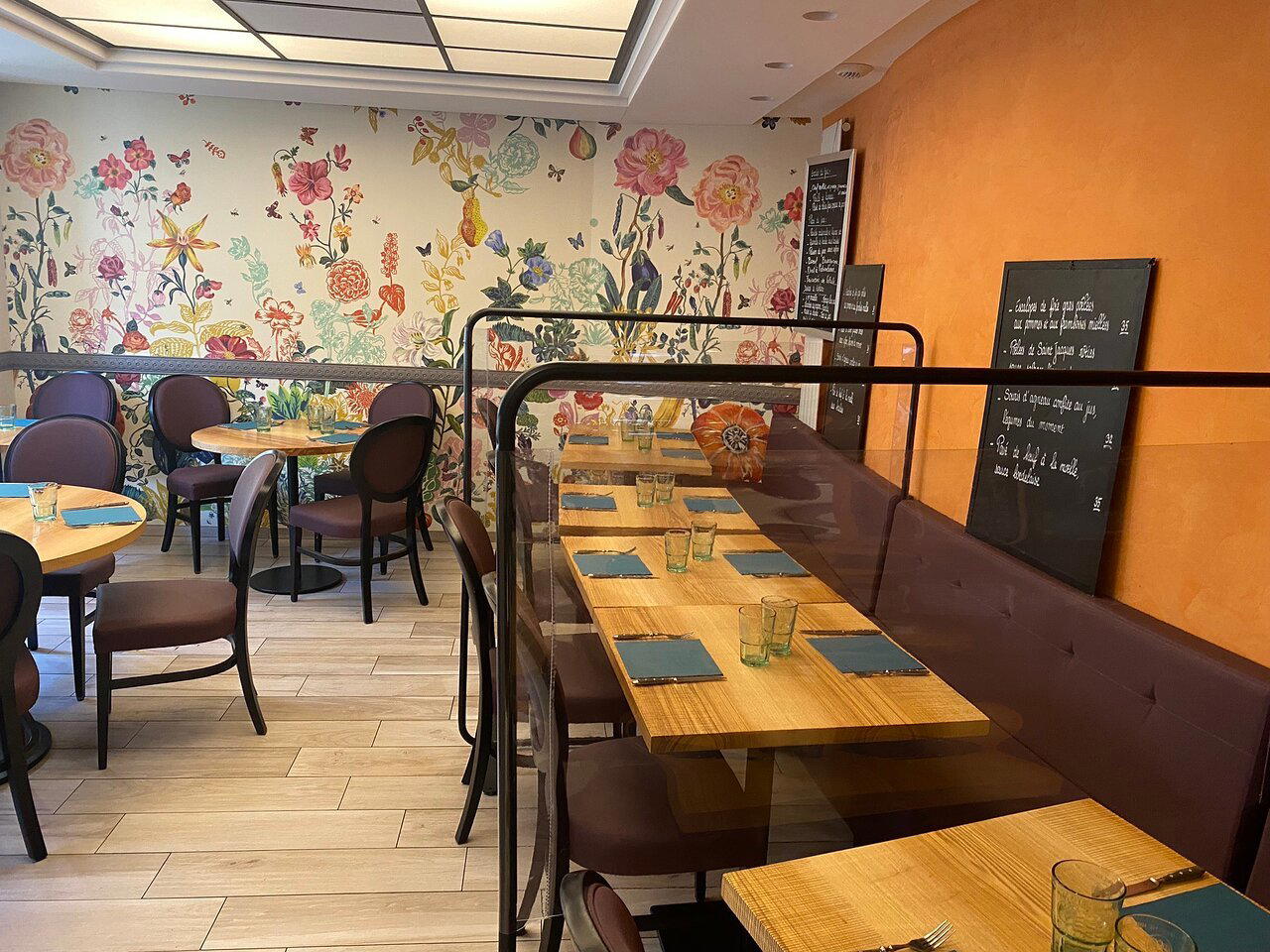
A Street, a Room, and the Weight of Alpine Expectation
Rue Sommeiller is not one of Annecy's postcard addresses. It sits back from the lake and the painted facades of the Vieille Ville, in a quieter residential register that the city's most self-aware restaurants have increasingly favoured. The logic is consistent across French provincial dining: the rooms that take their cooking seriously tend not to compete for window dressing. Le Vertumne, a French Regional Bistro in Annecy, follows that pattern. Arriving here, the attention falls on the plate rather than the view beyond the glass.
Annecy's position within French fine dining has shifted considerably over the past fifteen years. The city and its immediate Alpine surrounds now form one of the more concentrated clusters of serious cooking in provincial France, sitting in a triangle with Lyon to the west and the haute-montagne kitchens of the Savoie to the east. The broader region connects directly to institutions such as Flocons de Sel in Megève and, further afield, landmark houses like Troisgros in Ouches and Bras in Laguiole. Against that wider map, Annecy functions as a proving ground: kitchens here are measured against serious regional competition and visitors who have already eaten at the country's reference addresses.
How the Local Scene Frames Le Vertumne
Within Annecy itself, the restaurant tier has stratified in ways that mirror what has happened across French provincial cities since the mid-2010s. At the summit of the local register sit creative tasting-menu operations including Le Clos des Sens and Maison Benoît Vidal, both of which price and position against the broader French fine-dining circuit rather than just the local market. A step below sits a cohort of modern cuisine addresses, among them L'Esquisse and La Rotonde des Trésoms, which operate in the €€€€ bracket with format and seriousness to match. At a more accessible price point, ANTO represents the newer wave of modern bistro cooking that has found an audience in the city over the past few years.
Le Vertumne at Rue Sommeiller occupies its own position within this structure. In a city where the leading addresses compete for recognition on a national scale, a restaurant on a side street with limited public profile functions differently: it is the kind of address that circulates by word of mouth among people already invested in the local scene rather than arriving via travel supplements. Whether that positioning reflects ambition, restraint, or simply the pace at which provincial reputations accumulate is a question the room itself answers over time.
The Sensory Register of the Room
French provincial dining rooms of this type share certain atmospheric constants that predate any particular chef or owner. The lighting tends toward warm and low, calibrated for the dinner hour. The acoustic register is contained, with tables spaced to support conversation rather than performance. Surfaces that have accumulated a few seasons of use carry a particular quality of seriousness that newer rooms can take years to develop. These are not incidental details: they are the accumulated result of choices about what kind of attention a room should receive, and they communicate to the diner before the first plate arrives that the kitchen is not pitching for spectacle.
In the Alpine context, this sensory mode connects to a longer tradition. The Savoie and Haute-Savoie have produced kitchens since at least the postwar period that understood restraint as a form of confidence. The seasonal logic is visible in what the surrounding landscape offers: lake fish from Annecy and Léman, mountain dairy products that carry altitude and pasture character, fungi and foraged material through autumn, game through winter. These ingredients have shaped the region's cooking identity in ways that persist even as individual kitchens modernise their technique. Addresses such as Auberge de l'Ill in Illhaeusern and Paul Bocuse in Collonges-au-Mont-d'Or established the broader regional logic that kitchens in this part of France still move within, even when pushing against it.
Timing, Season, and the Practical Question of Access
Annecy receives a high volume of visitors in July and August, when the lake and the surrounding peaks draw a largely French and northern European crowd. The pressure on the city's better dining rooms during these months is significant: tables at the leading addresses book out weeks in advance, and the mid-tier fills faster than most visitors expect. The shoulder seasons, particularly late May through June and September through October, offer a more navigable version of the city, with produce at the precise moment when Alpine summer ingredients are giving way to autumn's depth of flavour. For a restaurant on a quieter street like Rue Sommeiller, the difference in atmosphere between August and October is considerable.
Anyone planning a broader itinerary around the region's serious dining might note that Annecy sits within reasonable reach of Lyon's extended restaurant circuit and the mountain kitchens of the Savoie, forming a logical sequence for visitors who also hold reservations at addresses like Mirazur in Menton or AM par Alexandre Mazzia in Marseille further south. The city is well connected by TGV to Paris, making it a practical addition to an itinerary anchored around Alléno Paris au Pavillon Ledoyen or comparable capital-tier cooking. International visitors arriving via transatlantic routes with serious restaurant priorities might also cross-reference with Le Bernardin in New York or Atomix to calibrate the register before departure.
Where Le Vertumne Sits in the Broader Conversation
The French regional fine-dining circuit has produced a particular category of address over the past two decades: rooms that do not seek the spotlight but maintain consistent standards for a local clientele that knows the difference between a kitchen in form and one that is coasting. Annecy has several of these, and the restaurant on Rue Sommeiller appears to belong to that type. It is not positioned against the creative tasting-menu format of Le Clos des Sens or the national visibility that addresses like Assiette Champenoise in Reims or Au Crocodile in Strasbourg have cultivated. It occupies a more reserved position, and that in itself is a form of editorial statement in a city where the competition for attention among serious diners is growing year on year.
Peers You’d Cross-Shop
Comparable venues nearby, for context on price, style, and recognition.
| Venue | Cuisine | Price | Notes |
|---|---|---|---|
| Le VertumneThis venue — the venue you are viewing | French Regional Bistro | $$$ | Not listed |
| Les Chineurs de la Cuisine | Modern French Bistronomique | $$$ | vieille ville |
| Les Parcellaires | French Wine Bar | $$$ | Pré Carré |
| Le Bistro du Rhône | Seasonal French Bistro | $$$ | Avenue du Rhône |
| Bistro Sauvage | Seasonal French Bistro | $$$ | Avenue des Îles |
| Bloomer | Modern French Neo-Bistro | $$ | Near Annecy Train Station |
Continue exploring
More in Annecy
Restaurants in Annecy
Browse all →
Bars in Annecy
Browse all →
Hotels in Annecy
Browse all →

At a Glance
- Cozy
- Intimate
- Classic
- Special Occasion
- Date Night
- Terrace
- Local Sourcing
Current opening hours
- Monday
- Closed
- Tuesday
- Closed
- Wednesday
- 12–1:30 PM, 7–8:30 PM
- Thursday
- 12–1:30 PM, 7–8:30 PM
- Friday
- 12–1:30 PM, 7–8:30 PM
- Saturday
- 12–1:30 PM, 7–8:30 PM
- Sunday
- Closed
Hours can change for holidays and private events. Last verified .
Warm, welcoming, and intimate atmosphere with a convivial terrace, described as feeling like dining with family in a lively yet cozy neo-retro bistro setting.