


On the seventh floor of Cheval Blanc Paris, Le Tout-Paris holds a Michelin star (2024) under the direction of Arnaud Donckele and chef William Béquin. The room, designed by Peter Marino in vivid colour, sits above the Seine with terrace views across to the Left Bank. The format is modern brasserie: classical structure, technically ambitious cooking, and a freedom to specify how your fish or meat arrives.
Pearl is the En Primeur Club membership app — saves, bookings, and concierge access live there. Same editors, same standards.
- Address
- 8 Quai du Louvre, 75001 Paris, France
- Phone
- +33 1 79 35 50 22
- Website
- letoutparis.fr
- Directions
- Get directions
 Saves & bookings on Pearl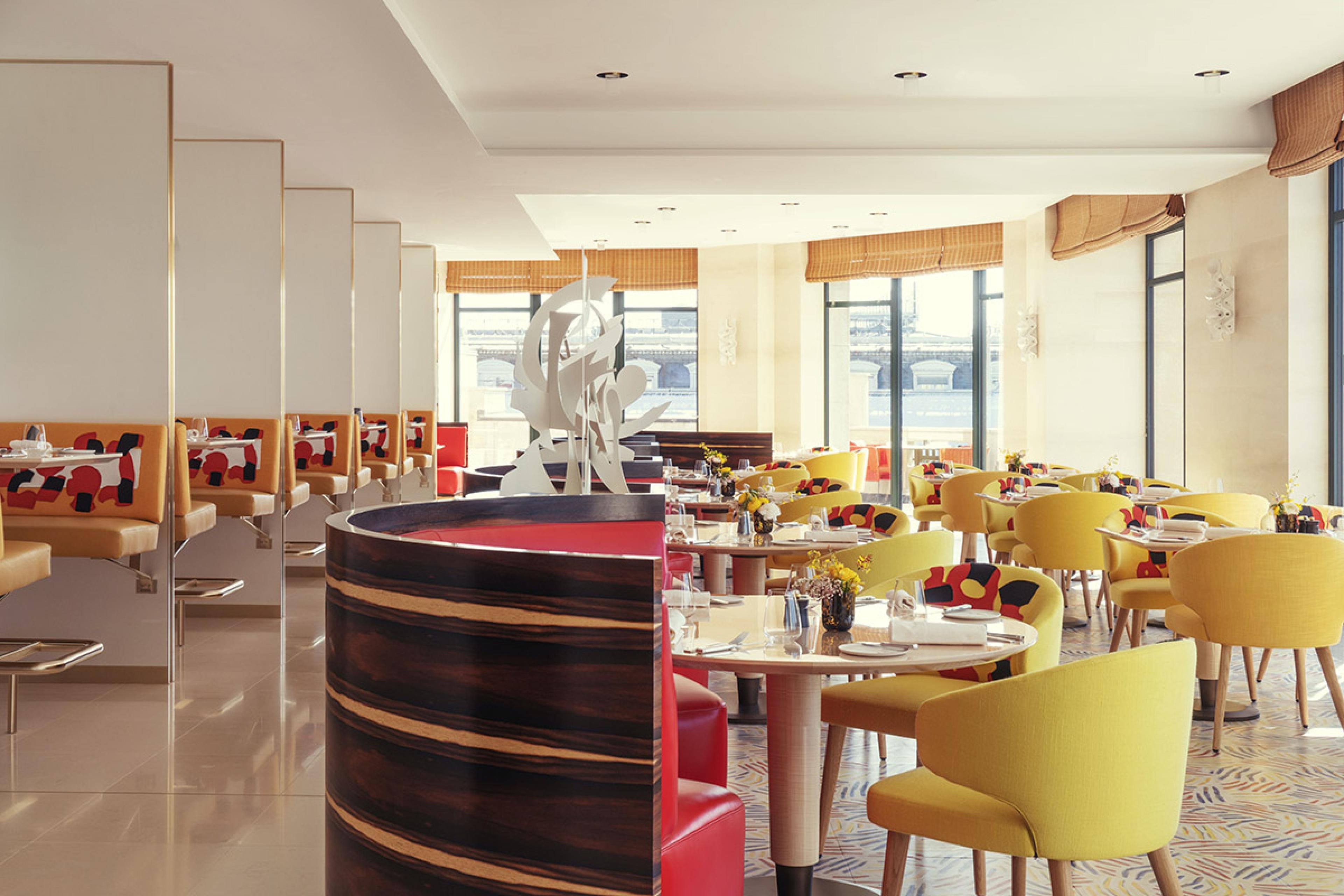
Where the Brasserie Format Gets a Technical Rethink
The Parisian brasserie has always been a democratic format. Choose your dish, specify your preparation, eat well without ceremony. What makes the seventh floor of Cheval Blanc an interesting address is not that it abandons that contract but that it pursues it with a level of technical precision more commonly found at the city's gastronomy tables. Le Tout-Paris, awarded a Michelin star in 2024, is a modern Parisian brasserie at 8 Quai du Louvre in Paris, with a price point of about $150 per person.
That tension between accessibility and craft defines where this address sits in Paris's current fine dining spread. At the summit tier, places like Amâlia and Accents Table Bourse are pushing creative boundaries with tasting-only formats. Somewhere below that, the brasserie remains one of France's most resilient formats, precisely because it gives diners agency. Le Tout-Paris attempts to occupy both positions simultaneously, and the Michelin committee's assessment suggests the attempt is working.
The Room, the View, and Peter Marino's Colour
The physical context matters here. Cheval Blanc Paris opened in 2021 inside the La Samaritaine building on Quai du Louvre, itself a significant piece of Paris's architectural history following a decade-long restoration. The hotel sits at the intersection of the first arrondissement and the river, with sight lines directly across the Seine toward Saint-Germain. On the seventh floor, Le Tout-Paris commands that vantage point directly.
The interior is the work of Peter Marino, whose commissions tend toward full visual commitment. Here, the palette runs to vivid, layered colour, a deliberate contrast to the neutral, pared-back aesthetics that dominated Parisian dining room design through the 2010s. The terrace, open when weather permits, frames a view of the Seine and the Left Bank that ranks among the more compelling outdoor dining positions in the city centre. The address sits at 8 Quai du Louvre, which places the terrace directly above the river's northern bank, with Pont Neuf visible to the west.
William Béquin and the Arnaud Donckele Framework
Understanding the cooking here requires understanding the kitchen's hierarchy. Arnaud Donckele oversees culinary direction across Cheval Blanc's properties, a portfolio that includes Plénitude on the ground floor of the same building, which holds three Michelin stars and operates in an entirely different register. Donckele's broader reach in French gastronomy is well documented: his name connects a lineage of kitchens that prioritise sauce work, product sourcing, and technical rigour.
Chef William Béquin operates within that framework at Le Tout-Paris, bringing his own trajectory to the brasserie format. Chef William Béquin operates within that framework at the restaurant, bringing his own trajectory to the brasserie format. The evidence is in how the menu is constructed: the traditional brasserie guarantee of diner choice sits alongside preparations that would be at home in a more formally structured tasting menu context. A tartlet of mushrooms with a vin jaune emulsion, or blue lobster with a coral-coloured béarnaise scented with bergamot, are not brasserie dishes in any conventional sense. They are technically demanding plates that happen to exist within a format that lets you order à la carte.
This is a trajectory that parallels what has happened at other hotel dining rooms in the French context. The-positioned hotel restaurants across France, from Flocons de Sel in Megève to the grandeur of Paul Bocuse - L'Auberge du Pont de Collonges, tend to succeed when a clear chef identity sits inside a well-defined hospitality proposition. At the restaurant, the proposition is the brasserie format; Béquin's role is to ensure that the cooking justifies a star without dismantling what makes a brasserie function.
How It Compares to the €€€€ Paris Tier
Paris's leading price bracket runs from classically structured gastronomy rooms to creative ateliers to hotel dining. The restaurant shares its price point with addresses like Anona, 114, Faubourg, and the three-Michelin-starred Amâlia, but the format diverges from all of them. Unlike Plénitude downstairs, which holds three stars and operates as a full gastronomic experience, the restaurant is positioned as the more approachable room in the Cheval Blanc offer, approachable being relative at this price level.
The comparison that clarifies this leading is against peers like Le Cinq at the Four Seasons George V, which also applies serious cooking to a hotel dining room in a format that remains accessible in structure if not in price. The direction Michelin has taken with hotel brasseries in recent years, recognising that a single star can belong to a room that allows à la carte ordering and diner autonomy, reflects a broader shift in how the guide reads format versus craft. The restaurant is a beneficiary of that shift.
Outside France, the parallel is clearest when looking at what Frantzén in Stockholm represents in its own city: a hotel-aligned, high-craft address that commands a premium position partly on the strength of the broader property and partly on what happens on the plate. The difference is format: Stockholm's northern precision versus Paris's brasserie tradition.
The Broader French Gastronomic Reference Points
The restaurant operates in a city where the density of Michelin-starred addresses is higher than almost anywhere else in France. The institutions that define French fine dining at the national level, places like Troisgros in Ouches, Bras in Laguiole, or Auberge de l'Ill in Illhaeusern, represent decades-long continuity of a culinary proposition. Mirazur in Menton and the Auberge de Montfleury illustrate how French fine dining is extending its regional range. Paris, by contrast, is where format experimentation is most visible, and the brasserie is as Parisian a vehicle as any.
What a young chef like Béquin inherits in a room like this is a format with enormous public trust and an audience that understands what brasserie means. The challenge is not to explain the format but to use it as a canvas without breaking it. The vin jaune emulsion and bergamot béarnaise suggest that the cooking is operating several registers above the format's historical baseline.
What to Know Before Visiting
Know Before You Go
- Address: 8 Quai du Louvre, 75001 Paris, France
- Location: Seventh floor of Cheval Blanc Paris, above the Seine in the first arrondissement
- Price range: €€€€
- Awards: Michelin 1 Star (2024)
- Cuisine: Modern brasserie with high-craft technique; à la carte with diner choice of cooking preparation for fish and meat
- Chef: William Béquin, under the culinary direction of Arnaud Donckele
- Interior design: Peter Marino 6 from 1,804 reviews
- Terrace: Available; direct views over the Seine and the Left Bank
- Booking: Reserve directly through Cheval Blanc Paris; the terrace position makes this a sought seasonal booking, particularly in spring and summer
What People Recommend at Le Tout-Paris
The cooking that draws greater attention at the restaurant sits at the intersection of the brasserie format's traditional freedoms and Béquin's technical range. The ability to specify how fish and meat is prepared, grilled, roasted in thyme, or steamed in seaweed, is genuine, not decorative, and reflects a kitchen confident enough to execute across multiple methods at the same service. The dishes that define Béquin's approach, including the mushroom tartlet with vin jaune emulsion and the blue lobster with bergamot-scented béarnaise, show the kitchen's technical range. The terrace, when available, is a major draw: the view across the Seine from the seventh floor is among the more compelling outdoor dining positions in central Paris.
- Sole Meunière
- Foie Gras Macaroni with Truffle and Artichoke
- Grilled Sea Bass
- Veal Chop for Two
- Strawberry Charlotte
- Mont-Blanc
Standing Among Peers
Comparable venues nearby, for context on price, style, and recognition.
| Venue | Cuisine | Price | Awards | Notes |
|---|---|---|---|---|
| Le Tout-ParisThis venue — the venue you are viewing | Modern Parisian Brasserie | $$$$ | Michelin 1 Star | Not listed |
| Automne | Modern French Fine Dining | $$$$ | Michelin 1 Star | 11th Arr. |
| Le Sergent Recruteur | Modern French Gastronomic | $$$$ | Michelin 1 Star | Île Saint-Louis |
| ES | Modern French with Japanese Sensibility | $$$$ | Michelin 1 Star | 7th arrondissement |
| Omar Dhiab | Modern French with Egyptian Influences | $$$$ | Michelin 1 Star | Sentier |
| Anne | Modern French Fine Dining | $$$$ | Michelin 1 Star | Le Marais |
Recognition history
Dated appearances from independent guides and award organizations, with the underlying list record or original source where available.
Falstaff Restaurant - 92 Falstaff Points
Falstaff
Michelin 1 Star
Michelin
Opinionated About Dining Casual in Europe Recommended
Opinionated About Dining
Michelin 1 Star
Michelin
Michelin 1 Star
Michelin
Continue exploring
More in Paris
Restaurants in Paris
Browse all →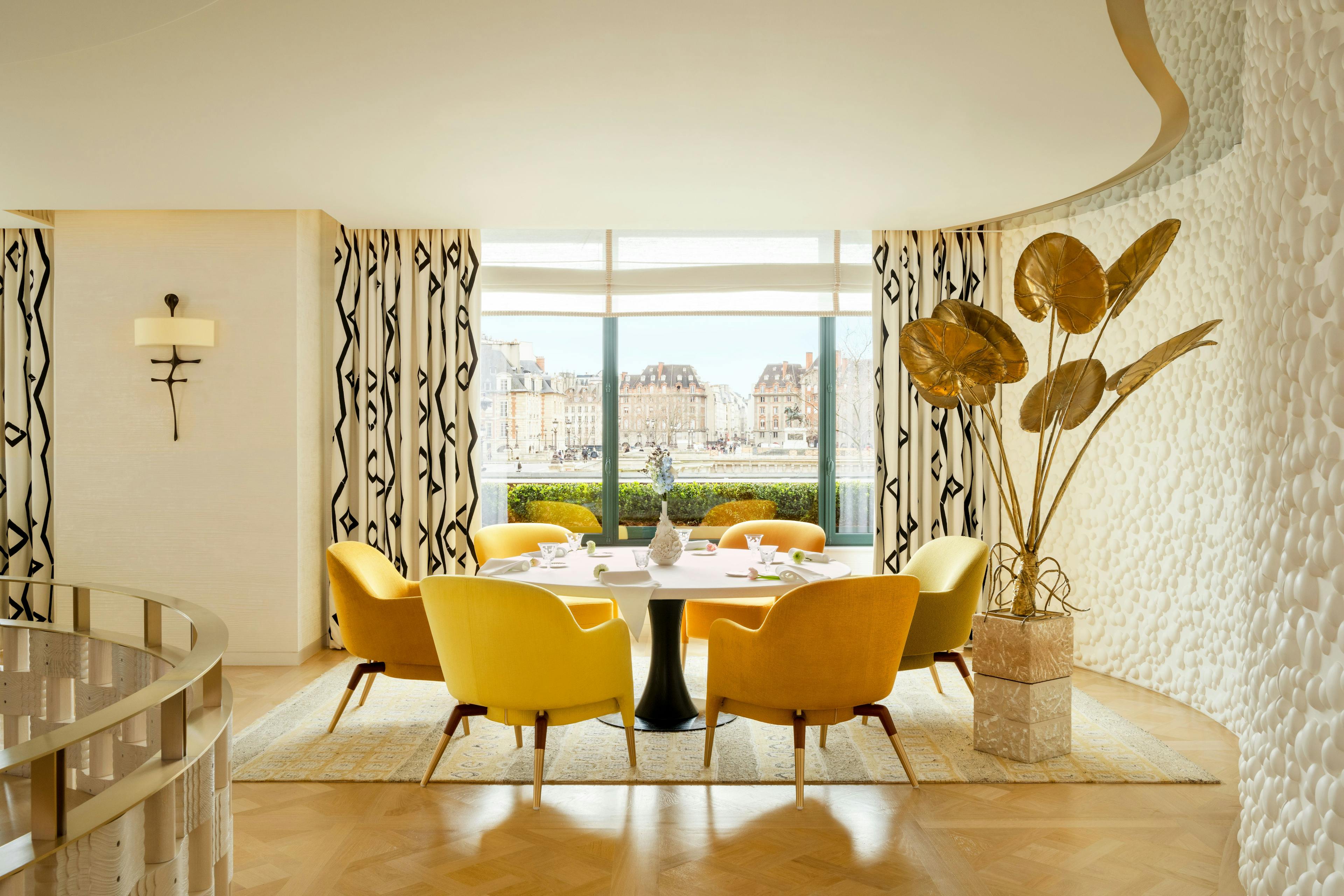
Bars in Paris
Browse all →
Hotels in Paris
Browse all →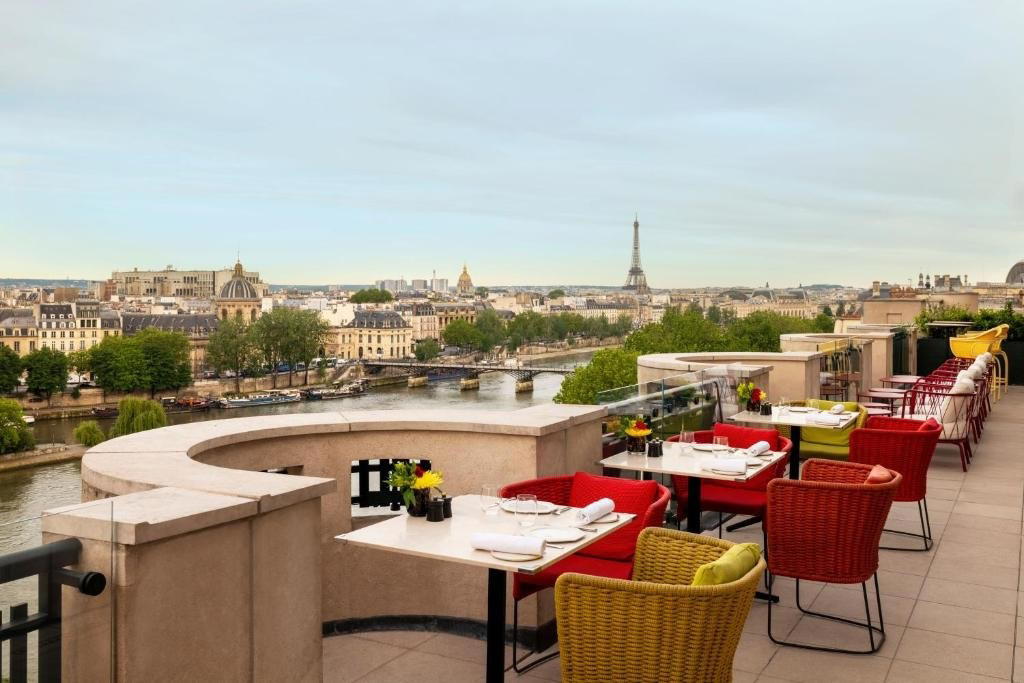

At a Glance
- Elegant
- Sophisticated
- Scenic
- Modern
- Lively
- Date Night
- Celebration
- Special Occasion
- Business Dinner
- Group Dining
- Rooftop
- Panoramic View
- Terrace
- Hotel Restaurant
- Design Destination
- Extensive Wine List
- Craft Cocktails
- Sommelier Led
- Local Sourcing
- Waterfront
- Skyline
Current opening hours
- Monday
- 7 AM–1 AM
- Tuesday
- 7 AM–1 AM
- Wednesday
- 7 AM–1 AM
- Thursday
- 7 AM–1 AM
- Friday
- 7 AM–1 AM
- Saturday
- 7 AM–1 AM
- Sunday
- 7 AM–1 AM
Hours can change for holidays and private events. Last verified .
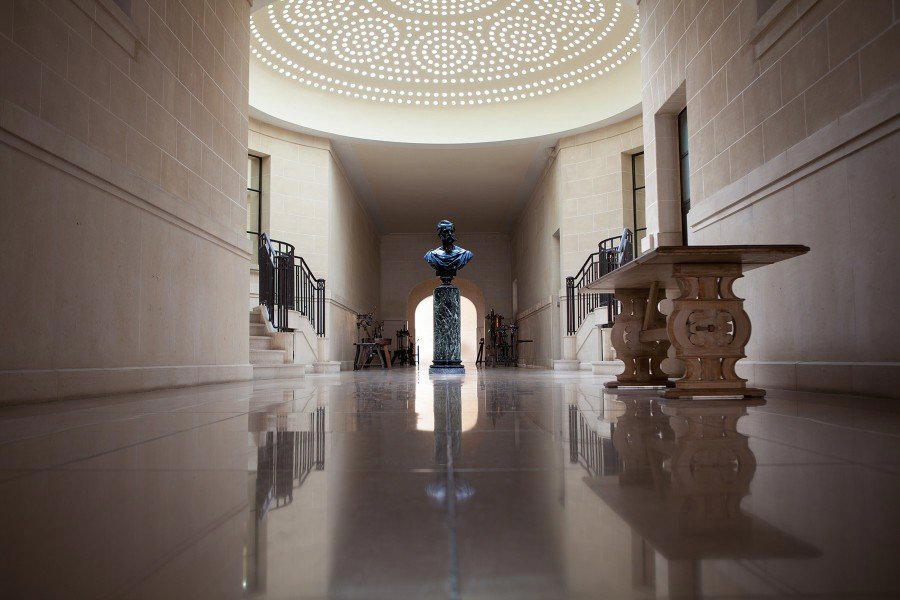
Bright, elegant, and sophisticated with colorful modern décor designed by Peter Marino; luminous dining rooms with floor-to-ceiling windows overlooking Paris; energetic yet refined atmosphere that balances fine dining with approachable brasserie warmth.