Le Manoir de Bellecombe
Our verdict
In the Tarentaise valley of the French Alps, Le Manoir de Bellecombe represents the kind of address that rewards visitors who seek table and terrain in equal measure. Grand Aigueblanche sits at the confluence of Alpine agricultural tradition and proximity to some of Savoie's most serious mountain country, placing this address within a regional dining context shaped by altitude, seasonality, and local produce.

Pearl is the En Primeur Club membership app — saves, bookings, and concierge access live there. Same editors, same standards.
- Address
- 25 Rte de Saint-Oyen, 73260 Grand-Aigueblanche, France
- Phone
- +33479014449
- Website
- lemanoirdebellecombe.com
- Directions
- Get directions
- Booking
- Book on Zenchef
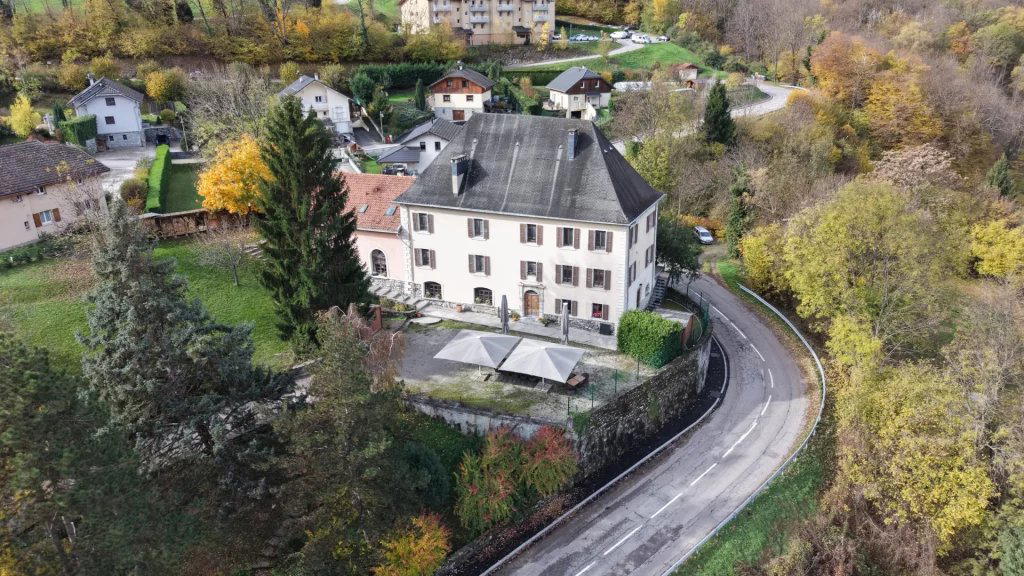
Where the Tarentaise Table Begins
The road into Grand Aigueblanche follows the Arc river through a valley that has supplied Alpine kitchens for centuries. At this altitude in the Savoie department, the relationship between land and plate is not a marketing position — it is a practical reality enforced by geography. Winters close off supply chains, summers produce an abundance of high-altitude herbs and dairy, and the seasons in between define what any serious kitchen here can and cannot do. Le Manoir de Bellecombe, at 25 Route de Saint-Oyen, sits inside that agricultural logic. The address places it in a village that most French dining travelers pass through on the way to the ski resorts of the Tarentaise — Courchevel, Méribel, Val Thorens, without stopping. That pattern of being overlooked is, in itself, an argument for stopping.
The Alpine Ingredient Tradition and Why It Matters Here
Savoie's kitchen vocabulary is built from a relatively small set of deeply local ingredients: reblochon, beaufort, tomme, diots, génépi, freshwater fish from Alpine lakes, and wild mushrooms gathered from forested slopes at elevations above 1,000 metres. The serious question for any restaurant in this department is how faithfully and intelligently it works within that vocabulary, and whether it adds anything to it. The Tarentaise valley, running northeast toward the Petit-Saint-Bernard pass into Italy, sits at an intersection of French Alpine and Franco-Italian pastoral traditions. Kitchens that pay attention to this geography tend to produce food that reads differently from the Savoie clichés you encounter at ski-resort brasseries, less gratinée, more considered, with the dairy and charcuterie handled as primary ingredients rather than background comfort.
This is the frame within which Le Manoir de Bellecombe operates. The manoir format itself, a stone country house functioning as a restaurant or inn, is a category with deep roots in provincial France. At its finest, it delivers a version of regional hospitality that larger resort-adjacent properties structurally cannot: proximity to local producers, a kitchen scale that permits genuine sourcing attention, and a physical setting that reflects the landscape rather than insulating guests from it. For comparisons in how that model functions at its most developed, Flocons de Sel in Megève and Bras in Laguiole both demonstrate what a regionally rooted kitchen looks like when it reaches the upper tier of French recognition, the former in mountain Haute-Savoie, the latter in Aubrac. Grand Aigueblanche operates at a different scale and register, but the editorial point holds: the most compelling French regional cooking tends to emerge from kitchens that treat the surrounding landscape as a sourcing document.
The Manoir Format in Regional Context
Across provincial France, the manoir or maison de maître format occupies a specific hospitality niche. These are properties that predate the contemporary boutique-hotel category, built originally as private residences and adapted over generations into places of hospitality. Their value is architectural and contextual, stone walls, proportioned rooms, gardens that connect the building to the land around it, rather than the designed amenity stacks of purpose-built hotels. In the Alps specifically, this format provides a counterpoint to the chalet-and-resort infrastructure that dominates the tourist economy. Travelers who find the resort machine alienating tend to seek out precisely this kind of address. L'Oustau de Baumanière in Les Baux and Auberge de l'Ill in Illhaeusern both demonstrate how the auberge and manoir format can anchor serious culinary programs in landscapes where the building and the plate reinforce each other. The Tarentaise equivalent operates more quietly, without the same level of national recognition, but the structural logic is the same.
For the French Alpine dining scene more broadly, the points of comparison worth holding in mind are the region's documented high-altitude producers: beaufort d'alpage, the summer-pasture version of the valley's most celebrated cheese, comes from herds grazed above 1,500 metres and carries a complexity the winter version does not. Kitchens in this valley that source with that level of specificity are working in a tradition with genuine depth. The same applies to the charcuterie culture, diots, longeoles, and the various smoked preparations of the Savoie, which in skilled hands provide a cold-weather larder with considerable range.
Planning a Visit to Grand Aigueblanche
Grand Aigueblanche sits approximately 70 kilometres southeast of Chambéry along the D915, and the nearest major rail hub is Moûtiers-Tarentaise, which connects to the TGV network via Chambéry. Travelers arriving for ski season will find the valley most accessible between December and April, though the summer months, July through early September, offer a different version of the landscape, with high pastures accessible and the valley operating at a quieter register than its resort neighbors. For those building a broader French Alpine or Savoie dining itinerary, Flocons de Sel in Megève sits roughly 60 kilometres to the north, providing a complementary point on the regional map. Our full Grand Aigueblanche restaurants guide covers the wider local dining context for anyone planning time in the Tarentaise.
Given the limited data currently available on Le Manoir de Bellecombe's specific pricing, hours, and booking arrangements, the practical recommendation is to approach the property directly through the address at 25 Route de Saint-Oyen, Grand-Aigueblanche, 73260. Properties in this format and this valley tier tend to operate seasonally, and confirming availability before travel, particularly in ski season and peak summer weeks, is the sensible approach.
Where Bellecombe Sits in the Wider French Dining Picture
The reference tier for French fine dining, addresses like Alléno Paris au Pavillon Ledoyen in Paris, Mirazur in Menton, or Troisgros - Le Bois sans Feuilles in Ouches, operates with documented recognition and international booking demand. Provincial addresses like Le Manoir de Bellecombe function differently: they hold a regional position that the national award apparatus has not necessarily processed, and they offer something the top-tier addresses have largely left behind, a sense of place that is not curated for outside consumption. Georges Blanc in Vonnas and Paul Bocuse - L'Auberge du Pont de Collonges in Collonges-au-Mont-d'Or represent what happens when a provincial French address accumulates enough recognition to become a destination in its own right. Most provincial manoirs operate well below that threshold and are better for it, they remain places where the primary audience is local and regional, and where the food reflects that.
For travelers who have worked through the established French dining canon and are looking for what operates beneath it, the Tarentaise valley and addresses like Le Manoir de Bellecombe represent a legitimate next layer of inquiry. The cooking tradition is real, the ingredient base is specific, and the landscape context is one of the more compelling in provincial France.
Frequently asked questions
Can I bring kids to Le Manoir de Bellecombe?
Le Manoir de Bellecombe sits within the manoir or maison de maître tradition, a format rooted in provincial French hospitality that typically runs at a more measured pace than casual brasseries. Families visiting Grand Aigueblanche should confirm directly with the property whether young children are accommodated, as the setting and service rhythm lean toward adult-focused dining. The venue's address is 25 Route de Saint-Oyen, Grand-Aigueblanche, 73260.
How would you describe the vibe at Le Manoir de Bellecombe?
The manoir format across provincial France occupies a specific register: quieter and more structured than a village bistro, but without the formality of a city grand restaurant. At Grand Aigueblanche, the Arc river valley setting and Tarentaise agricultural tradition shape the atmosphere as much as the architecture. Expect a pace calibrated to the unhurried rhythm of the Savoie countryside.
Is Le Manoir de Bellecombe a good base for exploring the Tarentaise Valley?
Situated at 25 Route de Saint-Oyen in Grand Aigueblanche, Le Manoir de Bellecombe sits directly along the D915 corridor that connects Chambéry to the high Alpine resorts of the Tarentaise. The nearest rail hub is Moûtiers-Tarentaise, placing major ski and mountain destinations within straightforward reach. For visitors who want proximity to the valley's mountain terrain while dining within a historically grounded Savoie property, the location is well-placed.
What part of town is Le Manoir de Bellecombe in?
Le Manoir de Bellecombe is located at 25 Rte de Saint-Oyen, 73260 Grand-Aigueblanche, France, Grand Aigueblanche.
How far ahead should I plan for Le Manoir de Bellecombe?
Grand Aigueblanche is roughly 70 kilometres southeast of Chambéry along the D915, with the nearest rail connection at Moûtiers-Tarentaise. The valley draws visitors during both ski season and summer, which tightens availability at smaller properties in the area. Booking several weeks in advance is prudent for peak Alpine periods; contacting the manoir directly at 25 Route de Saint-Oyen will clarify current lead times.
What's the signature at Le Manoir de Bellecombe?
The defining characteristic of Le Manoir de Bellecombe is its format: a maison de maître property in the Arc river valley of Grand Aigueblanche, positioned within a regional food tradition built around Savoie's most durable local ingredients. This is hospitality shaped by geography rather than trend, where the Tarentaise valley's altitude and agricultural heritage set the terms of the table.
How It Stacks Up
Comparable venues nearby, for context on price, style, and recognition.
| Venue | Cuisine | Price | Awards | Notes |
|---|---|---|---|---|
| Le Manoir de BellecombeThis venue — the venue you are viewing | Traditional French Bistro | $50–100 | Not listed | Not listed |
| La Ferme Saint-Amour | Contemporary French Fine Dining | Not listed | Not listed | Courchevel (Commune Non Irisée) |
| Alain Ducasse Baccarat | Avant-garde French fine dining in a crystal-clad Maison Baccarat setting | $150–200 | Not listed | 16th arrondissement |
| Le Coin Savoyard | Traditional Savoyard French | Not listed | Not listed | Courchevel (Commune Non Irisée) |
| L'Artisan | Modern French Gastropub | $50–100 | Not listed | Marquisats |
| Les Terrasses du Cottage | Modern French Gastronomic | $50–100 | Michelin Plate | Talloires-Montmin |
Continue exploring
More in Grand Aigueblanche
Restaurants in Grand Aigueblanche
Browse all →
Bars in Grand Aigueblanche
Browse all →
Hotels in Grand Aigueblanche
Browse all →
Wineries in Grand Aigueblanche
Browse all →
Le Manoir de Bellecombe
The wine
- Wine program
- Curated wine list
Details
- Romantic
- Elegant
- Rustic
- Cozy
- Scenic
- Date Night
- Family
- Celebration
- Special Occasion
- Terrace
- Garden
- Historic Building
- Local Sourcing
- Mountain
- Garden
- A La Carte
- Vegetarian Friendly
Warm and convivial atmosphere in an elegant, refined historic setting with a charming vaulted hall and sunny terrace.