Google: 4.7 · 774 reviews
Le Kaïku


A Michelin-starred address in what is said to be Saint-Jean-de-Luz's oldest building, Le Kaïku channels Basque terroir through a refined modern menu. Chef Nicolas Borombo, trained at the Hôtel Crillon and the George V in Paris, returns the region's ingredients to the plate with precision and originality. The Google rating of 4.7 across 740 reviews reflects a consistency that seasonal resort towns rarely sustain.
 Discover on Pearl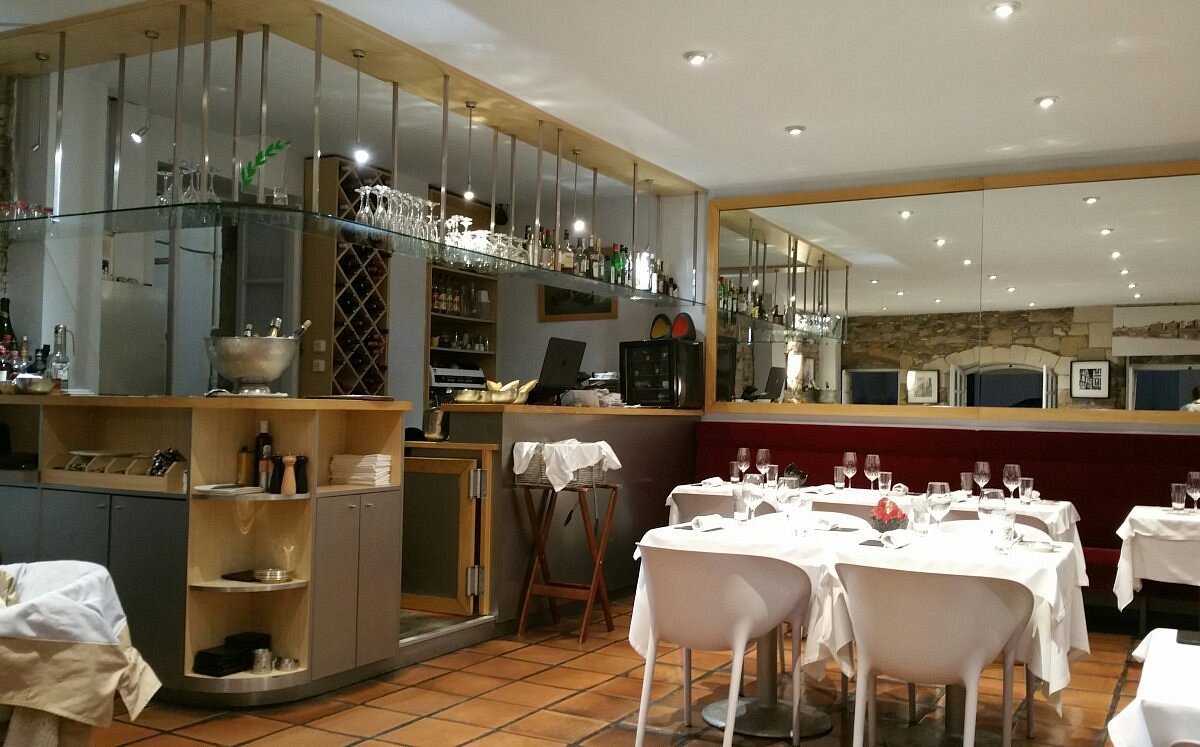
A Sixteenth-Century Shell, a Twenty-First-Century Menu
The building at 17 Rue de la République is said to be the oldest in Saint-Jean-de-Luz, a coastal town already weighted with history: Louis XIV married Maria-Thérèse of Austria here in 1660, and the Basque fishing port has worn that distinction with a certain civic seriousness ever since. Arriving at Le Kaïku, you pass through high stone walls and mullioned windows that belong to a different century entirely. The room inside is cosy and composed, the architecture doing the atmospheric work so the kitchen doesn't have to perform spectacle. What follows at the table is a study in restraint rather than theatre.
This tension between historic container and contemporary content is the defining quality of the space. Michelin awarded it one star in 2024 under the Remarkable designation, a recognition that places Le Kaïku within a specific tier of regional French dining: serious enough for destination consideration, anchored enough in local identity to resist the pull of generic fine-dining convention.
What the Menu Architecture Reveals
Modern Basque cooking at the higher end operates along a recognisable axis. On one side sits the maximalist tradition, where Basque produce is treated with elaboration and layering. On the other sits a more disciplined school, where the ingredient speaks and the technique recedes. Le Kaïku's Michelin profile language, citing cuisine that is «beautiful, original and refined» while making the most of regional ingredients, positions it clearly in the second camp.
That architecture has consequences. A menu built around regional Basque produce, from the Bay of Biscay's fish catch to the area's celebrated peppers, cured meats and aged cheeses, demands a different kind of kitchen discipline than a menu built around imported luxury ingredients. The cook must understand what the season is doing to local supply chains, not merely what the global market offers. When Michelin's notes reference «originality» alongside «refinement» in this context, the combination suggests a chef finding new angles on known materials rather than showcasing exotica.
Chef Nicolas Borombo is from Bayonne, immediately north along the coast, which places his relationship with Basque ingredients as biography rather than affectation. His formative time in Paris at the Hôtel Crillon under Dominique Bouchet and Jean-François Piège, and at the George V under Philippe Legendre, represents a classical Parisian formation at two addresses that sit comfortably alongside references like Alléno Paris au Pavillon Ledoyen in the French fine-dining canon. That formation informs what Le Kaïku is doing: Paris-grade technical precision applied to Atlantic Basque materials, in a sixteenth-century room, for a dining room that manages roughly two sittings a day across a tight service window.
Where Le Kaïku Sits in Saint-Jean-de-Luz's Dining Scene
Saint-Jean-de-Luz operates an interesting restaurant economy. It is a resort town with a strong year-round residential base, which means its better restaurants cannot rely solely on summer visitors to maintain standards. The Google score of 4.7 across 740 reviews is a meaningful data point here: sustaining that average over that volume of covers, in a town where seasonal influx regularly tests kitchen consistency, indicates something operating with genuine rigour.
The local modern-cuisine tier groups Le Kaïku with addresses like Aho Fina and Ilura, both working at the €€€ price point with contemporary cooking. Alongside those, the €€ bracket includes Erroa and Instincts, which offer modern approaches at a lower price ceiling, and L'Essentiel for those wanting the town's more accessible end. The Michelin star separates Le Kaïku from every other address in that group. In the wider French southwest, the comparison set narrows considerably: starred Basque-influenced cooking is more concentrated around San Sebastián across the Spanish border, making a Michelin-recognised address in the French resort town a genuine anomaly in the regional dining map.
For a broader picture of what the town offers across categories, our full Saint-Jean-de-Luz restaurants guide maps the scene from traditional pintxos bars to tasting-menu formats. The hotels guide, bars guide, wineries guide, and experiences guide round out planning for a longer stay.
The French Fine-Dining Reference Points
Borombo's Paris formation connects Le Kaïku to a specific generation of French cooking, one shaped by houses that were building Escoffier-rooted technique into something more personal and ingredient-led. The George V kitchens under Legendre and the Crillon under Piège and Bouchet represent the kind of apprenticeship that appears, in various forms, behind a significant number of the current generation of French regional starred tables. The pattern, Paris formation followed by a return to regional identity, is one of the more productive dynamics in contemporary French gastronomy, visible in addresses as different as Flocons de Sel in Megève, Bras in Laguiole, and, at the most recognised end, Mirazur in Menton. French gastronomy's historic backbone, represented by institutions like Troisgros in Ouches and Paul Bocuse in Collonges-au-Mont-d'Or, provides the longer arc within which this regional turn makes sense.
When chefs trained in that classical Parisian framework return to their home regions, the menu architecture they build tends toward a particular quality: deep familiarity with the ingredient combined with formal technical control. That combination, rather than either element alone, is what produces the originality Michelin attributes to Le Kaïku's cooking.
For comparison outside France, the turn toward contemporary cooking informed by rigorous classical training appears in starred addresses across Northern Europe as well, including Frantzén in Stockholm and its international extension FZN by Björn Frantzén in Dubai, where the same tension between deep classical formation and contemporary expression is the organising principle.
Planning a Visit
The service schedule at Le Kaïku runs Tuesday through Saturday, with lunch sittings from 12:30 to 1:30 PM and dinner from 7:30 to 9:30 PM. Monday operates dinner service only. The restaurant is closed on Sundays. The tight one-hour lunch window is a practical signal worth absorbing: this is not a venue for unhurried mid-afternoon lingering at the table. Dinner is the more comfortable format for those who want to move at a slower pace. The €€€ price positioning in a Michelin-starred context places it at the serious end of the local market, consistent with what a tasting or seasonal menu at this recognition level typically requires.
Given the combination of a small historic room, a single Michelin star, and a resort-town calendar that concentrates demand in summer months, advance booking is advisable from late spring through early autumn. The address, 17 Rue de la République, sits in the centre of Saint-Jean-de-Luz within walking distance of the port and the main square, making it easy to combine with the broader town before or after the meal.
Quick Comparison
A short peer set to help you calibrate price, style, and recognition.
Continue exploring
More in Saint-Jean-de-Luz
Restaurants in Saint-Jean-de-Luz
Browse all →
Bars in Saint-Jean-de-Luz
Browse all →
At a Glance
- Elegant
- Romantic
- Sophisticated
- Intimate
- Date Night
- Special Occasion
- Celebration
- Business Dinner
- Historic Building
- Open Kitchen
- Sommelier Led
- Local Sourcing
- Farm To Table
- Sustainable Seafood
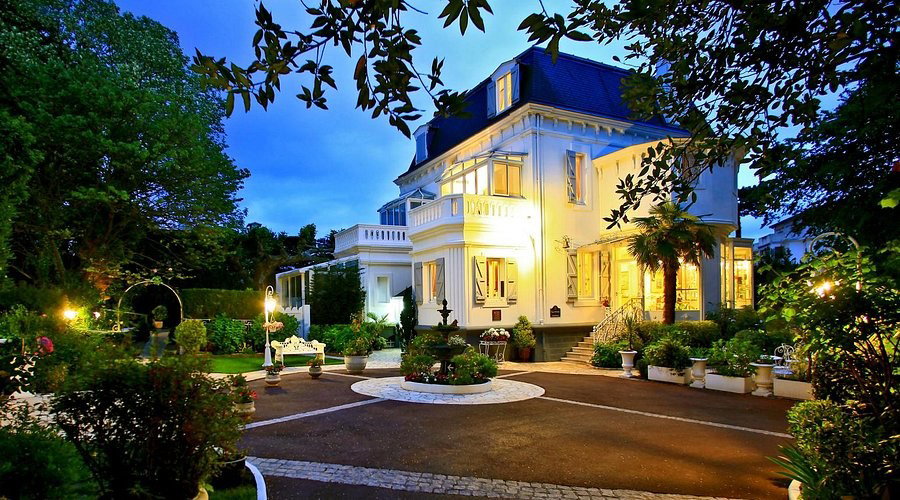
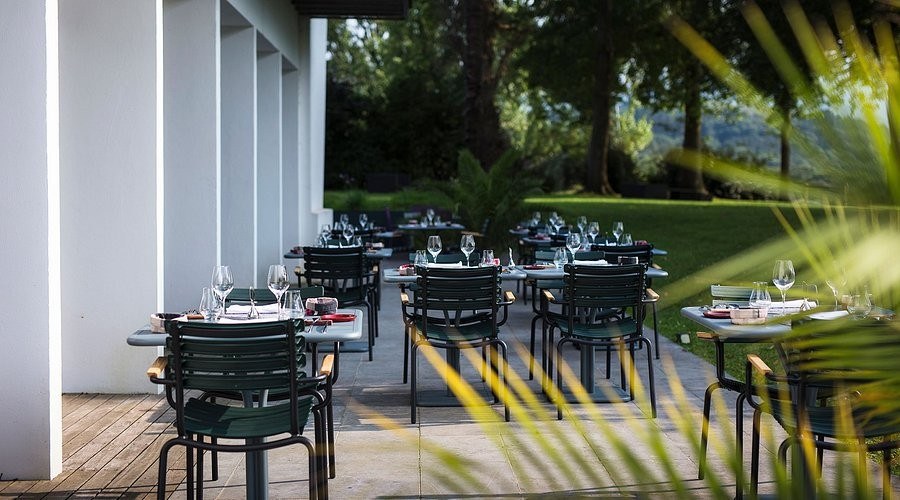
Sophisticated and warm with high walls, mullioned windows, and modern-yet-authentic décor creating an intimate, refined atmosphere in a historic setting.