
50 Top Pizza Italia #34
Our verdict
In the Cilento countryside outside Caggiano, Le Grotticelle is a family-run restaurant and pizzeria where the Rumolo family applies sourdough craft and self-produced ingredients to a menu rooted in the flavours of the Campanian interior. The stone structure, valley views, and the Zammedda pizza, a Cilento symbol of overcooked sauce and pecorino, make it a destination worth travelling for.

Pearl is the En Primeur Club membership app, where members save venues, book tables and use the concierge.
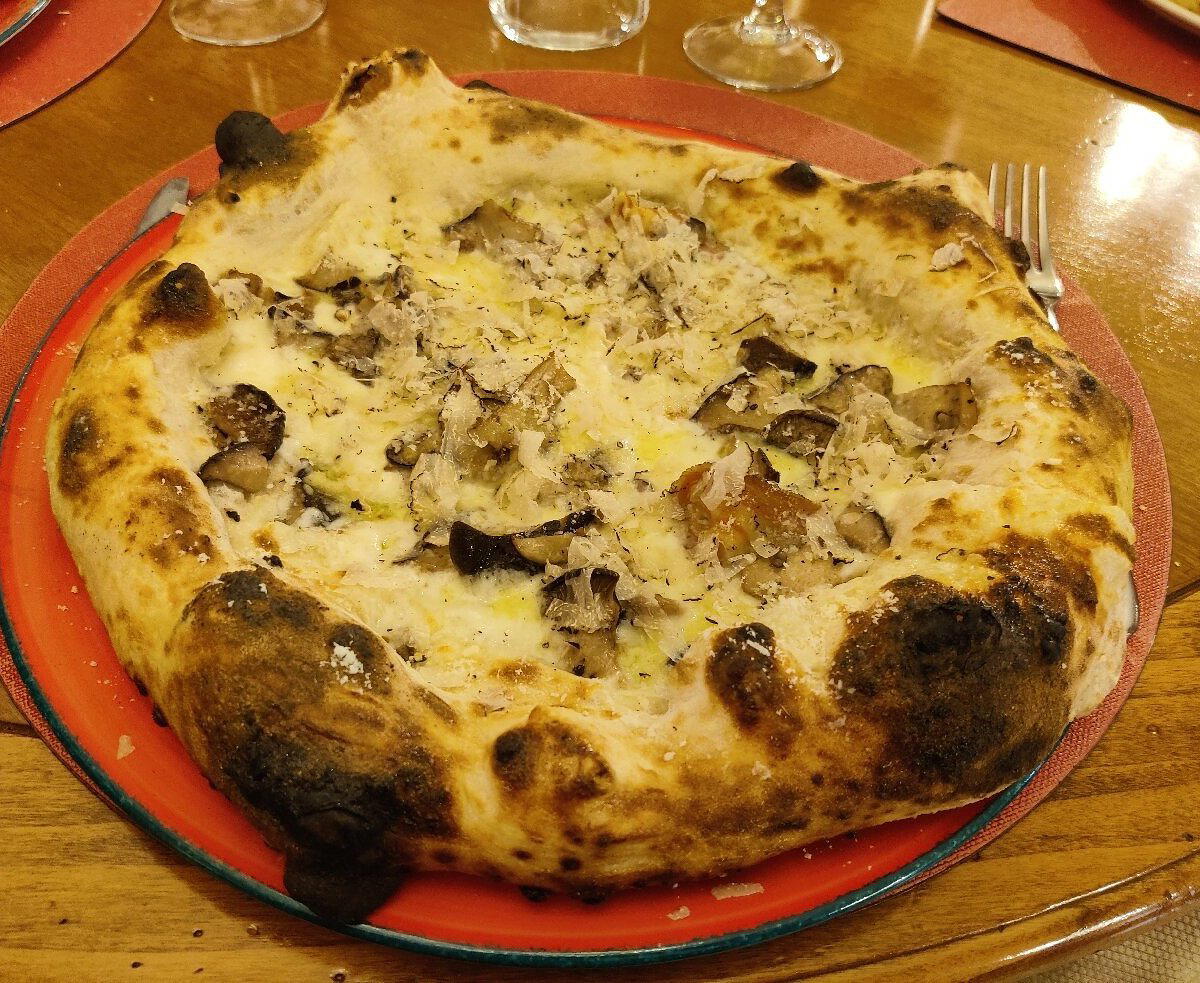
The menu
What to order
- Grotticelle pizza
- Caggianese pasticcio
- Lagane with chickpeas
Stone, Valley, and the Weight of the Countryside
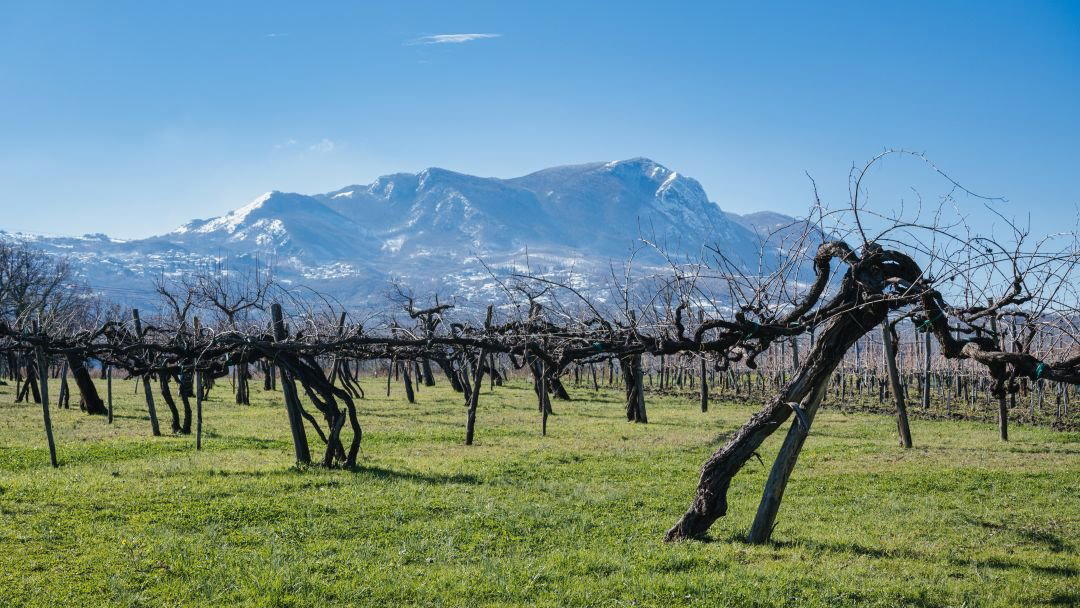
The approach to Le Grotticelle establishes the terms of the experience before you've eaten a bite. The restaurant sits in open countryside outside Caggiano, a hilltop comune in the Salerno province that most visitors to Campania bypass entirely in favour of the Amalfi coast or Naples. What they miss is a different register of the region: interior Cilento, where the food tradition is older, quieter, and less concerned with tourist validation. The stone structure at Località Le Grotticelle reads as part of the landscape rather than imposed on it, and the view across the valley frames the meal in a way that no urban dining room can replicate. For our full Caggiano restaurants guide, this setting keeps coming up as a reference point.
Cilento's Culinary Tradition and Where Le Grotticelle Sits Within It
Cilento is UNESCO-recognised as part of the Mediterranean diet's cultural homeland, not as a marketing designation but as a documented agricultural and culinary tradition centred on legumes, vegetables, preserved meats, aged sheep's milk cheeses, and wood-fired bread. The inland version of this tradition diverges sharply from coastal Campanian cooking. There is less seafood, more emphasis on cured pork, hard cheeses, and slow sauces, and a preference for fermented and sourdough-leavened breads and pizza bases that reflect both the availability of locally milled flours and a centuries-old relationship with controlled fermentation.
Family-run country restaurants in this part of the Salerno province occupy a specific position in the Italian dining map: they sit outside the fine-dining circuits tracked by major guides, but they often preserve techniques and ingredient relationships that starred restaurants in Milan or Modena reconstruct at considerable effort and expense. Places like Osteria Francescana in Modena or Enoteca Pinchiorri in Florence represent the apex of Italy's fine-dining ambition; Le Grotticelle operates in a different conversation entirely, one where the authority comes from unbroken continuity with a specific place rather than from innovation or international acclaim.
Sourdough as a Guiding Principle
Across Italy's serious pizza culture, from Naples to the increasingly competitive inland scenes, the divide between mediocre and considered pizza often comes down to the dough. The leading makers treat fermentation not as a technicality but as the foundation on which every other ingredient either works or fails. Long cold fermentation allows extensibility without tearing, produces a lighter cornicione, and delivers a depth of flavour in the crust itself that fast-rise commercial-yeast doughs cannot match.
At Le Grotticelle, the Rumolo family's commitment to sourdough and high-quality raw materials is not positioned as a trend-chasing gesture. In a region where these practices predate the current revival of interest in natural leavening by several generations, it reads more accurately as an unbroken habit. The dough here is described as balanced even for traditional tastes that lean particular, a significant credential in a region where pizza opinion runs strong and locals calibrate quickly against memory and precedent.
The Zammedda and What It Tells You About the Region
The pizza that draws the most attention at Le Grotticelle is the Zammedda, described as a symbol of Cilento. Its defining characteristics, overcooked tomato sauce and pecorino cheese, illustrate something important about the regional ingredient hierarchy. Where Neapolitan pizza orthodoxy demands san marzano tomatoes barely touched by heat, the Cilento interior tradition applies longer cooking to the sauce, concentrating it into something denser and more savoury. Paired with pecorino rather than fior di latte or buffalo mozzarella, the result is a distinctly terrestrial pizza: less bright acidity, more umami depth, more evidently from the mountains than from the coast.
This is the kind of dish that functions as a regional document as much as a menu item. For visitors trying to understand what distinguishes Cilento's food culture from the better-publicised Campanian traditions to its north, the Zammedda is a more instructive ten minutes than any amount of reading.
Beyond Pizza: Fried Dishes and Traditional Preparations
The wider menu extends the same logic: fried dishes that reference local customs, traditional preparations described as succulent, and an overall approach that uses the full range of Cilento's pantry rather than narrowing to a single crowd-pleasing format. The recognition that the restaurant functions well as a destination for pizza alone, but rewards those who stay for the broader menu, suggests a kitchen with range across categories rather than a single signature strength.
The stone setting also makes the space suitable for celebrations, which positions Le Grotticelle differently from a simple trattoria. It operates across registers, family lunch, celebratory dinner, standalone pizza visit, without the identity confusion that sometimes affects restaurants trying to cover too much ground. That coherence is a structural advantage of cooking from a specific place and tradition rather than from a composite concept.
Angelo Rumolo and the Family Kitchen
Chef Angelo Rumolo leads the kitchen within a family operation that owns and manages the restaurant and its surrounding land. The self-produced ingredient dimension of the offering is worth taking seriously: in Cilento's agricultural tradition, the proximity between what is grown and what arrives on the table is not a marketing point but an operational reality for smallholding families who have always cooked from what they produce. This is a different credential from the chef-trained-under-a-master lineage that structures the bios of figures like those behind Atelier Moessmer Norbert Niederkofler in Brunico or Dal Pescatore in Runate, but it represents a form of authority that is harder to replicate than any apprenticeship: ownership of the full chain from soil to plate.
Italy's most discussed restaurants, the Le Calandre in Rubano, Piazza Duomo in Alba, or Reale in Castel di Sangro tier, attract disproportionate attention partly because they're structured for critical evaluation. Le Grotticelle is not structured for that audience, and doesn't need to be.
Planning a Visit
Le Grotticelle is located at Località Le Grotticelle, 84030 Caggiano SA. Caggiano itself sits in the mountainous interior of the Salerno province, roughly accessible from Salerno to the west and from the A2 motorway corridor. The setting is rural and the drive into the Caggiano countryside is part of the transition into the meal's register, arriving by car is the practical default. The space handles celebrations and larger groups as well as smaller visits, and the service tone throughout is warm and familiar rather than formal. For those building an itinerary around southern Italy's less-trafficked interior, the area also has hotel options in Caggiano, bar recommendations in Caggiano, and experiences in and around Caggiano worth combining with a visit. For wine context in the region, our Caggiano wineries guide covers the local production.
The restaurant is also a useful counterpoint for travellers who have built an itinerary around Italy's high-end dining rooms. After a meal at Quattro Passi in Marina del Cantone or Uliassi in Senigallia, Le Grotticelle offers a different kind of instruction: not technique at its limit, but tradition at its source. The two experiences are not competing claims about what Italian food is. They're different chapters of the same long argument.
Frequently asked questions
Would Le Grotticelle be comfortable with kids?
The family-run format at Le Grotticelle, a Rumolo family operation in the Caggiano countryside, lends itself well to visits with children. A stone structure used for celebrations, a menu centred on pizza and familiar traditional preparations, and a service style described as warm and familiar in tone all suggest a relaxed setting rather than a formal one.
What should I expect atmosphere-wise at Le Grotticelle?
The restaurant occupies a stone building in open countryside outside Caggiano, with views across the valley that frame the meal from the moment you arrive. Service carries a familiar, family tone, this is a working country restaurant, not a designed dining room, and the atmosphere reflects that grounded character. It also functions as an event and celebration venue, so the space is substantial.
What awards or recognition does Le Grotticelle have?
Le Grotticelle has received recognition including: Le Grotticelle is the Rumolo family's country restaurant and pizzeria, located in the Caggiano countryside. It offers a superb view of the valley and a culinary experience focused on traditional, local, and self-produced ingredients, includ….
What do people recommend at Le Grotticelle?
The Zammedda draws consistent attention: a pizza described as a symbol of Cilento, built on overcooked tomato sauce and pecorino cheese. Beyond that, the fried dishes rooted in local custom and the broader traditional preparations are noted for flavour and authenticity. The sourdough base, made with self-produced ingredients, is the through-line across the pizza menu.
A Quick Peer Check
| Venue | Cuisine | Price | Awards | Notes |
|---|---|---|---|---|
| Le GrotticelleThis venue (the venue you are viewing) | Neapolitan Pizza with Local Cilento Products | Not listed | 50 Top Pizza Italia #34 | Not listed |
| Atelier Moessmer Norbert Niederkofler | Modern Alpine Fine Dining | $300–500 | 3 Michelin Stars · World's 50 Best #20 | Italian, Creative |
| Dal Pescatore | Classic Italian Fine Dining | $200–300 | 3 Michelin Stars · World's 50 Best #38 | Italian, Italian Contemporary |
| Enoteca Pinchiorri | Contemporary Italian Fine Dining | $200–300 | 3 Michelin Stars · World's 50 Best #32 | Italian - French, Italian Contemporary |
| Enrico Bartolini | Modern Italian Fine Dining | $300–500 | 3 Michelin Stars · World's 50 Best #85 | Creative |
| Osteria Francescana | Avant-Garde Italian Contemporary | $300–500 | 3 Michelin Stars · World's 50 Best #1 | Progressive Italian, Creative |
Recognition history
Dated appearances from independent guides and award organizations, with the underlying list record or original source where available.
50 Top Pizza Italia #34
50 Top Pizza
Full recognition history (3 entries)
50 Top Pizza World Best Pizza #37
50 Top Pizza
50 Top Pizza Italy #15
50 Top Pizza
Continue exploring
More in Caggiano
Restaurants in Caggiano
All restaurants in Caggiano →

Details
- Rustic
- Cozy
- Scenic
- Family
- Casual Hangout
- Terrace
- Historic Building
- Extensive Wine List
- Local Sourcing
- Mountain
- A La Carte
Current opening hours
- Monday
- 7:30–11:30 PM
- Tuesday
- Closed
- Wednesday
- 7:30–11:30 PM
- Thursday
- 7:30–11:30 PM
- Friday
- 7:30–11:30 PM
- Saturday
- 7–11:30 PM
- Sunday
- 12–5 PM, 7:30–11 PM
Hours can change for holidays and private events. Hours as of .
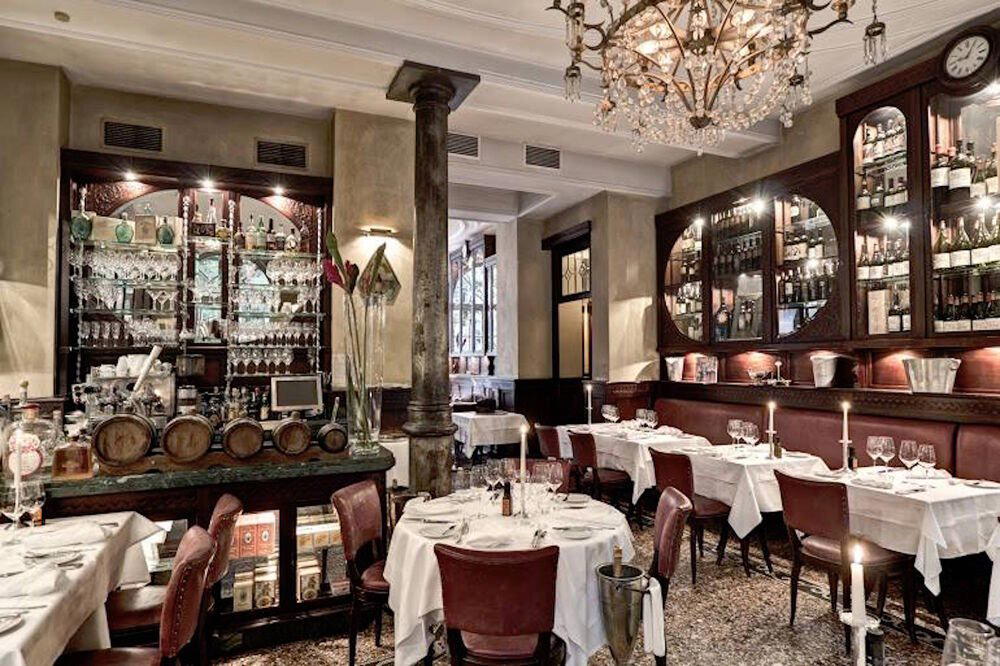
Warm stone-vaulted dining rooms with a cozy, fresh atmosphere and terrace offering spectacular mountain views.