
A rooftop lunch address in Essaouira where the city’s coastal identity does the heavy lifting: Atlantic light, Medina rooflines, Mogador Island in view, and a seafood-led menu shaped around regional produce. Chef Ahmed Handour’s name gives the kitchen a local anchor, but the real story is the midday grammar of the port city: lighter cooking, open air, and terroir read through the coast.
Pearl is the En Primeur Club membership app — saves, bookings, and concierge access live there. Same editors, same standards.
- Address
- 2, rue Ibn Batouta
- Phone
- +212524783434
- Website
- menumodo.com
- Directions
- Get directions
 Saves & bookings on Pearl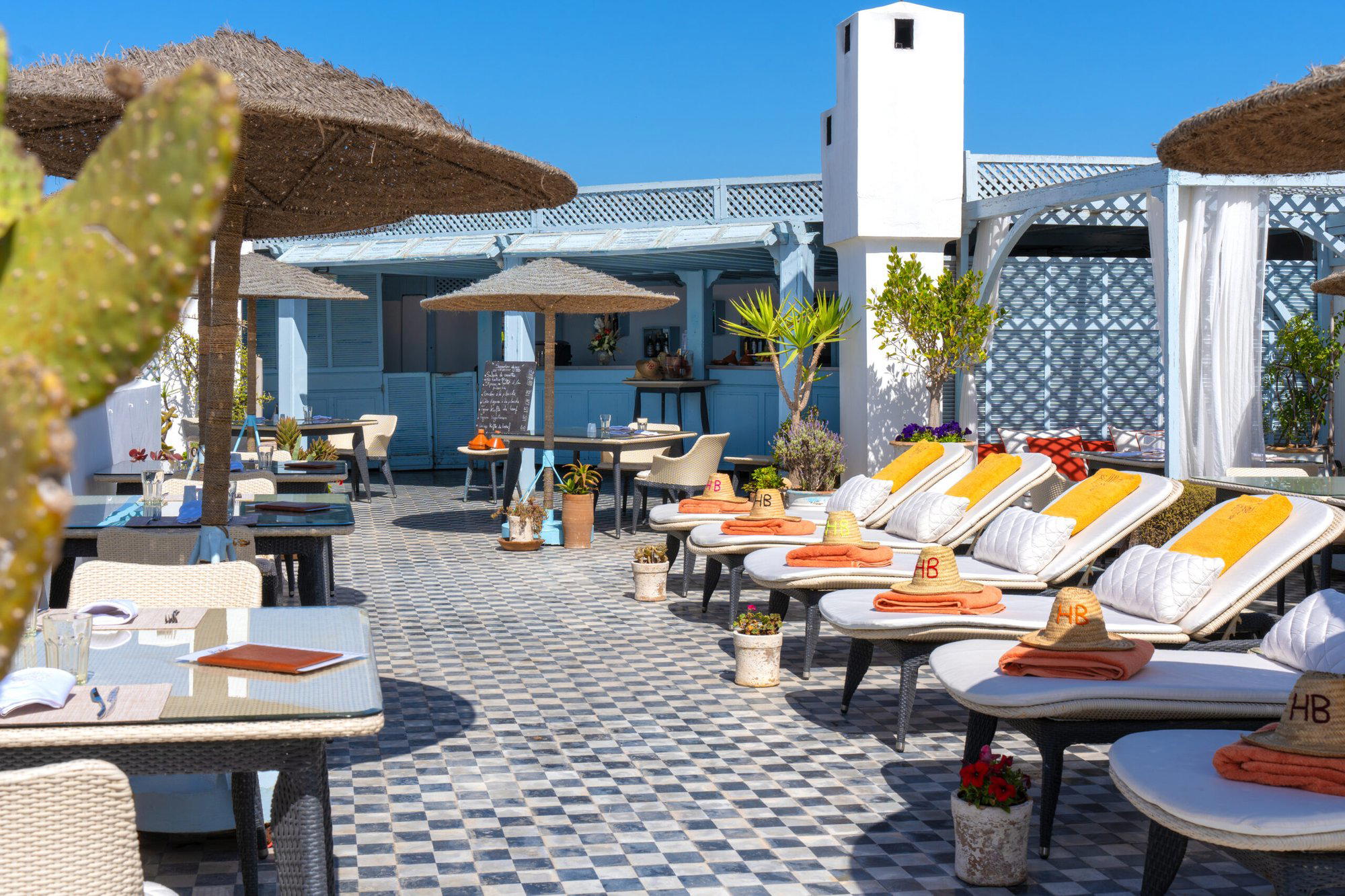
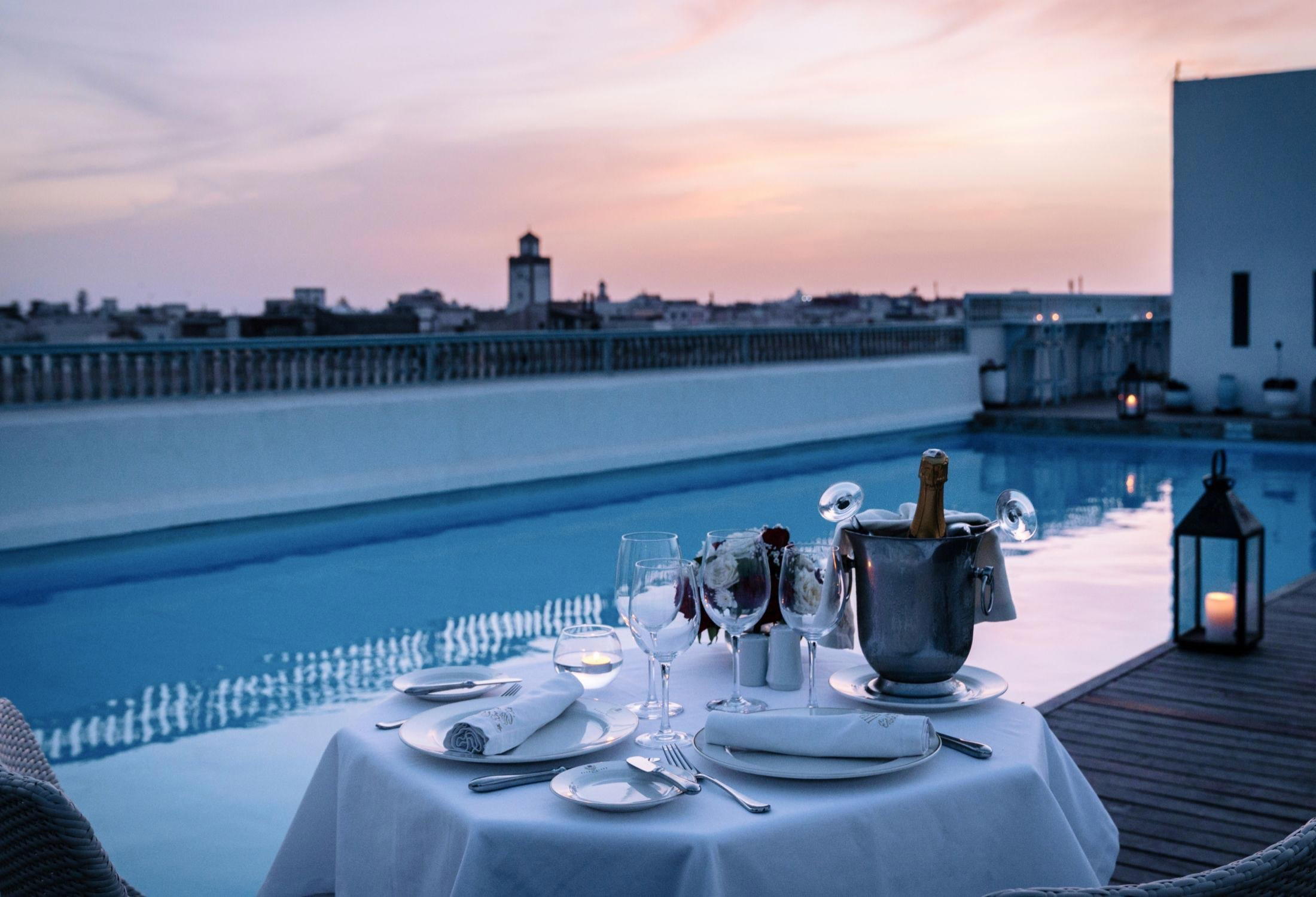
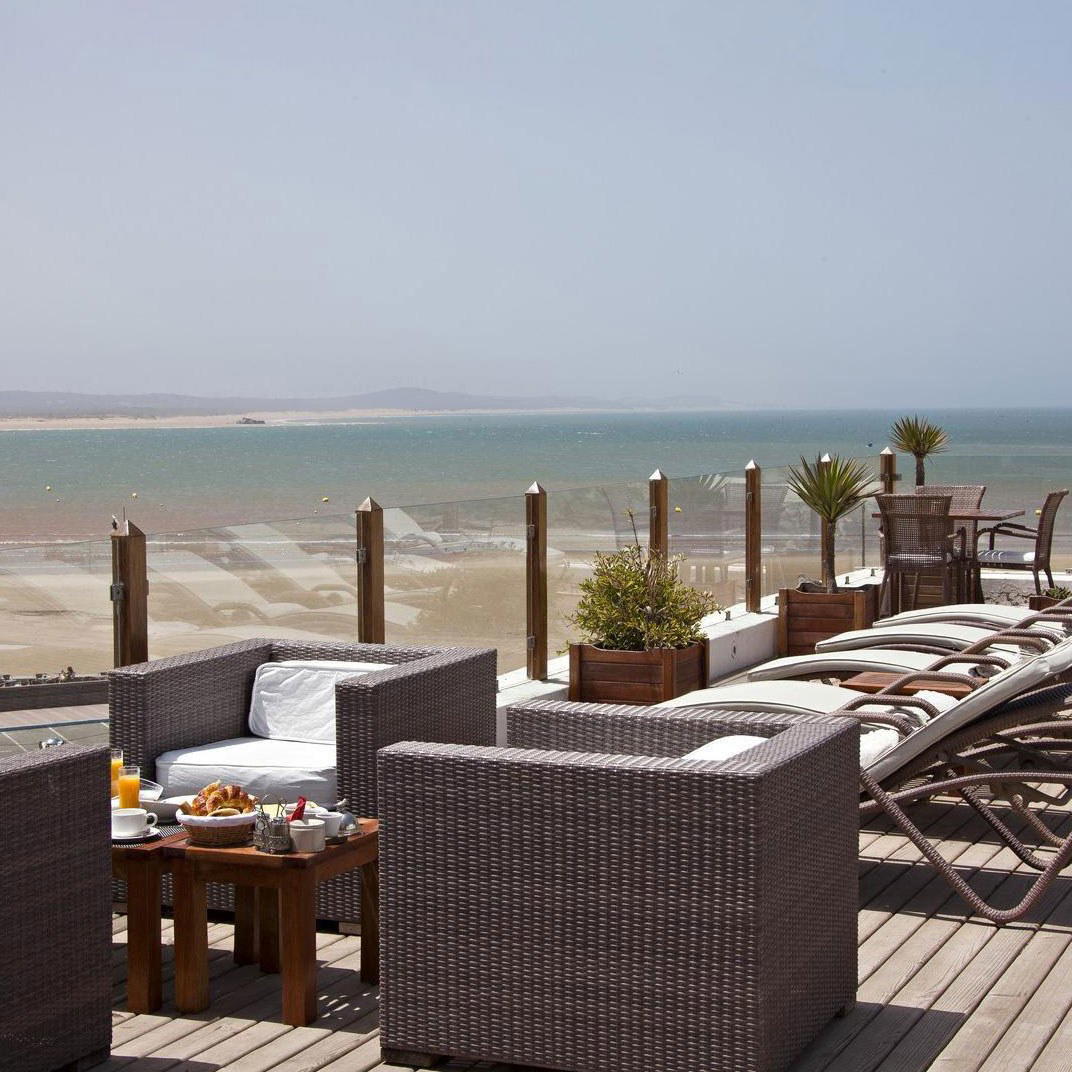
From the top floor, Essaouira reads in layers: whitewashed Medina walls, Atlantic glare, the offshore shape of Mogador Island, and the slow midday rhythm of a port city built around wind, fish, and trade. Le Grill de La Terrasse uses that altitude plainly. The restaurant sits between the pool and deckchairs, which puts lunch in open air rather than behind the heavier ceremony of a formal dining room.
That matters in Essaouira. The city’s better coastal cooking is not about excess; it is about knowing when to keep the plate light enough for sun, salt air, and a long afternoon. The menu is described as inventive and light, dedicated to seafood and regional products, which places it in a familiar Moroccan Atlantic register without forcing the meal into a rigid tasting format. The advertised “Chic & Gourmand Lunch” points to a midday set-piece built around seasonal products rather than an evening performance.
Seafood, regional produce, and the rooftop lunch grammar of Essaouira
Essaouira’s dining culture has always had a different tempo from Marrakech or Fès. The city is smaller, saltier, and more exposed to the weather; the kitchen logic follows. Lunch tends to suit the place better than late, heavy dining, especially when seafood and produce are the main cues. At Le Grill de La Terrasse, the open-air format reinforces that coastal pattern: the appeal is not a closed room with elaborate staging, but a meal framed by the Old Medina, the Atlantic Ocean, and Mogador Island.
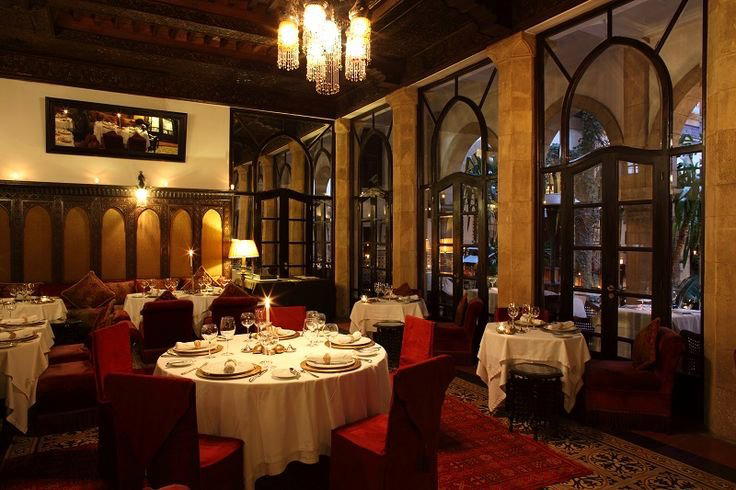
The kitchen’s stated language, “expression of the terroir,” is useful here because Essaouira’s terroir is not only agricultural. It includes the Atlantic catch, argan-country hinterland, market vegetables, citrus, herbs, and the Moroccan habit of letting spice support rather than bury the main ingredient. A seafood-led lunch in this setting belongs to that broader regional grammar. It is a different proposition from the city’s more riad-like Moroccan dining rooms, where the mood often turns inward toward salons, courtyards, and candlelit evening service.
For travellers mapping the city’s dining range, Heure Bleue Palais (Moroccan Coastal) and Le Salon Oriental (Moroccan Fusion) sit closer to the polished hotel-dining side of Essaouira, while Salut Maroc Rooftop Restaurant shows how much the city values a high view with lunch or dinner. Outside the Medina mood, Restaurant du Jardin des Douars, Table des Douars, and the broader Essaouira restaurants guide help show the split between coastal immediacy and garden-retreat dining.
Ahmed Handour's kitchen, read through coastal restraint
Chef Ahmed Handour gives the restaurant a named culinary lead, but the more interesting point is how the kitchen fits Essaouira rather than how it performs biography. In a city where seafood can easily become either grill-house simplicity or hotel-menu generalism, the stronger move is a narrow one: keep the cooking light, use regional products, and let the rooftop setting dictate the meal’s pace. That is a practical culinary stance, especially at midday.
The phrase “seasonal products” carries real weight in Morocco because markets change visibly through the year. Coastal menus that respond to seasonality tend to feel more convincing than those that read as imported luxury templates. Here, the advertised lunch format gives the kitchen a defined lane: daytime, open air, seafood and produce, with the city’s maritime geography in direct view. It is not the address for diners seeking a long, closed-room dégustation; it is better understood as a polished coastal lunch anchored by place.
That distinction helps position the meal within Morocco’s wider restaurant map. Marrakech restaurants such as +61 in Marrakech often draw on cosmopolitan produce-led dining; Fès addresses such as Amaraz in Fès and Amaraz Restaurant in Fez operate against a deeper imperial-city food history; Atlantic-facing addresses such as Anaw in Taghazout bring surf-coast informality into the equation. Essaouira’s version is quieter and more wind-shaped: less theatre, more horizon.
How to use it in an Essaouira itinerary
The smartest way to place Le Grill de La Terrasse is as a midday anchor rather than an all-purpose dining answer. The top-floor position, poolside setting, and 360-degree view make sense when the sun is doing part of the work. A lunch here can sit between a Medina walk and a slower afternoon by the coast, with the meal’s seafood-and-produce direction matching the city’s natural rhythm.
Travellers building a fuller Essaouira plan should think beyond restaurants alone. The Essaouira hotels guide is useful for understanding how riads, palais-style stays, and coastal properties shape dining choices. The Essaouira bars guide covers the city’s lighter evening circuit, while the Essaouira experiences guide gives context for culture, coast, and craft. Wine is not the city’s defining category, but the Essaouira wineries guide helps frame what is available around the destination.
For a broader terroir lens beyond Morocco, the comparison is conceptual rather than local. 4 Sajons, Expression of the terroir in Ortisei Val Gardena and ALMA Restaurant, Expression of the terroir in Tr Na show how the same category can mean alpine seasonality or European regional produce in another setting. In Essaouira, the phrase is more marine: Atlantic air, Medina proximity, seasonal Moroccan product, and a lunch format that works because it does not fight the city.
Within Morocco, coastal and regional cooking shifts sharply by place. Andalus in Tangier belongs to a northern city shaped by Mediterranean and Strait-of-Gibraltar influences, while Asayss Restaurant in Asni reads through mountain produce and High Atlas hospitality. Essaouira’s advantage is different: a compact Medina, immediate Atlantic exposure, and restaurants that can turn a clear view into part of the meal without overbuilding the concept.
How It Compares
Comparable venues nearby, for context on price, style, and recognition.
| Venue | Cuisine | Price | Notes |
|---|---|---|---|
| Le Grill de La TerrasseThis venue — the venue you are viewing | Sea-focused Moroccan rooftop grill | $$$ | Not listed |
| Heure Bleue Palais | Gastronomic Moroccan | $$$$ | Medina |
| Le Salon Oriental | Moroccan Fine Dining | $$$$ | medina |
| Eloomm | Mediterranean with Moroccan Influences | $$ | Méchouar-Kasba |
| Hyatt Place Taghazout Bay | Moroccan & International | $$ | Taghazout Bay |
| BÔ ZIN | Asian-French Fusion | $$$ | Tassoultante |
Recognition history
Dated appearances from independent guides and award organizations, with the underlying list record or original source where available.
Relais Chateaux Award
Relais Chateaux
Continue exploring
More in Essaouira
More from Chef Ahmed Handour
Browse all →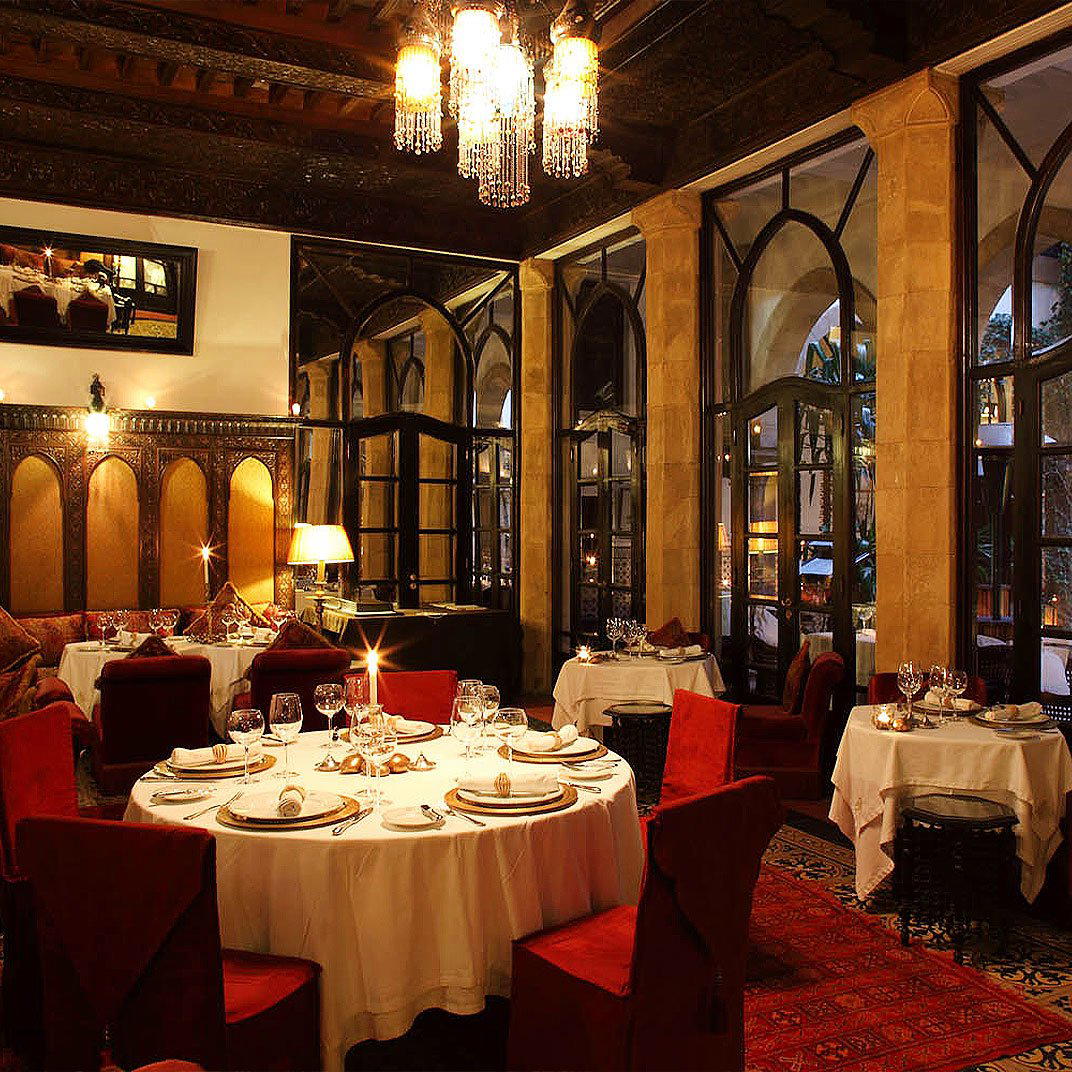
At a Glance
- Scenic
- Romantic
- Elegant
- Cozy
- Date Night
- Business Dinner
- Group Dining
- Celebration
- Special Occasion
- Rooftop
- Terrace
- Hotel Restaurant
- Panoramic View
- Extensive Wine List
- Craft Cocktails
- Local Sourcing
- Sustainable Seafood
- Waterfront
- Street Scene
Elegant yet relaxed rooftop setting between pool and sun loungers, with refined hotel service, soft lighting, and a calm, intimate atmosphere ideal for sunset and evening meals.