
Michelin Plate
Our verdict
On Brittany's far western edge, Le Château de Sable earns its Michelin Plate by grounding modern cuisine in the peninsula's own larder: Atlantic seafood, local Breton produce, and traditional recipes given room to breathe alongside more adventurous preparations.

Pearl is the En Primeur Club membership app, where members save venues, book tables and use the concierge.
Where the Atlantic Writes the Menu
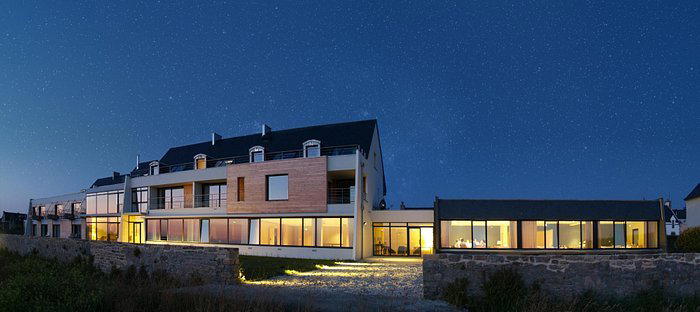
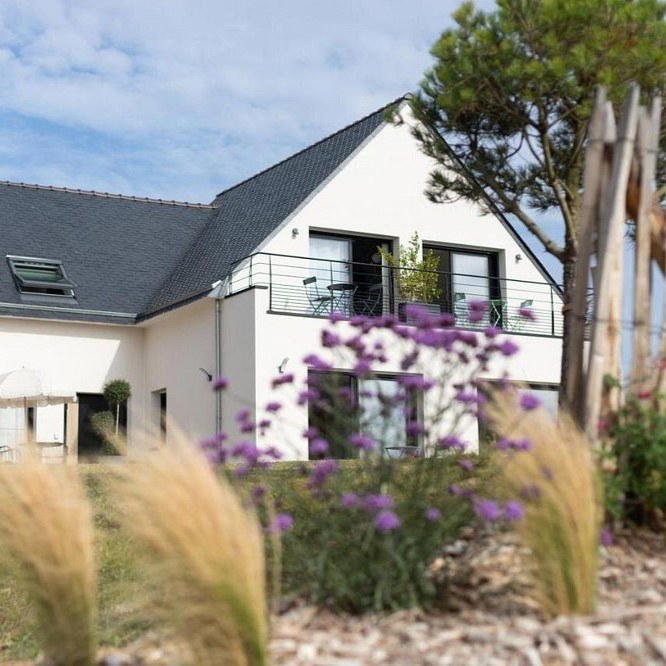
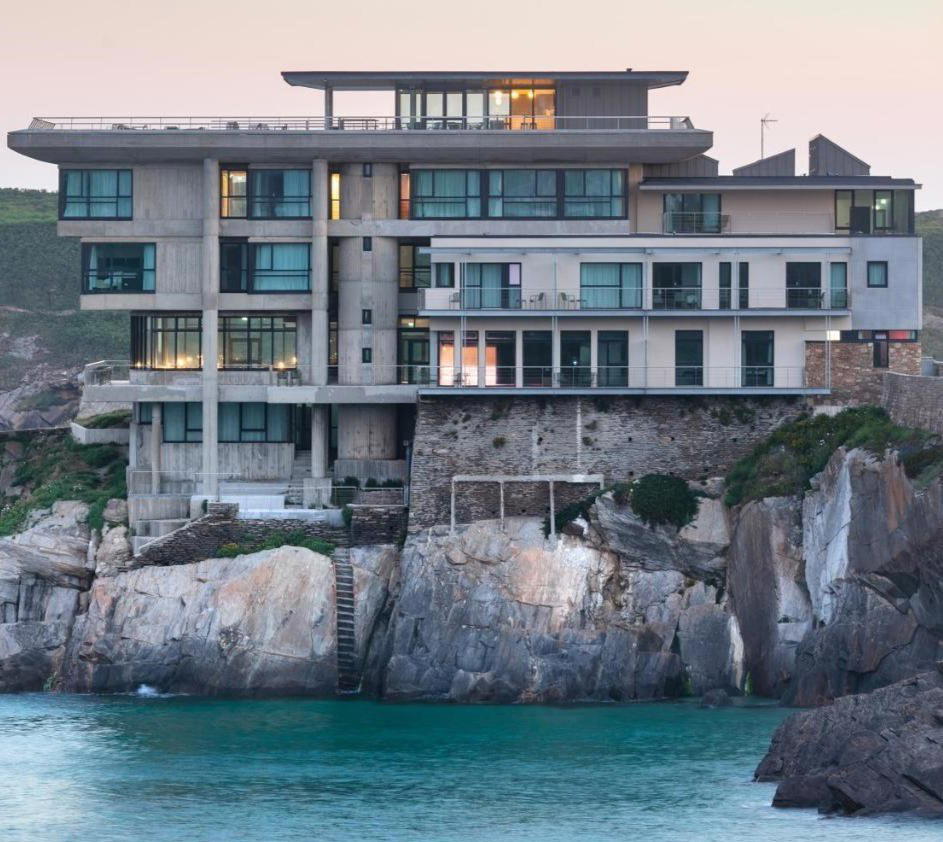
Finistère, the name translates roughly as 'end of the earth', is not an accident of geography for a kitchen philosophy. The western tip of Brittany has always organised its food culture around what the Atlantic provides: lobster, scallops, sea bass, and shellfish pulled from some of France's most productive coastal waters. In Porspoder, that logic reaches its most literal expression. The Saint Laurent peninsula sits within sight of the dining room at Le Château de Sable, and the Breton produce on the plate is, in this context, less a chef's choice than a statement of where you are.
Across Brittany, the most credible kitchens at the €€ price tier work this same sourcing principle: regional identity is not layered on top of the cooking, it is the cooking. What distinguishes Le Château de Sable within that peer group is the combination of a setting that places you directly inside the landscape being cooked from, and a menu that moves between traditional Breton preparations and more technically ambitious work without abandoning its coastal anchor. The kitchen holds a Michelin Plate (2024), a recognition that signals consistent quality and cooking worth the trip rather than the star-chasing apparatus of destination dining.
Breton Produce and the Logic Behind It
The case for hyper-local sourcing in Finistère is partly flavour and partly structure. Brittany's fishing ports, including those immediately around the Crozon and Iroise coasts near Porspoder, supply kitchens throughout France. The irony of coastal Breton restaurants importing protein from elsewhere would be considerable; the better houses in this region don't. When a menu description references local Breton produce in traditional recipes, the detail that gives it weight is proximity: shorter cold chains, shellfish pulled at the right moment, fish that has not been in transit long enough to soften.
The menu structure at Le Château de Sable reflects this. Traditional Breton recipes carry the sourcing logic clearly, since those dishes were built around what the region has always produced. The 'more high-flying creations' noted in the Michelin recognition introduce technique without relocating the kitchen's identity: the produce stays Breton, the ambition sits in what is done with it. This is a different proposition from, say, the tasting-menu-only format at three-star houses like Mirazur in Menton or the ingredient-precision programmes at Flocons de Sel in Megève. Le Château de Sable operates in a more accessible register, where the sourcing rigour is the headline rather than the theatrics of the tasting format.
The Setting and What It Does
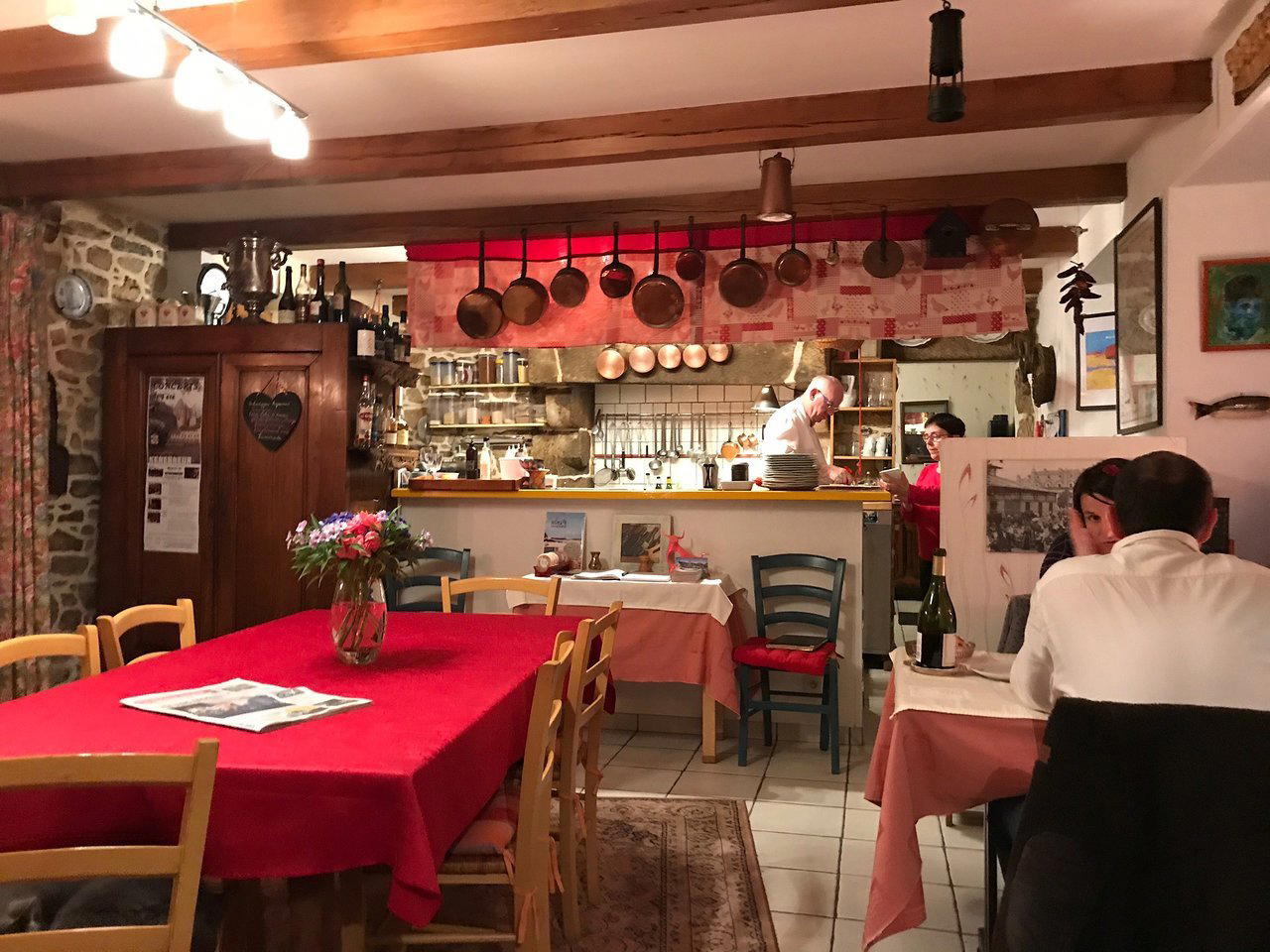
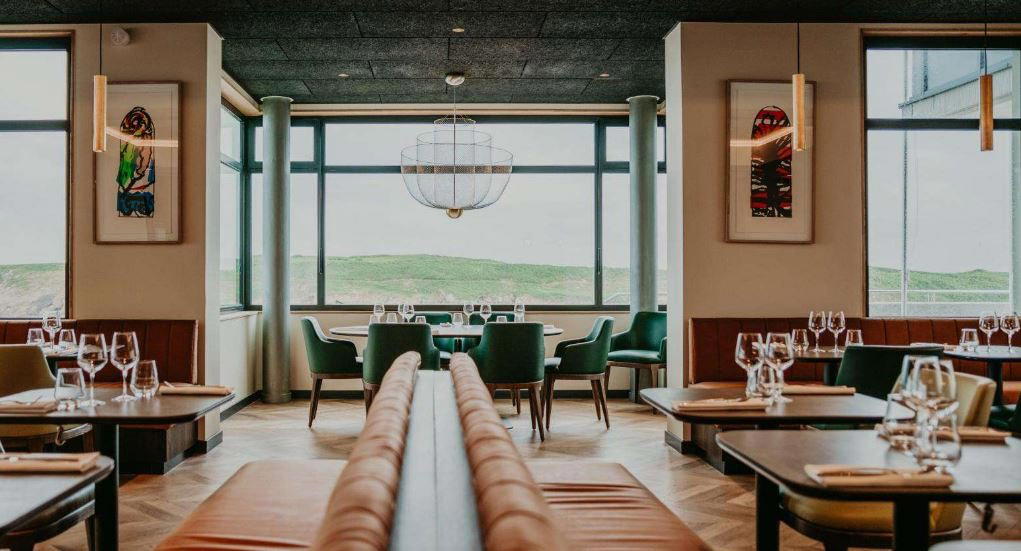
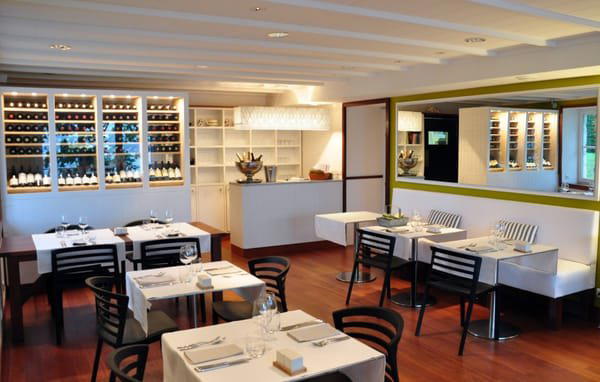
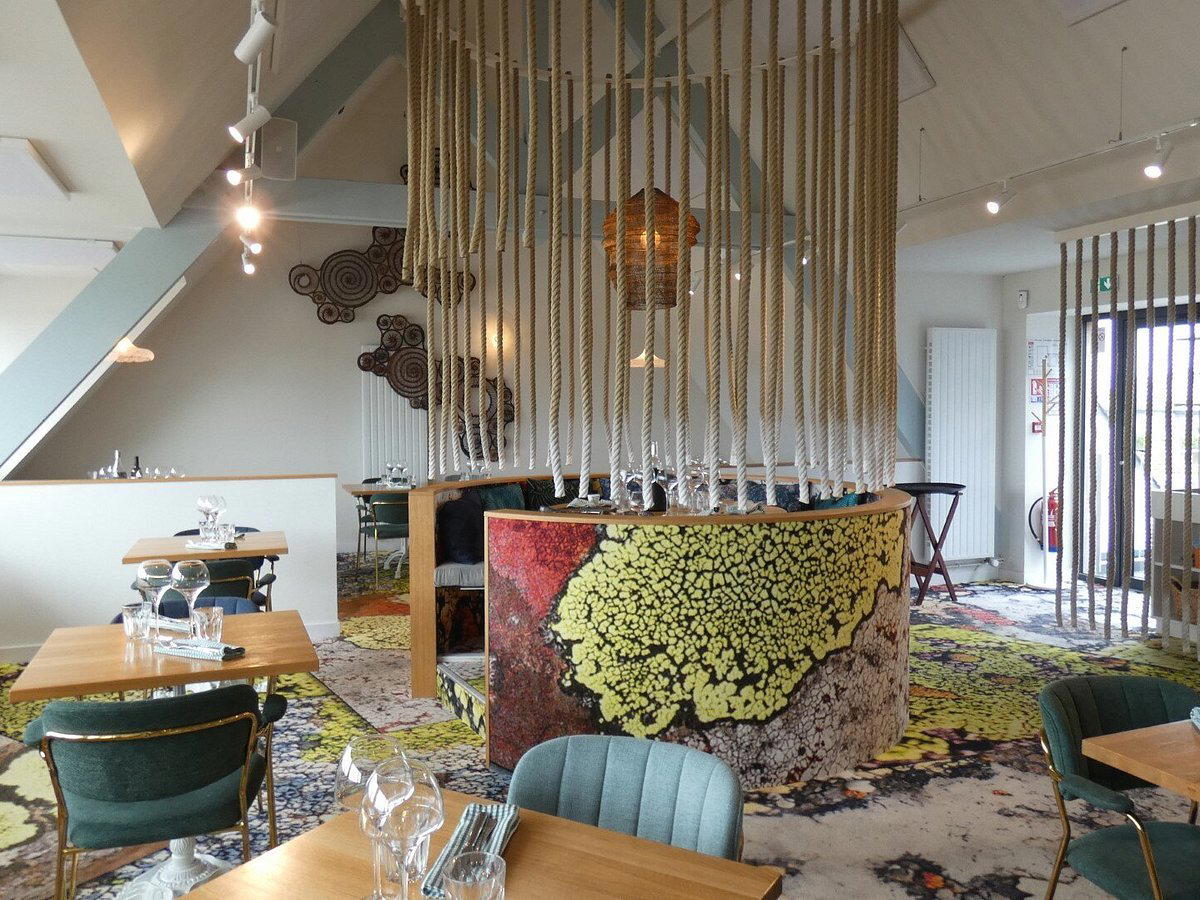
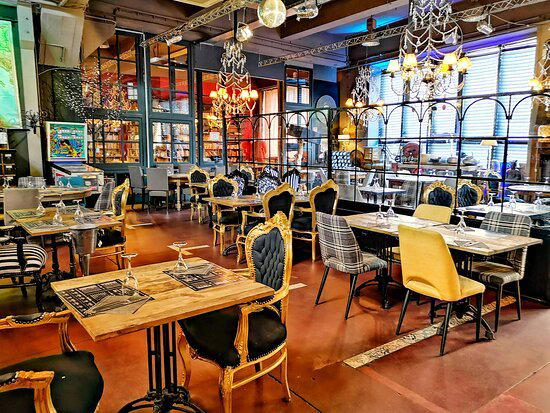
Coastal France has a particular category of restaurant that earns its reputation less from any single dish than from the combination of what is on the plate and where you are eating it. The interior at Le Château de Sable is described as plush and cosy, a smart seaside establishment where the view across to the Saint Laurent peninsula provides the context that makes the cooking legible. This is not a criticism: in a region where the landscape is as distinctive as Finistère's, a room that keeps you inside it rather than distancing you from it is doing something considered.
The €€ pricing, mid-range by French coastal dining standards, places Le Château de Sable within reach of a broad range of travellers exploring the Finistère coast, while the Michelin Plate confirmation separates it from the category of purely casual seaside stops.
For context within France's broader dining range, the €€ Michelin Plate tier sits well below the ceiling: houses like Alléno Paris au Pavillon Ledoyen, Troisgros in Ouches, or Bras in Laguiole operate in an entirely different financial and operational register. Le Château de Sable is not competing in that space. It is, instead, the kind of address that makes a drive through Finistère worth structuring around a lunch stop.
Planning a Visit
Porspoder sits at the western edge of the Finistère department, roughly an hour's drive from Brest along the Iroise coast road. The address at 38 Rue de l'Europe places it in the village proper rather than on a remote headland, which makes arrival direct. Visitors exploring the broader Finistère coast should note that the Saint Laurent peninsula and the surrounding Iroise Marine Nature Park are among Brittany's less-visited coastal stretches, and the area rewards time rather than a rushed detour. For further dining, drinking, and accommodation options in the area, see our full Porspoder restaurants guide, our Porspoder hotels guide, and our Porspoder bars guide. Those interested in the wider Breton experience can also explore our Porspoder wineries guide and our Porspoder experiences guide.
France's Broader Table, For Reference
Le Château de Sable represents a specific and valuable tier of French dining: regionally grounded, Michelin-recognised, and priced for accessibility rather than occasion-only visits. Those curious about how France's most ambitious kitchens use ingredient sourcing as a similar editorial framework can look further afield. Auberge du Vieux Puits in Fontjoncouse and Auberge de l'Ill in Illhaeusern demonstrate how deep local sourcing can run when given three-star resources to work with. AM par Alexandre Mazzia in Marseille shows a different coastal geography making similar demands on a kitchen. And for modern cuisine programmes operating at comparable technical ambition in international contexts, Frantzén in Stockholm and FZN by Björn Frantzén in Dubai both provide useful comparative anchors, though in price tiers significantly above what Porspoder requires. Also worth cross-referencing: Assiette Champenoise in Reims, Au Crocodile in Strasbourg, and Paul Bocuse in Collonges-au-Mont-d'Or for further readings on how France's regional dining traditions translate across different geographies and formats.
Frequently asked questions
Is Le Château de Sable more mid-range or high-end?
Pricing at Le Château de Sable is listed as €€.
| Venue | Cuisine | Price | Awards | Notes |
|---|---|---|---|---|
| Le Château de SableThis venue (the venue you are viewing) | Modern Breton French Cuisine | Not listed | Michelin Plate | Not listed |
| Alléno Paris au Pavillon Ledoyen | Modern French Fine Dining | $150–200 | 3 Michelin Stars · World's 50 Best #79 | Creative |
| Kei | Contemporary French, Modern Cuisine | Not listed | Michelin 3 Star | Not listed |
| L'Ambroisie | Classic French Haute Cuisine | $300–500 | 2 Michelin Stars · World's 50 Best #23 | French, Classic Cuisine |
| Le Cinq - Four Seasons Hôtel George V | Modern French Fine Dining | $300–500 | 3 Michelin Stars · World's 50 Best #24 | French, Modern Cuisine |
| Plénitude | Modern French Sauce-Led Fine Dining | $300–500 | 3 Michelin Stars · World's 50 Best #14 | Contemporary French |
Recognition history
Dated appearances from independent guides and award organizations, with the underlying list record or original source where available.
Michelin Plate
Michelin
Full recognition history (3 entries)
Michelin Plate
Michelin
Michelin Plate
Michelin
Continue exploring
More in Porspoder
Details
- Scenic
- Quiet
- Elegant
- Cozy
- Sophisticated
- Date Night
- Special Occasion
- Celebration
- Group Dining
- Waterfront
- Hotel Restaurant
- Panoramic View
- Extensive Wine List
- Local Sourcing
- Sustainable Seafood
- Waterfront
- A La Carte
- Set Menu
- Wine
- Pescatarian Friendly
Calm, refined and warm, with large views over the dunes, heathland and sea creating a relaxed coastal atmosphere.