Gwinizh Du

Gwinizh Du — Breton for 'buckwheat' — reframes the classic crêperie format through a strict local sourcing commitment: 90% of ingredients come from within 30km of Perros-Guirec. The open kitchen and contemporary bistro setting keep the focus on seasonal galettes that shift with the agricultural calendar, including fermented preparations that sit well outside the regional norm.
Pearl is the En Primeur Club membership app — saves, bookings, and concierge access live there. Same editors, same standards.
- Address
- 48 rue du Sergent-l'Heveder
- Phone
- +33 6 82 75 38 34
- Website
- gwinizhdu.com
- Directions
- Get directions
 Saves & bookings on Pearl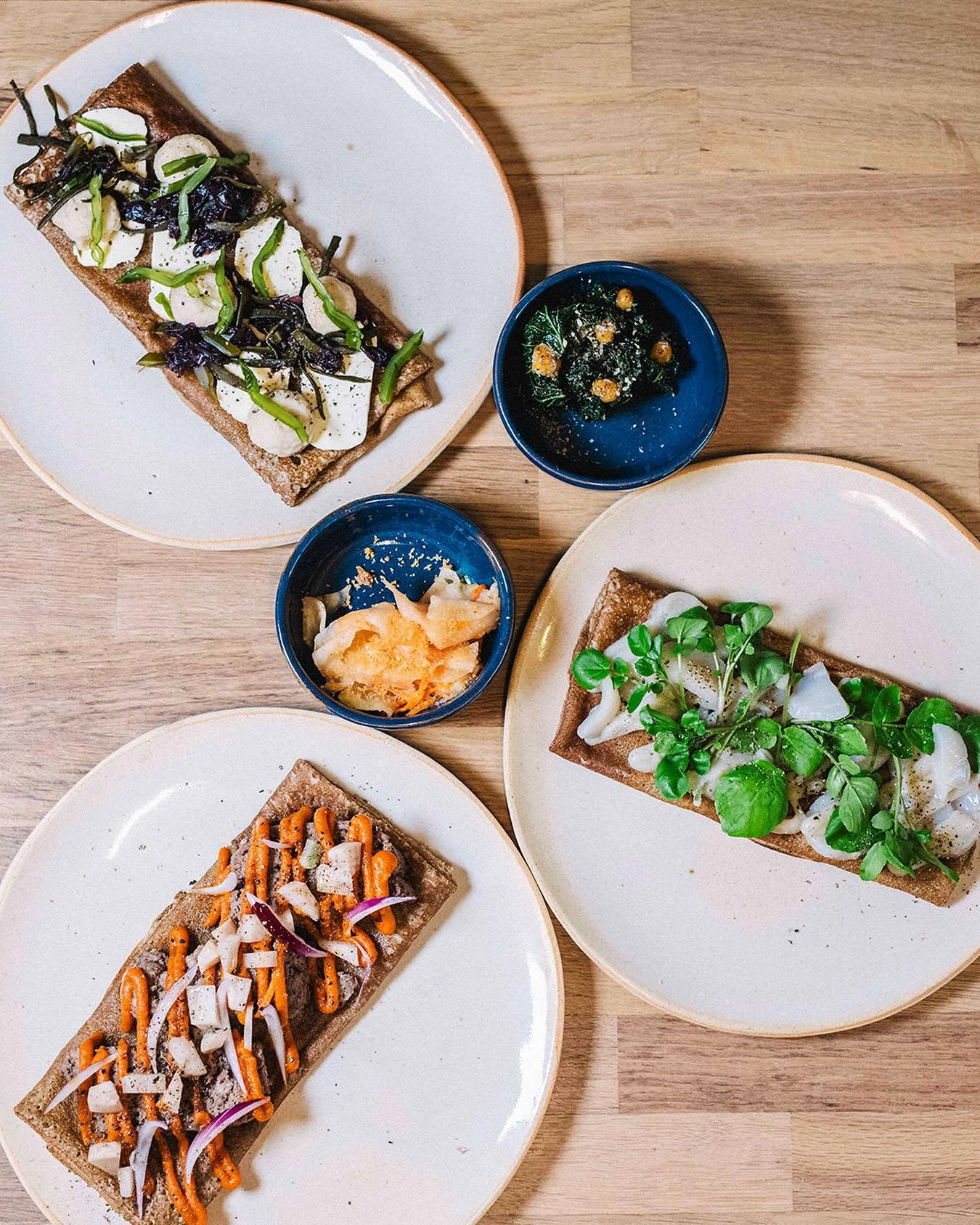
Buckwheat, Reframed: Perros-Guirec's Crêperie as Local Supply Chain
Brittany's crêperie tradition runs deep enough that it rarely needs defending, but it has also calcified in places. Across the region, the galette-complète — egg, ham, cheese, fold, serve — remains the standard offering at hundreds of addresses, delivered with variable ingredient quality and little seasonal variation. The more interesting development in recent years has been a smaller cohort of crêperies that hold the format intact while interrogating what fills it. Gwinizh Du, on the rue du Sergent-l'Heveder in central Perros-Guirec, belongs to that cohort. Its name, Breton for 'buckwheat,' the grain central to every savoury galette, signals where the kitchen's priorities sit before you've read a word of the menu.
What 30 Kilometres Actually Means in Practice
The commitment at Gwinizh Du is specific enough to be meaningful: 90% of ingredients sourced from within a 30km radius. In the Côtes-d'Armor département, that radius takes in dairy farms on the granite plateau above Lannion, market garden operations around Tréguier, and shellfish activity along the Trégor coast. It is a deliberately tight constraint for a kitchen operating in a tourist town where supply convenience pulls in the other direction. The comparison point here is instructive. French restaurants with serious sourcing credentials, places like Mirazur in Menton or Bras in Laguiole, have made hyperlocal supply a centrepiece of their identity at the three-Michelin-star tier. Gwinizh Du applies equivalent sourcing logic to a casual crêperie format, which is a different kind of argument about what local cooking can be.
The seasonal calendar shapes the menu rather than the other way around. Galette compositions shift as ingredients arrive and depart, which means a visit in May reads differently from one in October. That variability is an asset, not an inconvenience: it reflects what the farms within that 30km radius are actually producing, rather than a menu engineered around year-round supplier availability.
Fermentation as a Breton Tool, Not a Trend
Some preparations at Gwinizh Du incorporate fermented ingredients. In a regional context, this is less of a departure than it might appear. Brittany has a long tradition of preserved and fermented foods, salted butter, cured pork, various pickled preparations tied to coastal and agricultural cycles. The kitchen here is working within that logic rather than importing a Scandinavian-inflected fermentation trend. When fermented elements appear on the galette, they function as seasoning and acidity within a familiar format, not as the dish's headline novelty.
This approach places Gwinizh Du in an interesting position relative to the broader French dining conversation. The restaurants France positions as its flagships for technical ambition, Alléno Paris au Pavillon Ledoyen, Flocons de Sel in Megève, Troisgros in Ouches, operate in a register of formal tasting menus and multi-course progression. The more subversive move is applying the same intellectual rigour to a galette served in a bistro. The format stays accessible while the sourcing and preparation decisions carry genuine weight.
The Space and How It Works
The room is contemporary bistro in character: compact, open kitchen, the kind of space where the cooking is visible and the pace is direct. Chalked on a slate board is the ingredient list for those who want to compose their own galette or crêpe from the seasonal selection rather than choose from a fixed menu. This dual format serves different kinds of visitors. One group arrives with a specific appetite and works through the kitchen's composed creations; another prefers to assemble from components, treating the slate board as the actual menu. Both approaches draw from the same local supplier network.
The open kitchen is not decorative. In a crêperie operating at this sourcing standard, it functions as a kind of accountability: you can see what's being used and how. Brittany's crêperie culture already skews toward transparency, the billig griddle is typically visible, the folding technique on display, and Gwinizh Du maintains that tradition while adding a contemporary ingredient-forward dimension to it.
Perros-Guirec's Dining Context
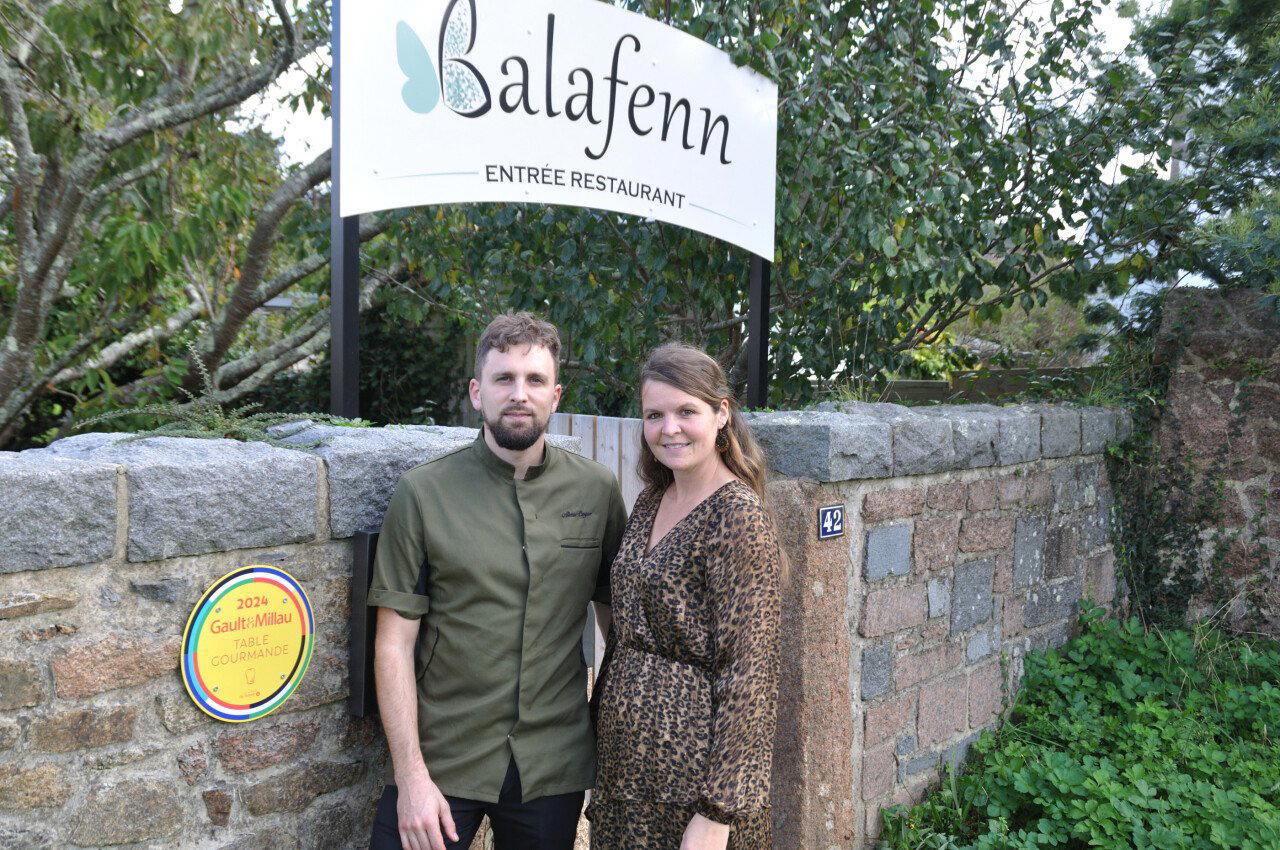
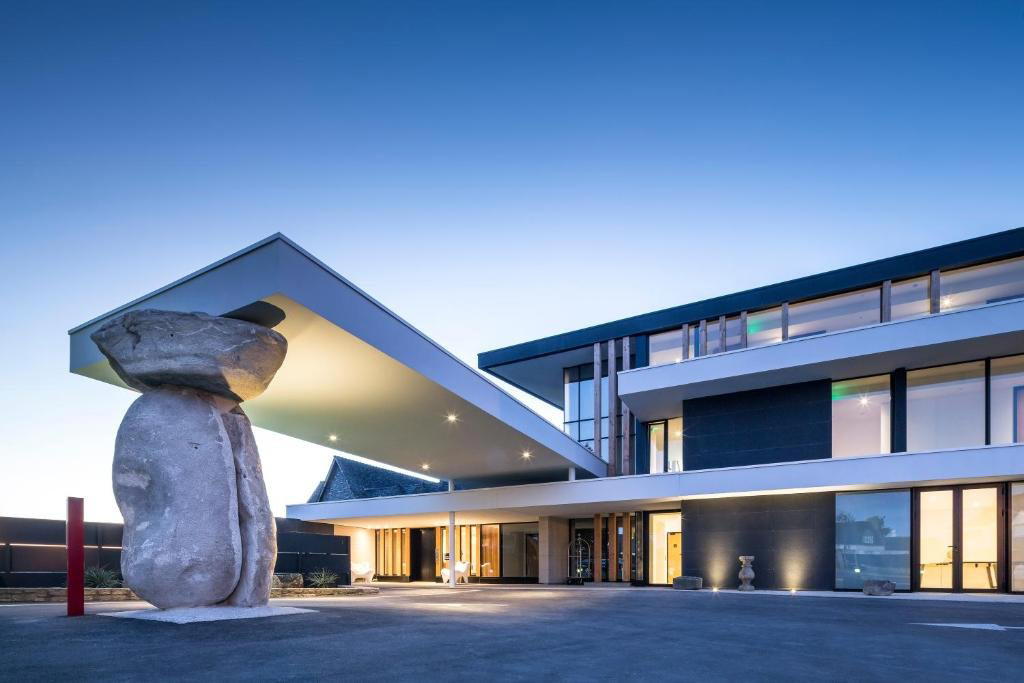
Perros-Guirec sits on the Pink Granite Coast, and its restaurant scene reflects the rhythm of a coastal town that peaks in summer and contracts in autumn. The town's more formally positioned addresses include Le Bélouga, operating in the modern cuisine register at the €€€ tier, and neighbourhood options like Balafenn and Les Bassans. Gwinizh Du occupies a distinct category among these: the crêperie as a format most diners understand, but executed with sourcing discipline that pulls it into a different conversation from the standard Breton crêperie-on-the-harbour. For a fuller picture of eating and drinking options in the area, the EP Club Perros-Guirec restaurants guide covers the range, alongside guides to hotels, bars, wineries, and experiences in Perros-Guirec.
Brittany's standing as a serious food region is not primarily built on its fine dining addresses. It is built on ingredient quality at the primary level: the oysters, the butter, the artichokes, the buckwheat. The interesting question is which restaurants actually let that primary quality speak rather than obscuring it with technique. Gwinizh Du makes a clear argument about where it stands on that question.
Planning a Visit
Gwinizh Du sits close to Perros-Guirec's town centre on the rue du Sergent-l'Heveder, which puts it within walking distance of the main commercial streets and easily reachable from the seafront on foot. Given the seasonal menu structure, what's available will depend on when you visit, summer months bring a wider range of local produce, while shoulder season visits offer a more edited selection that reflects autumn supply. Booking ahead is advisable during the summer peak period, when Perros-Guirec's visitor numbers are at their highest and the better-positioned local addresses fill quickly. Contact details are available directly through local search listings.
How Gwinizh Du Perros-Guirec compares with similar nearby venues.
| Venue | Cuisine | Price |
|---|---|---|
| Le Bélouga | Modern Cuisine | €€€ |
Recognition history
Dated appearances from independent guides and award organizations, with the underlying list record or original source where available.
Michelin Plate
Michelin
Continue exploring
More in Perros-Guirec
Restaurants in Perros-Guirec
Browse all →
Bars in Perros-Guirec
Browse all →

At a Glance
- Cozy
- Intimate
- Rustic
- Casual Hangout
- Date Night
- Open Kitchen
- Sake Program
- Local Sourcing
Current opening hours
- Monday
- 12–1:30 PM, 6:30–8:30 PM
- Tuesday
- 12–1:30 PM, 7–8:30 PM
- Wednesday
- 12–1:30 PM, 7–8:30 PM
- Thursday
- 12–1:30 PM, 7–8:30 PM
- Friday
- 12–1:30 PM, 7–8:30 PM
- Saturday
- Closed
- Sunday
- Closed
Hours can change for holidays and private events. Last verified .
Cozy homey vibes with simple furniture, vintage details, and open kitchen in an intimate contemporary bistro-style space.
Know Before You Go
- Getting there
- 48 rue du Sergent-l'Heveder