Our verdict
Le Bouillon Limousin sits on Rue du 71ème Mobiles in central Limoges, operating within the bouillon tradition that has seen a clear revival across French provincial cities over the past decade. In a city better known for porcelain and enamel than restaurant culture, it represents the accessible, convivial end of the local dining spectrum, where shared tables and straightforward cooking take precedence over ceremony.

Pearl is the En Primeur Club membership app — saves, bookings, and concierge access live there. Same editors, same standards.
- Address
- 5 Rue du 71ème Mobiles, 87000 Limoges, France
- Phone
- +33555030033
- Hours
- Mon ClosedTue–Wed 12–1:30 PMThu–Sat 12–1:30 PM, 7–8:30 PMSun Closed
- Directions
- Get directions
- Booking
- Book on the venue's website
The menu
What to order
- Magret de canard au miel
- Rum baba
The Bouillon Tradition, Returned to Form
The bouillon format has a longer history than its recent revival suggests. These were working-class Parisian canteens, established in the mid-nineteenth century to feed a city in motion: stock-based broths, strong cuts, affordable carafes of house wine, and tables packed close enough that you learned your neighbour's order before your own arrived. The concept nearly disappeared under the weight of brasserie culture and fast-casual competition, then came back decisively in the 2010s when a handful of Paris operators rediscovered that volume, honesty, and low prices could coexist with genuine cooking. That model has since moved outward into the regions, and Limoges now has a version of it on Rue du 71ème Mobiles.
What the bouillon revival tells us about French dining more broadly is that the demand for accessible, unpretentious restaurants never went away. It was simply underserved. The format strips away the anxiety that attaches itself to mid-range dining: no theatre of the menu reveal, no sommelier performance, no ambiguity about whether the bill will be reasonable. You sit, you eat, you leave with the sense that the transaction was fair. In a regional city like Limoges, where the restaurant scene is built more on regulars than tourists, that clarity of proposition has particular appeal.
Arriving on Rue du 71ème Mobiles
The address places Le Bouillon Limousin in the older residential and commercial fabric of the city, away from the cathedral district and the more polished thoroughfares that see weekend visitors. Limoges is compact enough that most central points connect on foot, and the street itself has the unremarkable character of a neighbourhood that functions for people who live there rather than people passing through. Arriving in autumn or winter, when the city's grey-stone architecture absorbs what little afternoon light remains, the lit interior of a bouillon-style dining room carries a specific kind of visual pull: steam, movement, the suggestion of warmth. That atmospheric quality is part of what makes the format work. It is designed to look occupied and alive.
Inside, the spatial logic of a bouillon depends on compression. Tables are close. The room is meant to sound like a room full of people, because it usually is. The sensory register is domestic in scale but collective in feeling: the smell of stock and roasted meat, glassware that clinks, the low-level noise of a space that makes no effort to muffle itself. This is the opposite of the hushed dining rooms associated with Michelin-chasing restaurants. Venues like Alléno Paris au Pavillon Ledoyen, Mirazur in Menton, or Flocons de Sel in Megève occupy the silence-and-reverence end of French dining. The bouillon tradition occupies the opposite pole, and does so deliberately.
Where Le Bouillon Limousin Sits in the Local Scene
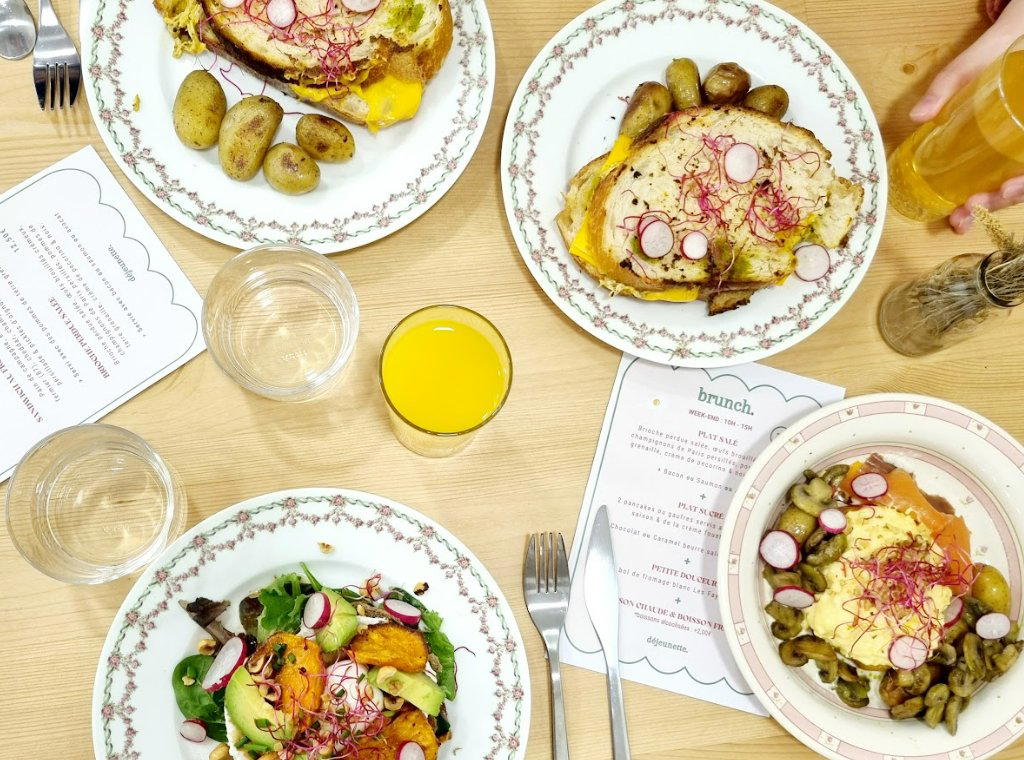
Limoges is not a city with a deep bench of destination restaurants. The dining scene runs toward the practical and the regional, with a handful of places pushing toward more ambitious cooking and a larger number operating in the everyday register. Amphitryon and L'Aparté sit at the more considered end of local modern cuisine, while La Cuisine du Cloître and L'Echanson cover different registers of the mid-market. Déjeunette Brunch handles the daytime crowd. Le Bouillon Limousin plugs a specific gap: the convivial, affordable, reliably French dinner that does not require advance planning or a particular occasion.
In cities with more developed restaurant cultures, the bouillon occupies a well-understood niche. In Limoges, it fills a role that was previously less well-defined. The format travels well to provincial settings precisely because it does not demand the critical mass of dining tourism that sustains, say, the Paris bouillons that draw queues before service. A local audience of regulars is enough, and a regional city with a functioning middle-class residential core is exactly the population the model is built for.
For comparison, the bouillon concept at its most refined sits a significant distance from the starred experiences found at places like Troisgros, Auberge de l'Ill, Bras in Laguiole, or Paul Bocuse's Auberge du Pont de Collonges. It is not trying to compete in that direction. Nor is it chasing the technical ambition of AM par Alexandre Mazzia in Marseille, the depth of Assiette Champenoise in Reims, or the classical weight of Au Crocodile in Strasbourg. The bouillon is a different kind of argument about what French restaurants are for, and Le Bouillon Limousin makes that argument in a city that has room for it.
The Limousin Region on the Plate
The Limousin region has a specific culinary identity built around beef, lamb, pork, and a produce tradition that has historically been better known to locals than to visitors. Limousin cattle carry a designated breed status whose reputation extends well beyond the region, and any bouillon operating in this context has access to the kind of raw material that restaurants in other parts of France would position as a selling point in itself. What is clear is that the regional larder is there to be used, and the format is generous enough to support direct preparations of good-quality cuts.
Seasonal rhythm matters in a format built on market availability. Spring and summer bring lighter preparations; autumn shifts toward braised cuts, lentils from the Puy du Velay (a short distance east), and the kind of cooking that makes sense when the Limousin plateau turns cold. A visit in the months between October and February puts you in the leading alignment with what the region produces and what a kitchen of this type is built to cook.
Planning Your Visit
Le Bouillon Limousin is located at 5 Rue du 71ème Mobiles, 87000 Limoges. Limoges is accessible by TGV from Paris Austerlitz in approximately three hours, which makes it a viable day-trip destination, though an overnight stay gives more time to cover the city's porcelain museum and cathedral quarter before eating. Walk-in dining is consistent with the bouillon format, which historically does not require advance reservation in the way that tasting-menu restaurants do, though a phone call ahead is sensible for larger groups or weekend evenings. For a broader view of where Le Bouillon Limousin sits among the city's other options, the EP Club Limoges restaurants guide covers the full range. International readers familiar with the standard set by Le Bernardin in New York or Atomix will find this a different kind of proposition entirely: lower stakes, lower ceremony, and a different measure of what a good meal looks like.
Frequently asked questions
Where exactly is Le Bouillon Limousin?
Le Bouillon Limousin is located at 5 Rue du 71ème Mobiles, 87000 Limoges, France, Limoges.
Is Le Bouillon Limousin a good choice for a meal between trains in Limoges?
Limoges is accessible by TGV from Paris Austerlitz in approximately three hours, making a stopover meal practical. The bouillon format is designed for straightforward, relatively quick service — you order from a compact menu of classics and the kitchen moves efficiently. The restaurant is located at 5 Rue du 71ème Mobiles, a short distance from the city centre, so factor in transfer time if you are working around a train connection.
What do people recommend at Le Bouillon Limousin?
The bouillon format centres on French classics: braised meats, stocks, simple vegetables, and house wine by the carafe. Given the restaurant's location in Limoges, the heart of Limousin cattle country, expect the beef preparations to reflect the region's strongest agricultural identity. The format discourages elaborate ordering — the menu does the work of guiding you toward what the kitchen does consistently well.
How far ahead should I plan for Le Bouillon Limousin?
The bouillon model is built for accessibility rather than scarcity, so same-day or next-day visits are generally realistic outside peak summer periods in Limoges. If you are travelling to the city specifically for this meal, a quick check a day or two before arrival is reasonable planning. The address at 5 Rue du 71ème Mobiles places the restaurant in a working neighbourhood rather than the tourist circuit, which tends to keep demand more consistent than seasonal.
What's Le Bouillon Limousin best at?
The bouillon format excels at honest, traditional French cooking delivered without ceremony or occasion pricing. In a Limoges context, that means direct access to Limousin regional produce — particularly its beef and pork traditions — through a format that has fed French workers since the mid-nineteenth century. It is the kind of cooking where the stock and the sourcing matter more than the plating.
Comparable Spots
Comparable venues nearby, for context on price, style, and recognition.
| Venue | Cuisine | Price | Notes |
|---|---|---|---|
| Le Bouillon LimousinThis venue — the venue you are viewing | Traditional French Brasserie with Limousin Specialties | $30–50 | Not listed |
| Le Bistrot d'Olivier | Traditional French Limousin Bistro | $20–30 | Halles Centrales |
| L'Echanson | Traditional French Bistro | $20–30 | Centre Ville |
| Le Cheverny | Traditional French Regional Bistro | Not listed | Downtown |
| Les Petits Ventres | Modern Traditional Limousin French | $20–30 | rue de la Boucherie |
| Le Versailles | Traditional French Brasserie | $30–50 | Downtown |
Continue exploring
More in Limoges
Restaurants in Limoges
Browse all →
Hotels in Limoges
Browse all →
Wineries in Limoges
Browse all →
Details
- Classic
- Elegant
- Cozy
- Family
- Group Dining
- Casual Hangout
- Date Night
- Historic Building
- Local Sourcing
- A La Carte
Current opening hours
- Monday
- Closed
- Tuesday
- 12–1:30 PM
- Wednesday
- 12–1:30 PM
- Thursday
- 12–1:30 PM, 7–8:30 PM
- Friday
- 12–1:30 PM, 7–8:30 PM
- Saturday
- 12–1:30 PM, 7–8:30 PM
- Sunday
- Closed
Hours can change for holidays and private events. Last verified .
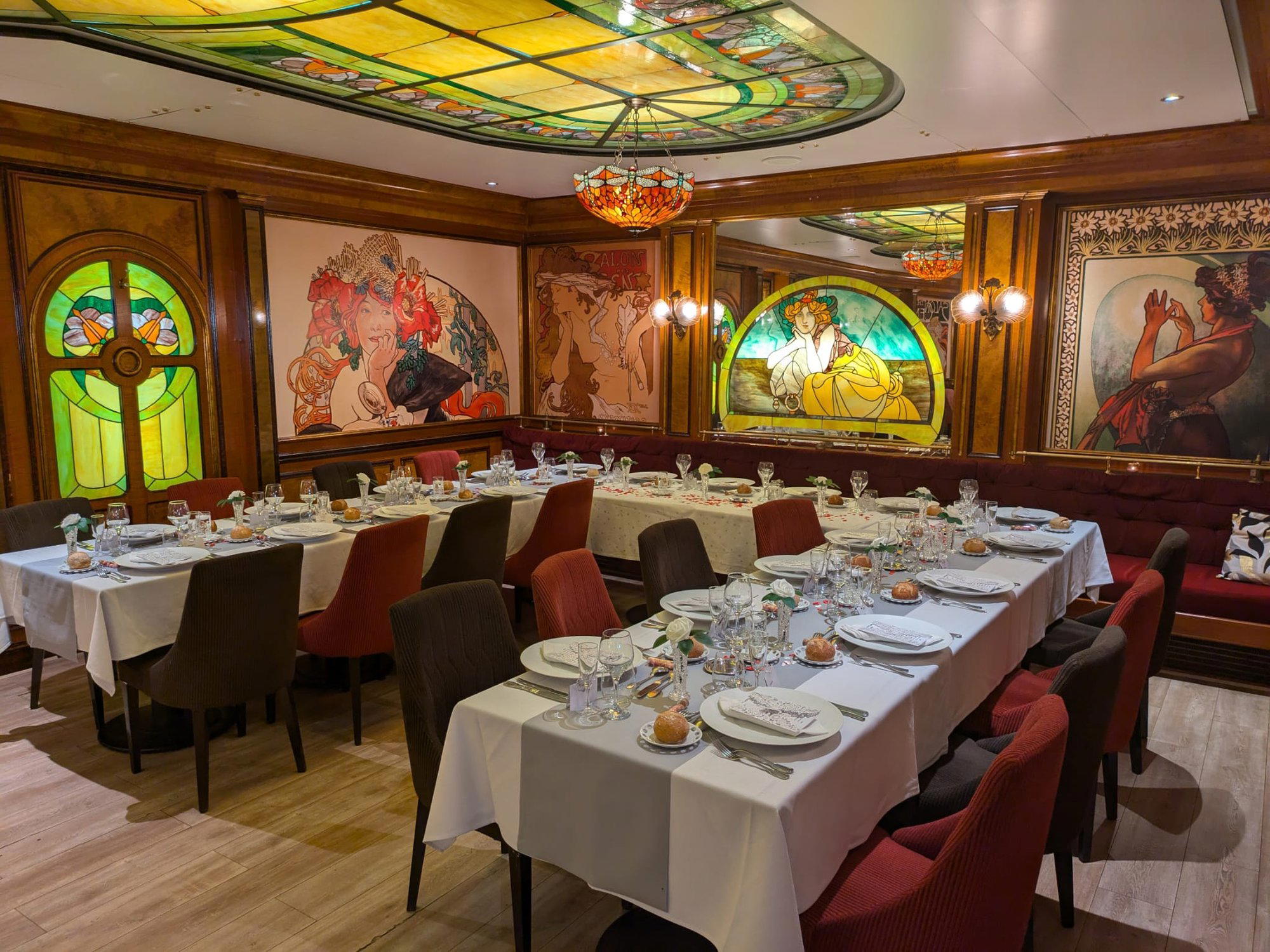
Magnificent fin-de-siècle Art Nouveau interior with beautiful stained glass providing a charming, elegant atmosphere.