Our verdict
La Table des Compagnons sits on Rue de la Règle in central Limoges, positioned within the city's compact but serious dining scene. The address places it among a cluster of restaurants where Limousin produce and French technique converge in a mid-market to upper-mid register. For visitors arriving without prior knowledge of the city's restaurant geography, it represents a sensible entry point into what Limoges does at table.

Pearl is the En Primeur Club membership app — saves, bookings, and concierge access live there. Same editors, same standards.
- Address
- 5 Rue de la Règle, 87000 Limoges, France
- Phone
- +33555338688
- Hours
- Mon–Fri 12–2:30 PMSat–Sun Closed
- Website
- facebook.com
- Directions
- Get directions
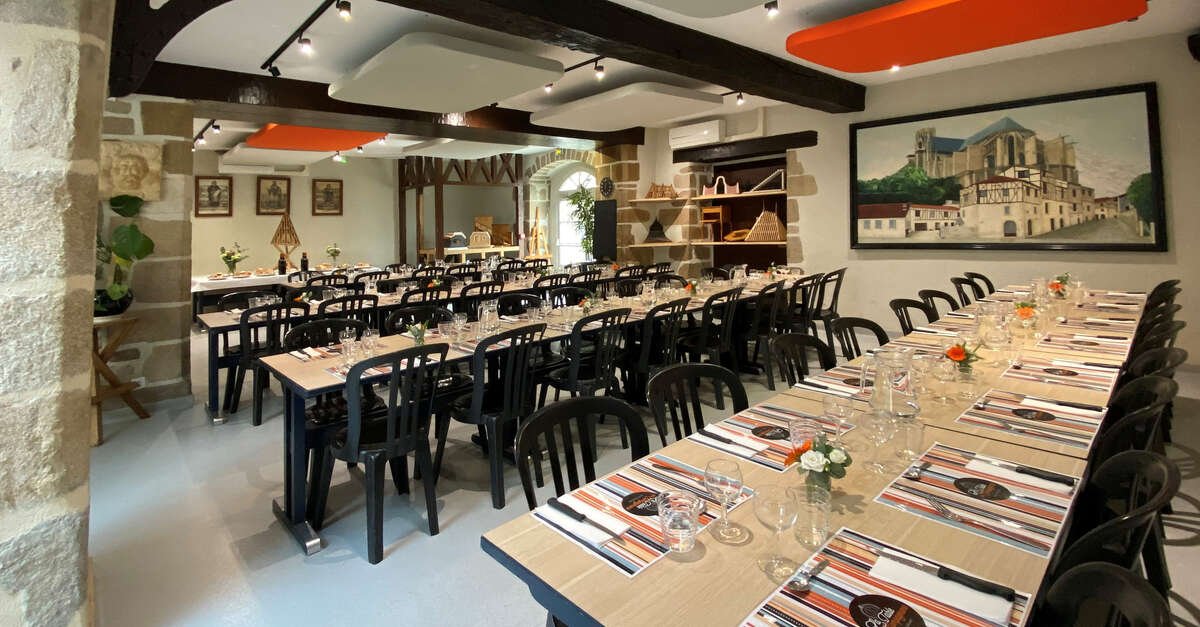
The menu
What to order
- Tête de veau
- Saumon rôti
- Choucroute
- Gigolette de canard à la bordelaise
- Salade de joues de cochon
Arriving in Limoges Without a Reservation
Limoges is not a city that announces its dining ambitions loudly. Approached from the train station, the centre reveals itself gradually: a cathedral district with narrow streets, a covered market that still functions as a working food source rather than a tourist attraction, and a restaurant scene that punches above what the city's reputation typically suggests. The address at 5 Rue de la Règle places La Table des Compagnons within walking distance of that old-town fabric, in the kind of street where the buildings do the contextualising before you reach the door.
That physical setting matters when thinking through how to approach this particular address. Limoges has long been associated with its porcelain industry and its Limousin cattle rather than with any singular dining tradition, which has historically kept it off the itineraries of food-focused travellers routing through the Nouvelle-Aquitaine region. That oversight has quietly worked in the city's favour: the restaurants that have developed here have done so for a local audience first, which tends to produce tighter, more honest cooking than venues built around tourist throughput.
Where This Address Fits in Limoges Dining
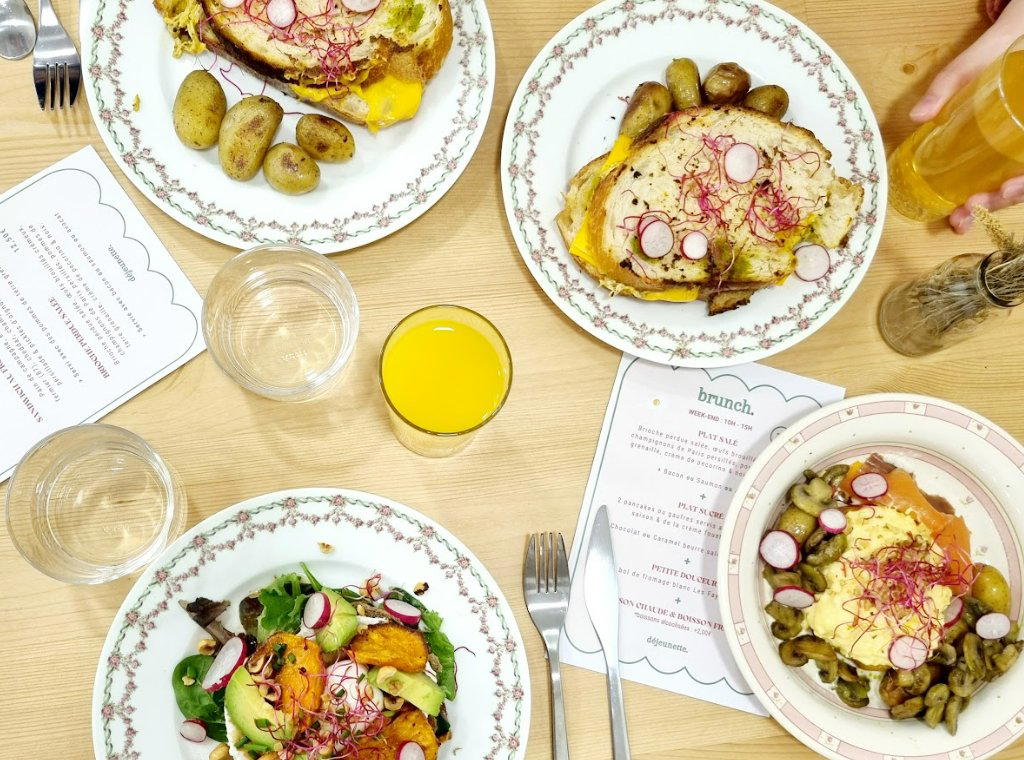
The Limoges restaurant scene in the mid-2020s divides into roughly three functional tiers. At the upper end, Amphitryon (Modern Cuisine) operates as the city's most formal reference point for contemporary French cooking. In the middle register, venues like L'Aparté (Modern Cuisine) and La Cuisine du Cloître (Modern Cuisine) represent the city's interest in technique-led cooking at accessible prices. L'Echanson adds a wine-forward dimension to that middle tier. At the more casual end, Déjeunette Brunch serves a different function entirely.
La Table des Compagnons occupies this scene at Rue de la Règle without the kind of award signals that create immediate legibility for visiting diners. That positioning is itself a useful piece of information. In French provincial cities of comparable scale, the restaurants operating without Michelin recognition or sustained national press often split between those that are genuinely overlooked and those that are simply unremarkable. Knowing which category applies requires either local intelligence or direct experience. For first-time visitors to Limoges working from the broader Limoges restaurants guide, this address merits cross-referencing before booking.
The Booking Question
French provincial restaurants at this price and profile level rarely require the advance planning of, say, a three-star counter in Paris. The kind of lead time needed for Alléno Paris au Pavillon Ledoyen or Mirazur in Menton is not the operating reality for an address in central Limoges without national award recognition. Similarly, the allocation systems that govern tables at Flocons de Sel in Megève or the extended booking windows of Troisgros - Le Bois sans Feuilles apply to a different category of dining.
No phone number, website, or booking method appears in the available record. For visitors planning from outside France, that absence creates a real logistical consideration. The standard approach for venues of this type in French provincial cities is to attempt contact via email or phone through a direct search, to arrive during service and enquire about availability, or to use a platform such as TheFork (La Fourchette), which carries many Limoges restaurants that do not maintain independent booking infrastructure.
Timing also shapes the experience at this class of address. French provincial restaurants in cities of Limoges's size typically close on Sundays and Mondays, with lunch service running two to three days per week alongside dinner. Visiting on a Saturday evening without a confirmed reservation at an address in this tier introduces real availability risk. A midweek lunch, by contrast, is usually the most accessible entry point and often the format in which French regional cooking of this register performs most clearly.
What Limoges Cooking Looks Like at This Level
The raw material available to any serious kitchen in Limoges is not in question. Limousin beef remains one of the most regionally specific products in French cuisine, with AOC status and a cattle breed whose genetics have been exported globally precisely because of the quality of the meat. The Limousin chestnut, the Creuse mushroom, and the game from the surrounding forests give any kitchen working in this city access to a seasonal larder that kitchens in Paris pay significant premiums to source.
What varies between addresses in a scene like Limoges is the ambition applied to that larder. In the top tier, as seen at venues like Bras in Laguiole or Auberge de l'Ill in Illhaeusern in their respective regional contexts, the local larder becomes the explicit intellectual subject of the cooking. At mid-tier addresses, the same produce appears in formats that prioritise accessibility and value over conceptual ambition. The distinction is not a quality judgment so much as a programming one: different formats serve different purposes, and a city's dining ecology needs both.
What the name itself signals is worth noting: compagnons in French carries a specific professional resonance, referencing the Compagnons du Tour de France, the guild system through which French artisans historically developed their craft through years of supervised travel and practice. Whether that reference is purely nominal or carries meaningful weight in the kitchen's approach is a question that requires direct engagement with the address to answer.
Planning the Visit
For a visitor building a Limoges itinerary around food, the practical hierarchy runs as follows. Confirm current hours and availability through direct contact or a booking platform before committing travel time specifically to this address. Cross-reference against the wider Limoges scene using the full Limoges restaurants guide to establish alternatives if availability is limited. Arrive with realistic expectations calibrated to a provincial city dining at this tier rather than to the benchmark set by Paul Bocuse - L'Auberge du Pont de Collonges, AM par Alexandre Mazzia in Marseille, or Assiette Champenoise in Reims.
The street address at 5 Rue de la Règle is precise enough to locate on arrival in Limoges without difficulty. The city is served by direct TGV from Paris Austerlitz in under three hours, which places it within a credible day-trip or weekend radius for travellers based in the capital. Within Limoges itself, the old-town dining district is compact and walkable, which means an evening that includes La Table des Compagnons can reasonably also incorporate a drink at L'Echanson or a look at the Cathedral Saint-Étienne without requiring transport between stops.
Frequently asked questions
What part of town is La Table des Compagnons in?
La Table des Compagnons is located at 5 Rue de la Règle, 87000 Limoges, France, Limoges.
Is La Table des Compagnons a good option for a solo traveller eating in Limoges?
For a solo traveller working through Limoges on a food-focused itinerary, a mid-tier address like La Table des Compagnons at 5 Rue de la Règle offers a more grounded read of the city's actual dining culture than the handful of destination restaurants at the upper end. Limoges does not generate the solo-diner infrastructure of a major gastronomic city, so calling ahead to confirm seating arrangements is worth the two minutes it takes.
What's the must-try dish at La Table des Compagnons?
What is clear is that any serious kitchen operating in Limoges has direct access to Limousin beef, one of France's most regionally specific proteins, alongside produce from the Haute-Vienne. Checking the current menu directly with the restaurant at 5 Rue de la Règle will give you the most reliable picture of what's running that season.
How hard is it to get a table at La Table des Compagnons?
French provincial restaurants at this level in Limoges rarely carry the booking lead times of starred counters in Paris or Lyon. A call or email to the restaurant a week or two in advance is typically sufficient for midweek sittings, though weekend evenings in a city with limited dining options at this register can fill faster than visitors expect. Confirming availability directly remains the safest approach.
What's the signature at La Table des Compagnons?
The broader context points toward regional cooking anchored in Limousin products, which defines the credible identity of serious kitchens in this part of France. The address at 5 Rue de la Règle positions the restaurant within Limoges' walkable dining centre, where the kitchen's relationship to local supply chains tends to shape what ends up as a house calling card.
A Quick Peer Check
Comparable venues nearby, for context on price, style, and recognition.
| Venue | Cuisine | Price | Notes |
|---|---|---|---|
| La Table des CompagnonsThis venue — the venue you are viewing | Traditional French Limousin Bistro | $20–30 | Not listed |
| Le Bistrot d'Olivier | Traditional French Limousin Bistro | $20–30 | Halles Centrales |
| Déjeunette Brunch | Homemade Brunch Café | $20–30 | centre ville |
| Le Versailles | Traditional French Brasserie | $30–50 | Downtown |
| Le Cheverny | Traditional French Regional Bistro | Not listed | Downtown |
| Le Bœuf à la Mode | French Steakhouse & Butcher | $30–50 | Downtown Limoges |
Continue exploring
More in Limoges
Restaurants in Limoges
Browse all →
Hotels in Limoges
Browse all →
Wineries in Limoges
Browse all →
Details
- Cozy
- Classic
- Rustic
- Casual Hangout
- Group Dining
- Family
- Historic Building
- Private Dining
- Beer Program
- Local Sourcing
- A La Carte
- Set Menu
- Wine
- Beer
- Allergy Accommodating
Current opening hours
- Monday
- 12–2:30 PM
- Tuesday
- 12–2:30 PM
- Wednesday
- 12–2:30 PM
- Thursday
- 12–2:30 PM
- Friday
- 12–2:30 PM
- Saturday
- Closed
- Sunday
- Closed
Hours can change for holidays and private events. Last verified .
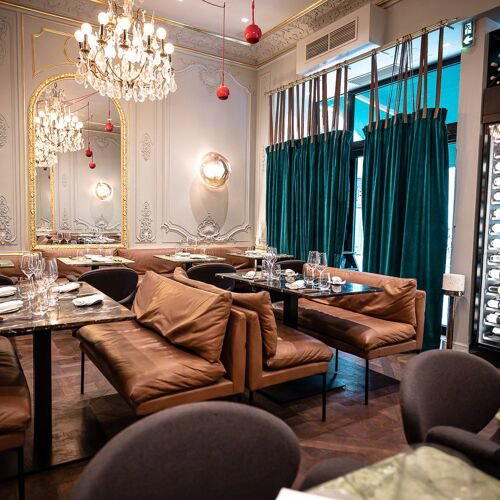
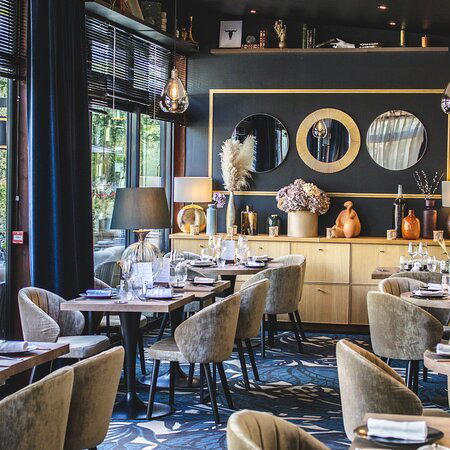
Warm, convivial, and relaxed atmosphere with handcrafted artisan pieces displayed throughout, creating an intimate connection to French compagnonnage heritage.