Our verdict
On Rue Jean Jaurès in central Limoges, Déjeunette Brunch represents the city's growing appetite for daytime dining that takes ingredient sourcing seriously. The Limousin region's cattle, river fish, and market gardens give brunch-format cooking here a distinct regional grounding that separates it from generic café fare. A practical stop for visitors exploring a city better known for porcelain than its plate.

Pearl is the En Primeur Club membership app — saves, bookings, and concierge access live there. Same editors, same standards.
- Address
- 6 Rue Jean Jaurès, 87000 Limoges, France
- Phone
- +33555060577
- Hours
- Mon–Tue 10 AM–4 PMWed–Thu ClosedFri 10 AM–4 PMSat 10 AM–6 PMSun 10 AM–4 PM
- Website
- dejeunette.com
- Directions
- Get directions
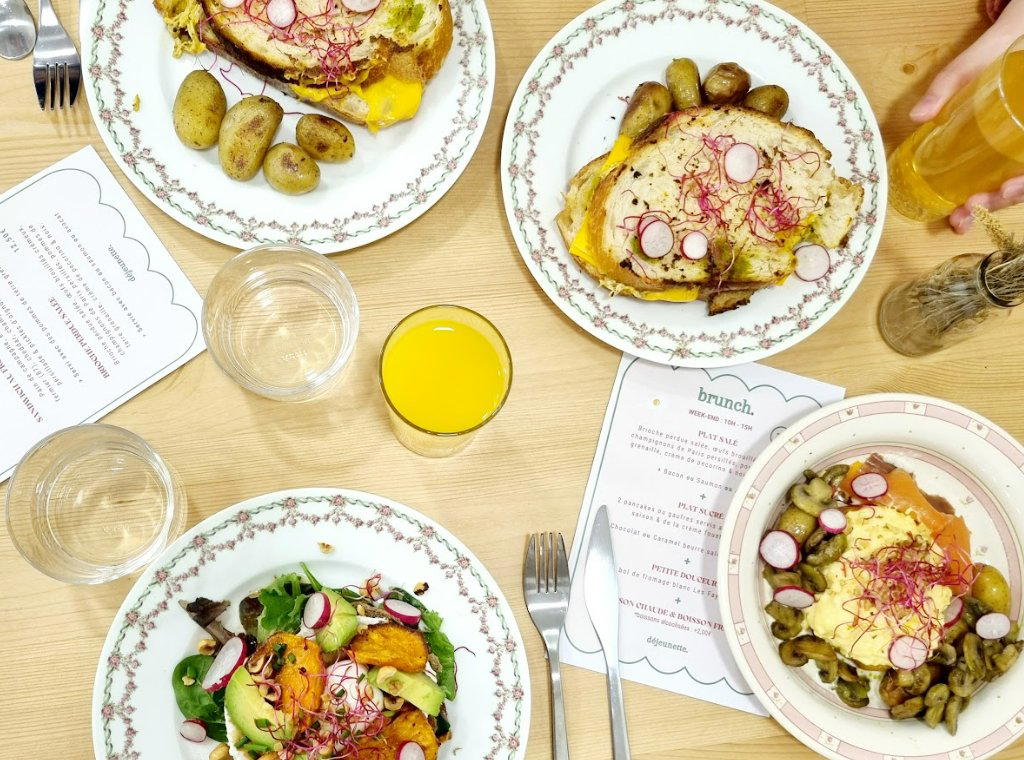
Brunch in a Region That Takes Its Larder Seriously
Limoges occupies an unusual position in the French dining conversation. The city is internationally known for its porcelain and enamel work, yet the Limousin region surrounding it is one of France's most productive agricultural territories: Limousin cattle, whose beef carries a protected designation of origin, graze across the plateau; the Vienne and Creuse rivers supply freshwater fish; and the hedgerow-divided bocage landscape supports small-scale market gardening that supplies regional kitchens from Brive to Guéret. What the city lacks in Michelin density compared to Lyon or Paris, it compensates for in raw material quality that kitchens at any price point can draw from.
Daytime dining in this context is not an afterthought. The brunch format, which has moved steadily from weekend novelty to a standing fixture across provincial French cities over the past decade, works particularly well in a city where the midday meal remains culturally important and where ingredient access is strong. Déjeunette Brunch, at 6 Rue Jean Jaurès in central Limoges, sits within this context: a dedicated brunch address operating in a city whose food identity is more tied to its agricultural hinterland than to any single celebrated restaurant.
What the Limousin Larder Brings to the Table
The editorial logic of ingredient sourcing matters more in a brunch setting than it might initially seem. Brunch menus across France tend to fall into two categories: the international hotel-buffet model, which relies on imported pantry staples and standardised presentation, and the market-led daytime model, which treats the format as an extension of the region's lunch culture and sources accordingly. The Limousin region pushes kitchens toward the second approach almost by default, given the density of local producers within a short supply radius.
Limousin beef, for instance, is one of the few French breeds with a Label Rouge designation that predates the EU's broader protected origin framework, and it appears in Limoges kitchens at every price point. Pork from the plateau, dairy from small Norman-influenced farms in the Corrèze border zone, and foraged mushrooms from the Creuse forest areas all feed into what regional kitchens can credibly put on a plate. A brunch address in this environment has access to sourcing that most European capitals would require significant premium pricing to replicate.
For visitors arriving from outside the region, this is worth registering: Limoges' daytime dining scene is not a diluted version of Parisian café culture but something shaped by a different set of supply chains. The context that Limousin cattle provide to a restaurant like Amphitryon at the top of the city's dining register applies, in modified form, all the way down to casual daytime formats.
The Address and Its Neighbourhood Context
Rue Jean Jaurès runs through a commercially active section of central Limoges, within reasonable walking distance of the cathedral quarter and the covered market at Les Halles de la Motte. The latter is significant for ingredient sourcing: the market draws regional producers and functions as a reference point for what is in season and locally available, which in turn sets a standard that nearby dining addresses work against or toward. A brunch venue on this axis is well-positioned both logistically and in terms of what it signals about its supply relationships.
Limoges operates at a lower tourist volume than comparable French cities of similar size, which means restaurant trade is driven more by local regulars than by visitor flows. This shapes the daytime dining scene in practical ways: opening hours tend to follow local habits rather than tourist expectations, and reservations are advisable at addresses that have built a local following. Visitors to the city are better served treating Limoges as a destination city, spending time in the porcelain museum district and the medieval streets around Saint-Étienne Cathedral, rather than passing through on a single meal. The city's restaurant circuit, including L'Aparté, L'Echanson, La Cuisine du Cloître, and La Table des Compagnons, rewards visitors who build itineraries around it rather than treating it as a detour.
Where Déjeunette Sits in the City's Daytime Register
Limoges' daytime dining options span a range from traditional brasserie service to modern bistro formats and, increasingly, dedicated brunch addresses. Déjeunette Brunch occupies the latter category, a format that has grown across mid-sized French cities as the gap between café culture and full restaurant service has widened into a recognised dining tier. At the more formal end of the Limoges dining scale, addresses like Amphitryon represent the city's engagement with contemporary French technique; the daytime tier, including Déjeunette, reflects a different demand: accessible, ingredient-led eating that does not require the commitment of a multi-course evening meal.
Comparison with brunch culture in French cities of equivalent size suggests that Limoges' version of the format has been shaped by local food habits rather than imported trends. The emphasis on quality sourcing from a strong agricultural base is a regional constant. France's most celebrated kitchens, from Flocons de Sel in Megève to Bras in Laguiole, make ingredient provenance central to their identity; the same logic, applied with less formality, defines what distinguishes better daytime dining from generic café service across provincial France.
For visitors who want to understand Limoges' food culture as a whole, the daytime register is part of the picture. The full dining circuit, from addresses like Déjeunette through to the evening restaurants covered in our full Limoges restaurants guide, maps a city whose culinary identity is grounded in regional agriculture rather than metropolitan influence.
Planning a Visit
Déjeunette Brunch is located at 6 Rue Jean Jaurès, 87000 Limoges, in central walking distance from the main cathedral and market areas. As with most dedicated brunch addresses in provincial French cities, confirming current opening days and hours directly before visiting is advisable, particularly midweek, as daytime-only formats often operate on compressed schedules. Limoges is accessible by TGV from Paris in approximately three hours and by regional rail connections from Bordeaux and Toulouse, making it a practical addition to a southwest France itinerary.
Frequently asked questions
What should I expect atmosphere-wise at Déjeunette Brunch?
Déjeunette Brunch occupies a street-level address on Rue Jean Jaurès, one of central Limoges' commercially active corridors, placing it in the daytime rhythm of a city known more for its porcelain heritage than its restaurant scene. The dedicated brunch format positions it closer to a neighbourhood café-bistro register than a formal dining room. Detailed interior documentation is not available, but the address and format together suggest a relaxed, daytime-focused setting.
How does Déjeunette Brunch fit into Limoges' wider dining scene?
Limoges has historically been underrepresented in French dining coverage despite the Limousin region's strong food-production credentials, including AOC-protected beef and a well-regarded charcuterie tradition. Dedicated brunch addresses remain a smaller category within the city's daytime offer, which positions Déjeunette Brunch at 6 Rue Jean Jaurès as one of the more specific options for visitors seeking a structured mid-morning meal rather than a traditional brasserie service. The cathedral quarter and covered market are both within walking distance, making the address a practical base for a morning spent in central Limoges.
Where exactly is Déjeunette Brunch?
Déjeunette Brunch is located at 6 Rue Jean Jaurès, 87000 Limoges, France, Limoges.
What's the best way to book Déjeunette Brunch?
No booking phone number or website is currently documented for Déjeunette Brunch. The venue is located at 6 Rue Jean Jaurès, 87000 Limoges, and visiting in person or searching for an updated contact listing closer to your travel dates is the most direct approach. Brunch slots in French city-centre addresses can fill quickly on weekends, so advance contact is worth the effort.
Comparable Venues
Comparable venues nearby, for context on price, style, and recognition.
| Venue | Cuisine | Price | Notes |
|---|---|---|---|
| Déjeunette BrunchThis venue — the venue you are viewing | Homemade Brunch Café | $20–30 | Not listed |
| Le Bouillon Limousin | Traditional French Brasserie with Limousin Specialties | $30–50 | centre ville |
| Le Versailles | Traditional French Brasserie | $30–50 | Downtown |
| Les Petits Ventres | Modern Traditional Limousin French | $20–30 | rue de la Boucherie |
| Le Bistrot d'Olivier | Traditional French Limousin Bistro | $20–30 | Halles Centrales |
| L'Echanson | Traditional French Bistro | $20–30 | Centre Ville |
Continue exploring
More in Limoges
Restaurants in Limoges
Browse all →
Hotels in Limoges
Browse all →
Wineries in Limoges
Browse all →
Details
- Cozy
- Modern
- Brunch
- Casual Hangout
- Local Sourcing
- A La Carte
- Set Menu
Current opening hours
- Monday
- 10 AM–4 PM
- Tuesday
- 10 AM–4 PM
- Wednesday
- Closed
- Thursday
- Closed
- Friday
- 10 AM–4 PM
- Saturday
- 10 AM–6 PM
- Sunday
- 10 AM–4 PM
Hours can change for holidays and private events. Last verified .
Cozy atmosphere with light wood decor, plants, and soft lighting creating a warm and welcoming space.