Le Bouchon des Filles occupies a distinct position in Lyon's bouchon tradition: a neighbourhood table on Rue Sergent Blandan in the 1st arrondissement where the format skews toward the city's original working-class eating culture rather than its tourist-facing imitations. Compared to Lyon's contemporary French fine-dining tier, this is the other register entirely, and that contrast is precisely the point.
Pearl is the En Primeur Club membership app — saves, bookings, and concierge access live there. Same editors, same standards.
- Address
- 20 Rue Sergent Blandan, 69001 Lyon, France
- Phone
- +33478304044
- Website
- lebouchondesfilles.com
- Directions
- Get directions
 Saves & bookings on Pearl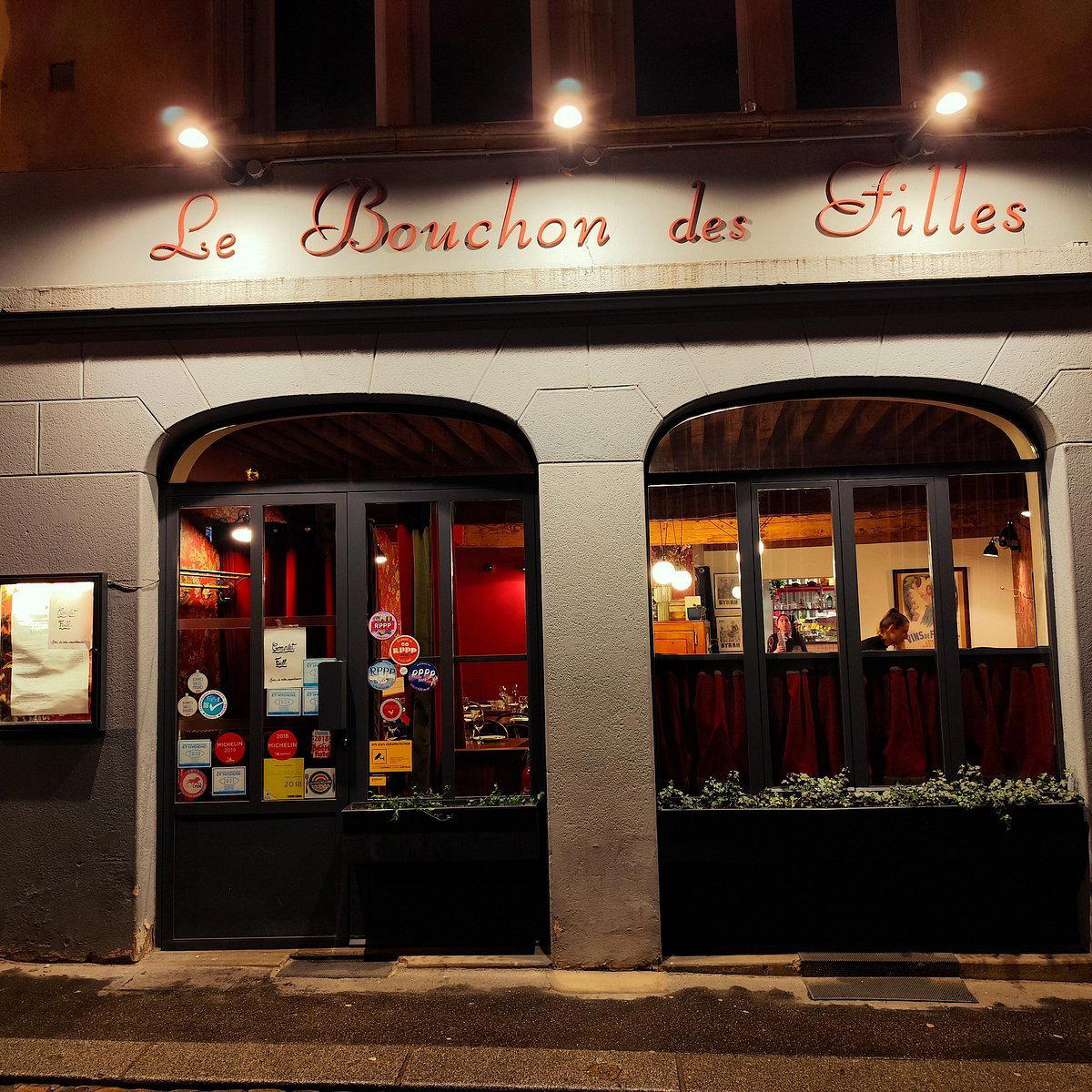
The Bouchon as a Living Format, Not a Museum Piece
Lyon's bouchons exist on a spectrum that runs from highly choreographed tourist traps to places that still function the way the format always did: as neighbourhood dining rooms where the food is tied to what the market offered that morning and the room fills with people who live nearby. Le Bouchon des Filles is a modern Lyonnaise bouchon at 20 Rue Sergent Blandan, 69001 Lyon, France. The street itself is a quiet residential cut in Croix-Rousse's lower slope. Arriving on foot from Place de la Croix-Rousse, you pass boulangeries and wine shops before the restaurant comes into view, which is exactly the kind of approach that contextualises what you're about to eat.
The bouchon tradition is older than Michelin stars and predates Lyon's modern reputation as a reference point for French gastronomy. Its origins are in mères lyonnaises, the women who ran modest, direct tables for workers and later for the city's bourgeoisie. The food was built around what couldn't be wasted: offal, slow-braised cuts, preserved meats, and the kind of protein that required technique to make appealing. That sourcing logic, born of economy rather than ideology, is the thread that connects the historic bouchon to its contemporary versions. Le Bouchon des Filles takes its name directly from that lineage, positioning itself within the tradition of women-led cooking rather than the chef-as-auteur model that has come to dominate Lyon's higher price tiers.
Where the Food Comes From, and Why That Framing Still Matters
In Lyon, the argument about ingredient provenance predates the farm-to-table discourse by several decades. The city's position at the junction of Bresse to the north, the Rhône valley to the east, and the Auvergne uplands to the west has always given its cooks a supply network that most European cities would struggle to replicate. Bresse chicken carries AOC designation and is among the more regulated poultry in France. Saône and Rhône river fish, quenelles made from pike, cheeses from the Auvergne and Lyonnais hills, and charcuterie from regional producers form the backbone of what a serious bouchon kitchen draws on.
In this context, what Le Bouchon des Filles represents is less a departure from the tradition than a fidelity to its original sourcing discipline. The format doesn't chase global ingredients or fusion references. It works within a defined regional perimeter, which is a constraint that most contemporary kitchens have voluntarily abandoned. That regional discipline is also what separates the bouchon category from the contemporary French creative tier represented by venues like Le Neuvième Art or Takao Takano, where the cooking is explicitly constructed around personal vision rather than inherited geography.
The contrast with La Mere Brazier is also instructive. La Mère Brazier operates as a Michelin-starred institution that carries the weight of Lyon's gastronomic mythology on its shoulders. Le Bouchon des Filles works in a different register entirely: lower ceremony, tighter geography, and a format that doesn't require a tasting menu to make its point. Both are legitimate expressions of the city's food culture, but they answer different questions about what Lyon cooking is for.
The Room and the Rhythm
Bouchons in their functional form are small. The rooms rarely accommodate large parties comfortably, and service operates on a lunch and dinner rhythm that reflects the working-day cadence the format was built around. The physical setting at Rue Sergent Blandan is consistent with that pattern: an interior that prioritises utility and warmth over design statement, where tables are close together and the room is loud enough at capacity to feel inhabited. This is not the environment of Au 14 Février or Burgundy by Matthieu, where the atmosphere is calibrated to the food's ambition. Here the atmosphere is the food's ambition, in the sense that the room's informality is itself an argument about what dining should feel like.
The wine approach in bouchons has historically favoured Beaujolais and Côtes du Rhône poured in small carafes, a tradition that reflects both regional proximity and the economic logic of keeping wine accessible rather than aspirational. That contrasts sharply with how wine is treated at the summit of the Lyon dining tier, or at reference restaurants like Paul Bocuse - L'Auberge du Pont de Collonges or the broader French fine-dining canon represented by venues like Alléno Paris au Pavillon Ledoyen or Troisgros - Le Bois sans Feuilles. At a bouchon, wine is a utility, not a ceremony.
Reading Le Bouchon des Filles Against the Lyon Dining Map
Lyon's dining scene has fragmented over the past two decades into several legible tiers. At the leading sit the Michelin-heavy creative addresses; below them, a growing cohort of modern bistros like Burgundy by Matthieu that translate contemporary technique into accessible formats; and at the base, the bouchon category, which ranges from the authentic to the performative. The challenge for a visitor is distinguishing which bouchons still operate with genuine sourcing logic and which have been reconfigured to meet tourist expectations rather than neighbourhood ones.
The restaurant' address in the 1st arrondissement, rather than in the more heavily trafficked Vieux-Lyon bouchon corridor, is one indicator of audience. The venue draws on a local residential base. That distinction matters when you're trying to understand whether the food is being prepared for people who eat there regularly or for visitors who won't return. The format of bouchon cooking rewards repetition, because the menu shifts with seasonal availability and the short-supply logic of traditional Lyonnais sourcing.
For a fuller picture of where the restaurant sits within Lyon's broader dining geography, compare it with the city's other bouchons and modern bistros.
Just the Basics
Comparable venues nearby, for context on price, style, and recognition.
| Venue | Price | Notes |
|---|---|---|
| Le Bouchon des FillesThis venue — the venue you are viewing | $$ | Not listed |
| Le Casse Museau | $$ | Quartier Bas des Pentes Presqu'île, Bouchon Lyonnais |
| La Cuisine | $$ | Quartier Haut et Coeur des Pentes, Modern French Bistro |
| La Cocagne | $$ | Quartier Mutualité Préfecture Moncey, Traditional French Bistro |
| Noham | $$ | Quartier Vaise Rochecardon Industrie, French Patisserie & Australian-Style Brunch Café |
| Bouchon Rouge | $$ | Quartier Quartiers Anciens, Traditional Lyonnaise Bouchon |
Continue exploring
More in Lyon
Restaurants in Lyon
Browse all →
Bars in Lyon
Browse all →
Hotels in Lyon
Browse all →

At a Glance
- Cozy
- Rustic
- Lively
- Intimate
- Date Night
- Casual Hangout
- Family
- Historic Building
- Extensive Wine List
Current opening hours
- Monday
- 7–10 PM
- Tuesday
- 7–10 PM
- Wednesday
- 7–10 PM
- Thursday
- 7–10 PM
- Friday
- 7–10 PM
- Saturday
- 12–1:30 PM, 7–10 PM
- Sunday
- 12–1:30 PM, 7–10 PM
Hours can change for holidays and private events. Last verified .
Warm, welcoming rustic atmosphere with red walls, checkered tablecloths, and a cozy, intimate feel.