Our verdict
Le Bibent occupies one of the most architecturally significant dining rooms in Toulouse, set inside a nineteenth-century brasserie on the Place du Capitole. The address places it at the civic heart of a city with a serious and often underappreciated restaurant culture. For visitors approaching Toulouse as a dining destination, Bibent is a logical first point of reference.

Pearl is the En Primeur Club membership app — saves, bookings, and concierge access live there. Same editors, same standards.
- Address
- 5 Pl. du Capitole, 31000 Toulouse, France
- Phone
- +33 6 48 71 73 65
- Hours
- Daily 8:30 AM–10:15 PM
- Website
- bibent.fr
- Directions
- Get directions
- Booking
- Book on Zenchef
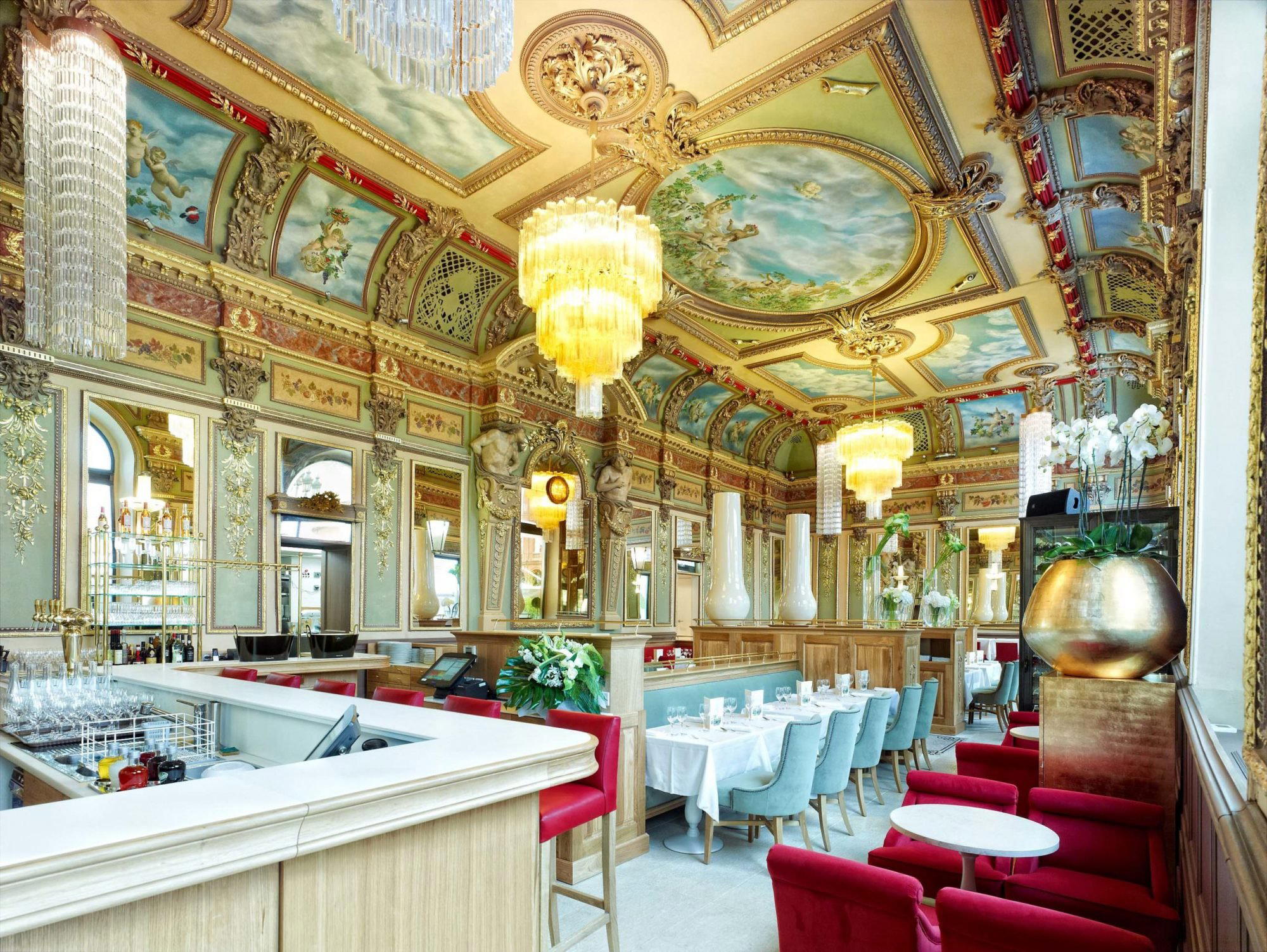
A Room That Sets the Terms Before You Sit Down
There are dining rooms that function as backdrops, and there are rooms that actively shape the meal. Le Bibent belongs to the second category. The space is a preserved nineteenth-century brasserie interior on the Place du Capitole, Toulouse's central square and the symbolic address of civic life in the city. Gilded mouldings, mirrored walls, and a ceiling scaled for ceremony establish the register immediately: this is a restaurant where the architecture participates in the ritual. Before a menu arrives, the room has already made an argument about what kind of meal this will be.
That argument is a classically French one. The grand brasserie tradition, which gave France institutions like Lipp in Paris and Bofinger in the Marais, depends on a particular contract between the room and the guest: the setting does serious work, the service follows a recognisable choreography, and the food is expected to honour the context rather than subvert it. Le Bibent, in that sense, is a practitioner of a recognisable French dining form, applied at one of the most architecturally significant restaurant addresses in the southwest.
The Ritual of the Brasserie Meal
Understanding Le Bibent requires understanding the brasserie as a dining format rather than simply a category. The French brasserie is not a casual alternative to a gastronomic restaurant; it is a distinct ritual with its own pacing, conventions, and expectations. Menus tend to be wide rather than tight, structured around regional and national classics rather than chef-driven novelty. Service is attentive but not theatrical. The meal is expected to sustain a table for two to three hours without demanding that diners perform close attention to every course. It is, in the original sense, a meal for adults with somewhere to be afterwards but no desire to rush.
At Le Bibent, that format is reinforced by the physical reality of the address. Sitting on the Place du Capitole means the room draws a broad cross-section of Toulouse life: business lunches, Sunday family meals, tourists arriving for the first time, regulars who have been coming for years. The brasserie format absorbs all of these without friction. A counter-culture omakase experience requires a specific kind of diner; Le Bibent asks less of its guests and delivers more in return for less effort.
Toulouse itself provides useful context here. The city has a restaurant culture that runs from traditional cassoulet-anchored bistros through to creative contemporary tables including Michel Sarran, whose double Michelin-starred address represents the highest formal tier, and inventive spots like Py-r and SEPT, which occupy the creative end of the mid-tier. Acte 2 Yannick Delpech and Agapes add further range to the modern cuisine tier. Le Bibent does not compete directly with any of these. It operates in a separate register, one defined by architectural heritage and classical format rather than creative ambition or chef-driven identity. For the fuller picture of how these addresses fit together, our full Toulouse restaurants guide maps the tiers and neighbourhoods in detail.
Southwest France on the Plate
The grand brasserie format, applied in Toulouse, carries a regional obligation that a Parisian equivalent does not face in quite the same way. The southwest is one of France's most ingredient-specific regions: duck confit, cassoulet, foie gras, Gascony wines, and the broader tradition of Occitan cooking are not incidental to the food culture here but foundational to it. A serious brasserie in this city is expected to engage with that tradition, at minimum as a reference point.
That regional specificity is what separates the southwest French brasserie from the Paris model. In the capital, the brasserie tradition tends toward the cosmopolitan: oysters, steak frites, choucroute, and a wine list built around accessibility. In Toulouse, the regional anchors are heavier and more particular. The cassoulet question alone, which version, which interpretation, how orthodox, can function as a kind of litmus test for how seriously a restaurant engages with its location. This is the context in which Le Bibent's menu choices carry meaning beyond their face value.
For readers building a broader picture of refined French dining outside the capital, the reference points extend well beyond Toulouse. Bras in Laguiole represents the Aveyron tradition, rooted in the natural world of the Aubrac plateau. Les Prés d'Eugénie - Michel Guérard in Eugénie-les-Bains anchors the Gascon end of southwest French haute cuisine. Further afield, Flocons de Sel in Megève, Mirazur in Menton, and Auberge de l'Ill in Illhaeusern each demonstrate how deeply regional identity shapes the formal French restaurant at altitude. The longer lineage runs through Troisgros - Le Bois sans Feuilles in Ouches, Paul Bocuse - L'Auberge du Pont de Collonges in Collonges-au-Mont-d'Or, Georges Blanc in Vonnas, and Alléno Paris au Pavillon Ledoyen, all addresses where French culinary heritage is the explicit subject of the meal. For contrast in how different national traditions approach formal dining, Le Bernardin in New York City and Lazy Bear in San Francisco show how the communal meal ritual translates across the Atlantic with entirely different rules.
Planning the Visit
Le Bibent sits at 5 Place du Capitole, which means it is reachable on foot from the Capitole metro station in under two minutes. The square itself is the geographic centre of the old city, which makes Bibent a natural starting or ending point for any day spent in central Toulouse. For visitors arriving by train, Gare Matabiau is roughly fifteen minutes on foot or a short metro ride on Line A. Given the address and format, the lunch service on weekdays draws a working-city crowd; the dinner service and weekend lunch tend to run longer and carry a different social texture. For a room of this architectural weight and central position, booking ahead is advisable, particularly for larger tables or weekend slots.
Frequently asked questions
What's Le Bibent's location?
Le Bibent is located at 5 Pl. du Capitole, 31000 Toulouse, France, Toulouse.
Is Le Bibent a good choice for experiencing traditional Toulouse cuisine?
Le Bibent sits on Place du Capitole, the geographic and civic centre of Toulouse, positioning it as a reference point for the city's brasserie culture rather than a peripheral or specialist address. The grand brasserie format, applied in southwestern France, carries a regional obligation toward local produce and cooking traditions that define Haute-Garonne gastronomy. For a traveller seeking a structured introduction to Toulouse's culinary identity in a formal room, Le Bibent's location and format align with that purpose.
What dish is Le Bibent famous for?
Le Bibent operates within the grand brasserie tradition at the heart of Toulouse, which means the kitchen anchors itself in southwestern French cooking. In this region, that points toward dishes built around duck confit, foie gras, and cassoulet — the canon that defines Haute-Garonne tables. Specific menu items should be confirmed directly with the restaurant, as seasonal composition can shift the offering.
What's the best way to book Le Bibent?
Le Bibent's address at 5 Place du Capitole — one of the most trafficked civic squares in Toulouse — means walk-in attempts are more viable here than at smaller reservation-only addresses in the city. That said, peak lunch service and weekend evenings draw both locals and visitors, so contacting the venue in advance is advisable. Check the restaurant's current booking channels directly, as online reservation details are subject to change.
Cuisine and Recognition
Comparable venues nearby, for context on price, style, and recognition.
| Venue | Cuisine | Price | Awards | Notes |
|---|---|---|---|---|
| Le BibentThis venue — the venue you are viewing | Classic French Brasserie with Southwestern Accents | $30–50 | Not listed | Not listed |
| Restaurant Les P'tits Fayots | French | Not listed | Michelin Plate | Capitole / Arnaud Bernard / Carmes |
| Barbaque Victor Hugo | French Steakhouse Grill | $30–50 | Not listed | Capitole / Arnaud Bernard / Carmes |
| Le Saint Sauvage | Modern French Bistro | $50–100 | Not listed | Capitole / Arnaud Bernard / Carmes |
| Le Colombier | Traditional Southwestern French Cassoulet | $30–50 | Not listed | Les Chalets / Bayard / Belfort / Saint-Aubin / Dupuy |
| Restaurant Sixty-two | Modern Southwestern French | $30–50 | Not listed | Capitole / Arnaud Bernard / Carmes |
Continue exploring
More in Toulouse
Restaurants in Toulouse
Browse all →
Bars in Toulouse
Browse all →
Hotels in Toulouse
Browse all →
Wineries in Toulouse
Browse all →
Le Bibent
The wine
- Wine program
- Curated wine list
- Extensive wine list
Details
- Classic
- Elegant
- Historic
- Well Known
- Casual Hangout
- Brunch
- Late Night
- Historic Building
- Terrace
- Extensive Wine List
- Local Sourcing
- Street Scene
- A La Carte
- Vegetarian Friendly
Current opening hours
- Monday
- 8:30 AM–10:15 PM
- Tuesday
- 8:30 AM–10:15 PM
- Wednesday
- 8:30 AM–10:15 PM
- Thursday
- 8:30 AM–10:15 PM
- Friday
- 8:30 AM–10:15 PM
- Saturday
- 8:30 AM–10:15 PM
- Sunday
- 8:30 AM–10:15 PM
Hours can change for holidays and private events. Last verified .
Ornate Belle Époque interior featuring stucco, friezes, mirrors, Murano chandeliers, and carved caryatids in a bustling, ornate setting.