
Michelin Bib Gourmand
Our verdict
For over 30 years, Lao Song Bian Shi Dian on Xiahe Road has been the reference point for Xiamen's bian shi tradition. Generations of locals have grown up on its pork wonton soup, peanut-sauced blanched noodles, and hand-shredded pork with tendon. At this price tier and with this longevity, it belongs on any serious survey of Fujianese street food.

Pearl is the En Primeur Club membership app, where members save venues, book tables and use the concierge.
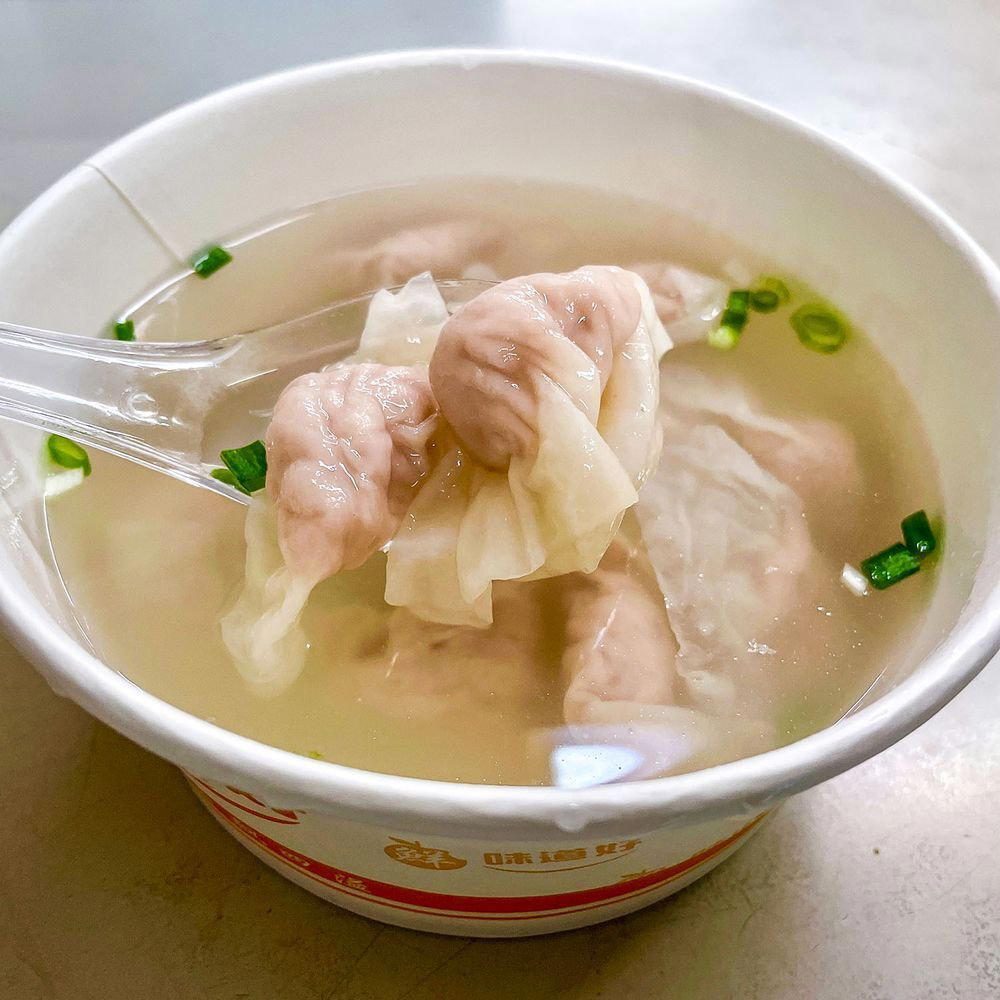
The menu
What to order
- Mini_pork_wontons
- Wonton_soup
- Blanched_noodles_peanut_sauce
- Hand_shredded_pork
Where Xiamen's Wonton Tradition Lives
Xiahe Road in Siming is not a destination street in the way that tourist itineraries frame Zhongshan Road or the Gulangyu ferry pier. It is a working neighbourhood artery, lined with the kind of low-margin, high-frequency eating that sustains a city's actual food culture rather than its promotional image. That is precisely the environment in which bian shi has always flourished. The snack, a compact pork wonton particular to Xiamen's Hokkien-rooted kitchen, belongs to the category of food that residents eat without consulting a guide: reflexively, repeatedly, generationally. Lao Song Bian Shi Dian, at 202-101 Xiahe Road, is one of the places that anchors that habit.
Arriving at the right hour matters here. The rhythm of a bian shi shop is driven by breakfast and lunch crowds, and by the late morning the tables fill with a combination of residents on their way through the neighbourhood and office workers looking for something fast and filling. The physical space is functional: tile floors, modest seating, the visual shorthand of a kitchen that has been running the same few items for decades. There is nothing to orient a first-timer except the menu board and the cues of the regulars in front of them.
The Ingredient Logic Behind Bian Shi
Bian shi is deceptively simple in construction, which is why sourcing and handling show immediately in the result. The filling is minced pork, and the quality of that pork, its fat ratio, its freshness, the fineness of the mince, determines the texture of the finished wonton. At Lao Song, the filling is tightly packed but not dense: there is enough give that the parcel yields cleanly when bitten rather than compressing into a hard pellet. That outcome reflects consistent sourcing and consistent preparation rather than kitchen innovation.
The more instructive variable is the wrapper itself. Lao Song offers two distinct types, and the choice between them is not cosmetic. The standard flour wrapper is soft once cooked, with a velvety surface that absorbs the broth it is served in. The starch-blended variety is a different product: thinner, translucent when cooked, with a springy bounce that gives each wonton a firmer bite. In the broader context of Chinese dumpling traditions, this split maps onto a distinction between wheat-forward northern textures and the starch-forward wrappers more common in southern coastal cooking. That Lao Song maintains both is a practical acknowledgement that its customer base has strong preferences on this point and that neither option is dominant.
This attention to the wrapper material is one of the ways that Xiamen's bian shi tradition differs from the generic pork wonton found in wider Cantonese or pan-Chinese contexts. For comparison, places like Hokklo and Yanyu (Jiahe Road) each represent distinct registers of Fujian-rooted cooking in Xiamen, where ingredient sourcing and regional specificity carry similar weight. At the street-food end of the spectrum, the discipline is the same even if the scale and price tier are different.
The Menu and Its Logic
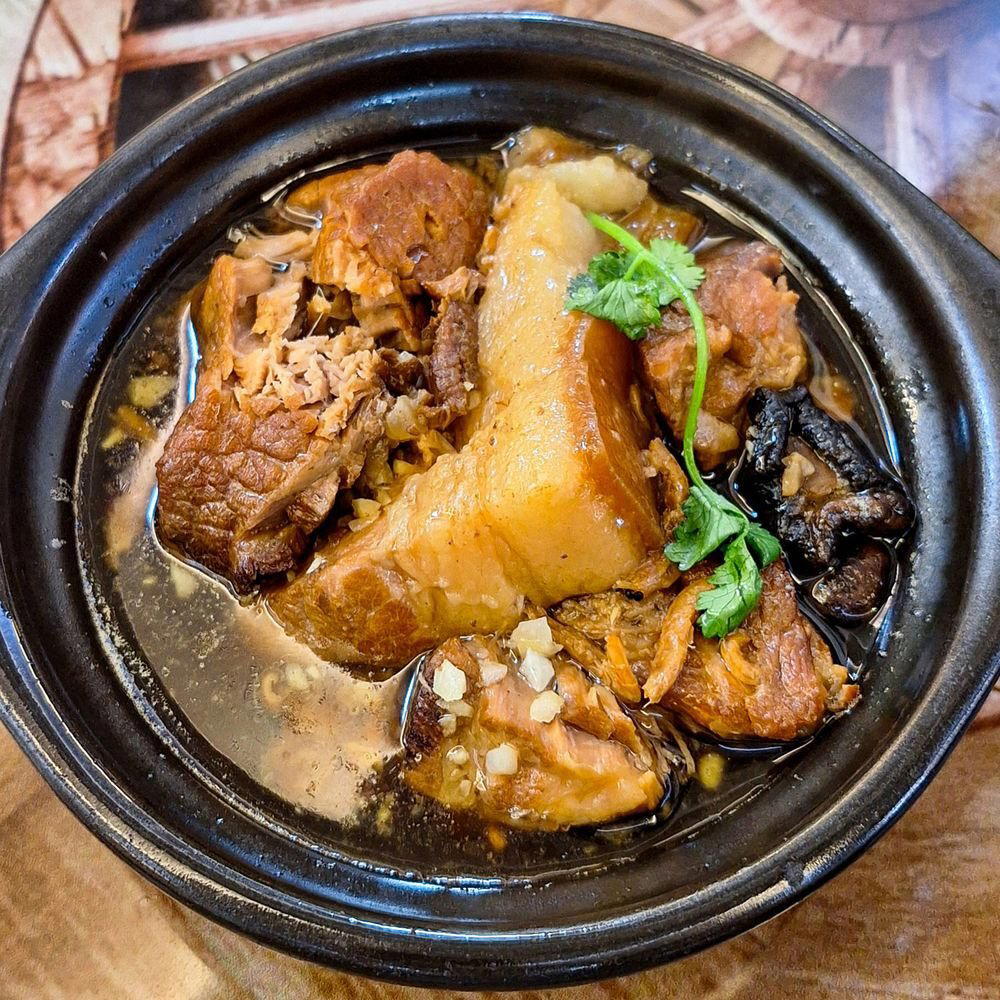
Three items form the core of what Lao Song does. The bian shi wonton soup is the signature: a clear pork broth holding a quantity of wontons, with an optional garnish of spring onion or dried flakes depending on the day's prep. The second item, blanched noodles tossed in peanut sauce, sits in a longer Hokkien tradition of using ground roasted peanuts as a primary seasoning rather than as a condiment. The peanut sauce here is not the sweetened, diluted version common in tourist-adjacent cooking but a dense, savoury paste that coats the noodles with enough body to function as the dish's structural element. The noodles are thin, wheat-based, and cooked to the point where they remain slightly springy rather than fully soft.
The third item, hand-shredded pork served with tendon attached, offers a textural contrast that the wonton format alone cannot provide. The tendon section is collagenous and slow-yielding, which requires a different pace of eating than the wontons' quick succession of bites. That combination, along with the peanut noodles, means a full order covers the range of textures that Hokkien street eating typically deploys: slippery, springy, soft, resistant.
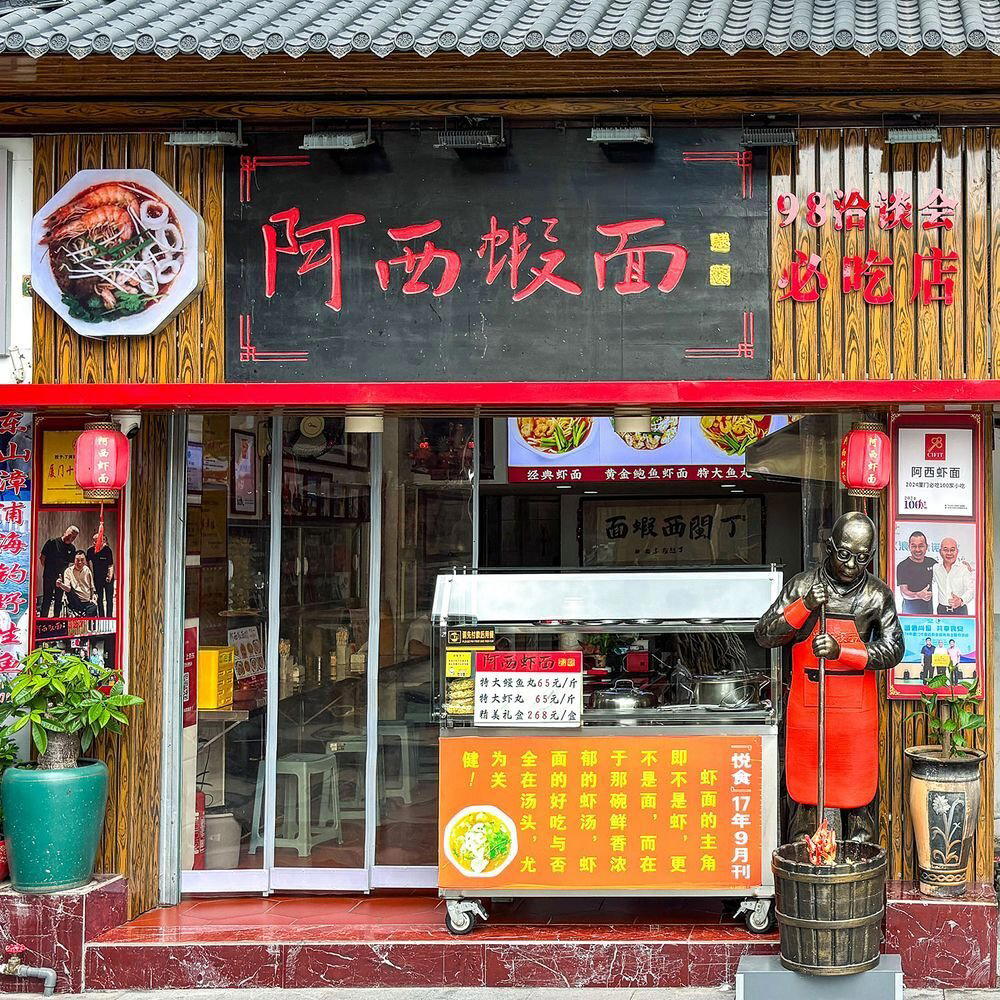
For a broader reading of Xiamen's street-food register, A Xi Xia Mian operates in a comparable tier, and the duck-focused congee tradition at 1927 Dong Yuan Si Chu maps the same neighbourhood-anchored eating culture through a different format. Outside Xiamen, the discipline of letting sourcing determine outcome rather than technique compensate for it connects Lao Song's approach to very different price tiers: the same logic governs seafood sourcing at fine-dining operations from Xin Rong Ji (Xinyuan South Road) in Beijing to Le Bernardin in New York City, even if the contexts are incomparable in format and price.
Thirty Years and What That Signals
A bian shi shop that has been running on the same street for over 30 years in a Chinese coastal city is not surviving on novelty or foot traffic from visiting diners. It is sustained by repeat business from a population that has specific, exacting expectations for the product. Generations of Xiamenese have grown up eating here, which means Lao Song is being measured constantly against a remembered version of itself. That is a harder benchmark to meet than any external award. The fact that it remains a household name in the city after three decades is the kind of trust signal that institutional recognition rarely matches at this price point.
This also places Lao Song in a different competitive frame than the restaurants drawing visitors from outside the region. Fleurs Et Festin and the upper tier of Xiamen's dining scene, including options surveyed in our full Xiamen restaurants guide, operate on an entirely different axis of value and audience.
Planning Your Visit
Lao Song Bian Shi Dian is at 202-101 Xiahe Road in Siming district. Xiamen's metro system covers much of Siming, and Xiahe Road sits within walking distance of several central stations. Given the format, arriving before the peak lunch rush, between 11:00 and 11:30, generally means shorter waits. No booking is possible or expected at this type of operation. Payment is handled at the counter, cash being the most reliable method though mobile payment is standard in Xiamen broadly. A full order across the three main items runs to a very small bill by any urban dining standard.
For a complete picture of how to structure time and spending in Xiamen across categories and price tiers, our full Xiamen hotels guide, bars guide, wineries guide, and experiences guide map the city's offer across those verticals.
Frequently asked questions
How do I find Lao Song Bian Shi Dian?
Lao Song Bian Shi Dian is located at 202-101 Xiahe Road, Siming, Xiamen.
What awards or recognition does Lao Song Bian Shi Dian have?
Lao Song Bian Shi Dian has received recognition including: This spot, a household name in Xiaman, has been serving mini pork wontons – bian shi – for over 30 years. Generations of Xiamenese have grown up eating their wonton soup, blanched noodles tossed in peanut sauce, as well as hand-shredded por….
What do regulars order at Lao Song Bian Shi Dian?
The core order for most regulars is the bian shi wonton soup alongside blanched noodles tossed in peanut sauce. Many also add the hand-shredded pork with tendon attached. For the bian shi itself, the shop offers two wrapper styles: a soft flour skin and a starch-and-pork variety that is bouncy and translucent, locals tend to have a firm preference for one or the other.
How hard is it to get a table at Lao Song Bian Shi Dian?
Lao Song operates as a neighbourhood fixture on Xiahe Road in Siming, not a reservation-taking dining room. That means peak hours, breakfast and lunch, see queues of regulars who have been coming for decades. Arriving slightly off-peak improves your chances of sitting down quickly, though the turnover at a wonton counter is fast.
What's Lao Song Bian Shi Dian best at?
The bian shi wonton is the reason this spot has held its place on Xiahe Road for over 30 years. The two wrapper styles, one soft and velvety, one translucent and springy, demonstrate a level of craft that keeps generations of Xiamenese returning rather than moving on to newer options. The peanut-sauce noodles run a close second as a reason to visit.
Comparable Spots, Quickly
Comparable venues nearby, for context on price, style, and recognition.
| Venue | Cuisine | Price | Awards | Notes |
|---|---|---|---|---|
| Lao Song Bian Shi DianThis venue (the venue you are viewing) | Traditional Xiamen Small Eats | Not listed | Michelin Bib Gourmand | Not listed |
| Shan Gu Tang | Fujian Medicinal Herbal Soups | $20–30 | Michelin Bib Gourmand | Siming |
| Ming Yue Xia Mian (Xiahe Road) | Xiamen Prawn Noodles | $1–10 | Michelin Bib Gourmand | Siming |
| Da Tong Shao Jiu Lang | Fujian Small Plates (Shao Jiao Pei) | $20–30 | Michelin Bib Gourmand | Siming |
| Cong Hui Tongan Lao Mei Shi Fan Dian | Fujian Tong'an Home-Style | Not listed | Michelin Bib Gourmand | Siming |
| Yue Hua Sha Cha Mian | Xiamen Sha Cha Noodles | $1–10 | Michelin Bib Gourmand | Siming |
Recognition history
Dated appearances from independent guides and award organizations, with the underlying list record or original source where available.
Michelin Bib Gourmand
Michelin
Continue exploring
More in Xiamen





Details
- Classic
- Casual Hangout
- Standalone
- A La Carte
Current opening hours
- Monday
- 9:30 AM–10 PM
- Tuesday
- 9:30 AM–10 PM
- Wednesday
- 9:30 AM–10 PM
- Thursday
- 9:30 AM–10 PM
- Friday
- 9:30 AM–10 PM
- Saturday
- 9:30 AM–10 PM
- Sunday
- 9:30 AM–10 PM
Hours can change for holidays and private events. Hours as of .
Casual small shop atmosphere focused on authentic local flavors.