Google: 4.7 · 1,073 reviews
.png)
A 2025 Michelin Bib Gourmand recipient on the corner of Rue Saint-Laurent in Bayeux's medieval quarter, L'Angle Saint-Laurent works a tight, seasonal lineup built on Normandy's most legible produce: Bayeux pork, Carrouges gruyère, local oysters. The €€ price point and exposed-stone interior make it the kind of address that earns its recognition through consistency rather than spectacle.
 Discover on Pearl
Pearl is the En Primeur Club membership app — saves, bookings, and concierge access live there. Same editors, same standards.
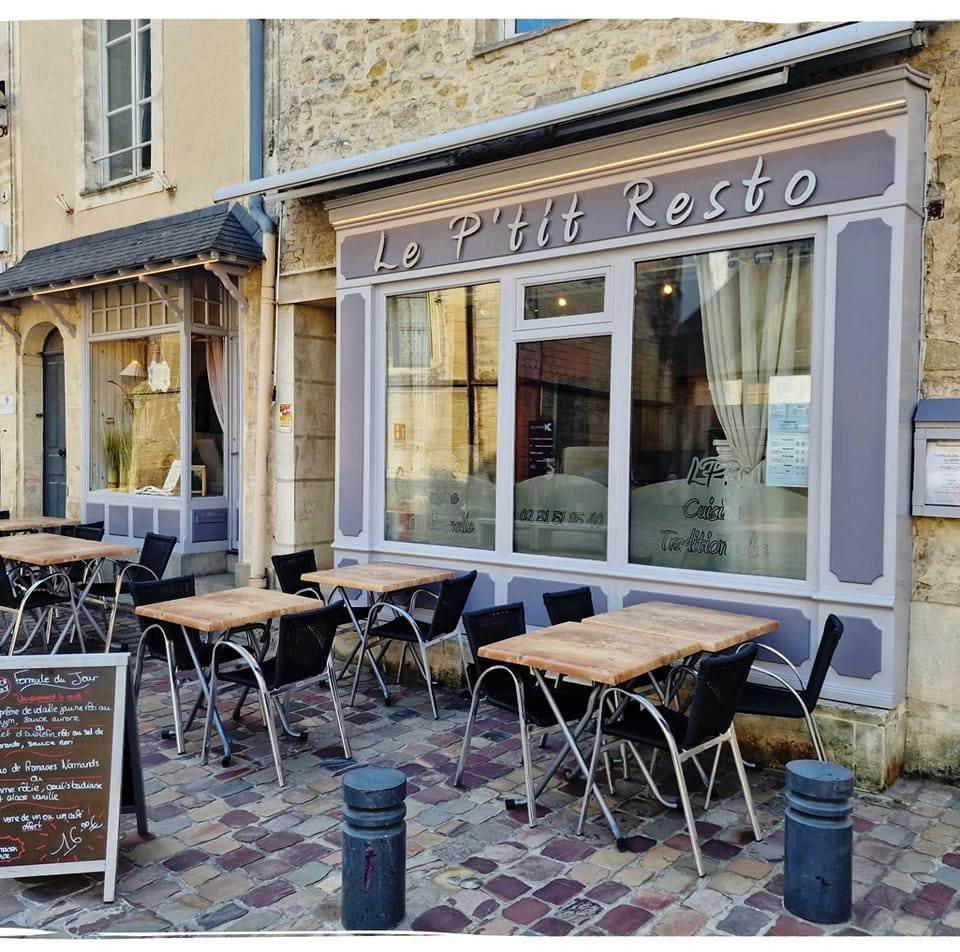
Stone Walls, Regional Larder: Bayeux's Bib Gourmand at the Butchers' Corner
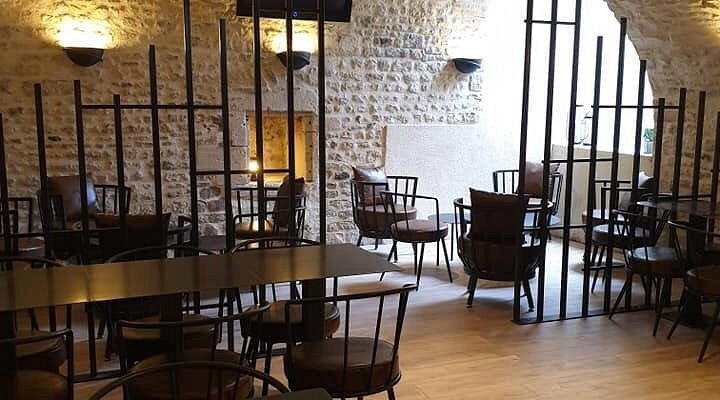
The junction of Rue Saint-Laurent and Rue des Bouchers in central Bayeux has the density of history that most Norman towns carry almost casually: exposed limestone, painted timber beams, lanes narrow enough that the buildings seem to lean in. L'Angle Saint-Laurent occupies that corner with the kind of physical presence that requires nothing additional in the way of design intervention. The room works with what the building already is — soft lighting against pale stone, structural beams left visible overhead — and the result is an interior that reads as settled rather than staged. In a city accustomed to visitors arriving for the and the D-Day coast, a room that doesn't announce itself is, in its own way, a considered choice.
What Bib Gourmand Means in a Market Town Context
Michelin's Bib Gourmand designation, awarded here in 2025, signals something specific: quality cooking at a price point that the guide considers genuinely accessible. Across France, the award tends to cluster around two types of address , the urban bistro running tight seasonal menus, and the market-town restaurant with direct producer access and lower overheads than city peers. L'Angle Saint-Laurent sits clearly in the second category. Bayeux's market infrastructure, the agricultural hinterland of Calvados, and the proximity of the Norman coast give kitchens here access to ingredients that restaurants in Paris or Lyon would pay significantly more to source. The Bib Gourmand recognition places L'Angle Saint-Laurent within a national cohort of addresses where the value proposition is structural, not promotional. For context on how French fine dining operates at higher price tiers, consider the positioning of Alléno Paris au Pavillon Ledoyen in Paris or Mirazur in Menton , the Bib Gourmand tier occupies a deliberate space below starred ambition but above generic regional cooking.
Within Bayeux itself, the restaurant sits alongside a small peer group of modern cuisine addresses at the €€ level. L'Alcôve and La Table du Lion share the same pricing tier and cuisine classification, while Le 1720 - Château de Sully operates a step above at €€€ and La Rapière anchors the traditional end of the spectrum. The Bib Gourmand recognition differentiates L'Angle Saint-Laurent within that local field, providing an external quality marker that the others in its tier do not currently carry.
The Produce Logic: Why Bayeux Pork, Norman Oysters, and Carrouges Gruyère
The menu's three named anchors , Bayeux pork, Normandy oysters, Carrouges gruyère , are not incidental. Each one reflects a specific strand of Norman agricultural identity, and their combined presence on a single menu is an argument about place as much as it is a list of ingredients.
Bayeux pork comes from a breed with deep regional roots in the Calvados bocage, slow-growing and well-fatted in the way that industrial production has largely eliminated from the mainstream supply chain. Its appearance on a restaurant menu at this price point signals direct or near-direct sourcing rather than the commodity channels that supply most mid-market kitchens. Normandy oysters from the region's coastal beds , among the most productive in Europe , require minimal explanation as a local ingredient, but their placement alongside the pork and the gruyère reinforces a consistent provenance logic rather than a scattershot appeal to perceived luxury. Carrouges gruyère, produced in the Orne département to the south, is the least immediately recognisable of the three outside the region, which is precisely what makes it editorially interesting: it points to a kitchen paying attention to the full Norman food geography rather than reaching for internationally legible prestige ingredients.
This kind of ingredient discipline is what distinguishes regionally grounded kitchens from those that invoke terroir rhetorically while sourcing from national distributors. The Michelin note explicitly identifies these three products as central to the lineup , a level of specificity that the guide reserves for menus where the sourcing is genuinely demonstrable. Restaurants built on this model, from Bras in Laguiole at the starred end to smaller Bib addresses across provincial France, share an underlying logic: the region's larder as the primary creative constraint, not an afterthought.
Continuity and the New Tenure
The current kitchen is led by chef Aurélien Jousseaume, who took over alongside a partner after both spent years working under the previous owners. That transition detail matters in a specific way: the Michelin recognition reflects an assessment of the restaurant under the new tenure, not accumulated goodwill from a prior era. The guide's language in the 2025 award is explicit on this point , the change in leadership altered nothing in terms of concept or produce philosophy. In practical terms, this means the sourcing relationships, the menu structure, and the room's character were carried forward intact. For a visitor, it removes the uncertainty that sometimes attaches to newly tenured kitchens: the Bib Gourmand was awarded with full knowledge of who is now cooking. Restaurants where institutional knowledge transfers this cleanly are less common than the food press sometimes implies; the continuity here is a meaningful operational fact, not merely a reassuring narrative.
For a broader sense of how chef lineage functions in French restaurant culture, the trajectories of addresses like Auberge de l'Ill in Illhaeusern or Paul Bocuse - L'Auberge du Pont de Collonges in Collonges-au-Mont-d'Or show how multigenerational continuity becomes part of an establishment's identity at the higher end. L'Angle Saint-Laurent operates on a more modest scale, but the principle , that consistent philosophy matters more than individual biographical drama , applies across price tiers.
Planning a Visit
L'Angle Saint-Laurent is on Rue des Bouchers in central Bayeux, within walking distance of the cathedral and the museum, which means it sits naturally in the itinerary of most visitors to the city. The address's Google rating of 4.7 across 935 reviews suggests a consistently positive reception from a broad visitor base , a useful signal for a restaurant where the Michelin recognition is recent and the new team is still establishing its public profile. Booking ahead is advisable, particularly during the summer months when Bayeux's visitor numbers peak around D-Day anniversary commemorations and the broader Normandy tourist season. The €€ price point makes the restaurant accessible relative to the full Norman dining spectrum. No dress code information is available in current records.
For a complete picture of eating and drinking in Bayeux, see our full Bayeux restaurants guide. If you're planning accommodation alongside the meal, our full Bayeux hotels guide covers the city's current options. Drinks-focused itineraries are mapped in our full Bayeux bars guide, and the wider Norman region's wine and cider scene is documented in our full Bayeux wineries guide. Cultural programming and guided experiences around the D-Day sites are covered in our full Bayeux experiences guide.
Budget and Context
A compact peer snapshot based on similar venues we track.
| Venue | Price | Awards | Notes |
|---|---|---|---|
| L'Angle Saint-Laurent | €€ | Bib Gourmand | This venue |
| L'Alcôve | €€ | Modern Cuisine, €€ | |
| La Rapière | €€ | Traditional Cuisine, €€ | |
| Le 1720 - Château de Sully | €€€ | Modern Cuisine, €€€ | |
| La Table du Lion | €€ | Modern Cuisine, €€ |
Continue exploring
More in Bayeux
Restaurants in Bayeux
Browse all →
Bars in Bayeux
Browse all →
Hotels in Bayeux
Browse all →
Wineries in Bayeux
Browse all →
At a Glance
- Cozy
- Elegant
- Warm
- Intimate
- Date Night
- Special Occasion
- Historic Building
- Local Sourcing
- Organic
- Farm To Table
Sober, elegant, cozy and warm atmosphere with exposed stones and painted beams, creating an intimate and welcoming dining experience.