
A Michelin Selected château property on the edge of Bayeux, Château de Sully occupies a Norman manor house whose stone facades and formal grounds place it in the tradition of landed rural hospitality that defines this part of Lower Normandy. For travellers approaching the D-Day coast or the cathedral town itself, it offers a more architecturally considered base than the standard market-town hotel.
Pearl is the En Primeur Club membership app — saves, bookings, and concierge access live there. Same editors, same standards.
- Address
- 1 Rte de Vaux Sur Aure, 14400 Sully, France
- Phone
- +33 2 31 22 29 48
- Website
- chateau-de-sully.com
- Directions
- Get directions
 Saves & bookings on Pearl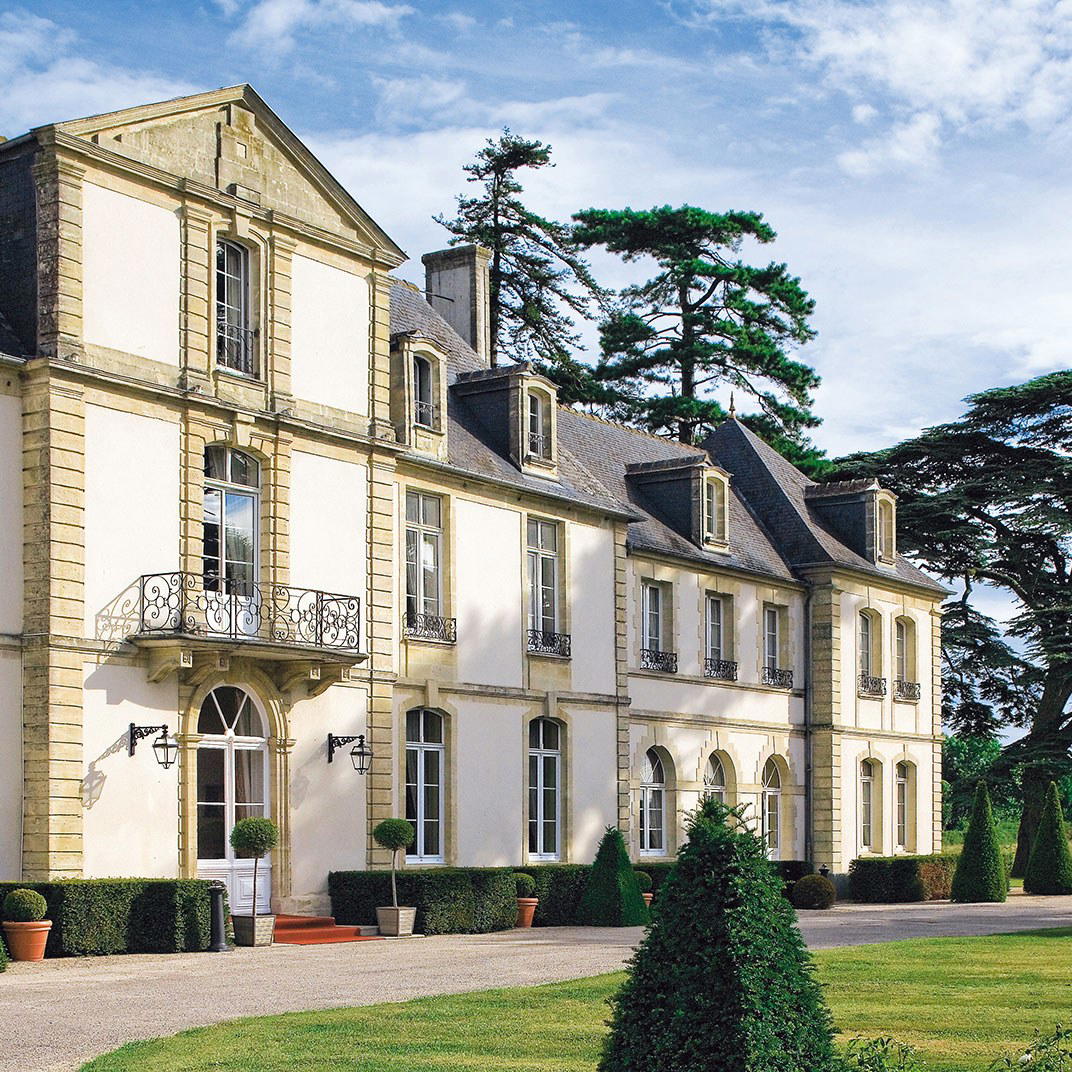
Stone, Scale, and the Norman Château Tradition
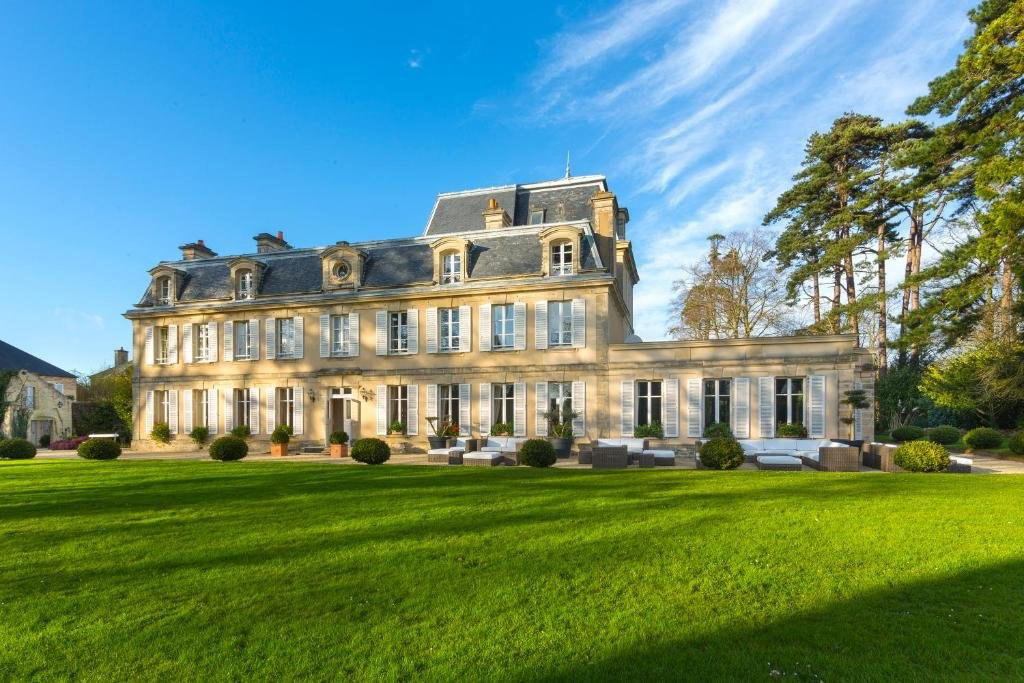
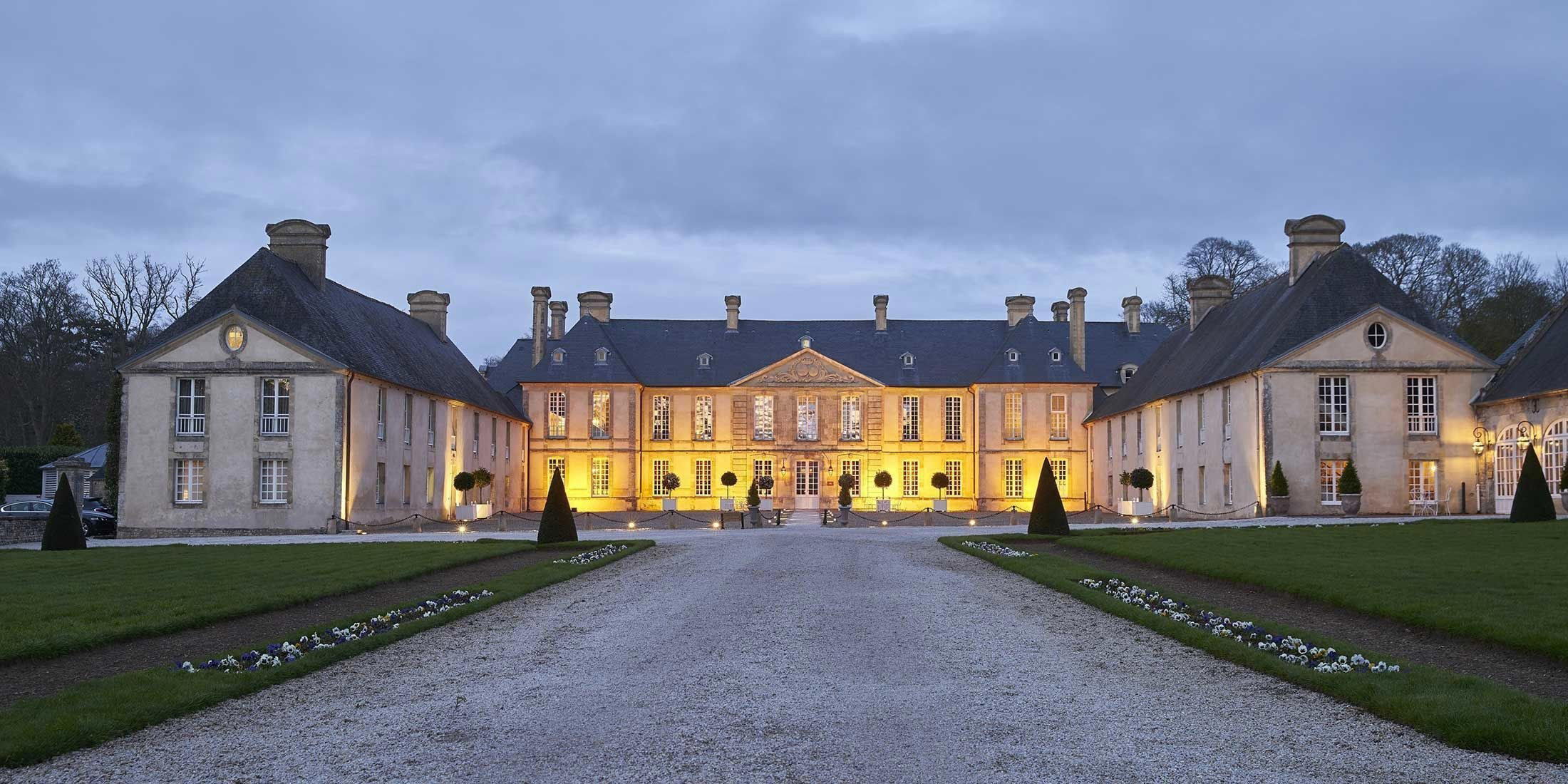
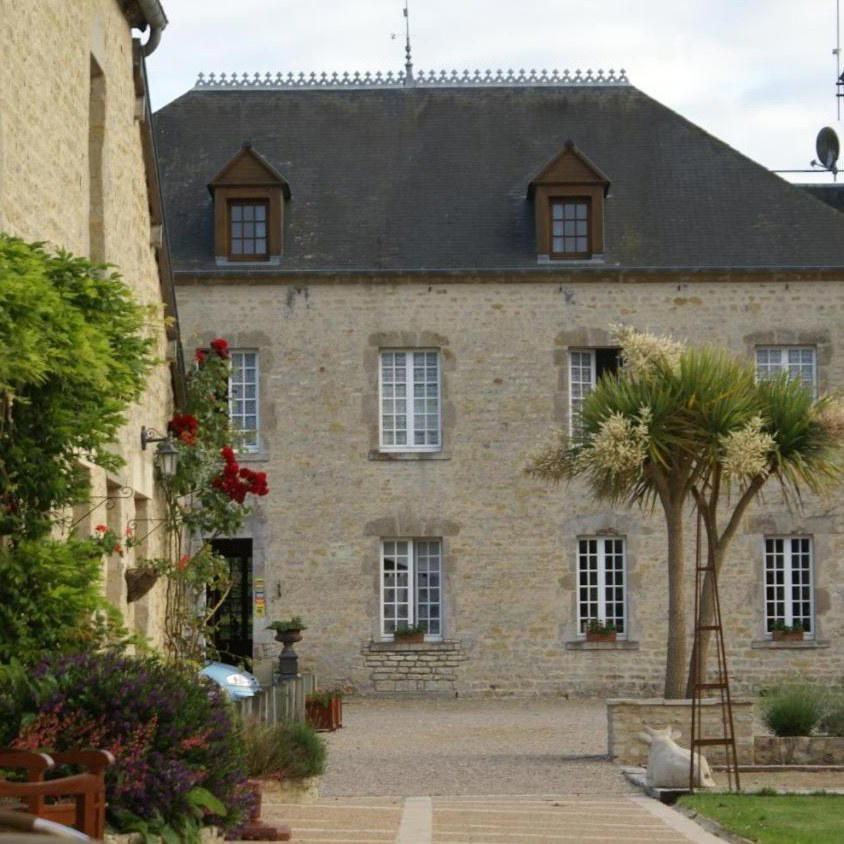
Arriving at Château de Sully, the grammar of the building does most of the talking before you reach the door. Norman château architecture works through accumulation: coursed limestone walls that have absorbed two or three centuries of weather, steeply pitched rooflines, and a relationship with the surrounding grounds that suggests the house was built to preside over the land rather than merely occupy it. This is not the theatrical neo-Gothic of a Loire Valley confection, nor the stripped modernism that has taken over parts of the Côte d'Azur premium market. It is quieter and more self-assured, in the mode of the Norman manoir that has been a reference point for regional hospitality long before château hotels became a category.
That architectural register matters because it shapes what a stay here actually feels like. Properties in this mould tend toward thick walls, relatively deep-set windows, and interior volumes that are generous without being showy. The physical envelope sets certain conditions: cooler rooms in summer without mechanical intervention, an acoustic calm that urban hotels spend considerable effort trying to replicate, and a sense of proportion in public spaces that comes from rooms designed for a different kind of social life entirely. Michelin's 2025 Selected designation for Château de Sully signals that the property meets a standard of quality and character the guide considers worth recommending to its readership.
Bayeux as a Base: What the Location Gives You
Bayeux occupies a specific position in the Lower Normandy travel circuit. It is, first, the town of the, the 70-metre embroidered account of the 1066 conquest that draws visitors to the Centre Guillaume le Conquérant, but it functions equally as one coherent staging point for the D-Day beaches. The landing sites at Omaha, Gold, and Arromanches are all within a short drive, and Bayeux itself was the first French town liberated in 1944, which gives the place a particular historical density that the surrounding landscape amplifies rather than diminishes.
For accommodation, this creates a demand pattern split between those who want the convenience of the town centre and those who prefer to arrive from slightly outside it. Château de Sully, on Rue du Château, sits at the edge of that equation. A château property at this scale typically implies grounds that provide separation from the street, which is a meaningful consideration in a town that draws significant visitor numbers across the spring and summer season. Travellers booking the area in June around D-Day anniversary commemorations should expect the highest demand period.
The comparison that matters most for travellers deciding between Bayeux's options is between the hotel and Villa Lara, the other property in the town's upper accommodation tier. Villa Lara operates in a more compact townhouse format close to the cathedral, which positions it differently for guests whose priority is walking access to the historic centre. The hotel's architecture implies a different proposition: more space, more grounds, and a physical setting that engages with the Norman countryside rather than the urban streetscape. Neither is a substitute for the other, and the choice depends entirely on whether a guest is prioritising architectural immersion or urban convenience.
The Michelin Selected Designation and What It Signals
Within the Michelin hotel framework, the Selected tier sits below the starred categories (Palace, Five Keys, and so on) but represents active editorial endorsement rather than mere listing. The 2025 inclusion places the hotel in a peer group of French properties that Michelin's inspectors consider to offer a consistent and characterful guest experience. For a regional château of this type, the designation is a meaningful credential: it confirms the property is being maintained and operated at a standard that holds up to inspection, rather than trading on architectural heritage alone.
The wider French château hotel category spans an enormous range. At one end sit properties like Château du Grand-Lucé in Le Grand-Lucé, whose 18th-century interiors have been subject to full design intervention. At the other end are working estates that offer rooms almost incidentally. The hotel, as a Michelin Selected property, sits in a middle tier where hospitality is the primary purpose and the architectural setting is a deliberate asset rather than a coincidence. That is a different proposition from the larger-format luxury hotels that anchor the French market: properties such as Le Bristol Paris, Domaine Les Crayères in Reims, or Royal Champagne Hotel & Spa in Champillon operate at a different scale and price point, but they share the same underlying logic: architecture and landscape as the primary experiential driver.
For those building a broader Norman itinerary, the region's hotel stock is thinner than Provence or the Loire Valley. La Ferme Saint-Siméon in Honfleur is the reference property for the Côte Fleurie, but it operates in a completely different architectural register. The hotel holds a relatively uncrowded position in its specific niche: a characterful château property within reach of both the D-Day sites and one of France's most visited medieval towns, endorsed by Michelin for 2025.
Planning a Stay
Bayeux is approximately two hours from Paris by car via the A13, or reachable by train to Bayeux station on the Paris Saint-Lazare to Cherbourg line with journey times from around two hours depending on service. The town functions as a full-day destination in its own right, but most visitors combine it with at least one beach visit. Normandy's weather is genuinely variable: May and June offer the reliable light and the D-Day anniversary period in early June brings concentrated visitor numbers that affect both accommodation availability and road traffic toward the memorial sites. Early September is a quieter alternative that retains warmth without the peak-season pressure.
Those extending further into France will find the EP Club's coverage of comparable château and heritage properties useful context: Baumanière Les Baux-de-Provence, La Bastide de Gordes, and Les Sources de Caudalie in Bordeaux represent the southern and southwestern equivalents of this format, each with a distinct regional architectural identity of the same general type.
In Context: Similar Options
Comparable venues nearby, for context on price, style, and recognition.
| Venue | Cuisine | Price | Awards | Notes |
|---|---|---|---|---|
| Château de SullyThis venue — the venue you are viewing | 18th-century château hotel with parkland | $$$$ | 4-Star | Not listed |
| Villa Lara | Contemporary classical elegance with replica French furniture and plush fabrics. | $$$$ | Not listed | city center |
| Les Dromonts | Well-known 1960s alpine architecture with fan-shaped pine-cone design. | $$$$ | 4-Star | heart of Avoriaz |
| Grand Hotel de L'Océan | Seaside boutique hotel | $$$$ | 4-Star | Plage du Port Lin |
| Fahrenheit Seven Courchevel | neo-vintage lifestyle hotel | $$$$ | 4-Star | Courchevel 1650 |
| Experimental Chalet Val d'Isère | Contemporary alpine luxury with nostalgic 1970s design elements and Savoyard charm; positioned as a sophisticated yet casual mountain escape. | $$$$ | 4-Star | Val d'Isère village center |
Recognition history
Dated appearances from independent guides and award organizations, with the underlying list record or original source where available.
Michelin Selected
Michelin
Continue exploring
More in Bayeux
Hotels in Bayeux
Browse all →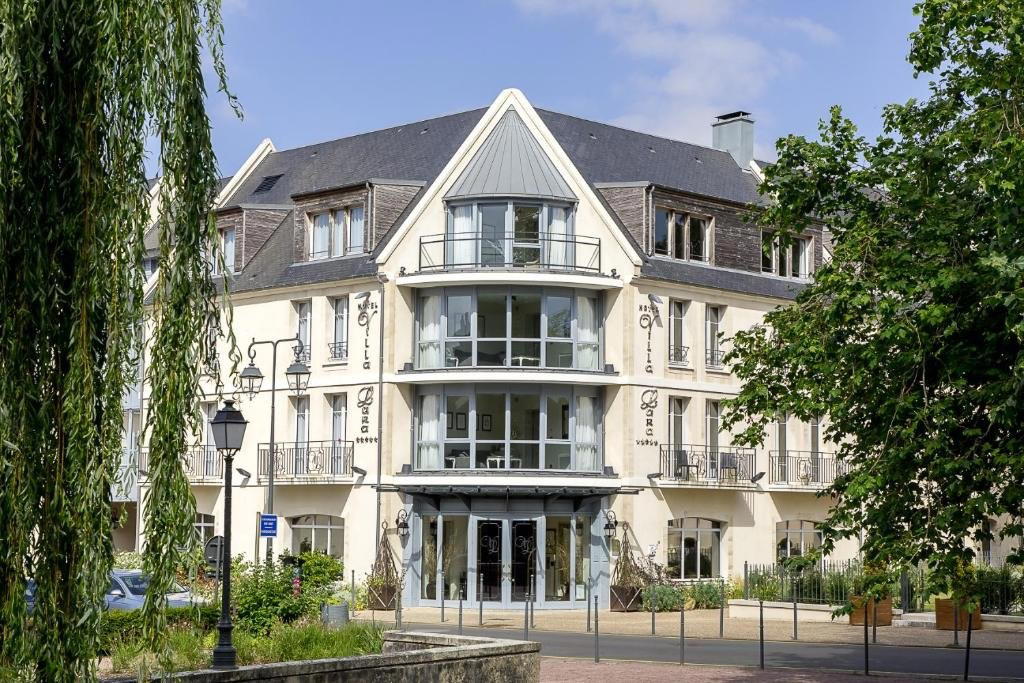
Restaurants in Bayeux
Browse all →
Wineries in Bayeux
Browse all →
At a Glance
- Romantic
- Elegant
- Classic
- Scenic
- Intimate
- Sophisticated
- Romantic Getaway
- Anniversary
- Weekend Escape
- Historic Building
- Garden
- Terrace
- Pool
- Spa
- Wi Fi
- Room Service
- Concierge
- Restaurant
- Garden
- Pool
- Spa
- Wi Fi
- Room Service
- Concierge
- Restaurant
Elegant traditional lighting in period-decorated rooms with a serene, romantic countryside atmosphere.