Tabelog 100 #65
Our verdict
Tokyo’s dessert counter culture rewards precision over spectacle, and LAITIER fits that Sendagaya-Kita Sando lane with soft serve, cafe sweets, and Tabelog 100 Ice Cream/Gelato recognition from 2023. The appeal is less about a long meal than a tightly run pause: small-format seating, take-out utility, and a location that works cleanly between central Tokyo neighbourhoods.

Pearl is the En Primeur Club membership app, where members save venues, book tables and use the concierge.
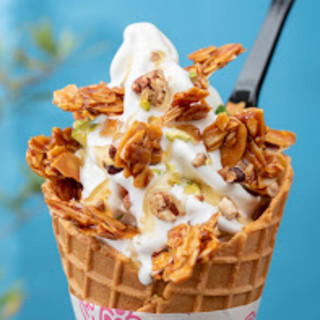
Approaching LAITIER in Tokyo, the mood shifts from city movement to the quieter register of focused dessert planning: a short stop, a clear category, and a place built around soft serve ice cream, cafe service, and sweets. Dessert here does not need the ceremony of a pastry salon to be taken seriously. The better version is often short, exact, and timed between larger plans.
That is the context for LAITIER, a soft-serve, cafe, and sweets address whose 2023 selection in Tabelog’s Ice Cream/Gelato 100 places it inside a narrow Japanese category where texture, dairy handling, and the timing of a dessert stop matter more than dining-room theatre. Tokyo’s dessert map is broad, but the strongest ice cream and gelato counters often function as specialist stops rather than full-evening destinations. This is a useful distinction for travellers: the decision is not whether to spend a night here, but how to place it cleanly within a day that may already include a lunch counter, a museum, and a late reservation elsewhere.
Tokyo's serious dessert culture, without the pastry-salon weight
Japan has long treated soft serve as more than convenience-store nostalgia. Regional dairy, seasonal fruit, parfait culture, depachika pastry counters, and cafe sweets all feed into a market where a short dessert stop can be judged with the same scrutiny applied to ramen broth or sushi rice. In Tokyo, the category splits between high-volume chains, department-store counters, plated-dessert rooms, and focused shops with a narrower offer. That last mode is where planning becomes interesting, because timing, queue flow, and city rhythm can shape the experience as much as the menu category.
LAITIER sits in that dessert-specialist tier rather than the luxury-hotel patisserie lane. Its Tabelog score of 3.70 and Ice Cream/Gelato 100 selection are useful signals because they point to sustained local attention in a category that rarely gets the international coverage given to sushi, tempura, or kaiseki. For visitors building a Tokyo food itinerary, that makes the stop more instructive than flashy: it shows how the city’s casual sweets culture can be both low-priced and closely watched within its own field.
The comparison set matters. A Tokyo dining day can swing from serious dining rooms to counter formats, casual specialists, or other compact meals across the city. Dessert specialists operate on a different clock. They do not replace those meals; they solve the gap between them. In the broader Tokyo cafe conversation, some places lean visual and social, while single-category sweets stops sit in another tradition. The common thread is focus, not luxury coding.
The small-format stop is the point
The visit is best understood through brevity and focus. This is not a place to frame as a long, multi-course meal or treat dessert as an entire evening plan. It belongs to Tokyo’s specialist-dessert economy, where a clear order and a short window can be the most natural way to experience the category.
That format also affects expectations. A sweets stop asks for a different kind of discipline from the guest: arrive with a narrow plan, order decisively, and avoid turning a quick dessert visit into a bottleneck. The reward is efficiency. In a city where ambitious dining often means advance planning, fixed seating times, or extended menus, a focused ice cream and sweets address offers a lower-friction way to add a credible food stop without overloading the day.
Tokyo helps. The city rewards travellers who build days by geography rather than by isolated reservations, and that positioning matters. A dessert stop here can sit after a morning of culture, before an evening meal across the city, or as a reset between shopping and train transfers.
The broader Tokyo planning frame is worth keeping open. For restaurant-heavy days, use Our full Tokyo restaurants guide; for stays that make cross-city dining easier, pair it with Our full Tokyo hotels guide. Evening plans can branch through Our full Tokyo bars guide, while specialist itineraries can extend into Our full Tokyo wineries guide and Our full Tokyo experiences guide. The smart move is not to over-schedule dessert, but to place it where the city’s transit logic already works.
How to place it in a Japan food itinerary
LAITIER makes sense for travellers who care about category depth: not only sushi counters and tasting menus, but the smaller Japanese habits that define everyday eating. A countrywide itinerary might include regional cooking, cafe culture in another major city, or a stop elsewhere in Japan. Against that wider map, a Tokyo soft-serve specialist is not minor; it is part of the same national habit of taking narrow formats seriously.
That habit extends beyond dessert. Casual cooking, category specialization, and contemporary dining across Japan all underline the same editorial point: Japan rewards travellers who stop treating casual categories as filler. Even overseas Japanese-adjacent formats draw on this confidence in compact, repeatable pleasures.
The critical read is simple. This is a short-format dessert address with credible local recognition, a Tokyo setting, and a category that often reveals more about the city than another overbuilt dinner plan. Fold it into the day rather than making it the day. In a city where serious eating can become logistically heavy, that restraint is part of the appeal.
Frequently asked questions
Where exactly is LAITIER?
Tokyo.
Is LAITIER more mid-range or high-end?
Pricing at LAITIER is listed as - JPY 999 - JPY 999.
When is LAITIER open?
Check current opening hours directly before visiting LAITIER.
What is LAITIER known for?
LAITIER is known as a Tokyo soft serve ice cream, cafe, and sweets specialist with a 2023 Tabelog Ice Cream/Gelato 100 selection.
A Minimal
Comparable venues by cuisine and category.
| Venue | Cuisine | Price | Awards | Notes |
|---|---|---|---|---|
| LAITIERThis venue (the venue you are viewing) | Soft Serve Ice Cream Cafe | $1–10 | Tabelog 100 #65 | Not listed |
| ロクターヴ ハヤト コバヤシ | Modern French Gastronomy | $150–200 | Tabelog 100 #19 | Not listed |
| CHACO Amemiya | Charcoal‑grilled Steakhouse | $50–100 | Tabelog 100 #64 | JPY 10,000 - JPY 14,999 JPY 1,000 - JPY 1,999 View spending breakdown |
| Okashiya Ucchi | Seasonal Japanese cake & dessert shop | $50–100 | Tabelog 100 #20 | JPY 5,000 - JPY 5,999 |
| Shaoxiong Hanten | Seasonal Shanghai Chinese Fine Dining | $500+ | Tabelog 100 #67 | JPY 100,000 - View spending breakdown |
| Le Bistro Tokyo | Classic French Bistro | $50–100 | Star Wine List | Not listed |
Recognition history
Dated appearances from independent guides and award organizations, with the underlying list record or original source where available.
Tabelog 100 #65 · No. 65
Tabelog · Tabelog 100 - Ice cream / Gelato - 2023