Our verdict
On Tumanyan Street in central Yerevan, Lahmajun Gaidz anchors itself in one of Armenia's most debated street foods: the thin, spiced-meat flatbread that crosses borders and carries history. The address puts it within walking distance of the city's main dining corridor, making it a practical and pointed stop for anyone tracing Armenian culinary tradition beyond the standard tourist circuit.

Pearl is the En Primeur Club membership app — saves, bookings, and concierge access live there. Same editors, same standards.
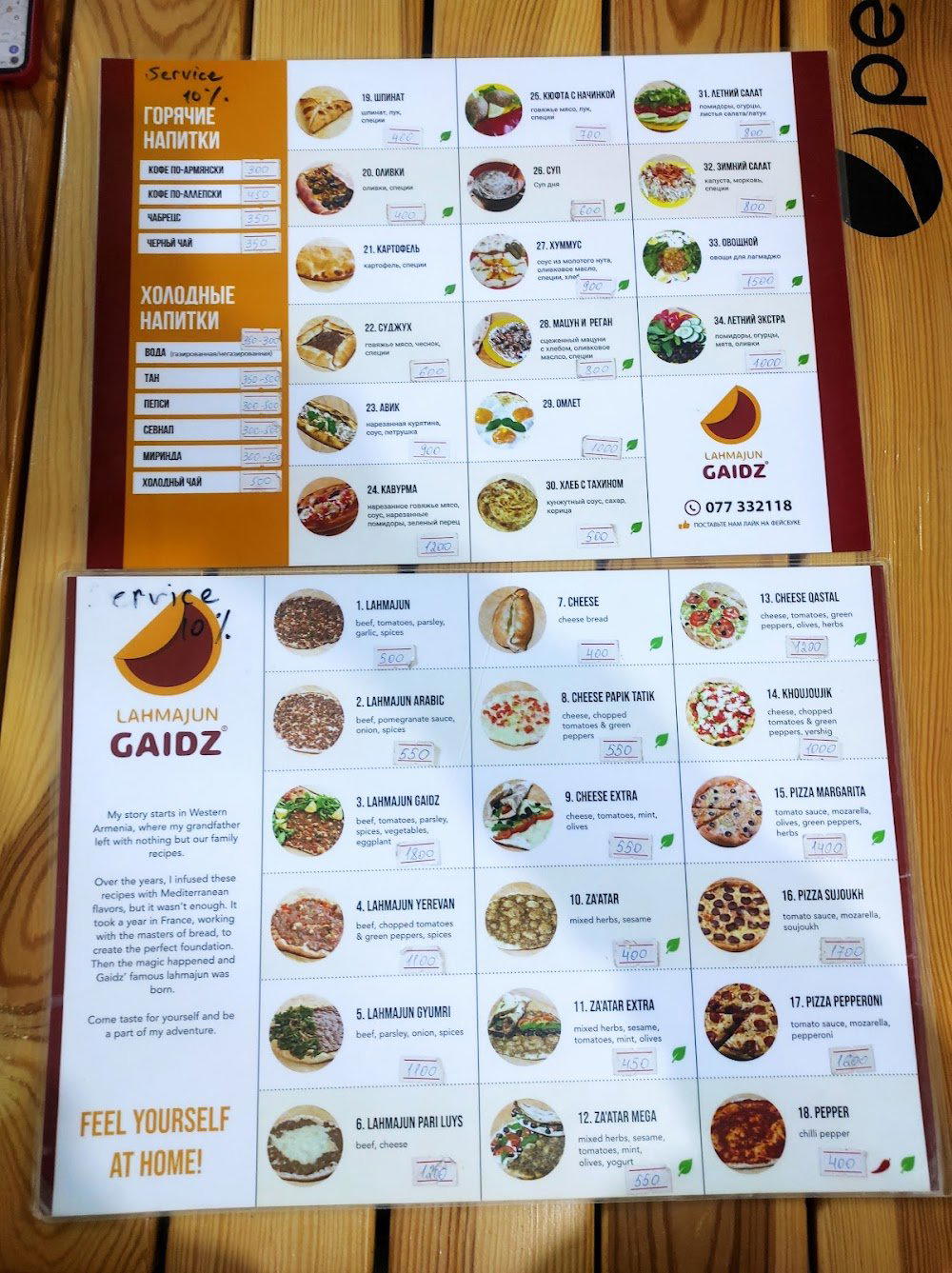
Tumanyan Street and the Flatbread Question
Central Yerevan's dining corridor along and around Tumanyan Street has a specific character: it runs the full range from pavement-side grills to candlelit Armenian revival kitchens, and regulars tend to move between them in a single evening without much ceremony. Lahmajun Gaidz at 9 Tumanyan St sits within this stretch, and its subject matter, the lahmajun, positions it immediately in a conversation that Armenian, Turkish, and Lebanese food cultures have been having for centuries. The flatbread itself, a thin round of dough spread with spiced minced meat and baked in a searingly hot oven, is the kind of dish whose geography is disputed even as its preparation is broadly agreed upon. In Yerevan, it carries particular weight as a marker of Armenian identity, especially for diaspora communities who grew up eating versions of it in Beirut, Los Angeles, or Paris before encountering it on home soil.
The Ritual of Eating Lahmajun
There is a specific way lahmajun gets eaten that matters more than most diners acknowledge before they sit down. The flatbread comes out hot, pulled quickly from the oven, and the orthodox approach in Armenian tradition involves squeezing fresh lemon over the surface, then rolling or folding it around a handful of fresh herbs, typically flat-leaf parsley and sometimes mint, with a few rings of raw white onion tucked inside. The roll is eaten immediately, in the hand, without cutlery. This is not incidental to the experience; it is the experience. The pace is fast, the portions sequential, and the meal ends not with a dessert course but with tea and perhaps a shared plate of pickled vegetables. Restaurants that treat lahmajun seriously tend to structure service around this rhythm rather than fighting it with formal table settings or multi-course pacing. The dish resists slow dining and rewards immediate attention.
That structural logic makes lahmajun venues distinct from the broader Armenian restaurant scene. Where a place like Dolmama or At Gayane's builds its meal around the full arc of Armenian home cooking, a lahmajun-focused spot operates more like a specialist counter. The discipline is narrower and the execution pressure is higher, because there are fewer dishes absorbing any inconsistency. For comparison, think of the way a serious ramen shop in Tokyo operates against a broader Japanese restaurant: the constraint sharpens everything, or it exposes weaknesses immediately.
Yerevan's Approach to Its Own Street Food
Yerevan has spent the better part of the last decade developing a more considered relationship with its own culinary heritage. The city's restaurant scene in the 2010s leaned heavily toward European formats and international cuisine as signals of post-Soviet modernisation, but the current direction is different. Armenian ingredients, traditional preparation methods, and regional dishes from across the country have reasserted themselves in central Yerevan dining rooms. This is visible in the renewed seriousness around dishes like khorovats, dolma, and, notably, lahmajun, which had for some years occupied an informal or low-prestige position in the local dining hierarchy despite being deeply embedded in Armenian food memory.
The shift mirrors patterns visible elsewhere when a food culture reassesses what it had previously undervalued. In this context, a dedicated lahmajun address on Tumanyan Street reads not as a throwback but as part of a broader reclamation. Venues across Yerevan's central district, from the more formal dining rooms near the opera to the casual spots tucked around the Vernissage market, are all participating in a similar reassessment. For a broader map of where that conversation is happening, the full Yerevan restaurants guide covers the range of formats and neighbourhoods in detail.
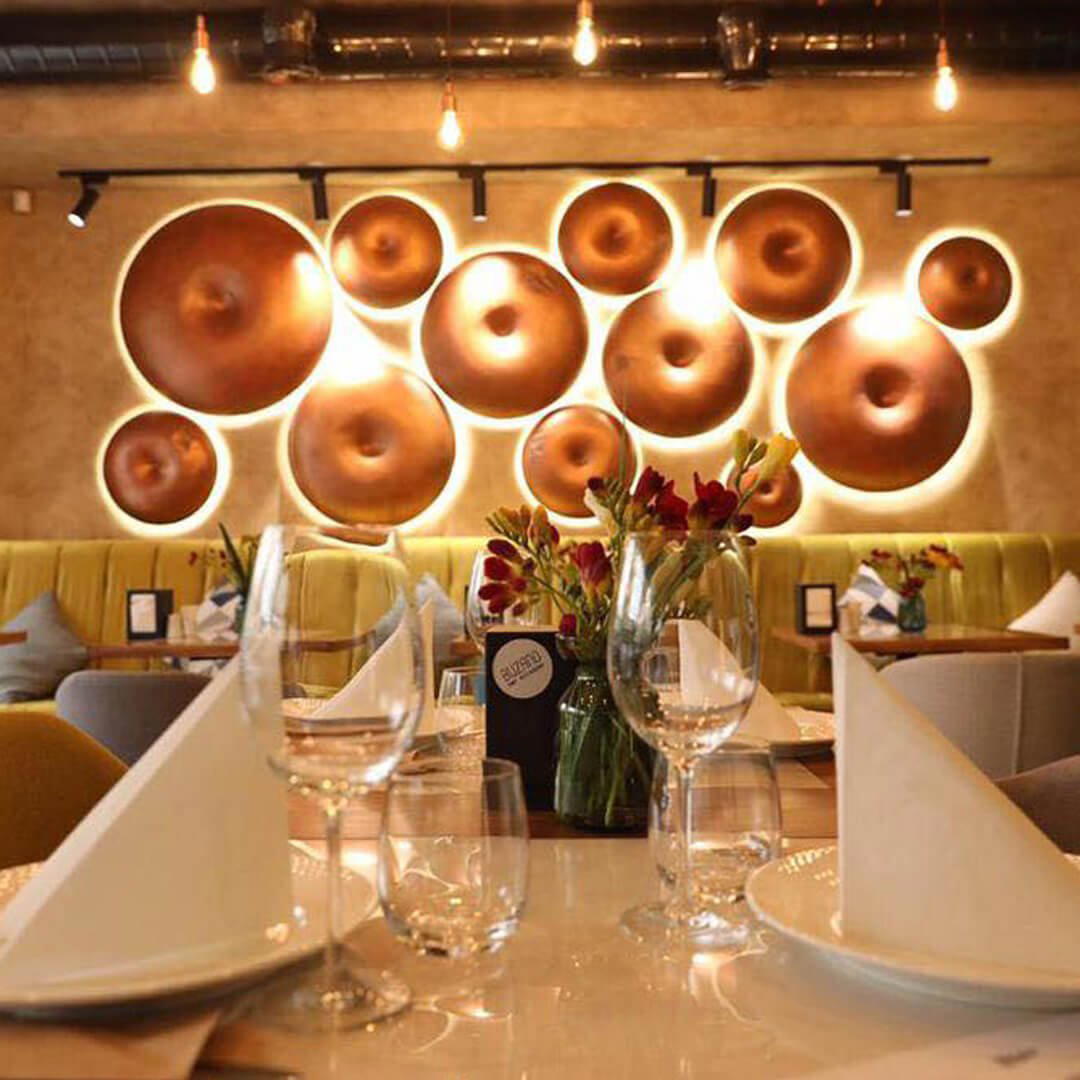
Within Yerevan's central dining corridor, the comparison set for a lahmajun-focused venue is not the white-tablecloth Armenian revival restaurants, nor the international hotel dining rooms. The relevant peer group is made up of specialist addresses with a single dominant dish, a fast-turning table format, and pricing that sits in the city's accessible mid-range. Bar B. Q. and Buzand Cafe Restaurant operate in adjacent territory, each anchored by a specific Armenian preparation rather than a broad menu. The distinction between venues in this tier comes down to oven temperature consistency, sourcing of the meat, and how seriously the kitchen treats the lemon-and-herb ritual rather than shortcutting it for speed.
That regional specificity connects outward, too. Armenian food traditions don't stop at the borders of Yerevan or even Armenia. Losh in Dilijan and Poloz Mukuch in Gyumri both demonstrate how Armenian culinary identity varies by region, with different emphases in ingredient sourcing and preparation depending on whether you are in the northern forests or the second city. Lahmajun itself has regional variations within Armenia, and the Yerevan version tends to be thinner and more heavily spiced than what you find in diaspora communities. That distinction is worth holding in mind when comparing what you eat here against a version from a Lebanese-Armenian bakery or a Los Angeles specialist.
Getting There and Practical Planning
The address at 9 Tumanyan St puts Lahmajun Gaidz within a short walk of Republic Square and the central metro station, making it reachable on foot from most of Yerevan's central hotels and guesthouses. Tumanyan Street itself is one of the city's main pedestrian-friendly corridors in the evening, which means the area sees consistent foot traffic from late afternoon onward. The meal moves quickly by design, so even a short visit covers the full experience. Combining a stop here with a broader evening along Tumanyan, perhaps finishing at one of the wine-focused restaurants further along the street, tracks with how locals tend to use the corridor.
For context on how this kind of focused, tradition-anchored dining sits against the global range of specialist restaurant formats, it is worth considering how different the operating logic is from places like Le Bernardin in New York City or Alinea in Chicago, where the experience is constructed around extended pacing and multi-course progression. The lahmajun ritual inverts that entirely: the value is in compression, repetition, and immediacy rather than elaboration. That makes it a different kind of specialist commitment, but no less demanding in its own terms. Dolmama - Armenia's Restaurant offers a contrasting approach to Armenian cuisine in the same city, for those who want to cover both ends of the formality spectrum in a single visit.
Frequently asked questions
Where do I go for Lahmajun Gaidz?
Lahmajun Gaidz is located at 9, 9 Tumanyan St, Yerevan, Armenia, Yerevan.
Is Lahmajun Gaidz a good option for visitors staying near Republic Square in Yerevan?
The address at 9 Tumanyan St is within walking distance of Republic Square and the central metro station, making it a straightforward on-foot option from most central Yerevan hotels. The venue sits within the Tumanyan Street dining corridor, which runs the range from grills to sit-down restaurants, so it can anchor a broader evening in the neighbourhood. For visitors wanting a specifically Armenian flatbread experience rather than a full multi-course meal, the format is well-suited to that purpose.
What's the signature dish at Lahmajun Gaidz?
Lahmajun is the entire focus here, which sets Gaidz apart from Yerevan's broader Armenian revival restaurants that treat it as a side item. The flatbread arrives hot and is eaten rolled with fresh herbs and lemon, a format that has its own specific ritual. This single-dish concentration at a Tumanyan Street address puts it in a different category from the pavement grills and candlelit dining rooms that flank it.
Do I need a reservation for Lahmajun Gaidz?
No booking contact details are currently listed for Lahmajun Gaidz. For a flatbread-focused spot in Yerevan's central dining corridor, walk-in is the standard mode of entry, though arriving at off-peak hours is practical given the venue's position near Republic Square and the volume of foot traffic that Tumanyan Street generates.
Cuisine and Awards Snapshot
Comparable venues nearby, for context on price, style, and recognition.
| Venue | Cuisine | Price | Notes |
|---|---|---|---|
| Lahmajun GaidzThis venue (the venue you are viewing) | Authentic Armenian Lahmajun | $10–20 | Not listed |
| Tavern Yerevan | Traditional Armenian | $20–30 | near Republic Square |
| Gabriel’s Brasserie | French Patisserie | Not listed | Kentron |
| Dragon Garden | Chinese & Japanese Fusion with Hot Pot | $20–30 | Republic Square |
| The Club | New Armenian Cuisine | $20–30 | Tumanyan |
| Flying Ostrich by Dolmama | Armenian Fusion with Ostrich Barbecue | Not listed | Dilijan |
Continue exploring
More in Yerevan
Restaurants in Yerevan
All restaurants in Yerevan →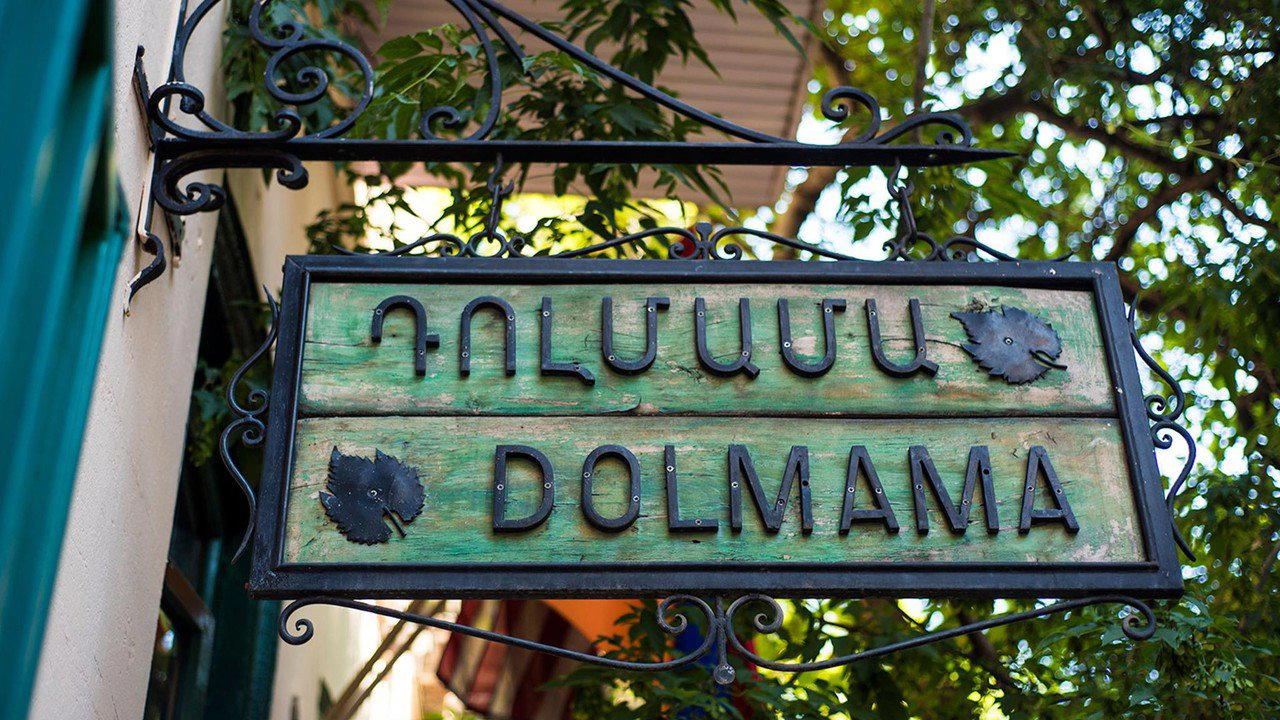
Bars in Yerevan
All bars in Yerevan →
Hotels in Yerevan
All hotels in Yerevan →
Wineries in Yerevan
Browse all →
Details
- Cozy
- Casual Hangout
- A La Carte
- Vegetarian Friendly
- Vegan Options
- Halal
Current opening hours
- Monday
- 11 AM–6:30 PM
- Tuesday
- 11 AM–6:30 PM
- Wednesday
- 11 AM–6:30 PM
- Thursday
- 11 AM–6:30 PM
- Friday
- 11 AM–6:30 PM
- Saturday
- 11 AM–6:30 PM
- Sunday
- Closed
Hours can change for holidays and private events. Last verified .
Cozy and homey with note-adorned walls, creating a hospitable feel like dining at home.