

Michelin Plate · Relais Chateaux Award
Our verdict
Set inside a clifftop medieval castle above the Lot Valley, La Table de Mercuès serves a single multi-course tasting menu built around the produce of southwest France: Quercy pigeon, Rocamadour cheese, chanterelles, foie gras, and the estate's own wines. Chef Clément Costes oversees both the formal evening menu and a more relaxed bistronomy lunch, with terrace dining available in fine weather.

Pearl is the En Primeur Club membership app, where members save venues, book tables and use the concierge.
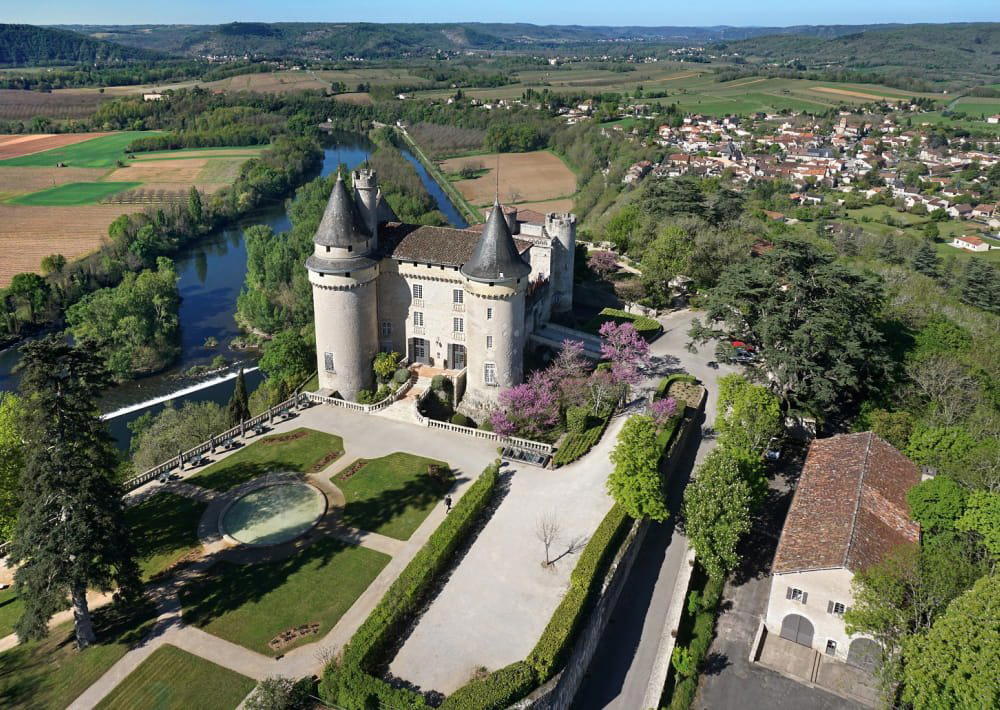
A Clifftop Castle and the Produce That Earns Its Place There
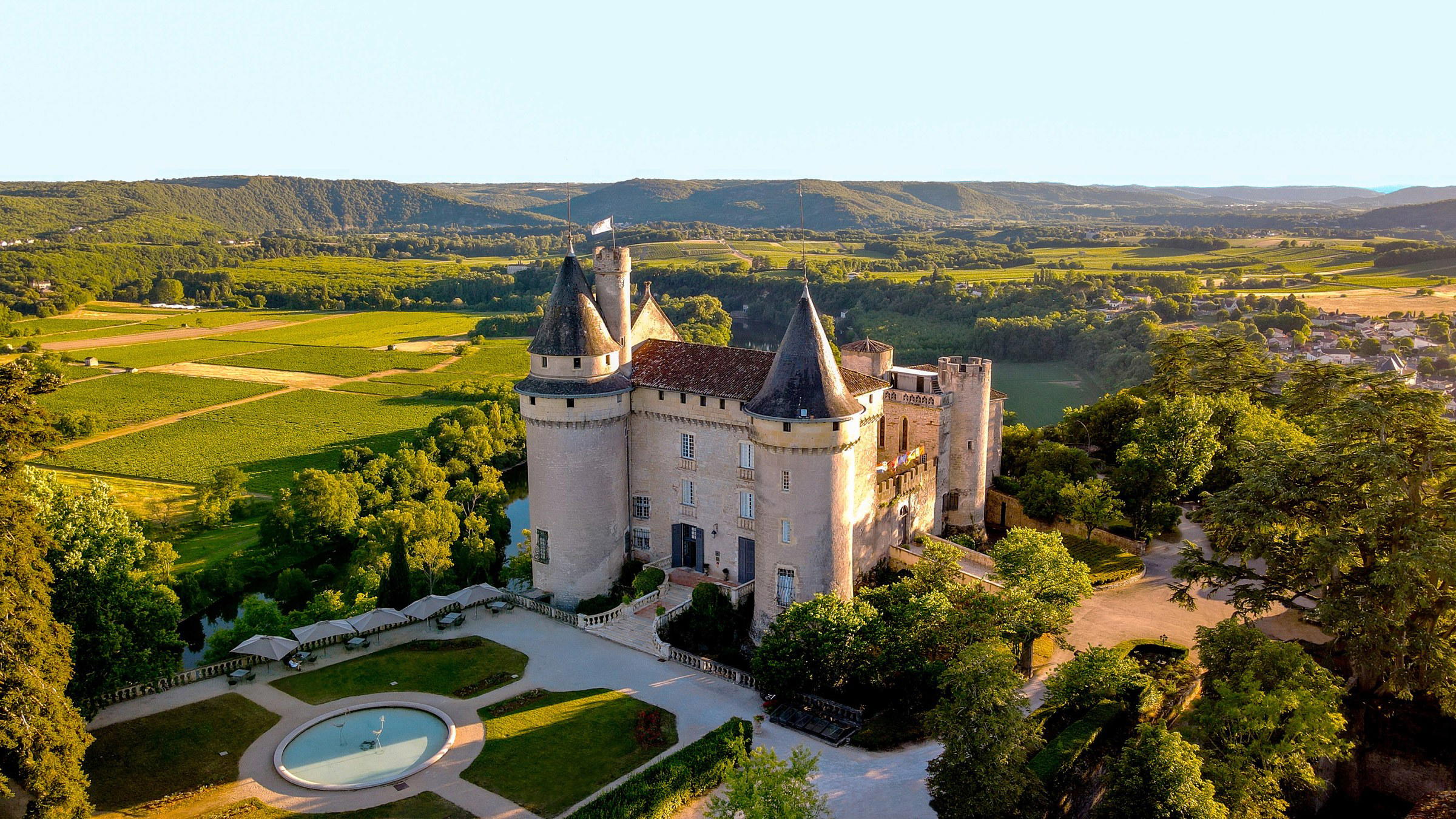
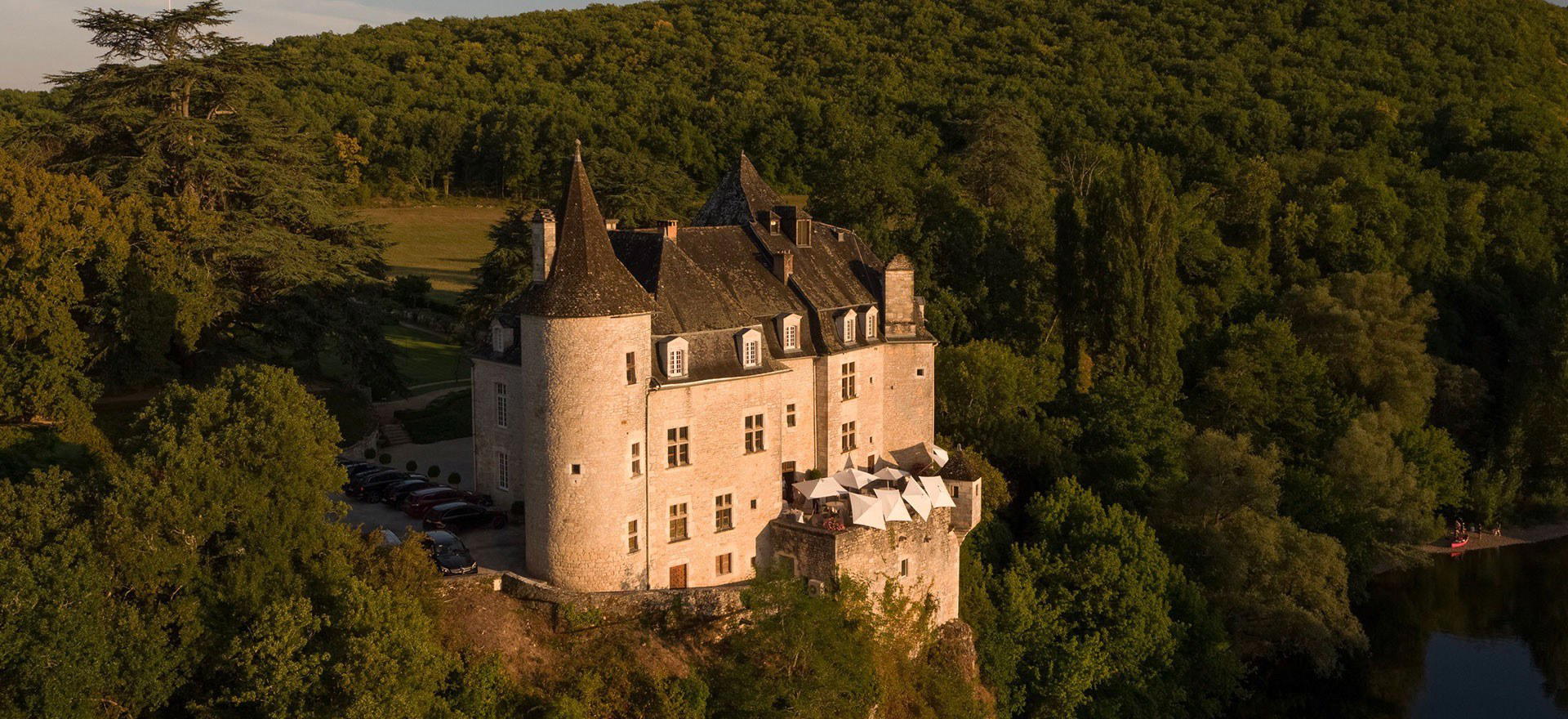
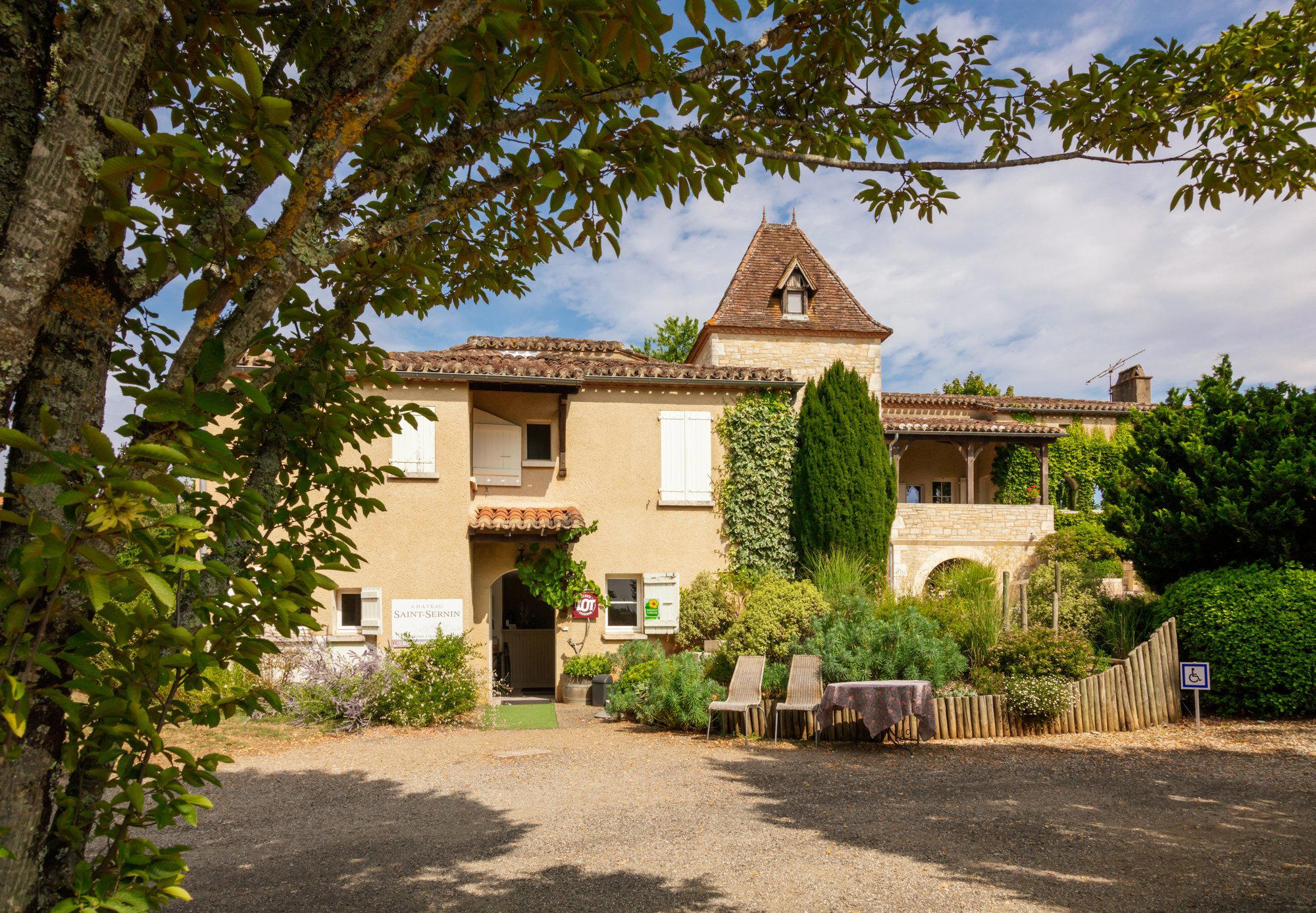
Arriving at Château de Mercuès requires a climb. The medieval fortification rises above a bend in the Lot River on a limestone bluff, and the approach by road makes the elevation unmistakable before you have stepped inside. That physical drama sets the register for what follows: stone walls several centuries old, a main courtyard where tables are laid in fine weather, and a kitchen whose sourcing logic is tightly bound to the terrain below. Southwest France has one of the most clearly defined larders in the country, and the dining programme at Château de Mercuès treats that larder as its primary argument.
The Lot Valley and its surrounding Quercy plateau produce a short list of ingredients that have acquired genuine regional identity over generations: Quercy pigeon, with its darker, more mineral-edged flesh; Rocamadour, the AOC-protected goat's cheese from the gorges fifty kilometres to the north; wild chanterelles pulled from the oak and chestnut forests that cover the causse; and foie gras, which remains a staple of local cooking rather than an imported luxury here. Lobster extends the sourcing radius toward the Atlantic coast, but the overall palette is emphatically rooted in the southwest. Chef Clément Costes builds the evening tasting menu around this material, applying technique that is precise and contemporary without repositioning the ingredients away from their regional context.
What the Tasting Menu Actually Argues
A single multi-course tasting menu at dinner means the kitchen is making one sustained argument rather than accommodating scattered preferences across a carte. That format has become standard at the tier of French fine dining that includes addresses like Mirazur in Menton or Flocons de Sel in Megève, where the geography of a place is treated as culinary content in its own right. At La Table de Mercuès, the roast pigeon is a particularly direct expression of this: Quercy pigeon is raised specifically for its eating qualities and arrives at the table as evidence of a local breeding tradition rather than as a generic protein. The format allows the kitchen to pace the progression and give that kind of regionally significant ingredient the weight it deserves within the sequence.
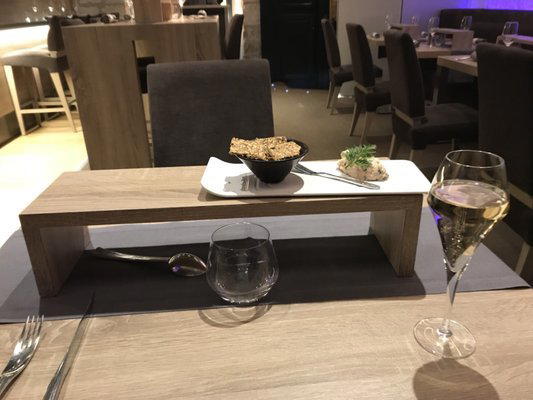
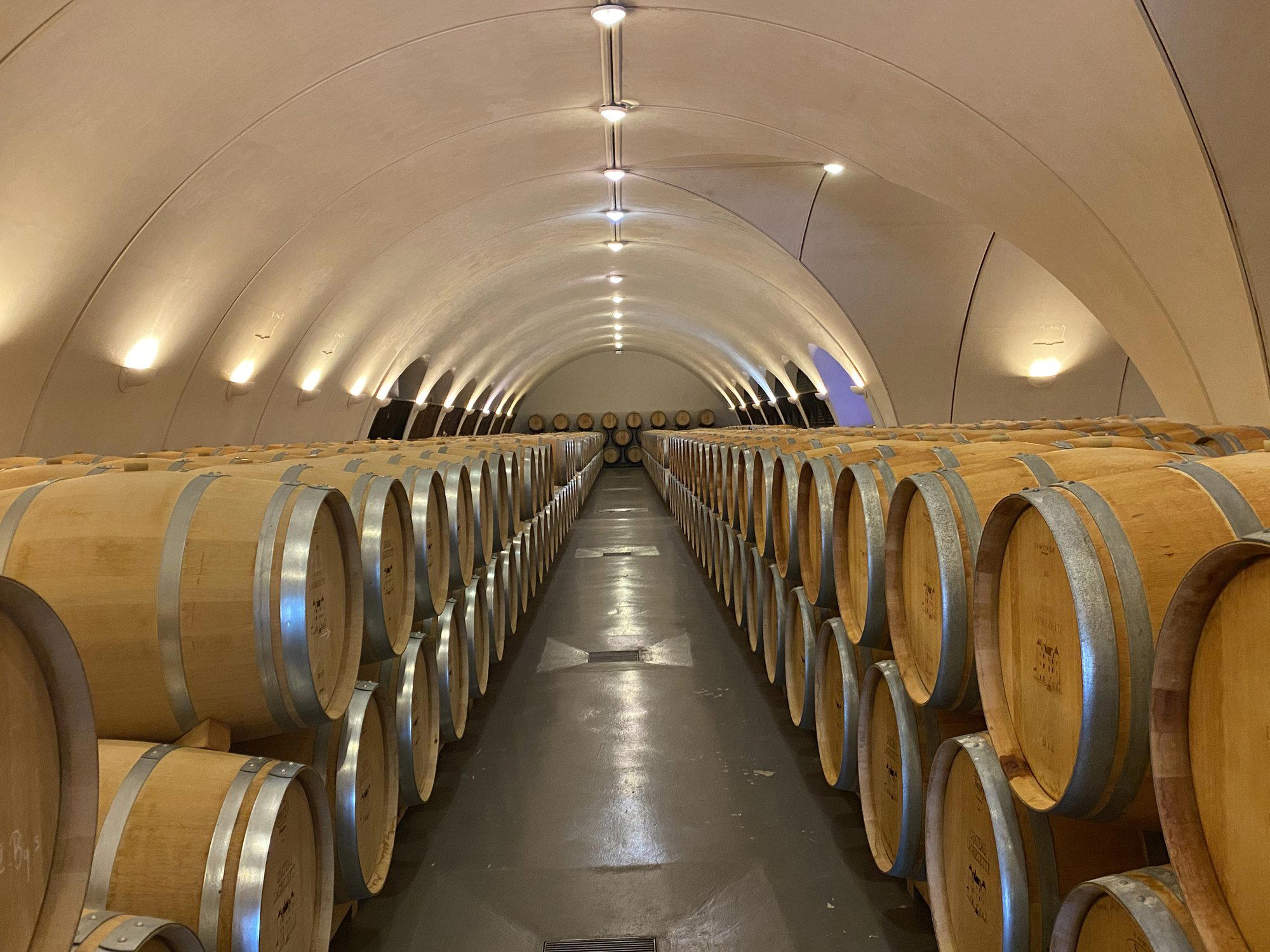
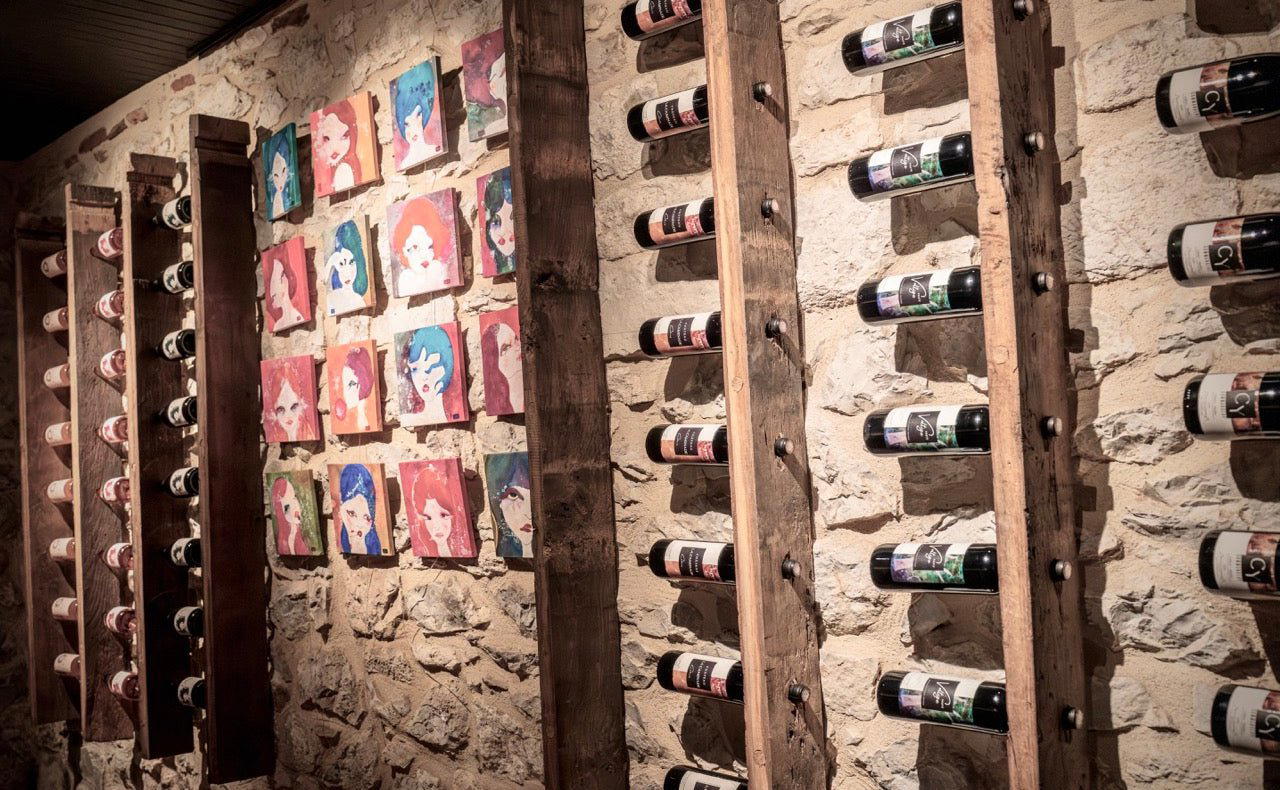
The interior dining room sits within the castle's centuries-old stone architecture, which gives it a visual density that more purpose-built restaurant spaces can't replicate. The pairing option with the estate's own wines connects the table directly to the Château de Mercuès wine programme, one of the Lot Valley's most visible producers of Malbec-based Cahors. That estate provenance adds a layer of coherence to the meal that is increasingly valued in French fine dining: the idea that what is in the glass and what is on the plate share a geography.
Lunch as a Different Proposition
The lunchtime offering operates on a bistronomy model, which in current French restaurant terms means cooking at a meaningful technical level with a lower formality threshold and, typically, a more accessible price point. This is a structurally different experience from the evening tasting menu: shorter, less ceremonial, and designed for a different appetite and pace. The terrace in the main courtyard is available in fine weather for both services, which changes the atmospheric equation considerably. Eating outdoors inside a medieval castle above a river valley is a different act from eating in a stone-walled dining room, even when the kitchen is the same.
Bistronomy lunch format also positions La Table de Mercuès within a broader shift in how French château properties now operate. Where the evening programme competes with recognized fine dining tables across provincial France, from Bras in Laguiole to Auberge de l'Ill in Illhaeusern, the lunch service carves a more accessible entry point for guests who want to experience the property and the regional produce without committing to the full evening format.
Regional Sourcing in Context
Southwest France larder that La Table de Mercuès draws on is one of the most coherent in the country, but it is also one that requires a certain culinary literacy to appreciate fully. Quercy pigeon is not interchangeable with standard pigeon: the AOC designation traces back to specific breeding conditions on the Quercy plateau, and chefs working elsewhere in France, from Alléno Paris au Pavillon Ledoyen to AM par Alexandre Mazzia in Marseille, source it specifically by name. Rocamadour similarly carries AOC protection and a flavour profile shaped by the limestone terrain of its valley. Chanterelles from the Quercy forests arrive with the seasons and cannot be substituted year-round, which means the menu shifts in response to what the land is actually producing at a given moment.
This kind of ingredient-first logic connects La Table de Mercuès to a lineage of French regional cooking that runs from Paul Bocuse's Auberge du Pont de Collonges to Troisgros in Ouches: the idea that the region's identity should be legible on the plate, and that the chef's technical contribution serves the ingredient rather than replacing it. Within that framework, the château setting is not merely decorative. It places the meal inside a physical history of the Lot Valley that predates the modern restaurant industry by several centuries.
Planning Your Visit
La Table de Mercuès is part of the Château de Mercuès hotel, which means staying on the property provides direct access to both services without requiring a separate booking journey. The castle sits above the village of Mercuès, a short drive from Cahors. For guests not staying at the hotel, booking ahead for the evening tasting menu is advisable: fine dining tables at château properties in provincial France tend to fill, particularly across spring and autumn when the terrace is in use and the regional produce is at its seasonal peak. Cahors has a train connection from Paris via Toulouse, and the château is reachable by car from the station. For broader context on the area's dining, wine, and hotel options, see our full Mercuès restaurants guide, our full Mercuès hotels guide, our full Mercuès wineries guide, our full Mercuès bars guide, and our full Mercuès experiences guide.
Frequently asked questions
Can I bring kids to La Table de Mercuès?
The dinner format at La Table de Mercuès is a single multi-course tasting menu served in a formal stone-walled dining room, which suits older children with an appetite for long, structured meals rather than younger ones. The lunchtime bistronomy offering is a more relaxed proposition and may be a better fit for families. The château hotel setting does accommodate guests of all ages.
What is the atmosphere like at La Table de Mercuès?
Dinner takes place inside centuries-old stone walls within Château de Mercuès, a medieval fortification on a limestone bluff above the Lot River, formal without being stiff. In good weather, the main courtyard terrace opens for dining, shifting the register considerably. Lunch at the bistronomy service is noticeably less ceremonial than the evening tasting menu.
Does La Table de Mercuès have a Michelin star or similar recognition?
La Table de Mercuès has received recognition including: Perched on a clifftop overlooking the Lot valley, this medieval castle is a majestic setting for contemporary fine dining and luxurious guestrooms. Tuck into delicious cuisine based on premium ingredients such as lobster, foie gras and Quer….
What should I eat at La Table de Mercuès?
Chef Clément Costes anchors the tasting menu around southwest France produce: lobster, foie gras, and Quercy pigeon sit alongside chanterelles and Rocamadour cheese sourced from the surrounding region. Roast pigeon is cited as a signature preparation. The menu is paired with wines from the château's own estate.
Where is La Table de Mercuès in Mercuès?
La Table de Mercuès is located at Château de Mercuès, route du Château, Mercuès.
Should I book La Table de Mercuès in advance?
A château hotel with a single tasting menu at dinner operates on fixed covers, which limits availability, particularly in warmer months when the terrace is in use. Booking ahead, especially for weekend evenings, is the practical approach. Guests staying at Château de Mercuès have the advantage of direct, on-property access to the restaurant.
A Quick Peer Check
Comparable venues nearby, for context on price, style, and recognition.
| Venue | Cuisine | Price | Awards | Notes |
|---|---|---|---|---|
| La Table de MercuèsThis venue (the venue you are viewing) | Modern French Quercy Fine Dining | $150–200 | Michelin Plate · Relais Chateaux Award | Not listed |
| Le Duèze - Château de Mercuès | Modern French Fine Dining | $150–200 | Michelin Plate · Relais Chateaux Award | Mercuès |
| Le Puy Tilleul | Modern French Terroir-Seafood | $100–150 | Michelin Plate | Tournemire |
| Hortùs | Modern Southern French Gastronomy | $50–100 | Michelin Plate | Capitole / Arnaud Bernard / Carmes |
| Cuq en Terrasses | Modern French Fine Dining | $30–50 | Michelin Plate | Cuq-Toulza |
| Le Moulin de L'Imaginaire | Traditional French Bistro | $30–50 | Michelin Plate | Terrasson-Lavilledieu |
Recognition history
Dated appearances from independent guides and award organizations, with the underlying list record or original source where available.
Michelin Plate
Michelin
Relais Chateaux Award
Relais Chateaux
Continue exploring
More in Mercuès
Restaurants in Mercuès
All restaurants in Mercuès →

La Table de Mercuès
The wine
- Wine program
- Deep wine list
- Extensive wine list
- Sommelier-led
Details
- Elegant
- Romantic
- Scenic
- Sophisticated
- Classic
- Special Occasion
- Date Night
- Celebration
- Historic Building
- Terrace
- Panoramic View
- Hotel Restaurant
- Extensive Wine List
- Sommelier Led
- Local Sourcing
- Vineyard
- Tasting Menu
- Prix Fixe
- A La Carte
- Wine
- Vegetarian Friendly
Current opening hours
- Monday
- Closed
- Tuesday
- 7:15–9 PM
- Wednesday
- 7:15–9 PM
- Thursday
- 7:15–9 PM
- Friday
- 7:15–9 PM
- Saturday
- 12:15–1 PM, 7:15–9 PM
- Sunday
- 12:15–1 PM, 7:15–9 PM
Hours can change for holidays and private events. Hours as of .
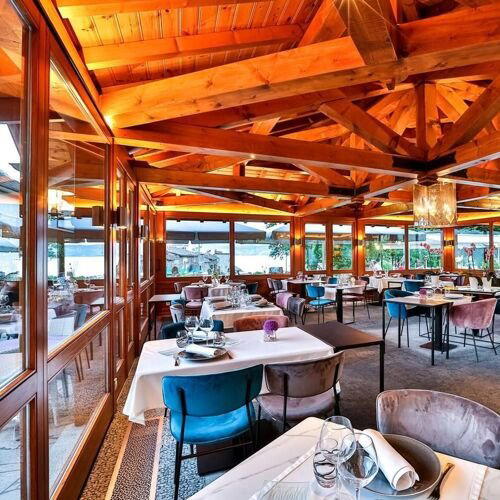
Refined interiors within centuries-old stone walls, elegant dining room in winter, and summer terrace in the historic courtyard with panoramic views.