Our verdict
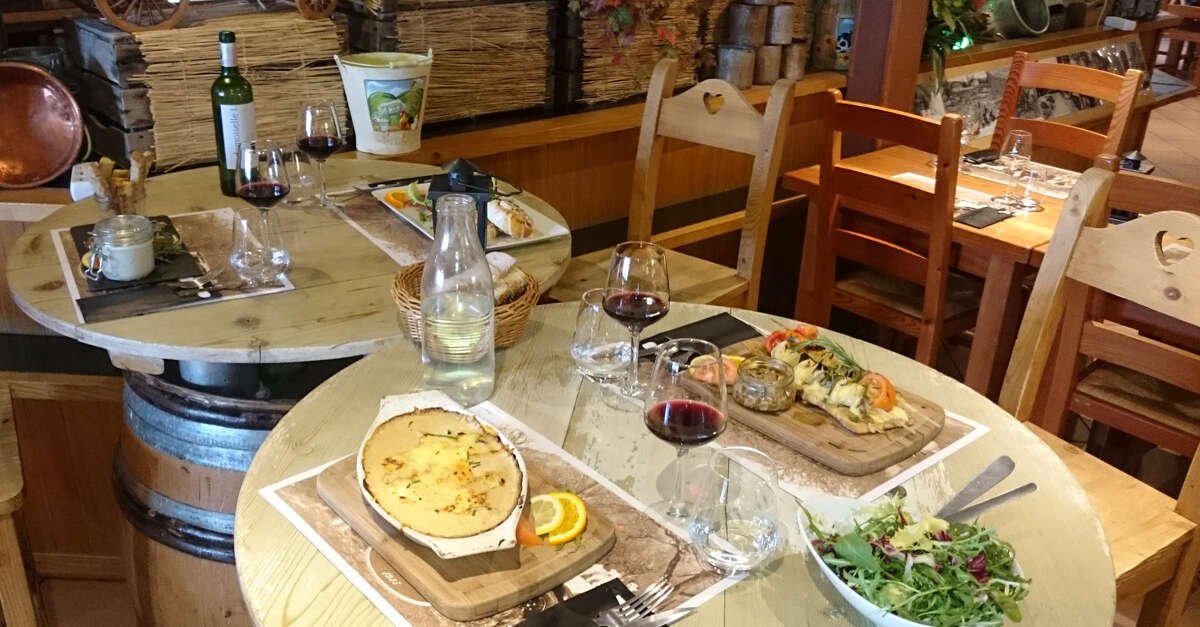
At the roundabout where Merlette's ski runs converge, La table de l'Establou occupies a position that only mountain resorts can produce: a dining room where the altitude and the surrounding agricultural region shape what arrives on the plate. In the Hautes-Alpes, that means produce drawn from one of France's more demanding growing environments, where short seasons concentrate flavour and proximity to source is less a marketing claim than a practical reality.

Pearl is the En Primeur Club membership app, where members save venues, book tables and use the concierge.
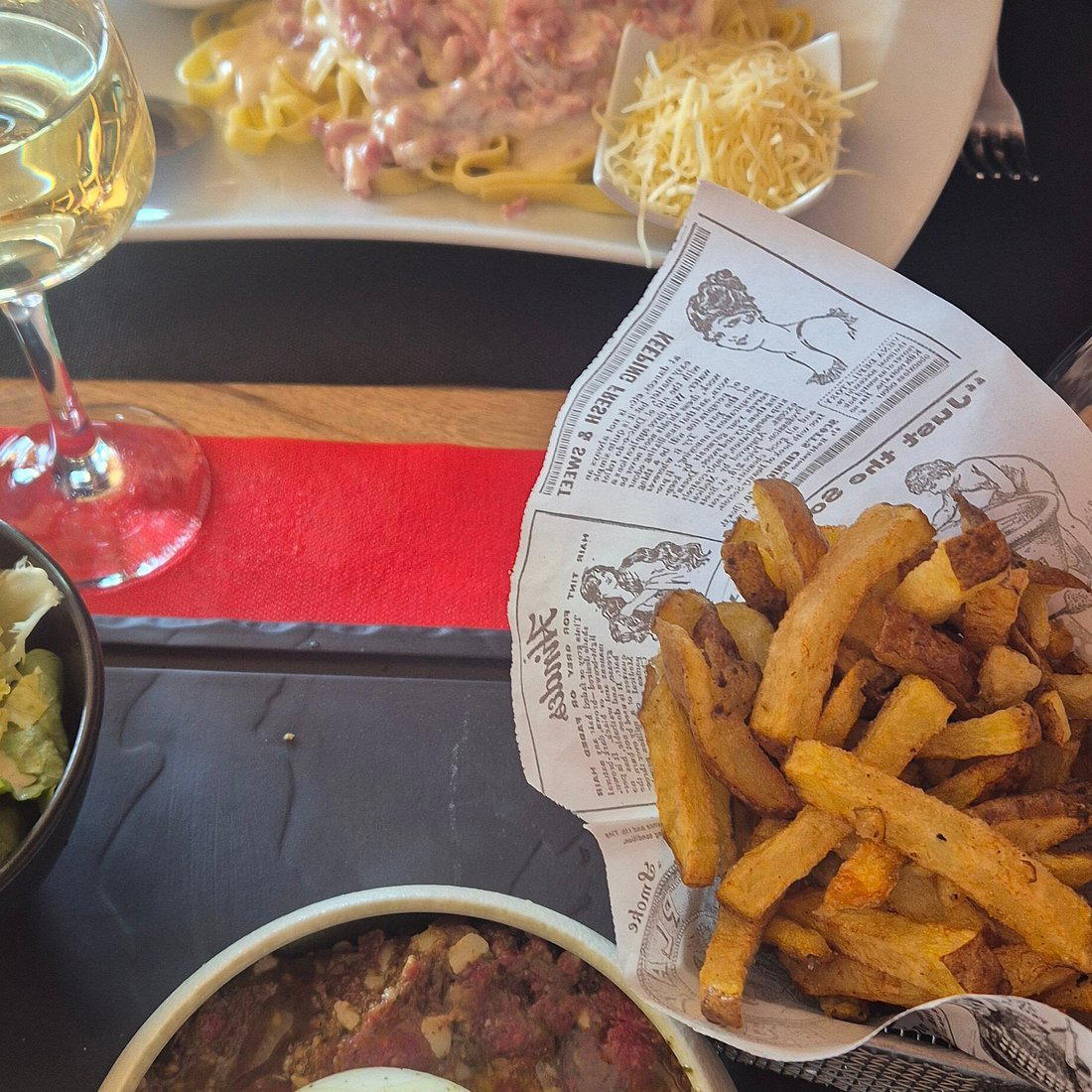
The menu
What to order
- Croziflette
- Mont d'or rôti
- Fondue
- Raclette
- Mega big burger
Where the Pistes End and the Plate Begins
Mountain resort dining in France operates on a spectrum that runs from convenience-driven slope-side fare to something considerably more considered. At the upper end of that range, a handful of addresses in the French Alps treat altitude not as a constraint but as a defining ingredient, places where the surrounding terrain, its producers, and its seasonal rhythms inform what the kitchen does rather than simply providing a picturesque backdrop. La table de l'Establou, positioned at the Rond Point des Pistes in Merlette above Orcières, sits closer to that more considered end of the spectrum than its resort-town postcode might suggest.
Orcières itself occupies an unusual place in the Hautes-Alpes. At around 1,850 metres in the Champsaur valley, it draws a ski crowd in winter and a hiking and cycling crowd in summer, but it has not attracted the international profile of Courchevel or Val d'Isère. That relative obscurity has a culinary consequence: the restaurants that earn local loyalty here do so without the safety net of guaranteed tourist footfall, which tends to focus the kitchen's attention on quality and consistency over novelty. Among Orcières' dining options, Le Cro-Magnon and Les Gardettes represent the broader local picture; La table de l'Establou's location at the piste entry point places it in conversation with that scene while drawing its own distinct clientele.
What the Hautes-Alpes Puts on the Table
To understand the editorial angle here, it helps to understand the Hautes-Alpes as a sourcing territory. The department is among the least densely populated in metropolitan France, and its agricultural identity reflects that: sheep farming on high pastures, small-scale vegetable cultivation in the valley floors, honey production from Alpine flora, and game that becomes available through the hunting season from late summer into autumn. These are not the abundant, climate-moderated growing conditions of Provence to the south or the Rhône valley to the west. The season is compressed. What grows here, grows with intensity precisely because the window is narrow.
Mountain kitchens that pay attention to this sourcing reality tend to cook differently from their lowland counterparts. The emphasis falls on preservation techniques, curing, smoking, fermenting, confiting, that extend seasonal produce across leaner months. They also tend toward dishes that have a structural density appropriate to high-altitude appetite: food built for bodies that have spent the morning on skis or the afternoon on a trail, not for a lingering urban lunch of small plates. This is not heavy food in the pejorative sense but food calibrated to context, where fat and protein carry a practical logic that urban tasting menus rarely need to consider.
France's most referenced mountain dining sits further north and west: Flocons de Sel in Megève operates at three Michelin stars with a sourcing philosophy rooted in Haute-Savoie terroir, while Bras in Laguiole, though technically on the Aubrac plateau rather than the Alps, has set the benchmark for how upland French cuisine can articulate its landscape through produce. These are reference points for what becomes possible when a kitchen commits to its geography. The Hautes-Alpes equivalent has not yet produced that level of international recognition, but the underlying sourcing logic is structurally the same.
The Broader French Fine Dining Reference Frame
For readers calibrating expectations against France's broader dining hierarchy, it is worth noting what that hierarchy looks like at its uppermost tier. Alléno Paris au Pavillon Ledoyen in Paris and Mirazur in Menton operate at the intersection of technical ambition and sourcing rigour that defines contemporary French cooking at its most decorated. Troisgros - Le Bois sans Feuilles in Ouches, Auberge de l'Ill in Illhaeusern, and Auberge du Vieux Puits in Fontjoncouse represent the regional anchors of French gastronomy outside the capital. Further afield, Paul Bocuse - L'Auberge du Pont de Collonges in Collonges-au-Mont-d'Or and Georges Blanc in Vonnas carry the weight of French culinary institution-building across decades.
La table de l'Establou does not compete in that tier. What it offers is something the recognised addresses above cannot: a dining experience calibrated to a specific Alpine moment, in a valley that sees far fewer international visitors, where the sourcing radius is measured in tens of kilometres rather than the broader national networks that supply Paris kitchens. Restaurants like AM par Alexandre Mazzia in Marseille, Assiette Champenoise in Reims, Au Crocodile in Strasbourg, Christopher Coutanceau in La Rochelle, and international references like Le Bernardin in New York City and Atomix in New York City all illustrate how deeply a kitchen's identity can be shaped by its sourcing geography. In Orcières, that geography is simply more extreme and less familiar to most diners.
Planning a Visit
La table de l'Establou is located at Merlette, the ski station above Orcières proper, at the Rond Point des Pistes, the roundabout that marks the convergence of the main ski runs. Access in winter is direct from the slopes; in summer, the road from Orcières to Merlette is driveable and provides a clear approach for visitors coming from the valley. Given the restaurant's location within a resort environment, visiting during the active ski season (broadly December through April) or the summer activity months (July to August) aligns with its operational calendar, though travellers should verify current opening periods and reservation requirements directly before planning. The broader Orcières restaurant guide is available at our full Orcieres restaurants guide for those building a longer stay around the area.
Frequently asked questions
Where is La table de l'Establou in Orcieres?
La table de l'Establou is located at Merlette - Rond Point des Pistes, 05170 Orcières, France, Orcieres.
Is La table de l'Establou a good option for lunch directly after skiing in Orcières?
Located at the Rond Point des Pistes in Merlette, the roundabout at the base of the ski runs above Orcières proper, the restaurant is positioned for exactly that transition point between mountain and table. The address at 05170 Orcières places it within the ski station perimeter, making it one of the few dining options in the area that sits at the convergence of the main pistes rather than requiring a separate journey down into the village.
What should I eat at La table de l'Establou?
The kitchen draws on the Hautes-Alpes as a sourcing territory, one of France's least densely populated departments and a region with a distinct larder of mountain produce. Expect the menu to reflect what the surrounding alpine environment puts forward seasonally, rather than a generic resort menu built around convenience. Specific dishes are best confirmed directly with the restaurant on arrival or at reservation.
Is La table de l'Establou reservation-only?
The restaurant sits at Merlette's Rond Point des Pistes, the convergence point for skiers coming off the slopes, which means lunchtime footfall can be high during peak ski season. Whether walk-ins are accommodated or advance booking is required has not been publicly confirmed, so contacting the venue directly before your visit is the practical approach. The address is Merlette - Rond Point des Pistes, 05170 Orcières.
What has La table de l'Establou built its reputation on?
Its position at the Rond Point des Pistes in Merlette places it at the functional heart of the Orcières ski station, yet the kitchen appears to operate with more considered intent than the slope-side canteen model that dominates at comparable altitude in France. The Hautes-Alpes context matters here: the department's relative isolation translates into sourcing from producers who largely supply local rather than national markets. No formal awards are currently documented for the venue.
Is La table de l'Establou good for vegetarians?
Cuisine type is not formally documented for La table de l'Establou, so a definitive answer requires checking with the restaurant directly. Mountain kitchens in the Hautes-Alpes tend to be anchored in animal proteins, though regional vegetable and dairy produce from the department is notably strong. Confirming options ahead of your visit is advisable.
Is La table de l'Establou overpriced or worth every penny?
Pricing data for La table de l'Establou has not been publicly documented, which makes a direct value assessment premature. What can be said is that the restaurant occupies a position in Orcières, a mid-sized Hautes-Alpes ski station rather than a Courchevel or Méribel, where pricing expectations typically sit below the high-end Savoie resort tier. Calibrate accordingly, and confirm current pricing when booking.
Comparable Spots, Quickly
Comparable venues nearby, for context on price, style, and recognition.
| Venue | Cuisine | Price | Notes |
|---|---|---|---|
| La table de l'EstablouThis venue (the venue you are viewing) | Traditional French Mountain Bistro | $20–30 | Not listed |
| Le Cro-Magnon | Traditional Savoyard Mountain Cuisine | $50–100 | Station de Merlette |
| Les Gardettes | Traditional Alpine French | $20–30 | Orcières |
| La Farigoule | Traditional Provençal French | Not listed | center of town |
| Le Petit Provençal | Provençal French Bistro | $30–50 | old town |
| Chez francois | Traditional French Bistro & Pizzeria | $20–30 | ZA Pole 2000 |
Continue exploring
More in Orcieres
Restaurants in Orcieres
All restaurants in Orcieres →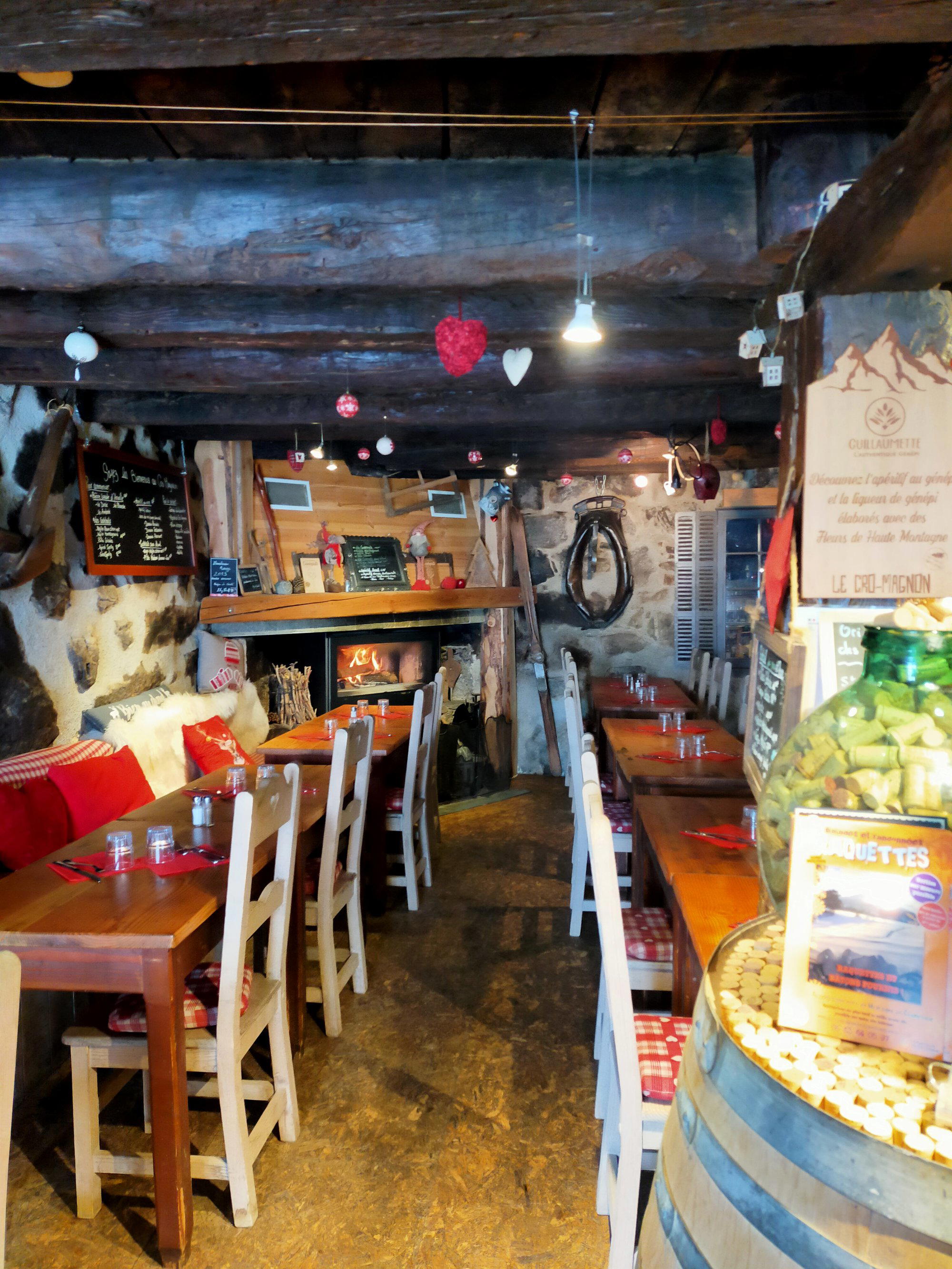
Details
- Cozy
- Rustic
- Intimate
- Family
- Group Dining
- Casual Hangout
- Terrace
- Local Sourcing
- Mountain
- A La Carte
- Vegetarian Friendly
Current opening hours
- Monday
- 12–2:30 PM, 7–11 PM
- Tuesday
- 12–2:30 PM, 7–11 PM
- Wednesday
- 12–2:30 PM, 7–11 PM
- Thursday
- 12–2:30 PM, 7–11 PM
- Friday
- 12–2:30 PM, 7–11 PM
- Saturday
- 12–2:30 PM, 7–11 PM
- Sunday
- 12–2:30 PM, 7–11 PM
Hours can change for holidays and private events. Hours as of .
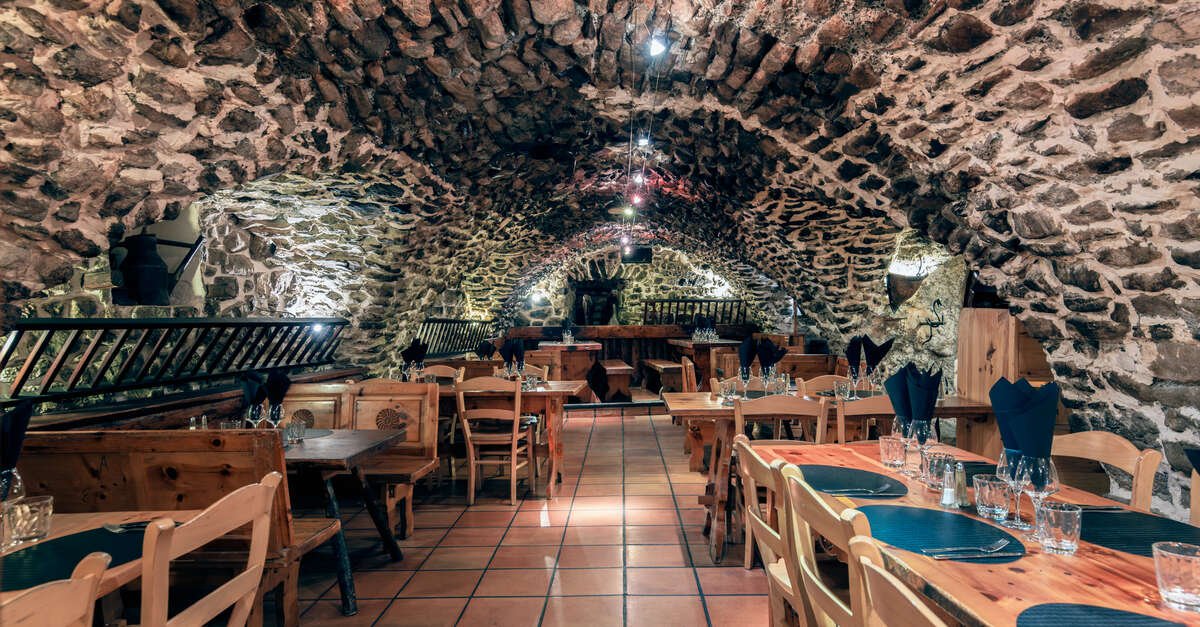
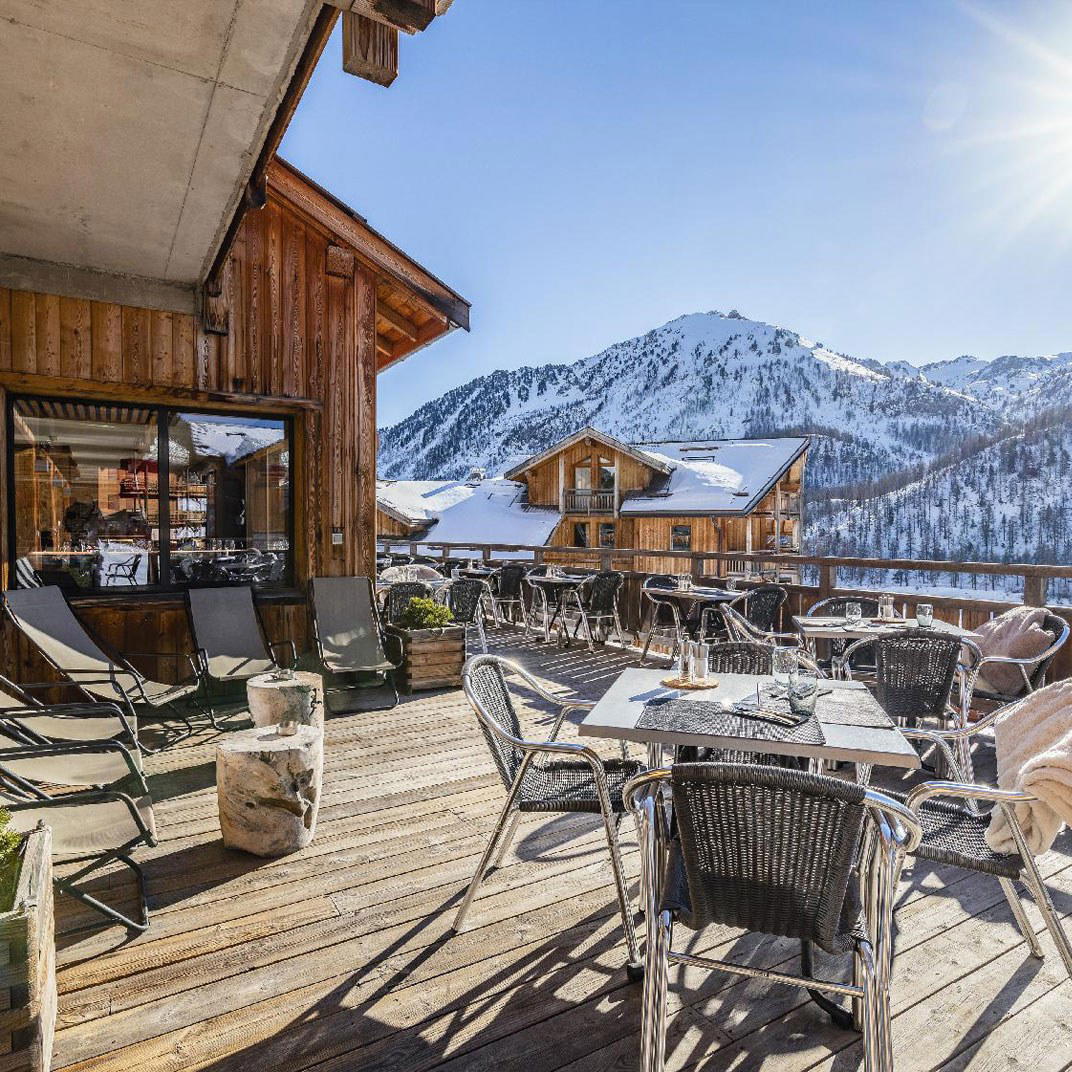
Warm, cozy chalet ambiance with friendly service and a convivial family-friendly feel.