La Poule Noire
La Poule Noire occupies a quiet address on the Place des Pêcheurs in La Charité-sur-Loire, a Loire Valley town more often associated with its Romanesque priory than its restaurant scene. In a region where market-driven kitchens draw from some of France's most productive agricultural land, the restaurant sits at the intersection of provincial tradition and serious sourcing. For travellers passing through Burgundy's western edge, it merits a deliberate stop rather than an afterthought.
Pearl is the En Primeur Club membership app — saves, bookings, and concierge access live there. Same editors, same standards.
- Address
- 9 Pl. des Pêcheurs, 58400 La Charité-sur-Loire, France
- Phone
- +33386594928
- Directions
- Get directions
 Saves & bookings on Pearl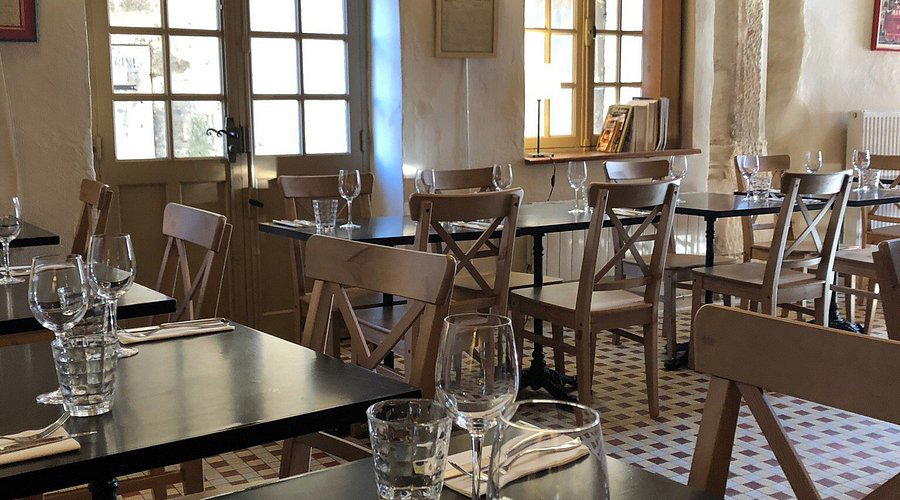
A Town That Earns Its Detour
La Charité-sur-Loire does not announce itself loudly. The town sits on the right bank of the Loire roughly midway between Nevers and Bourges, its skyline shaped by the eleven-century towers of the Prieuré Notre-Dame rather than anything built in the last hundred years. That historical stillness shapes the town's appeal. The same rural quiet that keeps visitor numbers modest also preserves the agricultural relationships that define serious provincial cooking in this part of France. This is not the Loire of celebrity châteaux and wine-trail weekends, it is a quieter stretch of the valley where small producers, market gardens, and local abattoirs still supply kitchens directly, without the intermediary logistics of a major city. French restaurant culture here is shaped less by spectacle than by local supply and seasonality.
La Poule Noire occupies a position on the Place des Pêcheurs, the square near the riverbank that gives the address an unhurried, almost village-scale character. The name itself, the Black Hen, signals a certain directness about the kitchen's probable interests: poultry, provenance, the kind of ingredient-first cooking that provincial France has practiced for generations without needing to theorise about it.
Sourcing on the Loire's Western Edge
The Loire Valley and its southern Burgundian approaches are among the more productive agricultural corridors in France. Nivernais cattle from the département of Nièvre, the administrative territory in which La Charité sits, have supplied French kitchens for centuries, with a breed profile that favours texture over rapid commercial yield. Market gardens around the valley floor produce a seasonal calendar that shifts meaningfully between spring asparagus, summer courgette flowers, autumn squash, and the root-heavy larder of winter. For a kitchen on the Place des Pêcheurs, proximity to those producers is a structural advantage that larger urban restaurants actively envy.
The broader tradition of French provincial cooking, what critics sometimes call cuisine du terroir in its most literal, non-romanticised sense, operates on the logic that short supply chains produce better ingredient quality than centralised distribution, and that a cook who knows a farmer by name makes different decisions than one ordering from a catalogue. That tradition is alive across the region. Troisgros in Ouches has built decades of critical recognition partly on exactly that supply-chain discipline. Auberge de l'Ill in Illhaeusern demonstrates how Alsatian terroir can anchor a kitchen for generations. Further afield, Auberge du Vieux Puits in Fontjoncouse operates from a village of fewer than a hundred inhabitants and has still accumulated three Michelin stars, proof that address alone is not a ceiling on culinary ambition.
Reading a Provincial French Menu in This Region
Kitchens at this latitude in France tend to organise around a few recurring categories: freshwater fish from the Loire and its tributaries (pike, perch, and sandre remain regional staples), poultry from nearby farms, and the sort of offal-inclusive cooking that disappears from urban menus whenever dining trends move toward the internationally palatable. A restaurant named for a hen in a town on the Loire is probably not serving a menu that looks like the contempory creative output of Alléno Paris au Pavillon Ledoyen or the technically ambitious tasting formats at AM par Alexandre Mazzia in Marseille. It is operating in a different register, one where classical technique applied to well-sourced regional product is the ambition, not a fallback.
That distinction matters for setting expectations. Readers accustomed to the structured tasting menus of Assiette Champenoise in Reims or the coastal focus of Christopher Coutanceau in La Rochelle will be arriving at a different kind of French restaurant. Provincial kitchens in towns of this size typically offer a shorter menu with stronger seasonal rotation and a wine list anchored to the nearby appellations, Pouilly-Fumé and Sancerre sit within forty kilometres of La Charité, which is not an incidental geographic fact for anyone building a cellar list.
Getting There and Planning a Visit
La Charité-sur-Loire sits on the A77 autoroute corridor linking Paris to Clermont-Ferrand, which makes it a viable lunch stop for drivers crossing central France rather than an isolated destination requiring dedicated planning. The town is also served by the Paris-Nevers rail line, with La Charité station a short walk from the town centre and the Place des Pêcheurs. For those building a longer Loire or Burgundy itinerary, combining visits to wine country around Sancerre or continuing south toward the Massif Central, the restaurant fits naturally into a two-night structure with the town as a base. The broader La Charité-sur-Loire restaurant scene is modest but coherent, and the Prieuré makes a compelling reason to arrive before lunch rather than rushing through. Booking ahead is advisable for weekend lunches, which tend to draw visitors from the surrounding departments; weekday dinner service is generally quieter.
The same logic, that ingredient quality comes first, is evident in kitchens well beyond the Loire.
Comparable Spots, Quickly
Comparable venues nearby, for context on price, style, and recognition.
| Venue | Cuisine | Price | Notes |
|---|---|---|---|
| La Poule NoireThis venue — the venue you are viewing | Traditional Burgundian Bistro | $$$ | Not listed |
| Le Relais des Gourmets | Traditional Burgundian French Bistro | $$$ | Centre-ville |
| Relais Saint-Jacques | Modern French Gastronomic | $$$ | Coings |
| Pierre & Clement | Contemporary French Bistronomy | $$$ | Ruelle des Chats |
| Le Beauharnais - Sherri et Nicola | Seasonal Glocal Gastronomic French | $$$ | La Ferté-Beauharnais |
| BISTROT DES GRANDS CRUS | Classic French Bistro | $$$ | Chablis |
Continue exploring
More in La Charite Sur Loire
Restaurants in La Charite Sur Loire
Browse all →
Hotels in La Charite Sur Loire
Browse all →

At a Glance
- Rustic
- Cozy
- Historic
- Intimate
- Date Night
- Special Occasion
- Terrace
- Historic Building
- Extensive Wine List
- Local Sourcing
Current opening hours
- Monday
- Closed
- Tuesday
- 12–1:30 PM, 7–8:30 PM
- Wednesday
- 12–1:30 PM, 7–8:30 PM
- Thursday
- 12–1:30 PM, 7–8:30 PM
- Friday
- 12–1:30 PM, 7–9 PM
- Saturday
- 12–1:30 PM, 7–9 PM
- Sunday
- Closed
Hours can change for holidays and private events. Last verified .
Pleasant sheltered terrace and vaulted ancient interiors creating a cozy historic atmosphere.