La Flibuste


A Michelin-starred table at Baie des Anges Marina, La Flibuste pairs the Ligurian-inflected Mediterranean cooking of chef Clio Modaffari with the Parisian fine-dining rigour that Anne Legrand brought from her starred Paris tenure. The result is a set-menu format anchored in local fish and market-garden vegetables, served behind floor-to-ceiling windows with direct harbour views in Villeneuve-Loubet.
Pearl is the En Primeur Club membership app — saves, bookings, and concierge access live there. Same editors, same standards.
- Address
- 1001 Av. Jean Marchand, 06270 Villeneuve-Loubet, France
- Phone
- +33 4 93 20 59 02
- Website
- restaurantlaflibuste.fr
- Directions
- Get directions
 Saves & bookings on Pearl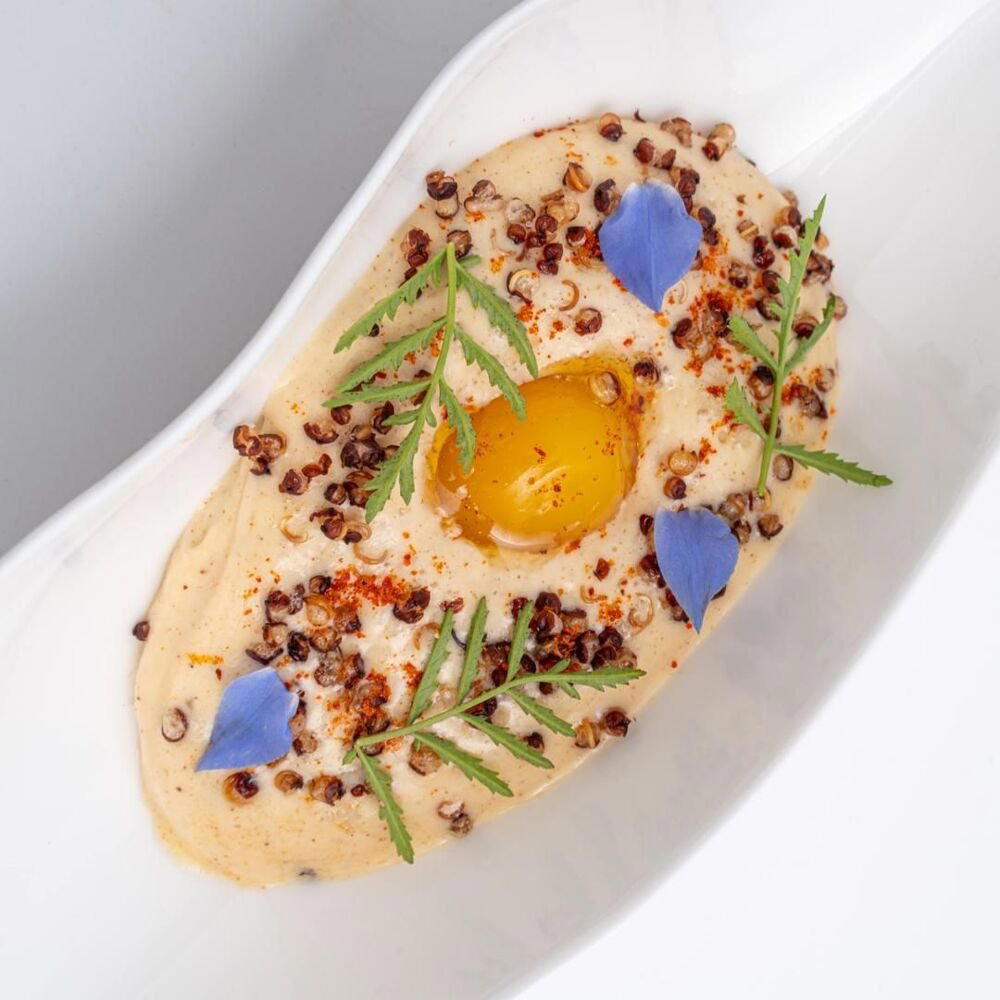
Where the Harbour Meets the Plate
Approach Baie des Anges Marina on a clear afternoon and the geometry of the place makes a specific kind of argument: this is the Côte d'Azur as it presents itself to the sea, not to the autoroute. The marina at Villeneuve-Loubet sits between Nice and Antibes, close enough to both that it draws from their respective dining cultures without being absorbed by either. La Flibuste occupies a ground-floor position within the marina complex, floor-to-ceiling windows framing the harbour so that water and mast-lines form the backdrop to every table. The terrace extends this further outward, giving diners a direct sightline over the boats. It is a setting that would flatter mediocre cooking; what actually arrives from the kitchen makes the view incidental.
Two Kitchens, One Coastline
The Franco-Italian arc of the Mediterranean coast has long produced a particular hybrid cuisine, one that draws on the larders of Liguria and Provence simultaneously without fully committing to either. That tradition has found serious expression at La Flibuste through a kitchen led by two chefs whose backgrounds are geographically and professionally distinct. Clio Modaffari, originally from Genoa, brings the Ligurian inflection: a familiarity with bottarga, with the oilier, more assertive flavours of the Italian riviera, and with the vegetable-forward cooking that Genoese tradition has always placed alongside its seafood. Anne Legrand arrived with different credentials: a Michelin star earned in Paris, and with it the technical discipline and service grammar of the French capital's fine-dining rooms.
What this combination produces is not a fusion exercise but something more coherent. The two culinary vocabularies share enough common ground, olive oil, Mediterranean fish, summer vegetables, that their differences register as texture rather than contradiction. Spaghetti with bottarga and orange condiment reads as an Italian dish seasoned with a Provençal instinct; Mediterranean capon with tandoori oil and rockfish jus is harder to locate geographically, which is precisely its interest. The asparagus dish with honey vinaigrette and pecorino sauce maps a similar triangulation: the vegetable is local, the cheese is Italian, the dressing is French in its logic. These are not the signature dishes of a chef working through a personal philosophy so much as evidence of what happens when two distinct training lines are applied to the same coastal raw material. Mirazur in Menton offers a useful comparison point, operating at the three-star level with similar Franco-Italian coastal references.
The Michelin Signal and What It Means Here
La Flibuste received its first Michelin star in 2025. In the context of the Alpes-Maritimes department, which already contains some of France's most decorated tables, a single star carries a specific implication: the kitchen is working at a level that warrants deliberate travel, but the experience remains accessible rather than ceremonial. The comparable set for a one-star table on this stretch of coast is not the three-star circuit, Mirazur, for instance, or the major Parisian rooms such as Alléno Paris au Pavillon Ledoyen, but rather the tier of serious regional restaurants where cooking quality is high, ingredient sourcing is local and intentional, and the format is structured without becoming rigid.
The set-menu format at La Flibuste, served across several sequences at both lunch and dinner, is standard for this category of French restaurant. What distinguishes the approach here is the sourcing infrastructure: fish from the high-quality local suppliers that the Côte d'Azur's proximity to small-boat Mediterranean fishing makes possible, and vegetables from a neighbouring market garden. That last detail matters more than it might appear. Market-garden supply at this proximity means the kitchen can work with produce at a stage of ripeness that larger-scale distribution cannot replicate. The fava beans in the asparagus dish, the courgettes alongside the capon: these are ingredients that depend on short supply chains to deliver what the recipe promises. Bras in Laguiole and Auberge du Vieux Puits in Fontjoncouse, both of which have built their reputations on hyperlocal sourcing in less obviously glamorous settings.
The Training Lines Behind the Cooking
In French fine dining, a chef's formation is not biographical colour, it is credential information that tells you which technical and philosophical lineages have shaped what arrives on the plate. Anne Legrand's starred Paris tenure places the restaurant's kitchen within the tradition of French capital fine dining, a tradition shaped by precision, classical structure, and an expectation of service calibration. The Paris dining scene at the level where stars are held, restaurants like Alléno Paris au Pavillon Ledoyen, operates with a formality and technical specificity that leaves marks on everyone who works within it.
Clio Modaffari's Genoese background feeds a different set of instincts: the Ligurian tradition is less ceremonial but no less technically demanding, with a particular emphasis on the quality of primary ingredients and a relative restraint with transformation. The bottarga pasta signals this directly, bottarga is an ingredient that rewards restraint, where over-manipulation destroys the quality that makes it worth using. The orange condiment alongside it is an adjustment, a brightening, not a complication. These are culinary decisions that reflect a specific kind of confidence: the kind that comes from knowing a tradition rather than performing it. Other chefs working in a similar mode of cross-border confidence include those at AM par Alexandre Mazzia in Marseille, where Mediterranean ingredients are handled with an equally individual editorial point of view. Further afield, the broader conversation about what modern European fine dining looks like when it moves away from classical French formulas is happening at tables like Frantzén in Stockholm and FZN by Björn Frantzén in Dubai.
How to Read the Room
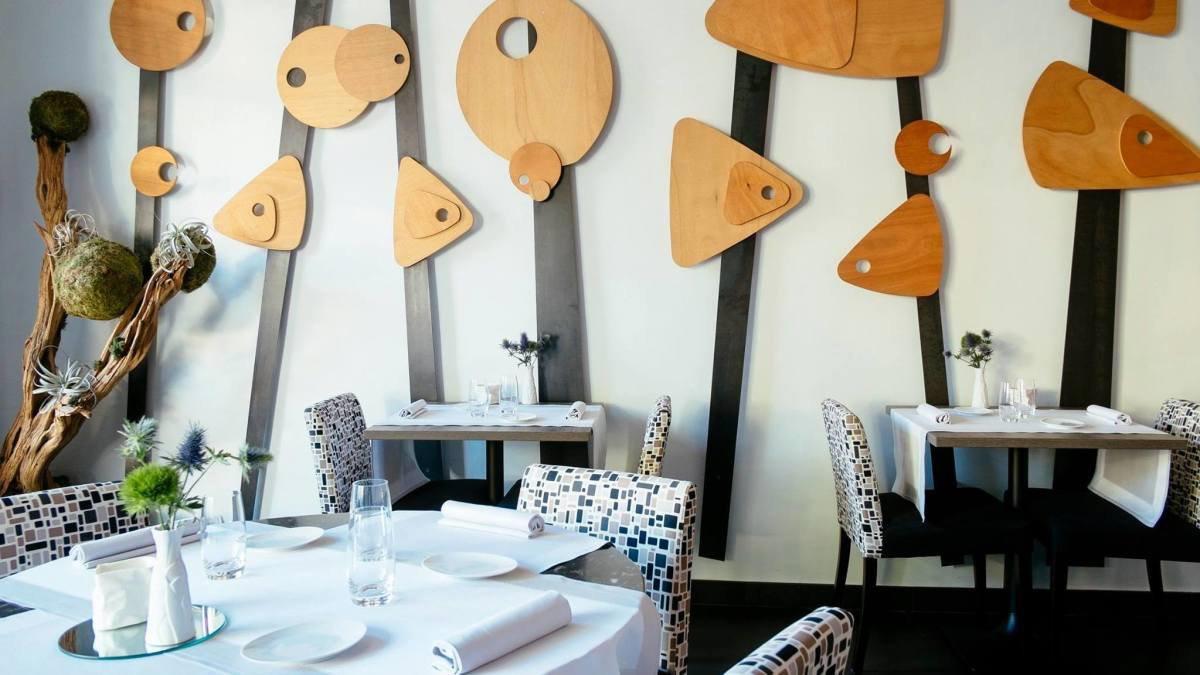
Guests at €€€€ tables tend to arrive with higher expectations and lower tolerance for missteps; a rating that holds above 4.7 at meaningful volume suggests the kitchen and front-of-house are consistently meeting the promise implied by the setting and the star. The floor-to-ceiling windows and the modern terrace are not incidental amenities but functional elements of the proposition: this is a lunch and dinner destination where the harbour view is part of what the meal offers, and the room's design integrates that rather than treating it as backdrop.
For those building a broader itinerary around serious French dining in the region, Flocons de Sel in Megève, Troisgros in Ouches, Auberge de l'Ill in Illhaeusern, Assiette Champenoise in Reims, Au Crocodile in Strasbourg, and Paul Bocuse in Collonges-au-Mont-d'Or provides a useful map of the French fine-dining spectrum from Alsace to the Mediterranean.
Planning Your Visit
The restaurant is located at 1001 Avenue Jean Marchand, 06270 Villeneuve-Loubet, within the Baie des Anges Marina. Service runs at both lunch and dinner, and the format is set menus across several sequences. At the €€€€ price point with a 2025 Michelin star, advance booking is essential, particularly for terrace tables with direct harbour exposure.
Quick Comparison
Comparable venues nearby, for context on price, style, and recognition.
| Venue | Cuisine | Price | Awards | Notes |
|---|---|---|---|---|
| La FlibusteThis venue — the venue you are viewing | Modern French Fine Dining | $$$$ | Michelin 1 Star | Not listed |
| Les Pêcheurs | Mediterranean Fine Dining | $$$$ | Michelin 1 Star | Cap d'Antibes |
| Bessem | Modern French Mediterranean Fine Dining | $$$$ | Michelin 1 Star | Mandelieu-La Napoule |
| L'Or Bleu | Modern French Gastronomic | $$$$ | Michelin 1 Star | Théoule-sur-Mer |
| La Palmeraie - Château de Valmer | Provençal Fine Dining | $$$$ | Michelin 1 Star | La Croix-Valmer |
| Le Restaurant des Rois - La Réserve de Beaulieu | Mediterranean Fine Dining | $$$$ | Michelin 1 Star | Beaulieu-sur-Mer |
Recognition history
Dated appearances from independent guides and award organizations, with the underlying list record or original source where available.
Gault & Millau Remarkable Restaurant
Gault & Millau
Michelin 1 Star
Michelin
Michelin 1 Star
Michelin
Continue exploring
More in Villeneuve-Loubet
Restaurants in Villeneuve-Loubet
Browse all →
Bars in Villeneuve-Loubet
Browse all →
Hotels in Villeneuve-Loubet
Browse all →
Wineries in Villeneuve-Loubet
Browse all →

At a Glance
- Elegant
- Sophisticated
- Modern
- Scenic
- Date Night
- Special Occasion
- Waterfront
- Terrace
- Local Sourcing
- Waterfront
Current opening hours
- Monday
- 12–2 PM, 7:30–9:30 PM
- Tuesday
- Closed
- Wednesday
- Closed
- Thursday
- 12–2 PM, 7:30–9:30 PM
- Friday
- 12–2 PM, 7:30–9:30 PM
- Saturday
- 12–2 PM, 7:30–9:30 PM
- Sunday
- 12–2 PM
Hours can change for holidays and private events. Last verified .
Refined and elegant atmosphere with marina views, attentive service, and a modern setting featuring large glass walls and terrace seating.