

La Chapelle at Château Saint-Jean holds a Michelin star (2025) and operates from a former chapel on the grounds of a château outside Montluçon, with copper lacework panels lining the nave. Chef Olivier Valade's kitchen draws on training at Loiseau and Darroze to deliver seasonal French cooking at the €€€€ price point. Wednesday through Sunday evenings, with Saturday and Sunday lunch service also available.
Pearl is the En Primeur Club membership app — saves, bookings, and concierge access live there. Same editors, same standards.
- Address
- Av. Henri de la Tourfondue, 03100 Montluçon, France
- Phone
- +33 4 70 03 26 57
- Website
- chateau-saint-jean.com
- Directions
- Get directions
 Saves & bookings on Pearl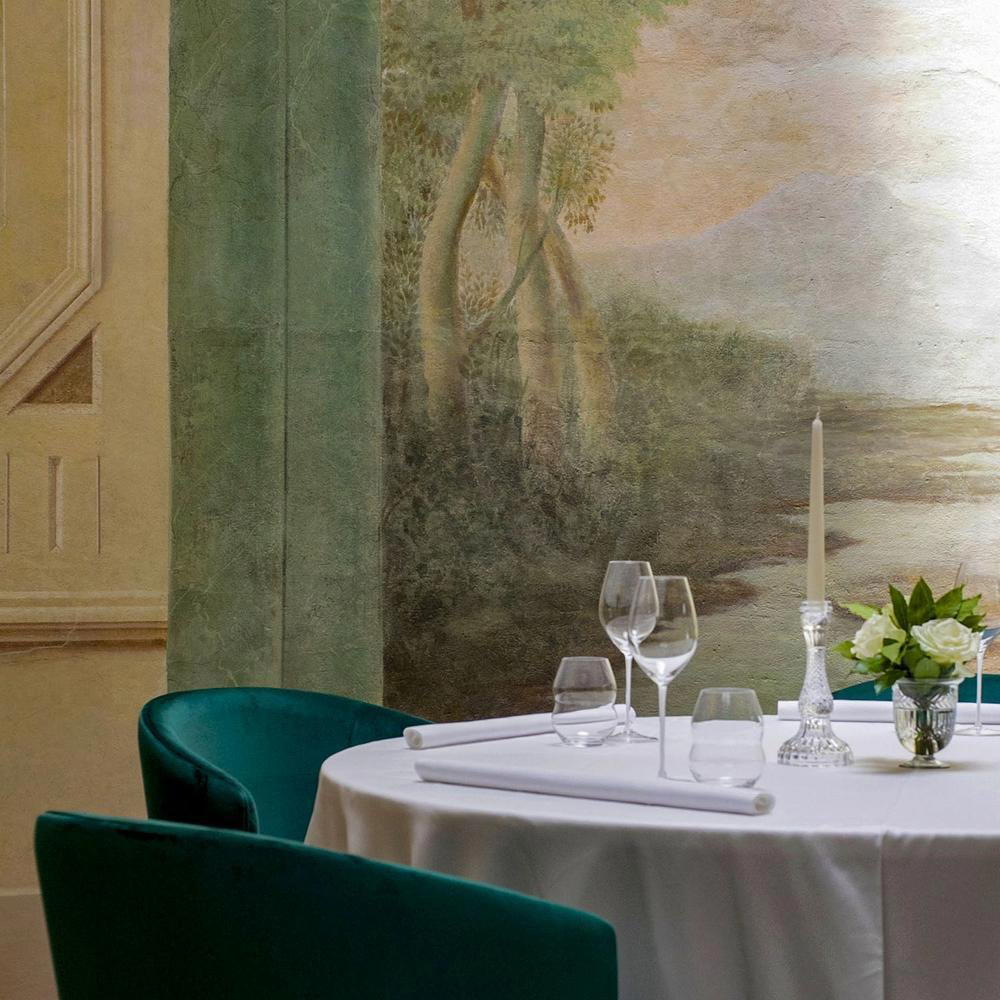
A Former Chapel, a Provincial Star, and the Question of What French Fine Dining Looks Like Away From Paris
France's most discussed starred restaurants tend to cluster in Paris, Lyon, and along the Mediterranean coast. Mirazur in Menton, Alléno Paris au Pavillon Ledoyen, and Troisgros in Ouches occupy the bracket that generates international conversation. But Michelin's coverage of provincial France has always told a different story: that serious cooking exists in small cities and rural châteaux, well outside the gravitational pull of the capital. La Chapelle at Château Saint-Jean, holding one Michelin star as of 2025, belongs to that less-publicised tier, and does so from one of the more arresting dining rooms in the Auvergne.
The Room Before the Meal
The physical setting here does real work. The restaurant occupies a former chapel within the château grounds, and the nave has been fitted with copper lacework panels that absorb and scatter light in ways a conventional dining room cannot replicate. The marriage of ecclesiastical architecture and contemporary material is not merely decorative, it creates the kind of enclosure that shapes how long people stay at the table. Reviewers note a surprisingly intimate atmosphere for a space of this scale, a quality that requires both architectural confidence and careful seating decisions. Among France's château dining rooms, few manage the transition from heritage shell to working fine dining room without the period details feeling museum-like. Here, they do not.
For context on the broader register: Auberge de l'Ill in Illhaeusern and Au Crocodile in Strasbourg represent the Alsatian model of the grand provincial table, formal, deeply rooted in regional produce, architecturally serious. La Chapelle occupies a comparable position for central France, though at one star rather than the multi-star tier.
The Bistro Tradition and Where This Kitchen Sits Within It
Classifying La Chapelle as a French bistro, as its listed cuisine type suggests, requires some unpacking. The bistro tradition in France is genuinely broad. At its core, it describes accessible neighbourhood cooking: fixed-price menus, seasonal ingredients, convivial pacing, a preference for regional produce over import-dependent luxury. The bistro differs from the brasserie in scale and informality, and from the gastronomic restaurant in ambition and price architecture. But those distinctions have blurred significantly since the 1990s, when a generation of chefs trained in three-star kitchens began opening smaller, more personal rooms and pricing them at a register that sat between casual and grand.
La Chapelle sits at the upper end of that spectrum. The €€€€ price point and Michelin recognition place it in a category that operates closer to the creative French dining room than to the neighbourhood zinc-bar bistro. The spirit, though, connects to the bistro's central promise: direct, seasonal cooking with clear regional identity, served without the ceremony that defined classical French haute cuisine for most of the twentieth century. Dishes cited in reviews, foie gras pot-au-feu, Cardinal prawns, calf's sweetbread with sweet onions, read as French bistro vocabulary handled with fine-dining precision. The pot-au-feu, in particular, is a dish rooted in bourgeois home cooking, the kind of preparation that rewards technique over theatre.
This is a pattern visible at several points across French regional cooking. Bras in Laguiole built its identity on Aubrac plateau produce treated with quiet technical seriousness. Paul Bocuse's Auberge du Pont de Collonges refined Lyonnais bistro material into grand cuisine. The approach at La Chapelle draws on the same logic, applied in a region, the Allier department and the broader Auvergne-Rhône-Alpes zone, with its own strong larder: lentils, Charolais beef, freshwater fish, and the kind of root vegetables and alliums that drive winter cooking in central France.
For those interested in how the bistro tradition translates outside France, Republique in Los Angeles and Au Cheval in Chicago offer useful reference points for what French bistro cooking looks like when transplanted into North American dining culture, a useful contrast to the source material in a room like this one.
Chef Valade's Kitchen: Training as Context
Chef Tom Meyer leads the kitchen, and his work is shaped by training at Bernard Loiseau's kitchen in Saulieu and at Hélène Darroze's table in Paris. Both houses represent distinct traditions within French fine dining: Loiseau built his reputation on product-led cooking with clean flavours and minimal sauce reduction, while Darroze's approach draws on the Landes larder and a more contemporary sensory palette. A chef who has passed through both houses carries technical depth across different registers of French cuisine.
Montluçon and the Case for Dining Off the Main Circuit
Montluçon sits in the Allier department, roughly equidistant between Paris and Clermont-Ferrand, in a part of central France that rarely appears on international dining itineraries. The city has a medieval core and a history tied to metalworking and the Bourbonnais region, but it is not a gastronomic destination in the way that Lyon, Bordeaux, or Strasbourg are. That is partly what makes a starred table here worth noting. The dining options around it are thinner than in larger cities, the Bistrot Saint-Jean offers a more casual modern cuisine alternative on the same property, which concentrates the serious dining decision considerably. For those already in the region, passing through on a longer drive south, or using Montluçon as a base for exploring the Auvergne, La Chapelle represents the clear high-end choice.
Planning Your Visit
The kitchen operates on a tight schedule: Wednesday through Friday evenings from 7:15 PM to 9:30 PM, with Saturday and Sunday offering both a lunch service from 12:15 PM to 1:30 PM and an evening sitting at the same evening hours. Monday and Tuesday are closed. The address is Av. Henri de la Tourfondue, Montluçon. The €€€€ price tier places this in the same bracket as comparable one-star provincial tables. Booking ahead is essential, particularly for weekend lunch.
Cost Snapshot
Comparable venues nearby, for context on price, style, and recognition.
| Venue | Cuisine | Price | Awards | Notes |
|---|---|---|---|---|
| La Chapelle - Château Saint-Jean | Montluçon, Modern French Fine Dining | $$$$ | Michelin 1 Star | Not listed |
| Bistrot Saint-Jean | Parc Saint-Jean, Creative French Bistro | $$$$ | Michelin Plate | Not listed |
| Radio | Not listed | $$$$ | Michelin 1 Star | Chamalières, Contemporary French Gastronomic |
| Le Valucien - Château de Vault-de-Lugny | Not listed | $$$$ | Michelin 1 Star | Vault-de-Lugny, Modern French Fine Dining |
| Stéphane Tournié - Les Jardins de l'Opéra | Not listed | $$$$ | Michelin 1 Star | Capitole / Arnaud Bernard / Carmes, Modern French Fine Dining |
| Le Favori - Les Sources de Cheverny | Not listed | $$$$ | Michelin 1 Star | Cheverny, Modern French Gastronomic with Vegetable Focus |
Recognition history
Dated appearances from independent guides and award organizations, with the underlying list record or original source where available.
Michelin 1 Star
Michelin
Relais Chateaux Award
Relais Chateaux
Michelin 1 Star
Michelin
Relais Chateaux Award
Relais Chateaux
Michelin 1 Star
Michelin
Continue exploring
More in Montluçon
Restaurants in Montluçon
Browse all →
Hotels in Montluçon
Browse all →
At a Glance
- Elegant
- Romantic
- Intimate
- Sophisticated
- Date Night
- Special Occasion
- Celebration
- Open Kitchen
- Historic Building
- Private Dining
- Extensive Wine List
- Sommelier Led
- Local Sourcing
Soft, intimate lighting within a majestic restored chapel featuring copper mesh detailing; formal yet welcoming atmosphere with meticulous attention to presentation and service.