La Baleine Café
Our verdict
On Homer Spit, where Kachemak Bay meets the road's end, La Baleine Café occupies a stretch of Alaska that makes ingredient provenance almost impossible to fake. The surrounding waters and farms set the sourcing agenda here, placing this café in the tradition of Alaska's most ingredient-honest kitchens. For travelers passing through Homer, it functions as a direct argument for eating where the food actually comes from.

Pearl is the En Primeur Club membership app, where members save venues, book tables and use the concierge.
The menu
What to order
- Salmon Eggs Benedict
- Salmon Bowl
- Alaska Crab Melt
- Baleine Breakfast Skillet
- Fish and Chips
Where the Spit Ends and the Bay Begins
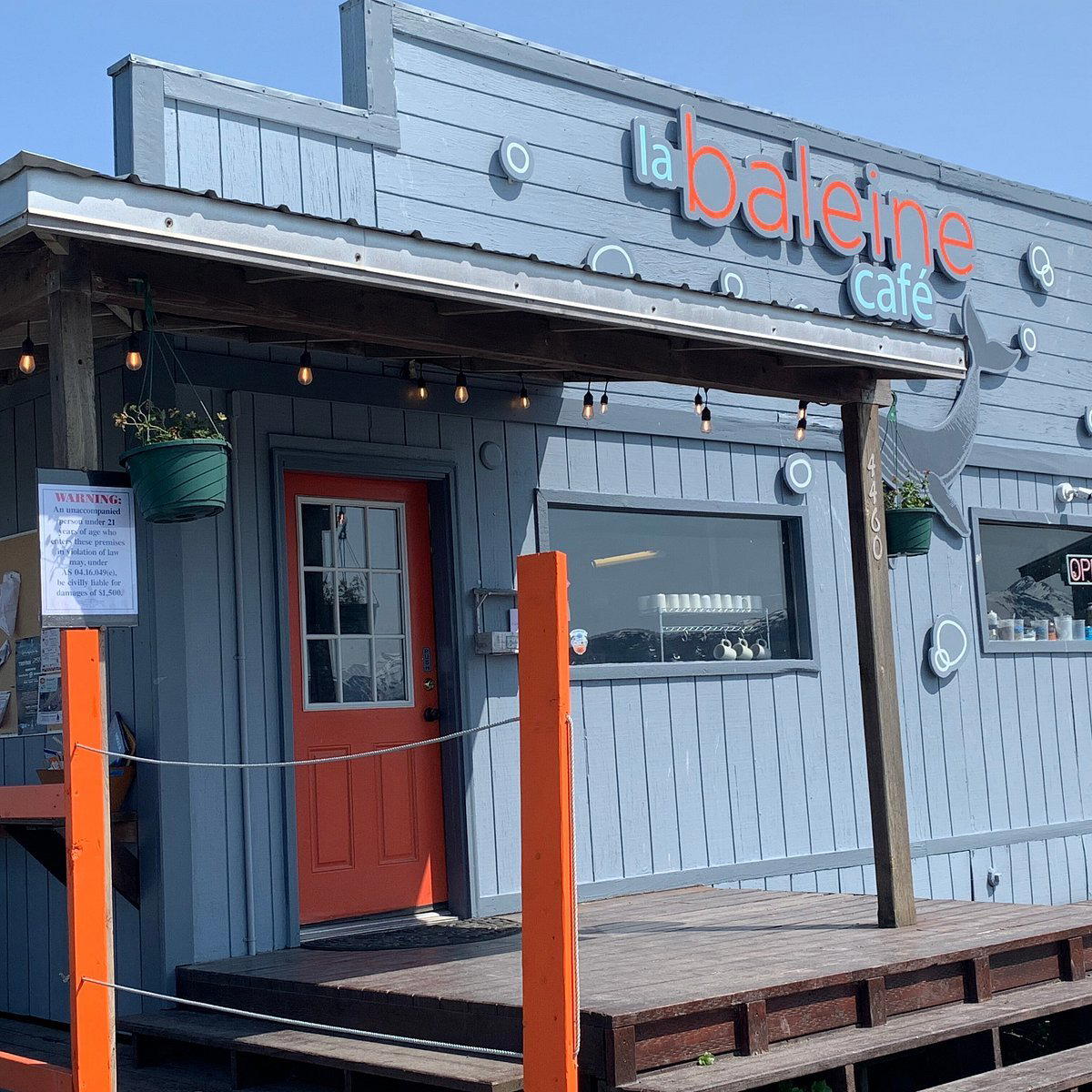
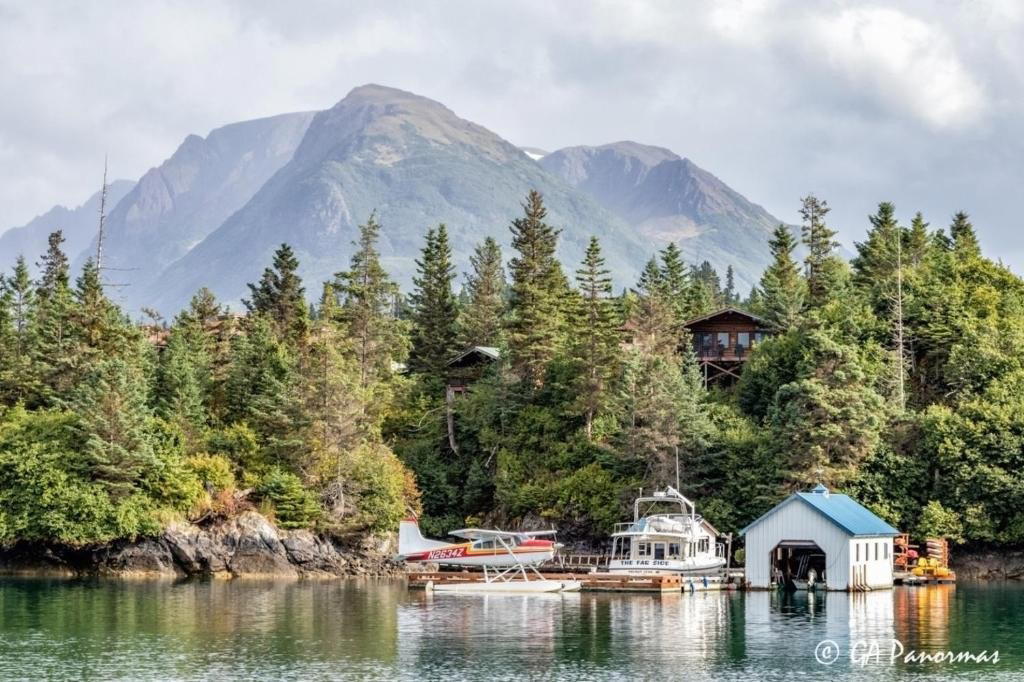
Homer Spit is a narrow finger of land that reaches four and a half miles into Kachemak Bay, and arriving at its far end is one of the more disorienting experiences in American coastal travel. The mountains of the Kenai Peninsula rise across the water; halibut boats move through the channel; the air carries salt and the particular cold of subarctic tidewater. La Baleine Café sits along that stretch, at 4460 Homer Spit Rd, inside one of the few American dining environments where the distance between the water and the plate is genuinely short. That geography is not incidental to what ends up on the table.
Homer occupies a specific tier in Alaska's dining conversation, not Anchorage's broader urban restaurant market, but a smaller, more place-specific category of waterfront cafés and seafood kitchens where local catch is the baseline expectation rather than a selling point. Across this category, the proximity of Kachemak Bay sets the sourcing ceiling. Few American fishing grounds are as well-documented for halibut and Dungeness crab. The International Pacific Halibut Commission tracks Homer-area harvests annually; the bay's halibut fishery is one of the most closely managed on the Pacific coast, which means the fish arriving from local boats carries a provenance chain that most coastal restaurants would pay a premium to approximate.
The Sourcing Logic of a Subarctic Kitchen
Ingredient-sourcing arguments in American dining tend to cluster around a familiar geography: Northern California farms, Pacific Northwest fisheries, Hudson Valley producers. The conversation at places like Blue Hill at Stone Barns in Tarrytown or Single Thread Farm in Healdsburg centers on controlled agricultural systems built around the restaurant's needs. Homer operates differently. The sourcing here is not curated from a distance, it is determined by what the bay and the surrounding land actually produce each season, and no amount of menu planning changes that calculus.
Kachemak Bay State Park, directly across the water, contains some of Alaska's most biologically productive intertidal zones. Razor clams, Dungeness crab, and multiple salmon species run through the area's seasonal calendar. Halibut season structures the summer kitchen in ways that a chef in a continental city would find foreign: availability is not a supply chain question but a weather and quota question. Kitchens in this environment learn to work within seasonal windows rather than around them, which produces a different kind of menu discipline than the farm-to-table frameworks at Smyth in Chicago or Lazy Bear in San Francisco.
That discipline is worth understanding before you sit down. What is available at La Baleine on any given visit reflects what Homer's boats and land have produced recently. The seasonal logic is compressed and unforgiving compared to temperate-zone sourcing. Alaska's growing season is short, its fisheries are heavily regulated, and the kitchen's job is to respond to that supply rather than shape it. Restaurants operating closer to major seafood supply chains, Le Bernardin in New York City, Providence in Los Angeles, work with global sourcing networks that give them year-round consistency. A café on Homer Spit does not have that infrastructure, and arguably does not need it.
Homer's Place in Alaska's Dining Geography
Alaska's restaurant scene divides, broadly, between Anchorage's urban dining options and the smaller, intensely place-specific kitchens that dot the coast and interior. Homer sits at the end of the road system, it is the southernmost point accessible by car on the Kenai Peninsula, which gives its food culture a particular character. Visitors arrive with intention; this is not a city you pass through. The dining options on the Spit reflect that captive-but-committed audience: seafood operations that range from fish processing direct-to-consumer to café formats that cook what the day's catch allows.
Within that context, La Baleine represents the café tier of Homer's waterfront food scene, positioned differently from the raw-bar and processing operations nearby. The comparison set is not Addison in San Diego or The French Laundry in Napa, it is the small cluster of cook-to-order kitchens on the Spit that treat local catch as the primary constraint on what appears on the menu. Understood this way, the café format is appropriate to its context. A tasting-menu format of the kind practiced at Atomix in New York City or The Inn at Little Washington would be a category mismatch in this setting. What works here is a more direct relationship between the source material and the plate.
Planning a Visit to the Spit
Homer is a five-hour drive south of Anchorage along the Sterling Highway, or accessible by Alaska Airlines from Anchorage's Ted Stevens International Airport, with flights running under an hour. Most visitors to Homer anchor their time around the Spit, where the majority of the town's fishing activity, seafood retail, and waterfront dining is concentrated. Summer, between June and August, is the primary visitor window and coincides with halibut season and peak salmon runs, the period when the sourcing argument for eating on the Spit is at its strongest. Shoulder season visits in May or September offer fewer crowds and a more local atmosphere, though some Spit operations reduce their hours outside the main season.
This is standard practice for smaller Alaskan café operations, where seasonal scheduling can shift with notice. Travelers combining a Homer visit with broader Alaska itineraries will find the Spit walkable from the main marina parking area.
Visitors with a broader interest in where ingredient-honest sourcing shows up across American restaurant culture will find useful comparisons in Oyster Oyster in Washington, D.C., Frasca Food and Wine in Boulder, Bacchanalia in Atlanta, The Wolf's Tailor in Denver, ITAMAE in Miami, Emeril's in New Orleans, and the alpine sourcing model practiced at Atelier Moessmer Norbert Niederkofler in Brunico, though all of these operate at higher price points and formality tiers than a waterfront café in Homer. Our full Homer restaurants guide covers the broader Spit dining scene and the town's food culture in more depth.
Frequently asked questions
Does La Baleine Café work for a family meal?
La Baleine Café is located at 4460 Homer Spit Rd, at the far end of a narrow peninsula jutting into Kachemak Bay, a setting that tends to appeal across age groups simply because the surroundings do most of the work. The Spit itself is an active harbor environment, which gives families with children something to engage with before or after eating.
What should I expect atmosphere-wise at La Baleine Café?
The café occupies the terminal stretch of Homer Spit, where the land narrows to a point between Kachemak Bay and the boat harbor. That geography shapes everything: expect a working-waterfront register rather than a polished dining room, with the bay as an immediate backdrop. Homer itself is a small coastal town in Southcentral Alaska, and the café reflects the character of a community where commercial fishing and daily life overlap.
Is La Baleine Café worth the drive out to Homer Spit?
Homer is already a five-hour drive south of Anchorage along the Sterling Highway, and the Spit extends a further four and a half miles into Kachemak Bay, so La Baleine Café is about as far from the Alaskan road network as a restaurant can get while remaining accessible by car. For visitors already in Homer, the Spit is the geographic centerpiece of the town, and the café's position at its end makes it a natural stop rather than a detour. Whether the kitchen alone justifies the full journey from Anchorage depends on what else you're combining the trip with.
What's the best thing to order at La Baleine Café?
What the body of reporting on Homer's dining scene consistently points to is the quality of locally sourced seafood, Kachemak Bay is a documented halibut and shellfish fishery, which positions any café operating at the Spit's end to draw on ingredients that don't travel far. Checking directly with the café on arrival or via current local sources will give the clearest picture of what's on offer.
What's the address for La Baleine Café?
La Baleine Café is located at 4460 Homer Spit Rd, Homer, AK 99603, Homer.
At-a-Glance Comparison
| Venue | Cuisine | Price | Awards | Notes |
|---|---|---|---|---|
| La Baleine CaféThis venue (the venue you are viewing) | Alaskan Farm-to-Table Café | $10–20 | Not listed | Not listed |
| Le Bernardin | French Seafood Fine Dining | $300–500 | 3 Michelin Stars · World's 50 Best #13 | French, Seafood |
| Lazy Bear | Modern American Tasting Menu | Not listed | 2 Michelin Stars · World's 50 Best #25 | Progressive American, Contemporary |
| Atomix | Modern Korean Tasting Menu | $300–500 | 2 Michelin Stars · World's 50 Best #7 | Modern Korean, Korean |
| Per Se | French Fine Dining Tasting Menu | $300–500 | 3 Michelin Stars · World's 50 Best #40 | French, Contemporary |
| Masa | Traditional Japanese Omakase | $500+ | 2 Michelin Stars · World's 50 Best #27 | Sushi, Japanese |
Continue exploring
More in Homer
Restaurants in Homer
All restaurants in Homer →
Details
- Casual
- Cozy
- Rustic
- Scenic
- Brunch
- Casual Hangout
- Family
- Solo
- Waterfront
- Standalone
- Beer Program
- Farm To Table
- Organic
- Local Sourcing
- Sustainable Seafood
- Waterfront
- A La Carte
- Local Beer
- Coffee
- Vegetarian Friendly
- Vegan Options
- Gluten Free Options
- Organic Focus