Salty Dawg Saloon
A Homer Spit institution where decades of signed dollar bills and fishing-season nostalgia wallpaper every surface, the Salty Dawg Saloon operates as a lighthouse-anchored bar drawing commercial fishermen, halibut charter crews, and travellers who end up staying longer than planned. The back bar runs deep on American whiskeys and Alaska-appropriate spirits, and the saloon's currency-lined walls tell the story of the Kenai Peninsula's relationship with hard work and harder weather.

Pearl is the En Primeur Club membership app, where members save venues, book tables and use the concierge.
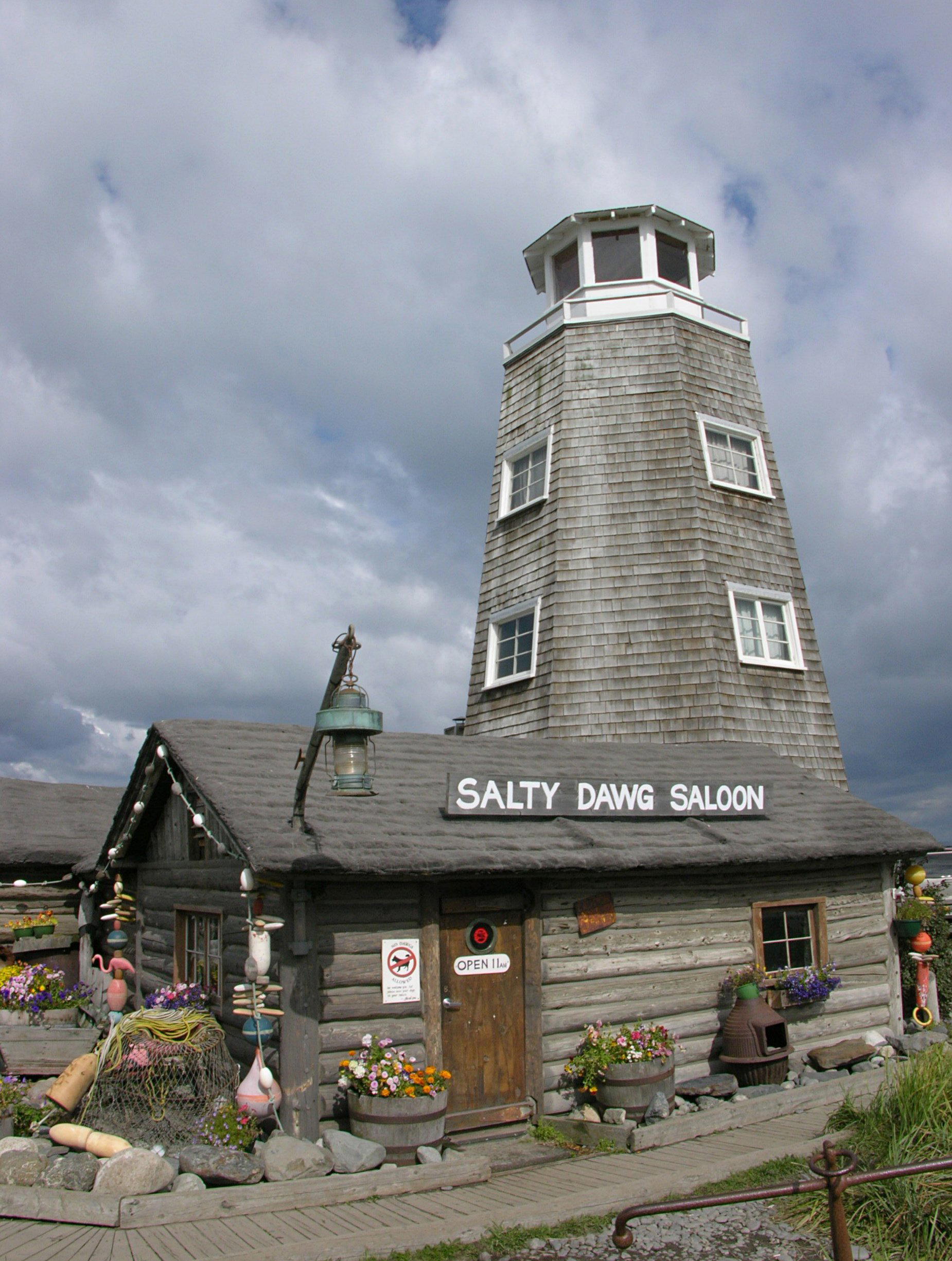
At the End of the Spit, at the Edge of the Continent
The Homer Spit reaches nearly five miles into Kachemak Bay, and the Salty Dawg Saloon sits at its far end, inside a repurposed lighthouse structure that has served the community in various forms since the late 19th century. Approaching on foot or by truck along Homer Spit Road, the low silhouette of the building reads as something that grew out of the land rather than was placed on it. The exterior is weathered in the way that only decades of Alaska coastal exposure can produce. Inside, the ceiling, walls, and every available surface are covered in signed and stapled dollar bills, tens of thousands of them, left by fishermen, travellers, and locals across generations. The effect is less novelty gimmick than archive: a physical record of everyone who passed through and felt compelled to leave something behind.
This is not a bar that positions itself against the craft cocktail movement or the premium spirits tier. It operates in a different register entirely, one where the measure of a good drink is whether it fits the room and the people in it after a long day on the water. Understanding what the Salty Dawg offers requires understanding what Homer itself is: a small city of roughly 5,000 people at the end of the Sterling Highway, where commercial fishing, tourism, and an unusually concentrated arts community coexist in close proximity. The saloon sits at the intersection of all three.
The Back Bar and What It Says About the Room
Bars at the geographic edge of a country tend to develop one of two back bars: the curated local expression or the well-worn workhorse. The Salty Dawg leans toward the latter, which in Alaska carries its own logic. The state has a distinct relationship with spirits, long winters, physically demanding work, and a tradition of self-reliance that extends to how people drink. American whiskeys form the backbone of what gets poured here, and the selection reflects the practical preferences of a clientele that includes commercial halibut and salmon crews alongside the summer tourist traffic that the Homer Spit generates between May and September.
For visitors accustomed to the depth-of-selection approach seen at technically focused programs like Bar Leather Apron in Honolulu or the spirit-forward curation at Kumiko in Chicago, the Salty Dawg operates in an entirely different tradition. The value here is not rarity or allocation, it is the directness of the transaction between a poured drink and its context. A bar in a fishing community at the tip of a remote Alaskan peninsula earns its credibility through consistency and atmosphere, not through the depth of its amaro collection. That said, the bar is not without range. Alaska's own distillery output has expanded considerably over the past decade, and the Salty Dawg's position as the de facto community anchor on the Spit means it absorbs new local product as it arrives.
For those tracking the American bar scene across regions, from the cocktail discipline at Julep in Houston to the technical precision at ABV in San Francisco or the concept-driven programming at Allegory in Washington, D.C., the Salty Dawg represents the counterpoint: a bar where the room itself is the concept, and where spirits function as social infrastructure rather than a tasting exercise. Both traditions are legitimate. Knowing which one you are walking into matters.
When Homer Drinks and Why It Matters
The Spit operates on a seasonal calendar more compressed than most American bar markets. Summer brings the largest concentration of visitors: sport fishing charters, kayaking outfitters, and travellers making the long drive down from Anchorage, roughly 225 miles to the northeast. The bar fills with a recognizable mix of locals unwinding after the week and tourists processing the experience of having reached the end of the road, literally. Alaska Highway lore has long designated Homer as the terminus of the connected American road network heading south and west, and the Salty Dawg functions as the unofficial punctuation mark on that journey.
Winter thins the crowd considerably. Homer's year-round population contracts back to its core, and the bar shifts from a destination for the passing trade to a neighbourhood institution for those who live and work through the dark months. The lighting inside, low, warm, filtered through the patchwork of currency and memorabilia, suits both modes equally well. It is the kind of place that makes seasonal sense without requiring a seasonal reinvention.
For a different point of entry into Homer's drinks culture, Homer Brewing Company offers the local craft beer perspective, and the two establishments serve complementary rather than competing purposes on the Spit. See our full Homer restaurants guide for broader context on where to eat and drink across the city.
The Broader American Bar Tradition It Sits In
There is a category of American bar that predates the cocktail renaissance and will outlast whatever the next movement turns out to be. These are places defined by accumulation rather than concept: objects, stories, patrons, and years layered into something that cannot be designed from scratch. The Salty Dawg belongs to this category alongside roadhouse bars, fishing town institutions, and frontier-era holdovers across the West and Pacific Northwest. The Salty Dawg's argument is the place itself, which is not a lesser argument, just a different one.
Internationally, this tradition of place-as-program has parallels in the heritage bar culture of cities like Frankfurt, where spots such as The Parlour hold a different kind of accumulated authority. And at Jewel of the South in New Orleans, the historical weight of the building and its cocktail lineage function similarly, the room carries meaning independent of the menu. What distinguishes the Salty Dawg is the sheer remoteness of its location, which amplifies everything: the warmth of the room, the directness of the pours, the sense that you have arrived somewhere specific and deliberate.
Planning Your Visit
The Salty Dawg Saloon is located at 4380 Homer Spit Road, at the far end of the Spit. Getting there from central Homer requires either the drive along Spit Road or a walk that takes in the working harbour, charter boat docks, and cannery operations along the way. Summer visits are the most populous, and the bar fills in the late afternoon and evening as fishing charters return for the day. Those visiting in shoulder season, late April or early October, will find a quieter version of the room and a more local-weighted crowd. No reservation is required or available. You walk in, find a spot at the bar or a table, and order directly. The dress code, to the extent one exists, is whatever you wore on the boat.
For a full picture of what Homer offers beyond the Spit, including restaurants, accommodation, and other bars, the EP Club Homer city guide covers the broader picture.
A Pricing-First Comparison
| Venue | Cuisine | Price | Awards |
|---|---|---|---|
| Salty Dawg SaloonThis venue (the venue you are viewing) | Not listed | $10–20 | Not listed |
| Julep | Not listed | Not listed | World's 50 Best |
| Kumiko | Not listed | Not listed | World's 50 Best |
| ABV | Cocktail Bar | $20–30 | World's 50 Best #39 · Eater Cocktail Bar Guide |
| Bisous | Not listed | $20–30 | World's 50 Best #30 · James Beard Award Semi Finalist |
| Canon | Not listed | Not listed | World's 50 Best |
Continue exploring
More in Homer
Bars in Homer
All bars in Homer →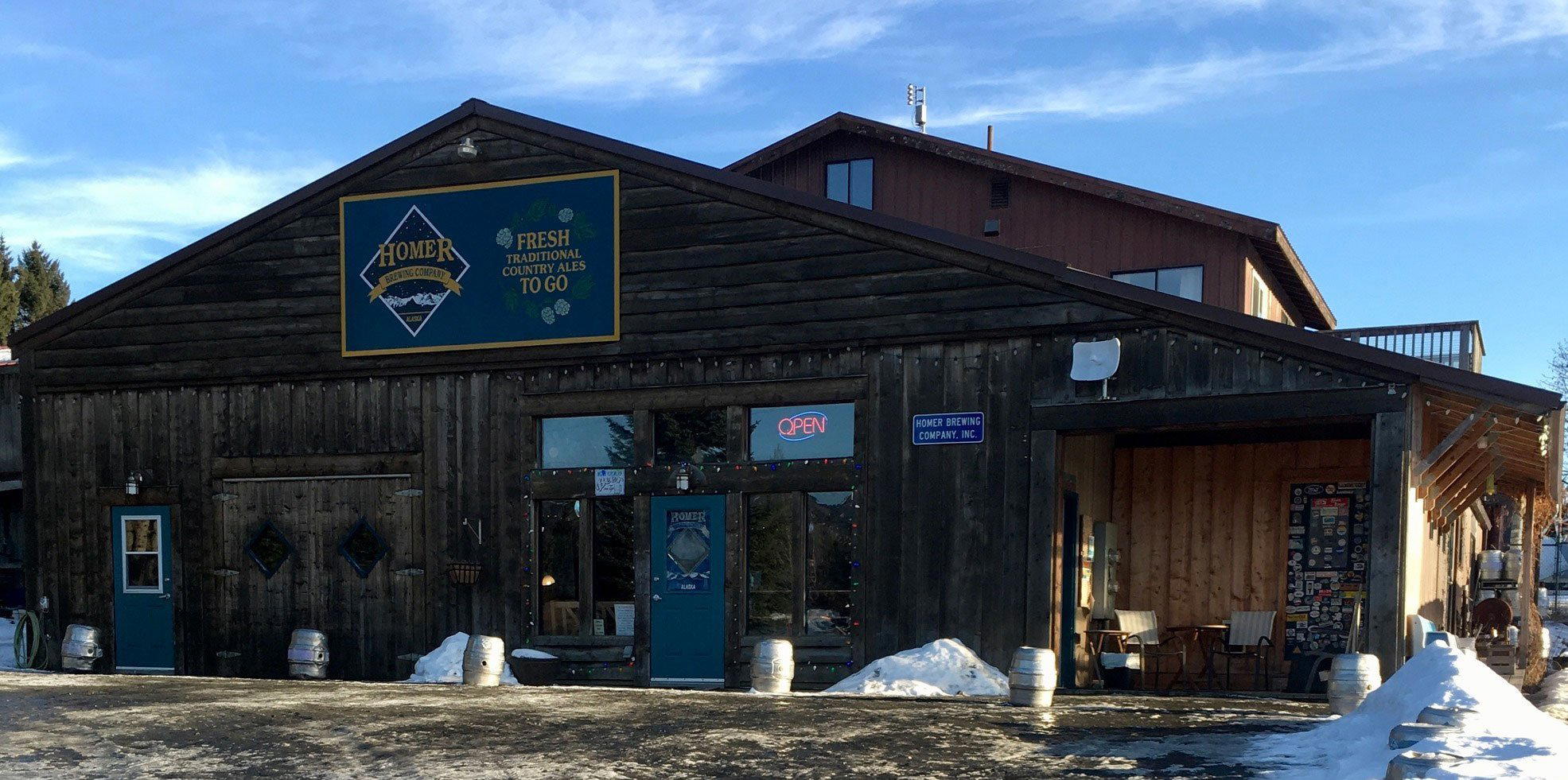
Restaurants in Homer
All restaurants in Homer →
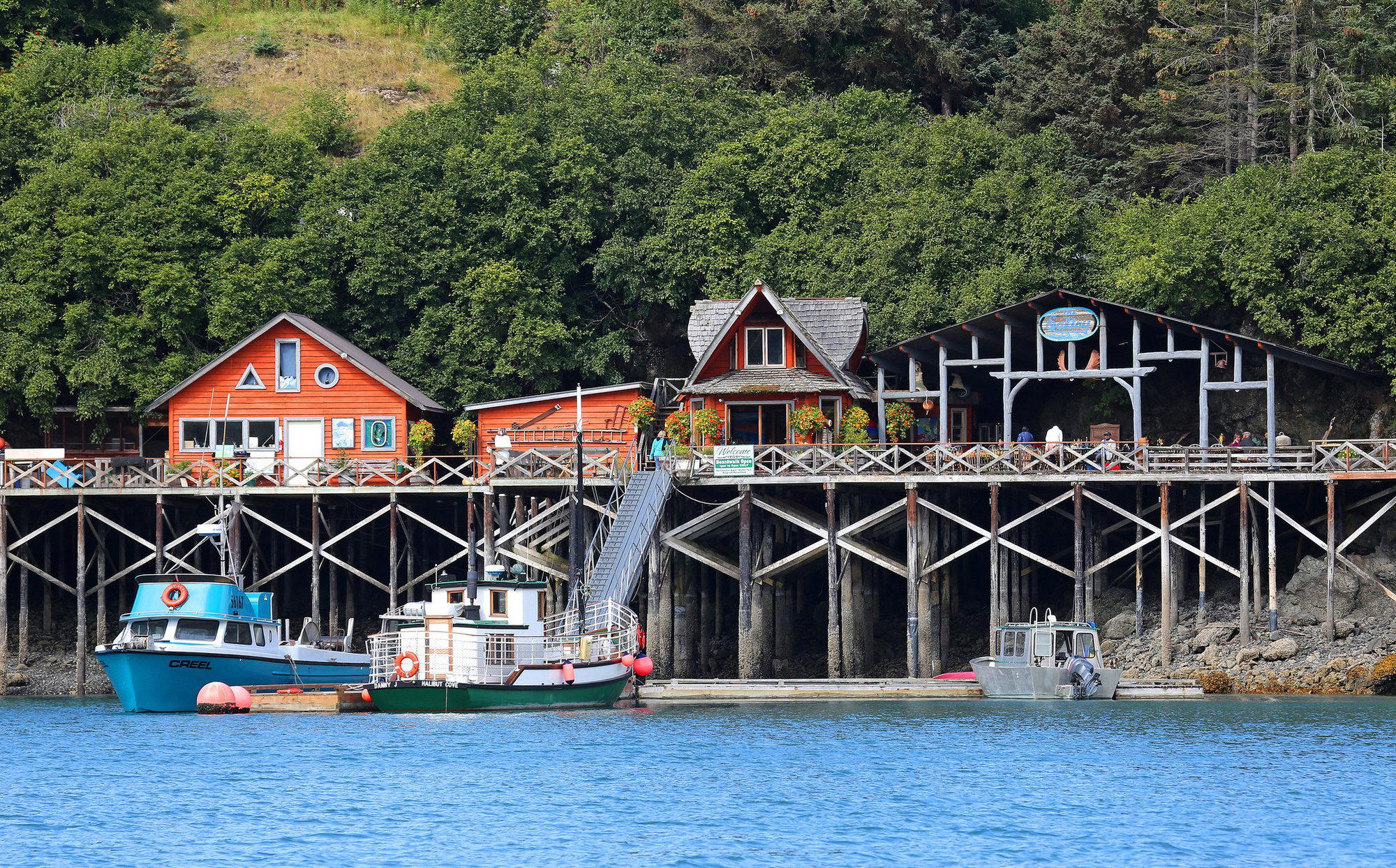
Salty Dawg Saloon
The drinks
- Classic cocktails
Signature drinks: Salty Dog, Duck Fart.
Details
- Rustic
- Well Known
- Lively
- Casual Hangout
- Late Night
- Historic Building
- Waterfront
- Seated Bar
- Outdoor Terrace
- Classic Cocktails
- Waterfront
Current opening hours
- Monday
- 11 AM–12 AM
- Tuesday
- 11 AM–12 AM
- Wednesday
- 11 AM–12 AM
- Thursday
- 11 AM–12 AM
- Friday
- 11 AM–12 AM
- Saturday
- 11 AM–12 AM
- Sunday
- 11 AM–12 AM
Hours can change for holidays and private events. Hours as of .
Unpretentious dive bar atmosphere with lively crowds, memorabilia-covered walls, and a historic log cabin vibe.