Our verdict
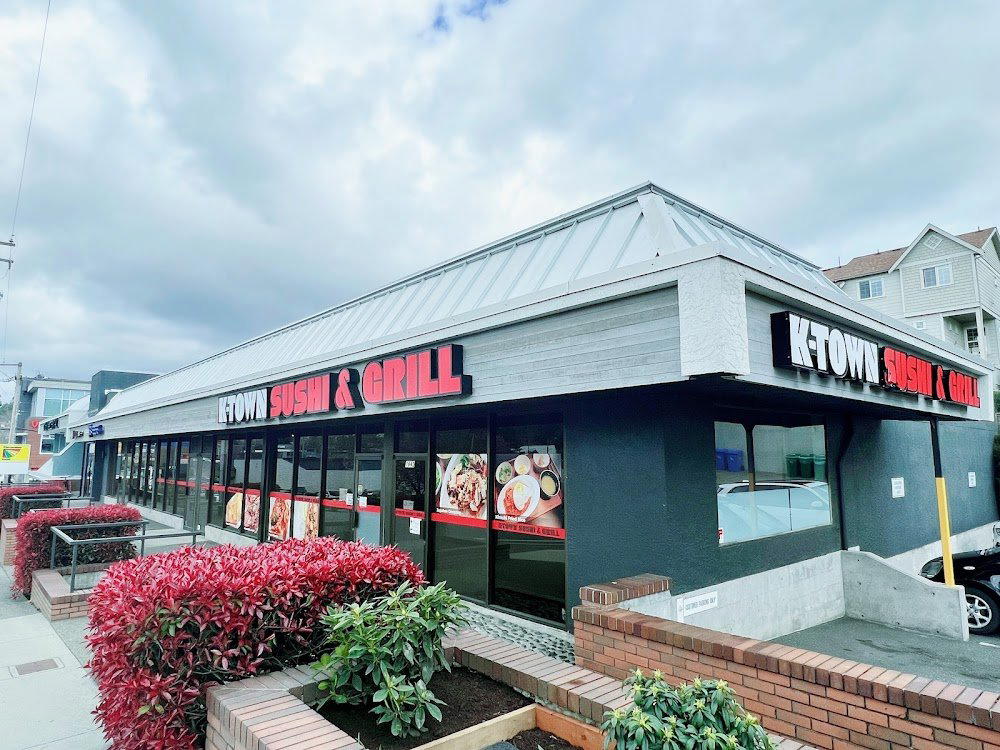
A sushi and grill address on Cedar Hill Cross Road in Victoria's residential east side, K-Town positions itself within a city dining scene that has grown increasingly comfortable blending Japanese technique with West Coast ingredients. The room serves a neighbourhood crowd that returns reliably, placing it in the casual-to-mid tier of Victoria's broader Japanese dining conversation.

Pearl is the En Primeur Club membership app, where members save venues, book tables and use the concierge.
The menu
What to order
- K-Deopbap (Rice Bowl)
- K-Town special rice bowl
Cedar Hill Cross Road and the East Side Dining Pattern
Victoria's restaurant concentration tends to cluster downtown and in the Cook Street corridor, which means venues operating further east along Cedar Hill Cross Road occupy a different kind of position in the city's dining map. They serve a genuinely local audience rather than a tourist circuit, and the regulars who find them tend to stay loyal. K-Town Sushi and Grill at 1640 Cedar Hill Cross Road sits in that east-side pattern: a neighbourhood address in a city that still debates whether its Japanese dining scene has caught up with the ambition visible at comparable addresses in Vancouver or even in other mid-sized Canadian cities.
That broader question matters for context. Japanese cuisine in British Columbia has a history that runs deeper than the proliferation of all-you-can-eat sushi chains might suggest. The province's Japanese-Canadian community established fishing, farming, and food-processing roots going back to the late nineteenth century, and the culinary traditions that followed reflect that layered presence. Victoria's own Japanese dining options range from counter-service rolls aimed at the lunch crowd to more considered izakaya formats and, increasingly, hybrid grill concepts that borrow from Korean barbecue structures while retaining Japanese ingredient priorities. K-Town's name signals that hybrid positioning directly.
The Korean-Japanese Hybrid Format Across Canadian Cities
The Korean-Japanese crossover format has become one of the more coherent dining propositions in mid-sized Canadian cities over the past decade. Where standalone sushi counters compete on fish quality and omakase credentials, and standalone Korean barbecue venues compete on meat sourcing and ventilation engineering, the hybrid model sidesteps those specialization arms races and instead offers range. A table can move between rolls, grilled proteins, and shared plates without the format feeling incoherent, because Japanese and Korean pantries share enough foundational ingredients, fermented condiments, and rice-centred logic to hold together on a single menu.
For comparison, addresses like Atomix in New York City or Le Bernardin in New York City represent the highest-commitment tier of Korean fine dining and French seafood precision respectively, where format discipline and tasting-menu structure define the experience. The hybrid sushi-and-grill model that K-Town represents is a different proposition entirely: it is built around accessibility and breadth rather than depth and ceremony. That is not a criticism. Most cities need both ends of the spectrum, and the mid-tier casual format serves a consistent demand that tasting-menu counters cannot.
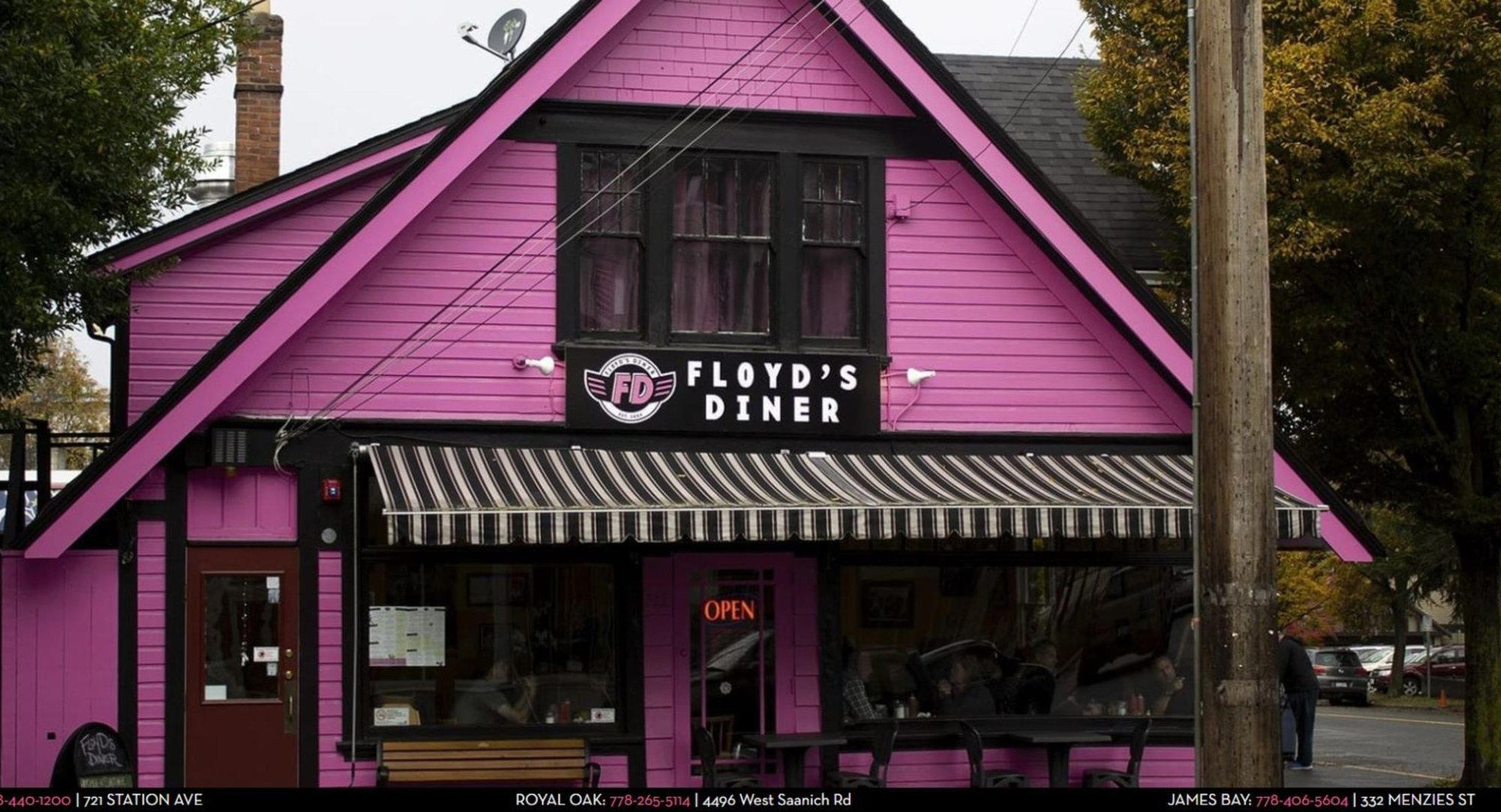
Within Victoria specifically, the dining scene has a handful of well-established anchors that frame what is possible. Brasserie L'Ecole and Cafe Brio have long defined the city's European-influenced fine-dining register. Floyd's Diner and Chicken 649 anchor the casual and comfort end. Hank's *A Restaurant represents a different kind of mid-tier ambition. K-Town occupies a position that none of those addresses fills: the casual Asian grill format that a neighbourhood east of downtown can support without requiring a destination-dining premise.
What the Grill Format Implies About the Menu
Sushi and grill combinations typically structure their menus in two distinct operational lanes. The sushi side demands cold precision: rice temperature, fish handling, and knife work that reflects training and sourcing discipline. The grill side operates on heat management and marinade depth, where Korean-influenced formats lean on gochujang, doenjang, and sesame oil as flavour architecture. When both lanes run well on the same ticket, the kitchen has demonstrated genuine range. When one lane outperforms the other, regulars tend to self-select toward what they trust.
What the format itself implies is that the kitchen is set up to serve tables that want optionality: a shared platter of nigiri alongside grilled proteins, or a solo diner working through rolls at a counter. That flexibility is the format's core value proposition in a neighbourhood setting.
Victoria's Japanese Dining in Canadian Context
Placing Victoria's Japanese and Asian-fusion dining within the wider Canadian picture is useful for calibrating expectations. The highest-credential Japanese and Korean fine-dining experiences in the country currently concentrate in Toronto and Montreal. Alo in Toronto and Tanière³ in Quebec City operate in a different tier of ambition and investment altogether, as does AnnaLena in Vancouver on the West Coast specifically. Further afield, places like Restaurant Pearl Morissette in Lincoln, Eigensinn Farm in Singhampton, The Pine in Creemore, and Narval in Rimouski each demonstrate what focused, place-specific dining programs can achieve in smaller Canadian markets. Jérôme Ferrer - Europea in Montreal, Aux Anciens Canadiens in Quebec, and Barra Fion in Burlington round out the breadth of what Canadian dining looks like across different formats and regions.
Victoria is a city of roughly 400,000 in the greater metropolitan area, with a dining scene that punches credibly for its size but has not yet developed the critical mass of Japanese-specific venues that Vancouver's Robson Street corridor or Richmond's Richmond Centre precinct can claim.
Planning Your Visit
K-Town Sushi and Grill is located at 1640 Cedar Hill Cross Road in the Saanich area east of downtown Victoria. The address is more accessible by car than on foot from the city centre, and bus connections exist along the Cedar Hill Cross corridor. The east-side location means parking is generally less constrained than downtown Victoria addresses. For a fuller picture of where K-Town sits within Victoria's dining options, the full Victoria restaurants guide provides comparative context across the city's neighbourhoods and formats.
Frequently asked questions
Where do I go for K-Town Sushi & Grill?
K-Town Sushi & Grill is located at 1640 Cedar Hill Cross Rd, Victoria, BC V8P 2P6, Canada, Victoria.
Is K-Town Sushi & Grill a good option for Korean-Japanese food in Victoria, BC?
K-Town Sushi & Grill at 1640 Cedar Hill Cross Road is one of the few venues in Victoria operating the Korean-Japanese hybrid format, a combination that has gained traction in Canadian cities over the past decade. Victoria's Japanese and Korean dining options are thinner on the ground than in Vancouver or Toronto, which gives a venue that spans both cuisines a clear position in the local market. No chef credentials or awards are currently documented for K-Town, so the visit is best approached on the format's own terms rather than against a credentialed benchmark.
What do regulars order at K-Town Sushi & Grill?
The venue name signals two distinct menu lanes: a sushi side built around cold precision and a grill side that follows Korean barbecue conventions. Regulars at Korean-Japanese hybrid formats in Canadian cities typically anchor their orders across both sections rather than treating them separately. The Cedar Hill Cross Road location draws a neighbourhood crowd, and repeat visitors tend to build meals that span both the raw and grilled offerings.
Can I walk in to K-Town Sushi & Grill?
K-Town Sushi & Grill is located at 1640 Cedar Hill Cross Road in Saanich, east of downtown Victoria, an area that functions primarily as a drive-to destination rather than a walk-in corridor. The address is straightforward to reach by car from central Victoria.
What do critics highlight about K-Town Sushi & Grill?
What the format itself signals is worth noting: the Korean-Japanese crossover proposition is one of the more coherent dining structures in mid-sized Canadian cities, and Victoria's east-side location places the venue outside the downtown concentration where most critical attention falls. That positioning shapes both its audience and its visibility in the broader Victoria dining conversation.
Budget and Context
Comparable venues nearby, for context on price, style, and recognition.
| Venue | Cuisine | Price | Notes |
|---|---|---|---|
| K-Town Sushi & GrillThis venue (the venue you are viewing) | Japanese Sushi & Grill | Not listed | Not listed |
| Kizuna Ramen on Douglas | Authentic Japanese Ramen | $10–20 | Downtown Victoria, Authentic Japanese Ramen |
| John's Place Restaurant | Classic American Diner | $20–30 | Downtown, Classic American Diner |
| Red Fish Blue Fish | Fresh Seafood Shack | $20–30 | Downtown, Fresh Seafood Shack |
| Part and Parcel | Contemporary Small Plates with French, Eastern European & Mediterranean Influences | $30–50 | Quadra Village, Contemporary Small Plates with French, Eastern European & Mediterranean Influences |
| Cafe Brio | Rustic Italian with Local Seasonal Ingredients | $50–100 | Downtown, Rustic Italian with Local Seasonal Ingredients |

Continue exploring
More in Victoria
Restaurants in Victoria
All restaurants in Victoria →


Details
- Casual Hangout
- Family
- A La Carte
Current opening hours
- Monday
- 4–11 PM
- Tuesday
- 4–11 PM
- Wednesday
- 4–11 PM
- Thursday
- 4–11 PM
- Friday
- 4–11 PM
- Saturday
- 4–11 PM
- Sunday
- Closed
Hours can change for holidays and private events. Last verified .
Casual neighborhood sushi spot with standard lighting.