Kim Tar Restaurant
Our verdict
Kim Tar Restaurant sits on East Garvey Avenue in Monterey Park, the dense commercial corridor that anchors one of the most concentrated Chinese dining districts outside mainland China. The restaurant operates within a neighborhood where Cantonese tradition, Shanghainese technique, and regional Chinese cooking all compete for the same block. Visitors come to this stretch for substance over spectacle.

Pearl is the En Primeur Club membership app — saves, bookings, and concierge access live there. Same editors, same standards.
- Address
- 964 E Garvey Ave, Monterey Park, CA 91755
- Phone
- (626) 307-9139
- Hours
- Daily 9 AM–11 PM
- Website
- kimtarseafood.com
- Directions
- Get directions
- Booking
- Book on the venue's website
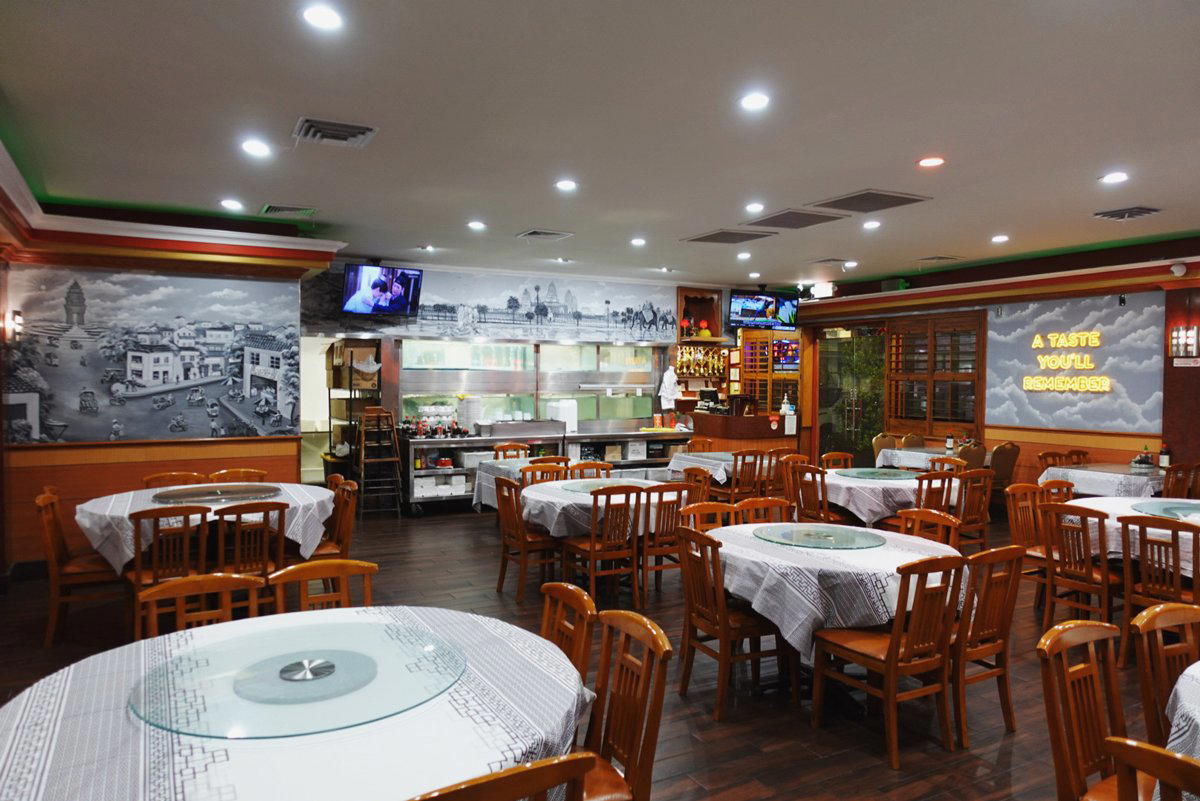
East Garvey and the Weight of Monterey Park's Chinese Dining Tradition
There are streets in the United States where the density of Chinese restaurants rivals anything you would find in Hong Kong or Guangzhou, and East Garvey Avenue in Monterey Park is one of them. Kim Tar Restaurant occupies a position on this corridor that has served as the commercial spine of Chinese-American dining in the San Gabriel Valley for decades. The storefronts here are not designed to court passing tourists. They are built for a community that knows what it wants and expects it delivered without ceremony.
Monterey Park's dining identity is worth understanding before you arrive. The city became a significant Chinese-American population center beginning in the late 1970s and accelerated through the 1980s, drawing immigrants primarily from Hong Kong, Taiwan, and mainland China. That demographic history shaped a restaurant culture oriented toward authenticity over adaptation. Dishes here are not calibrated to a generalized American palate. The kitchens operate under the assumption that the person ordering knows the cuisine. That context matters when you are trying to understand where Kim Tar sits within its neighborhood: it is part of an ecosystem, not a standalone destination.
East Garvey Avenue runs parallel to competitors and peers that include NBC Seafood Restaurant, which has anchored the area's dim sum trade for years, and Elite, which operates in the Chinese fine-dining register. Kim Tar sits within that broader ecology, drawing from the same community and competing for the same local loyalty that keeps Monterey Park's restaurant density among the highest per capita of any mid-size city in Southern California.
What the Neighborhood Format Means for How You Eat Here
San Gabriel Valley Chinese restaurants tend to operate on a logic that differs from the tasting-menu format familiar to readers of publications that cover places like Providence in Los Angeles or The French Laundry in Napa. On East Garvey, the format is typically table-service, family-style, and built around shared plates ordered from a printed or posted menu rather than a curated progression. Portions are meant to feed groups. The decision-making is collaborative. That social architecture is not a limitation; it is the point.
This format is common across the Monterey Park corridor and reflects the Cantonese and broader Chinese dining tradition in which the table, not the individual diner, is the unit of the meal. Dishes arrive when they are ready rather than in a choreographed sequence. The rhythm is looser and more convivial than the tightly paced service structures you find at formal Western restaurants. Readers accustomed to places like Alinea in Chicago or Atomix in New York City will find the operating logic almost entirely different, and that difference is the experience rather than a departure from it.
Nearby, Mama Lu's Dumpling House represents another register within the same neighborhood, focused on hand-made dumplings in a format that prioritizes throughput and affordability. iWagyu ATS BBQ occupies a different lane entirely, while Luminarias Restaurant and Special Events serves a different function in the local market, oriented toward events and a broader American audience. Kim Tar's placement within this range reflects the diversity of what East Garvey actually contains, which is not a monolithic Chinese dining experience but a collection of distinct traditions and formats sharing the same few blocks.
Cultural Roots and What They Ask of the Diner
Chinese restaurant culture in the San Gabriel Valley operates as one of the most direct transmissions of regional Chinese cooking traditions available in the United States. What that means practically is that the menus tend to assume knowledge. Dishes are described in terms familiar to those who grew up eating them. Translations, where they exist, are functional rather than evocative. The gap between the dish on the table and the description on the menu can be wide, and navigating that gap is part of the experience for newcomers.
This dynamic is worth naming because it shapes how you approach a restaurant like Kim Tar. The diners who make East Garvey Avenue work as a dining corridor are largely regulars or people connected to the communities that built these restaurants. The kitchen is not performing Chinese food for an outside audience; it is feeding its own. That posture, common across the leading neighborhood Chinese restaurants in cities from Los Angeles to Vancouver to Sydney, tends to produce cooking that is more direct and less mediated than what you find in Chinese restaurants calibrated for crossover appeal.
For context on how different the register is at the high-formal end of Chinese dining, consider 8 1/2 Otto e Mezzo Bombana in Hong Kong, which applies European fine-dining architecture to a Hong Kong context. East Garvey operates in an entirely different register, and that is not a hierarchy. It is a different set of priorities.
Planning Your Visit to Kim Tar and the East Garvey Corridor
Kim Tar Restaurant is located at 964 E Garvey Ave, Monterey Park, CA 91755. Parking along East Garvey can be competitive during peak lunch and dinner hours, particularly on weekends when the corridor draws significant traffic from across the San Gabriel Valley. Arriving early or during off-peak hours reduces friction considerably. The neighborhood is accessible by car from central Los Angeles in roughly 20 to 30 minutes depending on traffic, placing it well within range as a dedicated dining destination rather than a casual detour.
Walk-in dining is typical of the neighborhood format, though larger groups may benefit from calling ahead. For a broader view of what Monterey Park's dining corridor offers, our full Monterey Park restaurants guide maps the major options across price points and cuisines.
Readers who want to cross-reference the San Gabriel Valley experience against American fine dining more broadly can explore how different the structural logic is at restaurants like Blue Hill at Stone Barns in Tarrytown, Single Thread Farm in Healdsburg, Lazy Bear in San Francisco, Le Bernardin in New York City, Emeril's in New Orleans, Addison in San Diego, and The Inn at Little Washington. The contrast clarifies what makes neighborhood-anchored Chinese dining in the San Gabriel Valley its own distinct tradition, operating outside the formal tasting-menu circuit entirely.
Frequently asked questions
Where exactly is Kim Tar Restaurant?
Kim Tar Restaurant is located at 964 E Garvey Ave, Monterey Park, CA 91755, Monterey Park.
Is Kim Tar Restaurant a good option for large group Chinese dining in the San Gabriel Valley?
East Garvey Avenue restaurants in Monterey Park, including Kim Tar at 964 E Garvey Ave, are structured around the communal, multi-dish format that makes them practical for groups. The San Gabriel Valley has functioned for decades as the primary destination for large-table Chinese dining in greater Los Angeles, where the format of shared plates and rotating dishes is the operational baseline, not an accommodation. Groups should confirm capacity and timing directly with the restaurant, as seating arrangements on this corridor fill quickly during weekend meal periods.
What should I eat at Kim Tar Restaurant?
The menu at Kim Tar sits within the broader tradition of Chinese cooking that defines the East Garvey corridor in Monterey Park, a street where regional Chinese cuisine runs deep and kitchen output tends to favor family-style sharing dishes over individual plates. Given that the restaurant operates at 964 E Garvey Ave amid some of the highest-density Chinese dining in California, ordering across multiple dishes and sharing is the format the room is built for. Ask staff for current house specialties, as East Garvey kitchens frequently rotate based on ingredient availability.
Can I walk in to Kim Tar Restaurant?
Neighborhood Chinese restaurants on East Garvey in Monterey Park typically accommodate walk-ins, though peak lunch and weekend dinner hours draw competitive crowds along this corridor. Arriving outside the noon and 6–7pm rush windows improves your chances of being seated promptly. Calling ahead is advisable for larger groups, though a phone number for Kim Tar is not currently listed publicly.
What is Kim Tar Restaurant known for?
Kim Tar is a neighborhood-format Chinese restaurant on one of the most concentrated Chinese dining streets in the United States, East Garvey Avenue in Monterey Park, California. The restaurant operates within a corridor that functions as one of the most direct transmissions of regional Chinese cooking tradition outside of mainland China, where the standard is set by years of community patronage rather than by award cycles.
Price and Positioning
Comparable venues nearby, for context on price, style, and recognition.
| Venue | Cuisine | Price | Notes |
|---|---|---|---|
| Kim Tar RestaurantThis venue — the venue you are viewing | Authentic Asian Seafood | Not listed | Not listed |
| Elite | Cantonese Dim Sum | $10–20 | Monterey Park, Cantonese Dim Sum |
| NBC Seafood Restaurant | Cantonese Dim Sum & Seafood | $20–30 | Monterey Park, Cantonese Dim Sum & Seafood |
| Shinano | Classic Japanese Sushi and Tempura | $20–30 | Monterey Park, Classic Japanese Sushi and Tempura |
| Mama Lu’s Dumpling House | Shanghai Dumpling House | $10–20 | Monterey Park, Shanghai Dumpling House |
| Luminarias Restaurant & Special Events | New American with Latin influence | $20–30 | Monterey Park, New American with Latin influence |
Continue exploring
More in Monterey Park
Restaurants in Monterey Park
Browse all →
Bars in Monterey Park
Browse all →
Hotels in Monterey Park
Browse all →

Wineries in Monterey Park
Browse all →
Details
- Lively
- Family
- Group Dining
- Casual Hangout
- Open Kitchen
- Sustainable Seafood
- A La Carte
- Family Style
Current opening hours
- Monday
- 9 AM–11 PM
- Tuesday
- 9 AM–11 PM
- Wednesday
- 9 AM–11 PM
- Thursday
- 9 AM–11 PM
- Friday
- 9 AM–11 PM
- Saturday
- 9 AM–11 PM
- Sunday
- 9 AM–11 PM
Hours can change for holidays and private events. Last verified .
Warm, inviting atmosphere with big open family-style dining tables.