Kame Omakase


Michelin Plate
Our verdict
Kame sits on West Spring Mountain Road inside Las Vegas's Chinatown corridor, operating as an omakase counter helmed by Chef Eric Kim. A 2025 Opinionated About Dining listing for North America places it in a competitive tier well above the Strip's sushi mainstream. It draws serious sushi diners who have moved past showmanship and toward precision.

Pearl is the En Primeur Club membership app, where members save venues, book tables and use the concierge.
The menu
What to order
- A5 Wagyu
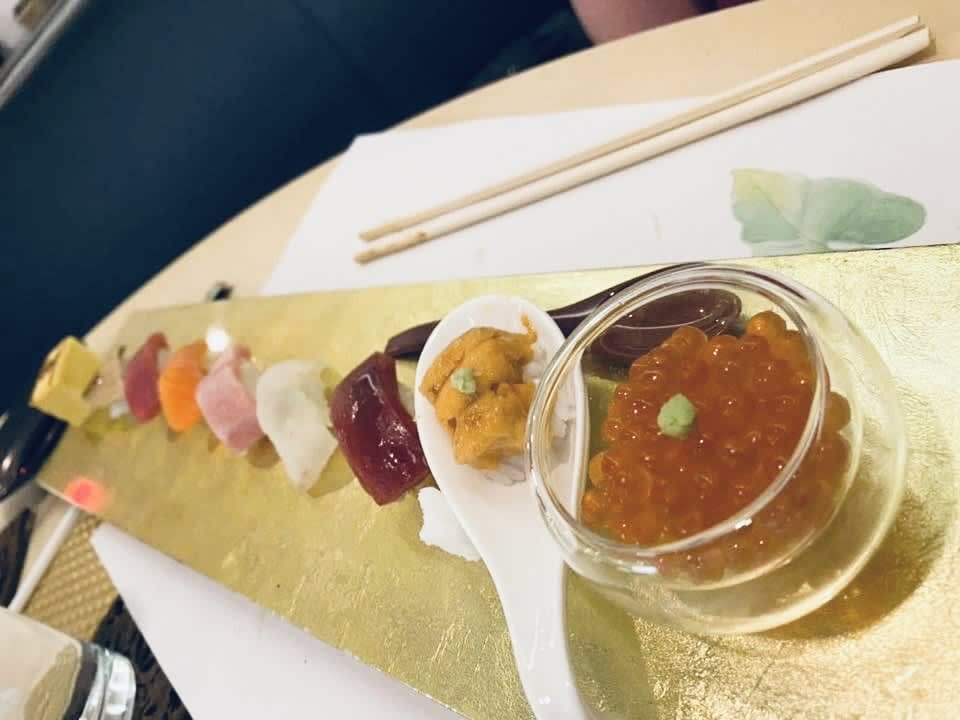
- Live Lobster with Uni
- O-toro Sushi
The Counter as the Room
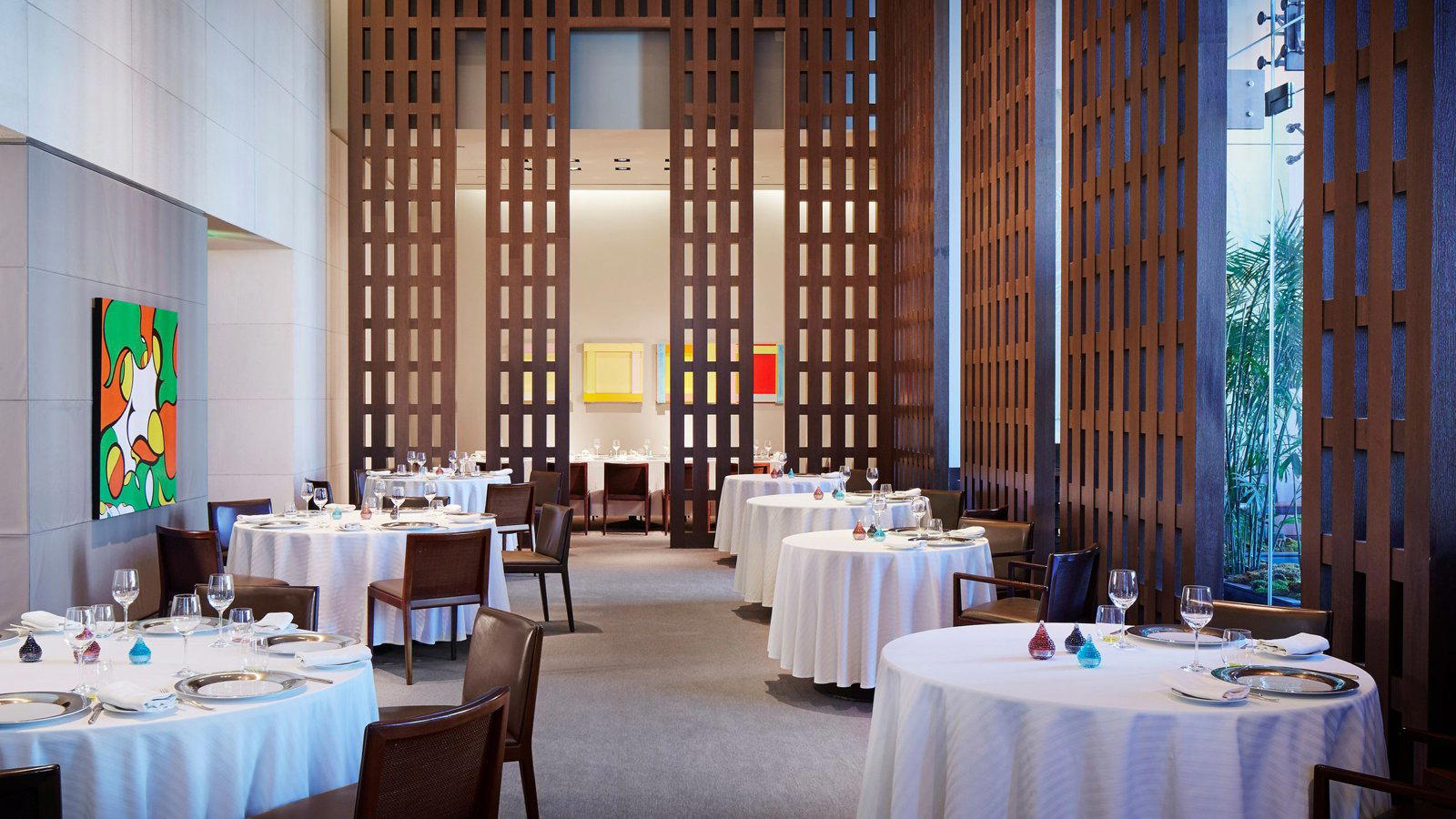
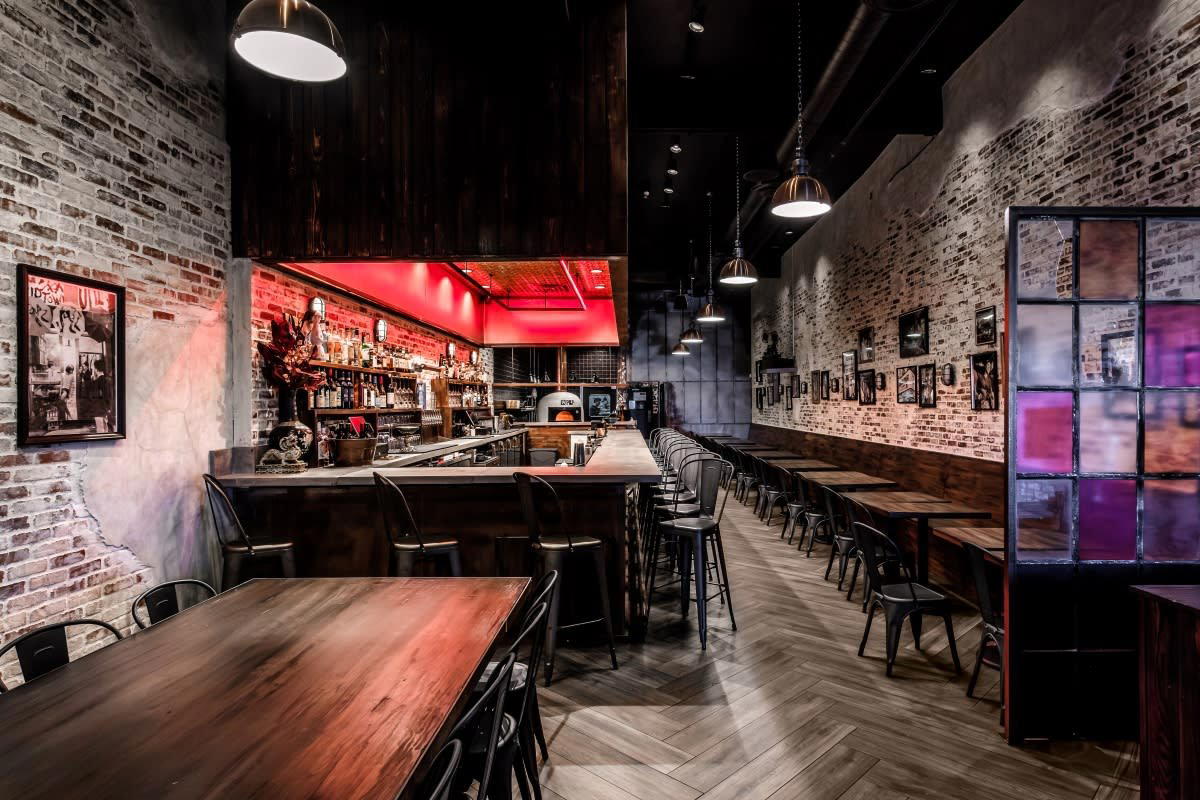
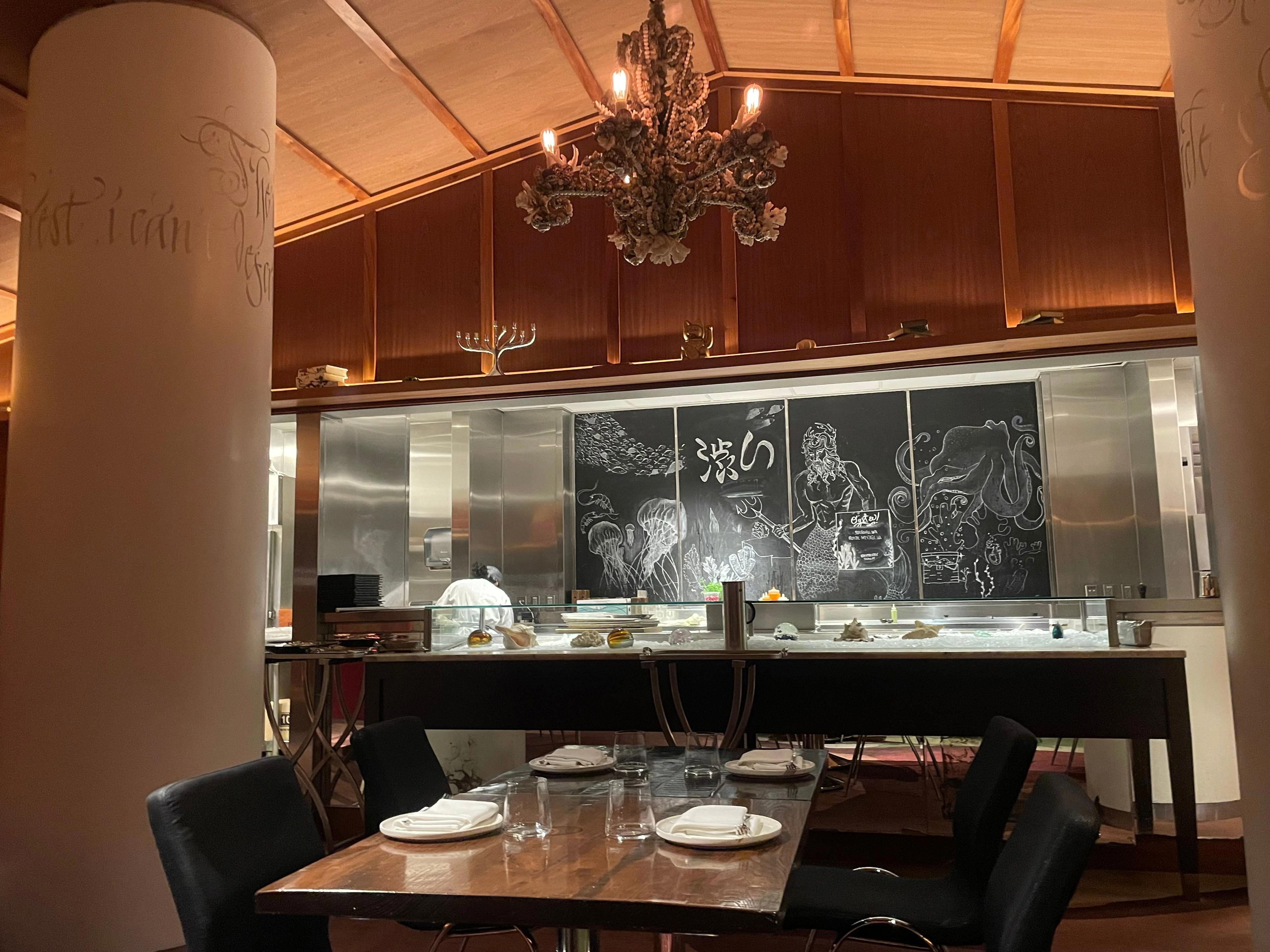
Las Vegas has two distinct sushi scenes, and the divide has grown sharper over the past decade. The Strip version trades in spectacle: towering rolls, theatrical plating, and dining rooms engineered for volume. The other version exists on West Spring Mountain Road in the city's Chinatown corridor, where a different set of priorities operates. Here, the counter is the room. The chef's hands are the show. The distance between kitchen and guest collapses to roughly an arm's length, and every move, the fold of a cloth, the temperature of a piece of fish rested against the palm before pressing, becomes legible in a way it simply cannot be across a 40-seat dining room.
Kame belongs to the second category. Located at 3616 W Spring Mountain Rd, it operates inside a format where proximity to Chef Eric Kim is not incidental to the experience but constitutive of it. Omakase at this level is an inherently theatrical form, and the counter is its stage.
Where Kame Sits in the Las Vegas Sushi Field
To understand what Kame represents, it helps to map the broader sushi field in Las Vegas. On the Strip, venues like Sushi Roku serve a wide audience in full-service dining room formats, with extensive à la carte menus and the visual drama that Strip guests expect. That format has its own logic and loyal audience. Omakase counters occupy a different position entirely: smaller in scale, narrower in menu, and priced for guests who want to surrender selection decisions to the chef.
Within that omakase tier, Yui Edomae Sushi is the other serious reference point on the same corridor. The West Spring Mountain Road concentration of Japanese dining, including Aburiya Raku, the long-running robata and izakaya that helped establish the street's reputation among food-focused travelers, means that Kame operates in a neighborhood context defined by Japanese culinary craft, not by casino foot traffic.
That geographic separation from the Strip is a deliberate filter. Guests who find their way to a suite-103 address in a strip mall on Spring Mountain Road are not wandering in from a casino floor. They have made a choice, done research, and arrived with specific expectations. That self-selecting audience shapes the room's atmosphere as much as the design does.
The OAD Recognition and What It Signals
In 2025, Kame earned a listing on Opinionated About Dining's Leading Restaurants in North America, a guide with a reputation for being harder to impress than most. OAD's methodology relies on votes from frequent, experienced diners rather than professional critics alone, which means a listing reflects accumulated serious opinion rather than a single editorial visit. For a counter in a Las Vegas strip mall, that recognition places Kame in a competitive set that includes omakase rooms in New York, San Francisco, Chicago, and other cities where the genre is more established.
The OAD North America list spans restaurants like Le Bernardin in New York City, Lazy Bear in San Francisco, Alinea in Chicago, Single Thread Farm in Healdsburg, and The French Laundry in Napa. Appearing alongside venues at that level is a meaningful signal about the seriousness of Kame's operation.
Counter Sushi as a Global Format
The omakase counter as a dining form originated in Tokyo's high sushi culture, where the relationship between chef and diner is treated with a formality that Western fine dining rarely matches. Globally, counters like Harutaka in Tokyo and Sushi Shikon in Hong Kong represent the format at its most refined: extremely limited seats, sourcing that tracks daily market conditions, and a progression of nigiri where the rice temperature, vinegar balance, and fish aging are as deliberate as anything in a three-Michelin-star kitchen.
American omakase has adapted that format in various ways. Some counters lean into a fusion register, treating the omakase structure as a scaffold for creative interpolation. Others hold closer to Edomae principles, prioritizing restraint, technique, and product quality over novelty. Kame's OAD recognition, combined with its position on a street that prizes craft over spectacle, suggests an orientation toward the latter. Chef Eric Kim's approach operates inside that broader shift in American omakase toward precision over showmanship, though the specific character of his menu is documented by those who have sat at the counter rather than announced in advance.
The Chinatown Corridor as Dining Context
Las Vegas's Chinatown on and around Spring Mountain Road has developed into one of the more consequential dining streets in the American West over the past fifteen years. The density of serious Japanese, Korean, Chinese, and Vietnamese restaurants along this stretch is anomalous for a city whose global dining reputation is almost entirely Strip-focused. For out-of-town visitors, the area functions as a corrective to the assumption that Las Vegas dining means celebrity chef steakhouses and large-format buffets. Local diners have known this for longer.
A night in this neighborhood operates on different rhythms from Strip dining. There is no hotel lobby to walk through, no casino ambient noise filtering in from the next room. The restaurants are smaller, the booking dynamics are different, and the clientele skews toward people for whom the food itself is the primary event. For anyone building a Las Vegas itinerary around serious eating rather than the casino entertainment complex, Spring Mountain Road is the logical anchor, and Kame is one of its key references.
Planning a Visit
Kame's address at 3616 W Spring Mountain Rd, Suite 103 places it in the Chinatown strip mall cluster roughly ten to fifteen minutes from the center of the Strip by car, depending on traffic. Given the format, advance booking is the only realistic approach: omakase counters at this recognition level in any city fill weeks out, and a venue with OAD North America standing in a city where serious omakase options are limited will not have last-minute availability as a working strategy. Specific booking methods, current pricing, and hours are best confirmed directly. For broader planning across Las Vegas's restaurant and hotel options, EP Club maintains full guides covering restaurants, hotels, bars, wineries, and experiences across the city. Visitors coming specifically for the food scene may also find useful context in reviews of other destinations in the format: Emeril's in New Orleans occupies a comparable position as a city reference point outside the expected fine-dining capitals.
Frequently asked questions
What part of town is Kame in?
Kame is located at 3616 W Spring Mountain Rd Ste 103, Las Vegas, NV 89102, Las Vegas.
What kind of cuisine does Kame serve?
Has Kame won any awards?
Kame has received recognition including: Opinionated About Dining Top Restaurants in North America (2025).
What's the signature dish at Kame?
Kame operates as an omakase counter, meaning the menu is chef-driven and seasonal rather than built around a single fixed dish. Chef Eric Kim determines what is served based on the day's ingredients, which is consistent with the counter sushi format that earned Kame its 2025 Opinionated About Dining listing. Specific courses are not published in advance, so the sequence itself is the format.
Budget Reality Check
Comparable venues nearby, for context on price, style, and recognition.
| Venue | Cuisine | Price | Awards | Notes |
|---|---|---|---|---|
| KameThis venue (the venue you are viewing) | Japanese Omakase | $300–500 | Michelin Plate | Not listed |
| Kaiseki Yuzu | Traditional Japanese Kaiseki | $150–200 | Not listed | The Asian District, Traditional Japanese Kaiseki |
| Blue Ribbon Sushi Bar & Grill | Japanese Sushi Bar & Grill | $50–100 | Not listed | The Vistas, Japanese Sushi Bar & Grill |
| Yu or Mi Sushi | Japanese Sushi Bar | $50–100 | Not listed | Rhodes Ranch, Japanese Sushi Bar |
| Bourbon Steak Las Vegas | Modern American Steakhouse | Not listed | Wine Spectator Best of Award of Excellence · World's Best Wine Lists Awards WBWL 1-Star | Boulder Junction, Modern American Steakhouse |
| Cote | Modern Korean Steakhouse & Korean BBQ | $150–200 | Michelin Plate · Star Wine List | South Las Vegas, Korean Steakhouse |
Recognition history
Dated appearances from independent guides and award organizations, with the underlying list record or original source where available.
Michelin Plate
Michelin
Opinionated About Dining Top Restaurants in North America
Opinionated About Dining