Kaiten Sushi Ginza Onodera Houston
Our verdict
Part of the Tokyo-founded Ginza Onodera group, this Westheimer Road location brings kaiten-style Japanese dining to Houston's Energy Corridor. The conveyor-belt format draws directly from mid-century Osaka tradition, where rotating sushi was designed to democratize access to skilled fish work. Positioned among Houston's growing Japanese dining options, it offers a more casual entry point than the city's omakase counters.

Pearl is the En Primeur Club membership app — saves, bookings, and concierge access live there. Same editors, same standards.
- Address
- 12270 Westheimer Rd, Houston, TX 77077
- Phone
- (469) 369-5140
- Hours
- Mon–Fri 12–2:30 PM, 5–9:30 PMSat–Sun 12–9:30 PM
- Website
- sushionodera.com
- Directions
- Get directions
- Booking
- Book on OpenTable
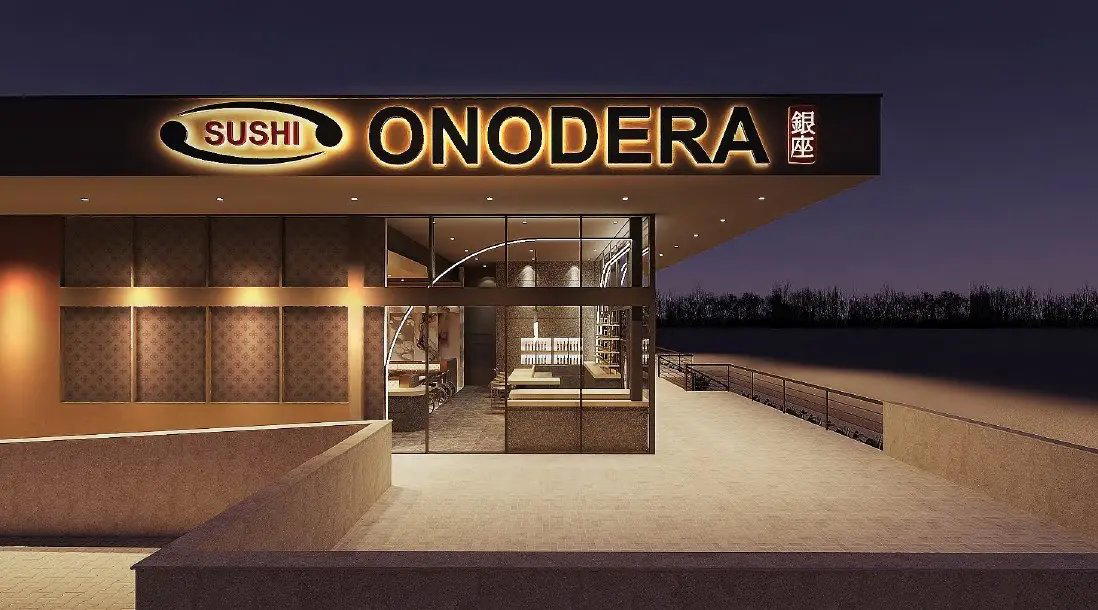
Conveyor-Belt Sushi and the Tradition Behind It
The kaiten format has a specific origin: Yoshiaki Shiraishi opened the first rotating-conveyor sushi restaurant in Osaka in 1958, drawing on the moving assembly lines he had observed in a brewery. The concept spread across Japan over the following decades, eventually splitting into two distinct tiers. At the lower end, pre-made plates rotate on automated belts with minimal chef involvement. At the upper end, restaurants affiliated with serious sushi houses use the format as an accessible vehicle for fish work that would otherwise require an omakase reservation and a multi-hour commitment. Ginza Onodera, the Tokyo-founded parent group, sits in the latter category — a brand with full-service omakase locations in cities including New York, Los Angeles, and Paris, and with kaiten offshoots designed to carry recognizable craft into a lower-barrier format.
The Houston location on Westheimer Road, in the Energy Corridor corridor, brings that lineage to a city whose Japanese dining scene has expanded steadily over the past decade. Houston has developed a credible omakase tier — March leads the city's broader fine-dining conversation, while venues like Hidden Omakase occupy the high-commitment sushi end, but affordable, quality-oriented Japanese options in the western suburbs have historically been thinner on the ground. The Onodera kaiten format addresses that gap directly.
What the Kaiten Format Actually Delivers
Kaiten sushi in its current form is sometimes misread as fast food with a theatrical element. The rotating belt is theatrical, but in the better examples of the format, it functions as a delivery mechanism for fish cut and prepared at a live station rather than hours in advance. The distinction matters at the table: nigiri that has rested too long on a moving belt loses temperature integrity, and the rice, which should be served at body temperature, never refrigerated, degrades quickly. The quality floor of kaiten sushi is set by how seriously the kitchen manages that timing problem.
The Ginza Onodera group's approach to its kaiten locations has generally prioritized that issue, applying standards closer to its full-service restaurants than to the mass-market kaiten chains that dominate Japanese convenience dining. In the context of Houston's sushi options, that positioning places this Westheimer address in a middle tier: above the casual roll-focused restaurants common across the city, and below the high-commitment omakase counters like Hidden Omakase, where prices and pacing match a fine-dining format. For readers exploring Houston's Japanese dining options alongside destinations like Musaafer for Indian or BCN Taste and Tradition for Spanish, this venue occupies a different register entirely, more casual in format, more specific in tradition.
Houston's Japanese Dining Context
Houston's restaurant culture is often discussed through the lens of its Tex-Mex and Gulf Coast seafood traditions, but the city's international dining depth is wider than that framing suggests. A significant Japanese-American community, concentrated in part in the western suburbs, has supported Japanese restaurants at various price points for decades. The Energy Corridor location on Westheimer Road reflects that demographic reality: the western stretch of Westheimer has a higher density of Asian dining options than the inner loop, serving residents who have long supported Japanese, Korean, and Vietnamese restaurants in that corridor.
Within Houston's broader fine-dining picture, the city has invested in serious international kitchens across multiple cuisines. Le Jardinier Houston brings a French vegetable-focused format, Tatemó works masa-focused Mexican cuisine at a serious level, and the city's overall ambition as a dining destination has grown visibly in recent years. Japanese dining has followed that pattern, with omakase options becoming more available even if they remain a small segment of the overall market. See our full Houston restaurants guide for a broader view of where the city's dining is moving.
The Onodera Group's Positioning
Understanding this Houston location requires some context about the parent brand. Ginza Onodera operates at the intersection of traditional Edomae sushi technique and international expansion. Its full-service omakase restaurants in cities like New York and Los Angeles occupy a price bracket that competes directly with other Michelin-tier Japanese counters. The kaiten format is a deliberate extension: a way to make the brand's sourcing relationships and fish knowledge available at a price and format that widens the audience considerably without compromising the underlying quality standards.
That model has parallels in other categories. In French cuisine, brasserie extensions of three-star kitchens have operated on a similar logic for decades. In the American context, some of the country's most technically serious restaurants, from Le Bernardin in New York to The French Laundry in Napa, sit at the top of a broader market that benefits from the standards those venues set. The kaiten format at Onodera represents a deliberate democratization within a single brand rather than a separate operation.
For Houston diners who follow Japanese cuisine closely, the Ginza Onodera lineage carries a specific signal: the fish sourcing and preparation standards are not incidental to the brand identity, they are central to it. That is a different claim than a standalone kaiten restaurant with no parent operation making it.
Planning Your Visit
The Westheimer Road address places this restaurant in the Energy Corridor, accessible by car from both the inner loop and the western suburbs. The format's accessibility is part of its design: kaiten restaurants are generally walk-in friendly compared to omakase counters, which often book weeks or months ahead. That said, popular timeslots at quality-oriented kaiten venues fill quickly, and arriving early in a dinner service window is typically the reliable approach.
For readers building a Houston itinerary that spans multiple dining registers, this location pairs logically with the city's more casual and mid-range Japanese options rather than functioning as a direct alternative to omakase formats. Those exploring fine dining across the US more broadly will find useful comparisons at Atomix in New York City, Providence in Los Angeles, or Addison in San Diego, all of which operate at the higher-commitment end of the spectrum that the Onodera kaiten format is specifically designed to complement rather than replicate.
Frequently asked questions
Where exactly is Kaiten Sushi Ginza Onodera Houston?
Kaiten Sushi Ginza Onodera Houston is located at 12270 Westheimer Rd, Houston, TX 77077, Houston.
How does Ginza Onodera's Houston kaiten restaurant differ from typical conveyor-belt sushi chains?
Ginza Onodera is a Tokyo-origin group with Michelin-starred operations in Japan and the United States, which distinguishes this Houston location from mass-market kaiten chains that prioritize volume over fish quality. The Edomae tradition the group follows involves specific curing, aging, and seasoning techniques that inform what travels along the belt, rather than purely raw cuts assembled to price. The Westheimer Road address in Houston places that approach within the city's expanding international dining corridor.
What dish is Kaiten Sushi Ginza Onodera Houston famous for?
The Onodera Group built its reputation on Edomae-style sushi, the Tokyo tradition of hand-pressed nigiri using aged and seasoned fish rather than purely raw cuts. That foundation carries through to the kaiten format at the Westheimer Road location, where the rotating belt delivers the same style of fish preparation associated with the parent brand's Tokyo and Los Angeles counters.
Can I walk in to Kaiten Sushi Ginza Onodera Houston?
The kaiten format is generally more walk-in-friendly than a fixed omakase counter, since seating turns continuously alongside the belt rather than at a single designated start time. That said, wait times at the Westheimer Road address in Houston's Energy Corridor will vary by day and hour.
What has Kaiten Sushi Ginza Onodera Houston built its reputation on?
The Houston location draws on the Ginza Onodera group's positioning at the intersection of traditional Edomae sushi technique and accessible format. The parent brand operates Michelin-recognized restaurants in Tokyo and New York, giving the Houston outpost a grounding in serious Japanese culinary standards applied to the conveyor-belt context. That combination of group pedigree and the kaiten format sets it apart from standard rotating-sushi chains in Texas.
Budget Reality Check
Comparable venues nearby, for context on price, style, and recognition.
| Venue | Cuisine | Price | Notes |
|---|---|---|---|
| Kaiten Sushi Ginza Onodera HoustonThis venue — the venue you are viewing | Kaiten Edomae Sushi | $50–100 | Not listed |
| Himari | Modern Japanese Sushi with Vietnamese Touches | $30–50 | Garden Oaks, Modern Japanese Sushi with Vietnamese Touches |
| Aiko | Modern Japanese Omakase | $30–50 | Neartown, Modern Japanese Omakase |
| Sushi Masa Westheimer | Japanese Sushi Fusion | $20–30 | Woodlake, Japanese Sushi Fusion |
| Oru | Modern Japanese A La Carte Sushi | Not listed | Greater Heights, Modern Japanese A La Carte Sushi |
| Sushi On Post Oak | Modern Japanese Sushi | $50–100 | Galleria, Modern Japanese Sushi |
Continue exploring
More in Houston
Restaurants in Houston
Browse all →

Bars in Houston
Browse all →
Hotels in Houston
Browse all →
Details
- Modern
- Trendy
- Sophisticated
- Casual Hangout
- Open Kitchen
- Sake Program
- A La Carte
- Counter Dining
Current opening hours
- Monday
- 12–2:30 PM, 5–9:30 PM
- Tuesday
- 12–2:30 PM, 5–9:30 PM
- Wednesday
- 12–2:30 PM, 5–9:30 PM
- Thursday
- 12–2:30 PM, 5–9:30 PM
- Friday
- 12–2:30 PM, 5–9:30 PM
- Saturday
- 12–9:30 PM
- Sunday
- 12–9:30 PM
Hours can change for holidays and private events. Last verified .
Modern and casual sushi bar atmosphere with moderate noise levels.