Kaiseki Yuzu
Our verdict
On Spring Mountain Road, Las Vegas's most concentrated stretch of Japanese dining, Kaiseki Yuzu brings the multi-course kaiseki format to a city better known for buffets and steakhouses. The restaurant sits inside a tradition where seasonal sourcing dictates the menu's structure and every course reflects where Japanese culinary discipline meets the American Southwest. For travelers willing to look past the Strip, this is a different register of dining entirely.

Pearl is the En Primeur Club membership app, where members save venues, book tables and use the concierge.
The menu
What to order
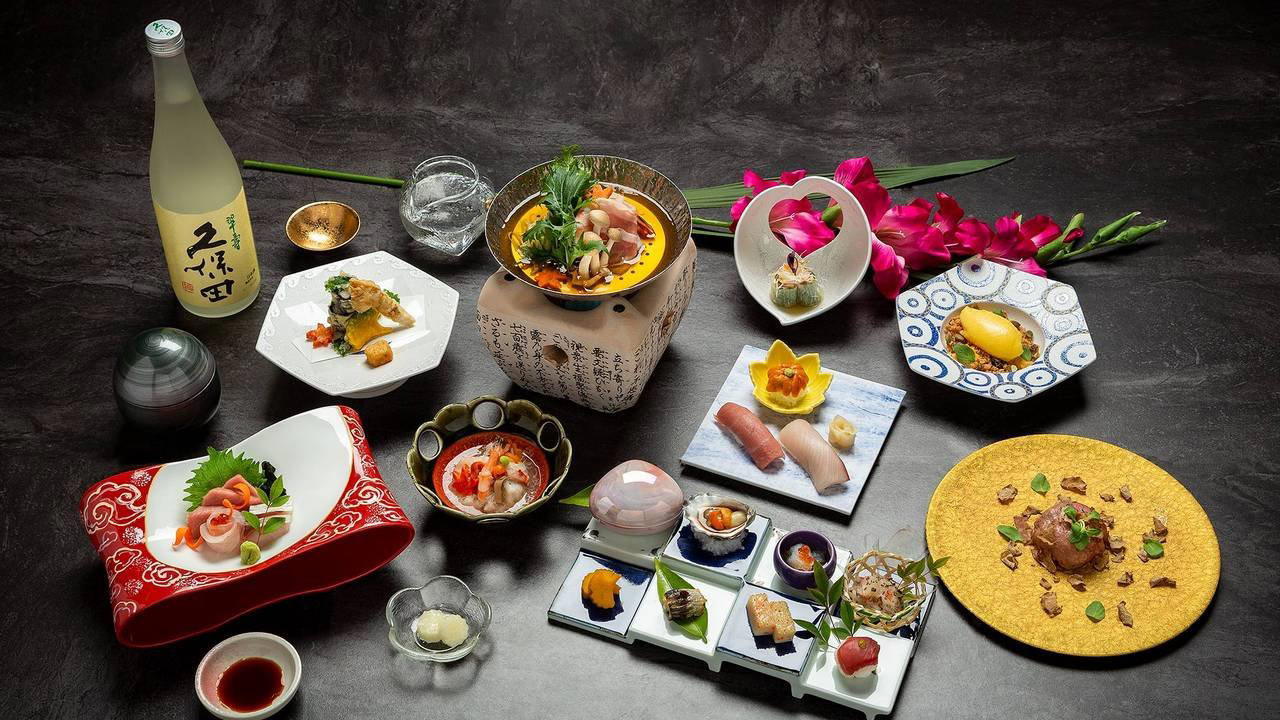
- Shou Kaiseki (10-course tasting)
- A5 Wagyu with truffle and foie gras
- Hokkaido scallop with grilled kohlrabi
- Miso-nabe hot pot
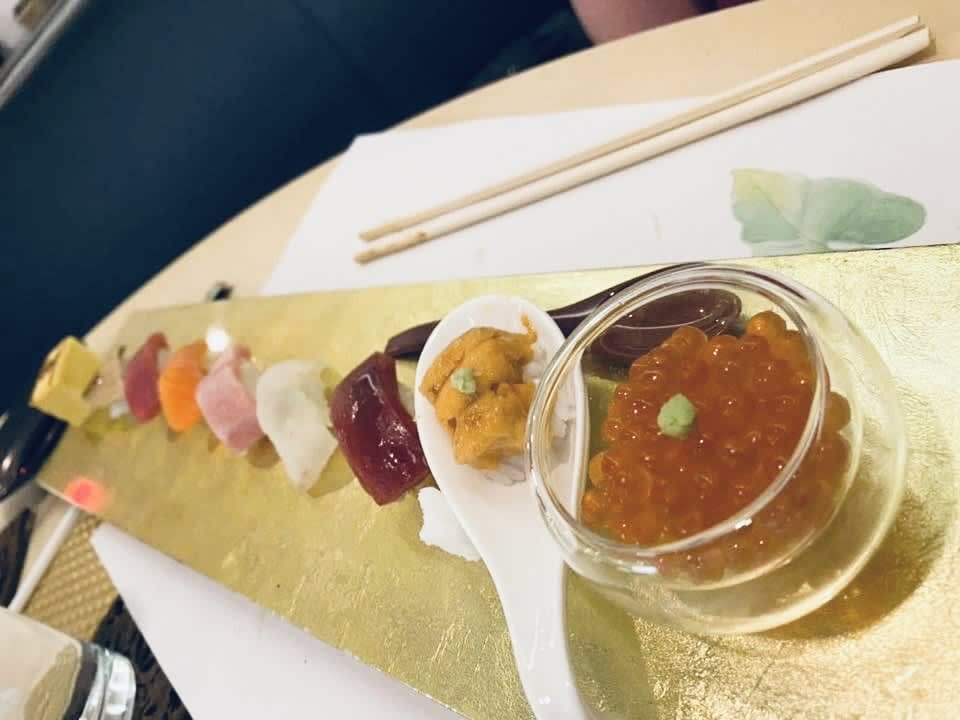
- Toshikoshi soba with uni and ikura
Spring Mountain Road and the Case for Japanese Dining Off the Strip
Las Vegas has two dining cities inside it. One runs along the Strip, where celebrity names and casino floor footprints define the offer. The other occupies a corridor on Spring Mountain Road, roughly four miles west of the Bellagio fountains, where a dense concentration of Japanese, Korean, and Chinese restaurants operates almost entirely for residents and informed visitors. Kaiseki Yuzu sits at 3900 Spring Mountain Road, inside that second city, and the address alone signals something about its competitive set: this is not a property negotiating with a casino's food and beverage department. It is a restaurant making its case on the quality of what arrives at the table.
The kaiseki format itself frames everything. Kaiseki is Japan's most codified fine-dining tradition, a multi-course progression in which each dish reflects the season, the ingredient's provenance, and the chef's judgment about what is ready. Compared to the tasting-menu format familiar at restaurants like Alinea in Chicago or The French Laundry in Napa, kaiseki imposes a stricter seasonal logic: the menu does not simply change quarterly. Classically, it shifts with ingredient availability, which means the kitchen's sourcing decisions are not a supply chain consideration but the creative engine of the meal.
Where the Ingredients Come From, and Why That Shapes the Meal
The editorial angle that matters most at a kaiseki restaurant is not the room or the chef's resume. It is the sourcing. In the kaiseki tradition, the question of where each component originates, whether dashi kelp from Hokkaido, citrus from domestic growers, or fish sourced from overnight air freight, determines the character of every course. The yuzu in the restaurant's name is itself a sourcing statement. Yuzu, the Japanese citrus whose aroma sits somewhere between grapefruit and mandarin, is notoriously difficult to source in the United States: import restrictions on fresh Japanese yuzu have historically pushed American restaurants toward domestic California-grown fruit or bottled juice, each of which produces a different flavor profile in finished dishes. A kitchen that names itself after the ingredient is making a declaration about its ingredient standards.
Las Vegas's desert climate adds a specific supply chain challenge. Unlike Blue Hill at Stone Barns in Tarrytown, which operates adjacent to its own farm, or Single Thread Farm in Healdsburg, where farming and hospitality share the same property, a restaurant on Spring Mountain Road must build its sourcing relationships across distance. The Pacific Coast is within reach by overnight freight, and Southern California's agricultural corridor supplies Japanese-American restaurants throughout the Southwest. What distinguishes the better operations in Las Vegas's Japanese dining corridor is not proximity to farms but the specificity of those sourcing relationships, and how directly they read on the plate.
The kaiseki tradition at this price and discipline level typically means no shortcuts on these questions. Courses arrive in a sequence, from lighter preparations through richer proteins, with each transition reflecting what is at its seasonal peak. In autumn and winter, that might mean matsutake mushrooms from Pacific Northwest forests, yuzu-dressed preparations, or aged fish from colder waters. Spring and summer rotate toward lighter dashi preparations, fresh greens, and river fish. A kitchen executing kaiseki properly is essentially publishing its sourcing calendar in menu form.
Placing Kaiseki Yuzu in Las Vegas's Japanese Dining Tier
Las Vegas has more serious Japanese dining than most American cities of comparable size, partly because the casino economy sustains high food costs and partly because a large Japanese-American residential community on Spring Mountain Road created genuine demand for non-performative Japanese cooking. Aburiya Raku, often cited as the anchor of that corridor, established that the area could support ingredient-forward Japanese dining without casino backing. Blue Ribbon Sushi Bar and Grill operates at a different register, with the scale and positioning of a hospitality group. Kaiseki Yuzu occupies a different tier from both: the kaiseki format is less accessible to casual visitors than izakaya or sushi bar formats, and that self-selection produces a room that skews toward deliberate diners.
The format discipline at those restaurants, the commitment to seasonal sourcing, small-course structure, and ingredient transparency, reflects the same culinary tradition that kaiseki formalized centuries earlier in Kyoto.
On the Strip itself, the contrast is almost categorical. Craftsteak operates at the MGM Grand, where protein sourcing is its editorial argument. The Spring Mountain Road corridor, including neighbors like 108 Eats, 18bin, 777 Korean Restaurant, and A Different Beast, operates on different terms entirely: lower overhead, higher ingredient specificity, and a dining room that does not require a hotel key to reach.
Planning Your Visit
Kaiseki Yuzu's Spring Mountain Road address puts it outside the walkable Strip zone, so a rideshare or rental car is the practical approach. The corridor is dense with dining options, which makes it sensible to build an evening around the neighborhood rather than treating the restaurant as a single-stop destination. The kaiseki format runs long by Las Vegas standards, typically two hours or more for a full progression, so arriving with a cleared evening is more practical than building it around show times.
Because kaiseki menus shift with seasonal availability, the meal you eat in January will differ materially from what the kitchen offers in June. If seasonal sourcing is the deciding factor in your reservation, contacting the restaurant directly before booking to ask what is currently in the progression is a reasonable step. Given the format's requirements, dietary restrictions and allergies warrant advance communication: a kitchen constructing a multi-course seasonal sequence can often accommodate with preparation time, but last-minute adjustments to a kaiseki progression are structurally difficult.
For the broader context of where Kaiseki Yuzu sits in Las Vegas dining, our full Las Vegas restaurants guide maps the city's dining tiers across neighborhoods and formats. Visitors comparing kaiseki to other American fine-dining benchmarks may also find it useful to read about Le Bernardin in New York City, Addison in San Diego, Lazy Bear in San Francisco, Emeril's in New Orleans, The Inn at Little Washington, and 8 1/2 Otto e Mezzo Bombana in Hong Kong for reference points on what rigorous tasting-menu formats look like at their international ceiling.
Frequently asked questions
Where is Kaiseki Yuzu located?
Kaiseki Yuzu is located at 3900 Spring Mountain Rd #A5, Las Vegas, NV 89102, Las Vegas.
How does Kaiseki Yuzu compare to Japanese restaurants on the Las Vegas Strip?
Strip Japanese restaurants largely operate within the celebrity-chef or high-volume casino model, where covers, bar programs, and brand recognition drive the offer. Kaiseki Yuzu at 3900 Spring Mountain Rd sits in a different category: a neighbourhood-facing operator running a traditional Japanese multi-course format without the casino floor below it. That structural difference affects everything from pacing to pricing to the room's noise level.
What's the must-try dish at Kaiseki Yuzu?
Kaiseki is a sequential format rather than an à la carte menu, so the meal is structured around seasonal progression rather than a single dish. At a kaiseki restaurant in Las Vegas like Kaiseki Yuzu on Spring Mountain Road, sourcing and seasonal alignment typically drive what appears at each course position. The kitchen's choices reflect what the format demands, not a signature plate that repeats nightly.
Can I walk in to Kaiseki Yuzu?
Kaiseki Yuzu is located at 3900 Spring Mountain Rd #A5, well outside the walkable Strip corridor. In practical terms, that means arriving by rideshare or car regardless of where you're staying. Given that kaiseki restaurants in this format typically operate with fixed-seat sittings, contacting the restaurant ahead of your visit is advisable rather than arriving without a confirmed reservation.
What makes Kaiseki Yuzu worth seeking out?
The Spring Mountain Road corridor is where Las Vegas's most operator-driven Japanese dining sits, away from the casino-subsidised model that shapes Strip menus and pricing. Kaiseki Yuzu brings a format, multi-course seasonal Japanese kaiseki, that remains rare in the American Southwest outside of a handful of major coastal markets. The effort required to reach it is precisely the point: it exists for the format, not the foot traffic.
Can Kaiseki Yuzu accommodate dietary restrictions?
Kaiseki menus are built around a fixed seasonal sequence, which means dietary modifications require advance notice rather than on-the-night adjustments. Contact Kaiseki Yuzu directly before your visit to discuss restrictions, as substitutions in a structured multi-course format depend on what the kitchen can prepare within the meal's architecture. Leaving this to the day of arrival is not recommended.
Peers Worth Knowing
Comparable venues nearby, for context on price, style, and recognition.
| Venue | Cuisine | Price | Awards | Notes |
|---|---|---|---|---|
| Kaiseki YuzuThis venue (the venue you are viewing) | Traditional Japanese Kaiseki | $150–200 | Not listed | Not listed |
| Blue Ribbon Sushi Bar & Grill | Japanese Sushi Bar & Grill | $50–100 | Not listed | Red Rock Casino Resort & Spa |
| Nobu | Japanese-Peruvian Fusion | $200–300 | Wine Spectator Award of Excellence | The Strip |
| Yuzu Japanese Kitchen | Traditional Japanese Kaiseki | $200–300 | Not listed | Silver Pointe |
| Carbone | Upscale Italian‑American Fine Dining | Not listed | Not listed | Las Vegas Strip |
| Umiya | All-You-Can-Eat Sushi | Not listed | Not listed | The Asian District |