On the Avinashi-Tiruppur Road in the Gandhinagar district, Kailash Parbat occupies a spot in a city whose dining scene is shaped by the textile trade that built it. The kitchen draws on North Indian vegetarian traditions in a region more commonly associated with Tamil and Kongu cooking, making it a useful reference point for understanding how migrant food cultures settle and adapt in mid-sized industrial cities across South India.
Pearl is the En Primeur Club membership app — saves, bookings, and concierge access live there. Same editors, same standards.
- Address
- 108, Dollar Hi Line, Avinashi - Tiruppur Rd, Gandhinagar, Velampalayam, Tiruppur, Tamil Nadu 641603, India
- Phone
- +919597768555
- Website
- kailashparbatgroup.com
- Directions
- Get directions
 Saves & bookings on Pearl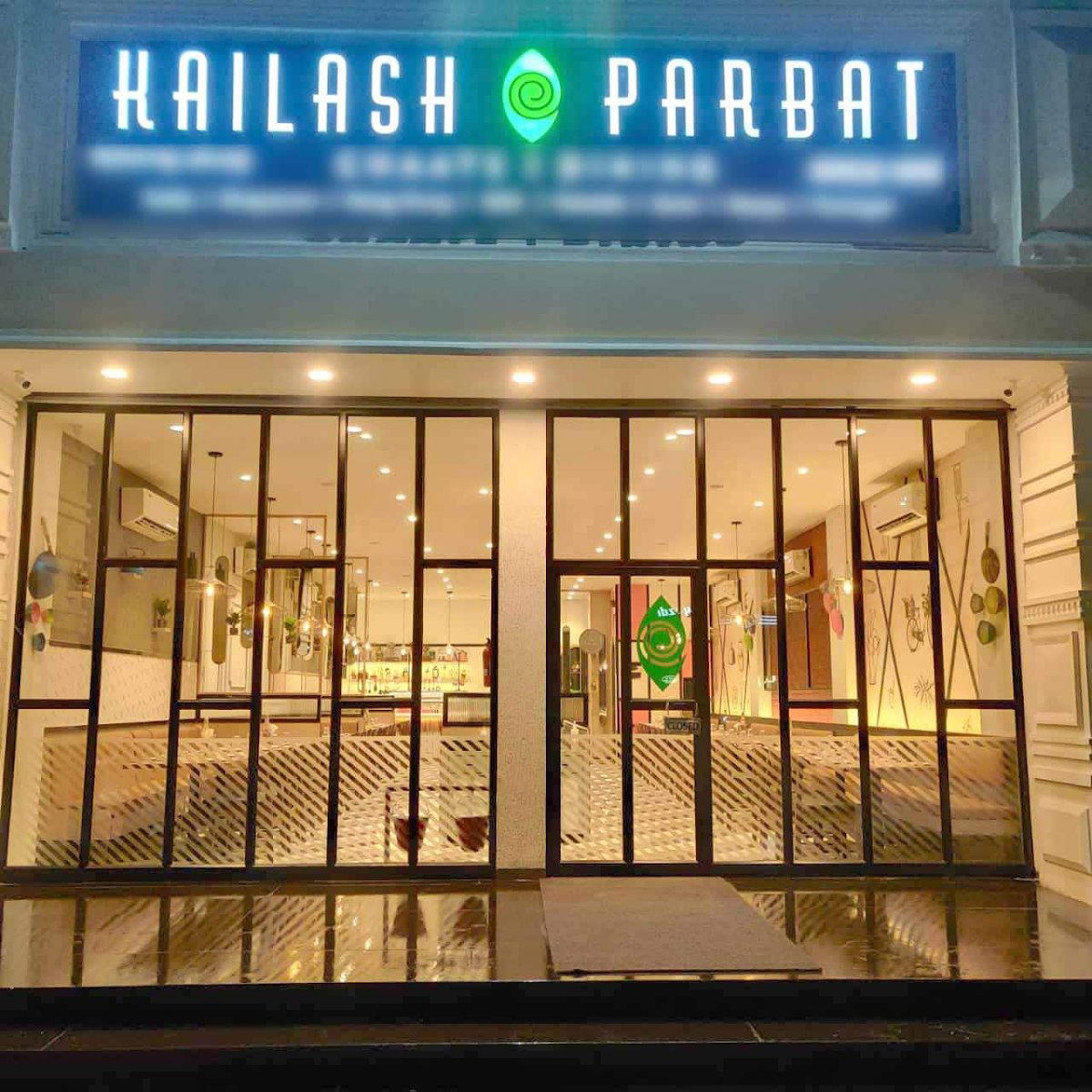
Where North Indian Vegetarian Cooking Meets the Kongu Belt
Tiruppur's food identity is defined less by a single culinary school than by the communities that the textile industry drew here over decades. Traders from Rajasthan, Gujarati merchants, and communities from across North India arrived alongside the boom in knitwear exports that gave the city its international profile, and their food preferences took root in the commercial corridors along the Avinashi Road. That stretch, running through Gandhinagar and Velampalayam, now carries a cross-section of eating options that would look unusual in almost any other Tamil Nadu city of comparable size. Kailash Parbat sits on this road, at 108 Dollar Hi Line.
The name Kailash Parbat carries specific freight in Indian dining contexts. It references Mount Kailash, the Himalayan peak sacred in Hindu and Jain traditions, and the association has long been used by restaurants serving strictly vegetarian communities for whom the name signals purity and provenance as much as it signals cuisine. In cities across India, from Mumbai's Chowpatty to the trading quarters of Ahmedabad, variants of this positioning appear wherever North Indian merchant communities have established themselves. Tiruppur's version follows that pattern, placing a vegetarian-coded identity in a city whose local Kongu cuisine is itself largely but not exclusively vegetarian in its everyday form.
The Sourcing Context: What Vegetarian Cooking in This Region Actually Means
The editorial angle that matters most at a restaurant like this is not the menu itself but where its ingredients originate and what that supply chain implies about quality. Tiruppur sits in the Kongu Nadu region of Tamil Nadu, an area with deep agricultural roots in cotton, but also in vegetables, dairy, and pulses that feed both the local population and the city's restaurant sector. The proximity to Coimbatore, roughly 45 kilometres west, gives mid-sized restaurants here access to one of South India's more active wholesale produce markets, where Nilgiri-grown vegetables, fresh paneer from small regional dairies, and the spice supply chains that run up from Kerala's cardamom and pepper belts all converge.
For a North Indian vegetarian kitchen operating this far south, that sourcing geography matters. The dal makhani, the paneer preparations, and the bread-heavy menu formats that characterise this style of cooking depend heavily on dairy quality and on the freshness of legumes and aromatics. A kitchen working within an hour or two of Coimbatore's wholesale infrastructure has a different baseline than the same format operating in a more isolated location.
This sourcing context distinguishes the Kongu Belt from, say, the Delhi corridor, where restaurants like Bukhara in New Delhi built their identities around tandoor technique and specific North Indian spice traditions, or from farm-to-table operations like Farmlore in Bangalore, which has made ingredient provenance the explicit editorial centre of its kitchen. In a mid-sized industrial city like Tiruppur, ingredient sourcing rarely becomes a marketing narrative, but it still shapes what ends up on the plate.
Tiruppur's Dining Scene: Industrial City, Layered Food Culture
Tiruppur is not a city with a developed fine-dining infrastructure. Its restaurants serve the practical needs of a working population, the social requirements of a merchant class, and the occasional expectations of domestic business travellers passing through on textile trade visits. The price positioning across most of its sit-down restaurants reflects this: mid-range, accessible, and orientated toward group dining and family meals rather than individual tasting experiences. Kailash Parbat fits that mould by address and neighbourhood type.
The contrast with India's more curated dining destinations is instructive. A restaurant like Esphahan in Agra operates inside a heritage hotel context where the dining room is as much a destination as the food. A city like Mumbai supports a layered tier of restaurants from neighbourhood Irani cafes up through inventive modern menus at places like Americano in Mumbai. Tiruppur offers neither of those contexts. What it offers instead is a food culture shaped by commerce and community, which has its own kind of authenticity: restaurants here are used hard, daily, and without affectation.
Kailash Parbat's location on the Avinashi Road places it in one of the more commercially active stretches of the city, accessible from the main arterial road but not in the central market core.
How This Format Reads Against the Wider Indian Vegetarian Tradition
North Indian vegetarian restaurants of the type the restaurant represents occupy a specific and durable niche across India's non-metropolitan cities. They are not attempting innovation in the way that newer urban kitchens are, and they are not serving tourists seeking regional authenticity. Their reference points are the shared shorthand of paneer, dal, roti, and rice-based preparations that cross caste, regional, and community lines among India's vegetarian-observant populations. In that sense, they function more like a neighbourhood institution than a destination restaurant.
Elsewhere in India, this format appears in different registers: the pure-veg restaurants of Gujarat, the vegetarian thali houses of Rajasthan, and the Udupi-style South Indian vegetarian chains that spread from Karnataka across the country. Each carries its own sourcing logic and community identity. In Tiruppur's case, the North Indian vegetarian format is a layer added on top of a Tamil and Kongu food base, which means the city carries multiple vegetarian traditions simultaneously. That overlap is more interesting than either tradition in isolation.
Comparable dynamics appear in other secondary cities elsewhere in India: Dadi Ki Rasoi in Budaun represents the pure-vegetarian restaurant in a Uttar Pradesh context, while Dosa Crepes N More in Mehsana shows how South Indian formats migrate into Gujarat's vegetarian-heavy market. The pattern of vegetarian formats crossing regional lines is consistent across India's commercial cities, and Tiruppur is no exception.
Planning a Visit
The restaurant is located at 108 Dollar Hi Line on the Avinashi-Tiruppur Road, in the Gandhinagar-Velampalayam area. The restaurant is open daily from 11 AM to 10:30 PM. The location on a main commercial road makes it findable by address, and the surrounding area has sufficient parking given the road's commercial character. It is walk-in friendly, with a casual dress code and an average price of about $8 per person.
Comparable Venues
Comparable venues nearby, for context on price, style, and recognition.
| Venue | Cuisine | Price | Notes |
|---|---|---|---|
| Kailash ParbatThis venue — the venue you are viewing | North Indian & Sindhi Street Food | $$ | Not listed |
| Dilli StreEAT | Indian Street Food | $$ | Indira Gandhi International Airport |
| Aanch | North-West Frontier North Indian | $$ | Niranjanpur |
| Swirl | Indian Pure Vegetarian | $$ | Vrindavan |
| Green Park | Indian & International Garden Dining | $$ | Fatehabad Road |
| Omya | Modern Indian Fine Dining | $$$ | Lodhi Road |
Continue exploring
More in Tiruppur
At a Glance
- Well Known
- Classic
- Lively
- Casual Hangout
- Group Dining
- Family
- Standalone
Current opening hours
- Monday
- 11 AM–10:30 PM
- Tuesday
- 11 AM–10:30 PM
- Wednesday
- 11 AM–10:30 PM
- Thursday
- 11 AM–10:30 PM
- Friday
- 11 AM–10:30 PM
- Saturday
- 11 AM–10:30 PM
- Sunday
- 11 AM–10:30 PM
Hours can change for holidays and private events. Last verified .
Casual dining atmosphere with a focus on authentic, traditional Indian culinary experience; welcoming to guests from all backgrounds.