Kachka Fabrika
Kachka Fabrika occupies a second-floor suite in Portland's Bindery Annex, extending the Russian-Georgian drinking and eating tradition that made its parent operation a reference point in the city's food scene. The format leans into Eastern European wine culture and fermented-drink repertoire at a moment when Portland's restaurant community is paying serious attention to the traditions of the former Soviet republics.
Pearl is the En Primeur Club membership app — saves, bookings, and concierge access live there. Same editors, same standards.
- Address
- Bindery Annex, 2117 NE Oregon St Suite 202, Portland, OR 97232
- Phone
- +15034705077
- Website
- kachkafabrika.com
- Directions
- Get directions
 Saves & bookings on Pearl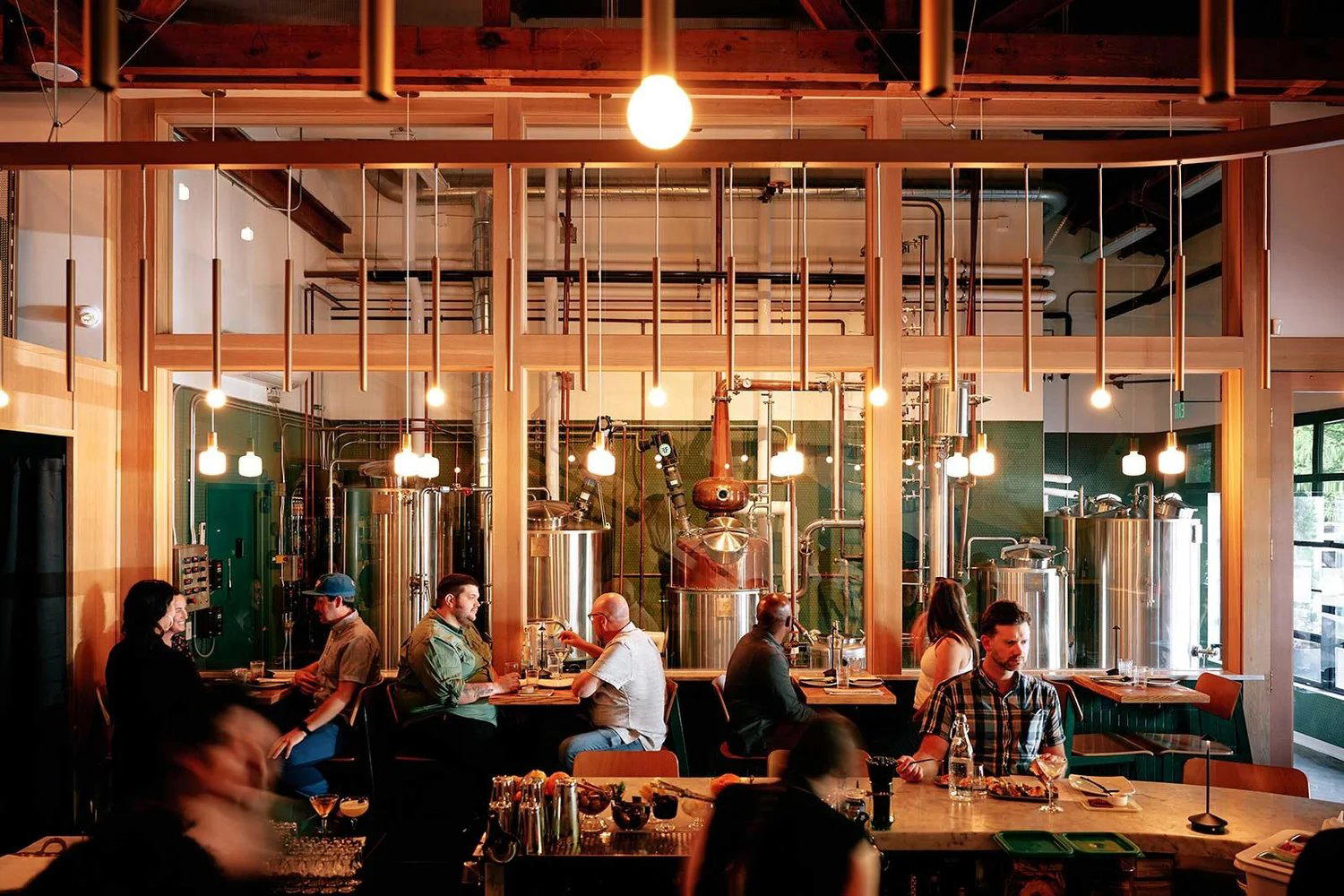
Eastern Europe in the Industrial Northeast
Portland's Northeast quadrant has spent the past decade becoming the city's most active dining corridor, absorbing immigrant cuisines, fermentation-forward bars, and format experiments that its more tourist-trafficked Pearl District neighbors rarely attempt. The Bindery Annex on NE Oregon Street sits squarely inside that energy: a converted industrial building where suite-format restaurants operate with a degree of autonomy that freestanding spaces rarely allow. Kachka Fabrika occupies Suite 202 on the second floor, and its address alone signals something about the kind of experience on offer. You are not walking into a polished street-level destination; you are going somewhere specific, for a reason.
That specificity is the point. Russian and Georgian food in the United States has long existed at the margins of the dining conversation, caught between immigrant canteen economics and the difficulty of sourcing the raw materials that make the cuisine work at full strength. Portland's broader restaurant culture, which has shown consistent appetite for fermentation, house-cured product, and wine programs built around obscure regional producers, turns out to be unusually hospitable terrain for exactly this kind of cooking. Kachka Fabrika uses that terrain deliberately.
The Drinking Tradition Behind the Food
In Georgian and Russian table culture, the division between food and drink is structurally different from the Western European model that dominates American fine dining. The meal is organized around toasts, shared plates, and a rhythm of eating and drinking that treats the table as a social institution rather than a consumption sequence. The wine list at an operation serious about this tradition cannot be a secondary consideration; it has to function as the organizing logic of the evening.
Georgian wine in particular has attracted serious attention from sommeliers and wine buyers globally over the past decade, partly because of the qvevri tradition, clay-vessel fermentation that predates barrel aging by thousands of years, and partly because the grape varieties are genuinely unlike anything grown elsewhere. Rkatsiteli, Mtsvane, Saperavi, and Chinuri do not translate neatly into Western wine categories, which makes the curation challenge significant. A list that does justice to these wines requires a buyer who understands them on their own terms rather than positioning them as exotic alternatives to familiar European benchmarks. Eastern European wine programs in the United States have historically struggled with exactly this: either treating the category as a novelty or failing to maintain the cellar consistency that regular service demands.
The broader context matters here. Across American cities, the wine programs that have earned sustained critical attention tend to share a structural quality: they are opinionated. Rather than cataloging breadth, they reflect a point of view about what belongs together on a list and why. That kind of curation is visible at operations like Lazy Bear in San Francisco and Single Thread Farm in Healdsburg, where the drink program functions as an argument rather than an amenity. Portland's restaurant culture has its own examples: Langbaan pairs a tightly controlled Thai tasting format with a list that rewards attention, and Berlu builds its Vietnamese program around similarly considered beverage decisions. Kachka Fabrika operates in that same register, where the drink program is a primary argument rather than a secondary service.
Format and the Industrial Setting
Suite-format dining in converted industrial buildings carries specific atmospheric qualities that differ meaningfully from restaurant-designed interiors. The bones of the space, ceiling height, floor material, the residual geometry of industrial use, create a sensory context that traditional restaurant design cannot replicate. In Portland's food scene, this format has become increasingly associated with operations that prioritize programming depth over surface finish, a pattern visible across the city's Northeast dining corridor.
The Kachka operation as a whole has built its identity around zakuski culture: the Russian tradition of small shared plates, pickled and fermented preparations, and smoked fish that functions as both the foundation of the meal and the framework for drinking. In the Fabrika iteration, that foundation presumably extends into a more elaborated format suited to the second-floor suite setting, a venue-within-a-venue structure that allows for a different pacing and selection than a high-volume primary restaurant. Portland's dining culture has shown appetite for exactly this kind of tiered operation, where a parent brand creates a subsidiary format that pushes further into the territory the main room cannot fully explore.
For comparative context within Portland's current scene, the ambition of operations like Kann (which built a nationally recognized Haitian program from the ground up) and Nostrana (which has held its Italian wood-fired position for nearly two decades) illustrates how Portland rewards restaurants that commit to a specific tradition rather than diffusing across categories. Kachka Fabrika's positioning inside Eastern European drinking and eating culture follows the same logic.
Placing Kachka Fabrika in the National Picture
Russian and Georgian food in American dining is still building a larger critical profile. Operations like Atomix in New York City demonstrate what happens when a non-Western culinary tradition is given tasting-menu infrastructure and serious wine program support; the critical response tends to follow the depth of commitment. The challenge for Eastern European cuisine in the United States is that the tradition does not map onto the Michelin categories that organize American fine dining recognition. The zakuski format is inherently communal and resistant to the sequential tasting-course structure that award bodies tend to privilege. That structural mismatch has kept Russian and Georgian cooking in a critical gray zone even as individual operations achieve real distinction.
Nationally recognized restaurants at the level of Le Bernardin in New York City, Alinea in Chicago, or The French Laundry in Napa operate within culinary frameworks that have decades of critical infrastructure behind them. Eastern European cuisine in the United States is building that infrastructure from a much earlier stage, and Portland's Kachka operation has been part of that construction. Other standout American restaurants, including Providence in Los Angeles, Blue Hill at Stone Barns in Tarrytown, Addison in San Diego, The Inn at Little Washington, and Emeril's in New Orleans, each represent a tradition with established critical language. The restaurant is participating in the work of creating that language for its own tradition. For diners interested in that process, the Bindery Annex address on NE Oregon Street is worth tracking.
Planning a Visit
The restaurant is located at the Bindery Annex, 2117 NE Oregon St Suite 202, Portland, OR 97232. The second-floor suite location means arrival requires more intention than a street-level drop-in; confirm hours and any booking requirements directly before visiting, as suite-format operations frequently adjust their schedules. The NE Oregon Street corridor is accessible by public transit and offers street parking, though the Buckman neighborhood's increasing density means evening parking competition is real. Given the drinking-culture orientation of the Kachka format, arriving with time to settle into the pacing is the right approach.
- Oysters on the Half Shell
- Oregon Bay Shrimp Salad
- Marinated Mussels
- Scallops
- Steelhead Jerky
- Cod Liver Foie with Rye Toasts
Comparable Venues
Comparable venues nearby, for context on price, style, and recognition.
| Venue | Cuisine | Price | Notes |
|---|---|---|---|
| Kachka FabrikaThis venue — the venue you are viewing | Eastern European Zakuski & Seafood Cocktail Bar | $$ | Not listed |
| Berlu Bakery | Vietnamese-Inspired Modern Bakery & Café | $$ | Buckman |
| Rangoon Bistro | Burmese Bistro | $$ | Central Eastside Industrial District |
| The Tao of Tea | International Tea House | $$ | Belmont District |
| Swiss Hibiscus | Authentic Swiss Cuisine | $$$ | King |
| Wailua Shave Ice Portland | Hawaiian Shave Ice | $ | Downtown |
Continue exploring
More in Portland
Restaurants in Portland
Browse all →
Bars in Portland
Browse all →
Hotels in Portland
Browse all →
At a Glance
- Lively
- Trendy
- Energetic
- Industrial
- Casual Hangout
- After Work
- Group Dining
- Open Kitchen
- Standalone
- Design Destination
- Craft Cocktails
- Beer Program
- Local Sourcing
Current opening hours
- Monday
- 4–9 PM
- Tuesday
- Closed
- Wednesday
- Closed
- Thursday
- 4–9 PM
- Friday
- 4–11 PM
- Saturday
- 4–11 PM
- Sunday
- 4–9 PM
Hours can change for holidays and private events. Last verified .
Sleek, modern industrial setting within a production facility with an elegant cocktail bar atmosphere and lively energy reflecting the brand's bold culinary vision.