Juliet



Michelin Plate · SquareMeal UK Top 100 Restaurants #32
Our verdict
A French bistro sensibility planted firmly in Gloucestershire, Juliet occupies a long, light-filled room on London Road and earns its popularity through genuinely sourced ingredients and a sharing-plates format that rewards the curious. The kitchen leans on produce from a walled garden at nearby Lypiatt Park and a wine list weighted toward low-intervention bottles. Book the private Piano Bar for celebrations.

Pearl is the En Primeur Club membership app, where members save venues, book tables and use the concierge.
The menu
What to order
- Oeuf mayonnaise
- Beef tartare
- Steak frites
The Cotswolds and the Bistro Tradition: Where Juliet Sits
The format of the French bistro, shared plates, generous portions, a wine list that keeps moving, staff who seem to actually enjoy their work, has travelled remarkably well beyond France. In market towns across the English countryside, a loosely defined but recognisably coherent bistro idiom has taken hold: linen-draped tables, a leaning toward European classics supplemented by whatever the season provides locally, and an atmosphere that sits somewhere between the neighbourhood café and the proper restaurant. Stroud, a post-industrial Gloucestershire town with a strong local food culture and a weekly farmers' market that draws producers from across the Cotswolds, is a plausible home for this kind of cooking. Juliet, operating from a converted music centre on London Road, is the area's clearest expression of it.
For context on where Juliet fits within the broader geography of British restaurant ambition, the destinations commanding major critical attention, places like The Ledbury in London, L'Enclume in Cartmel, or Moor Hall in Aughton, operate in a different register altogether: tasting menus, serious investment in kitchen infrastructure, and pricing that reflects it. Juliet's ambition runs in a different direction: accessible, sociable, and grounded in what the surrounding land and local supply network actually produce. That is not a consolation prize. It is a deliberate mode, and one that the Cotswolds dining scene increasingly rewards.
What You See When You Walk In
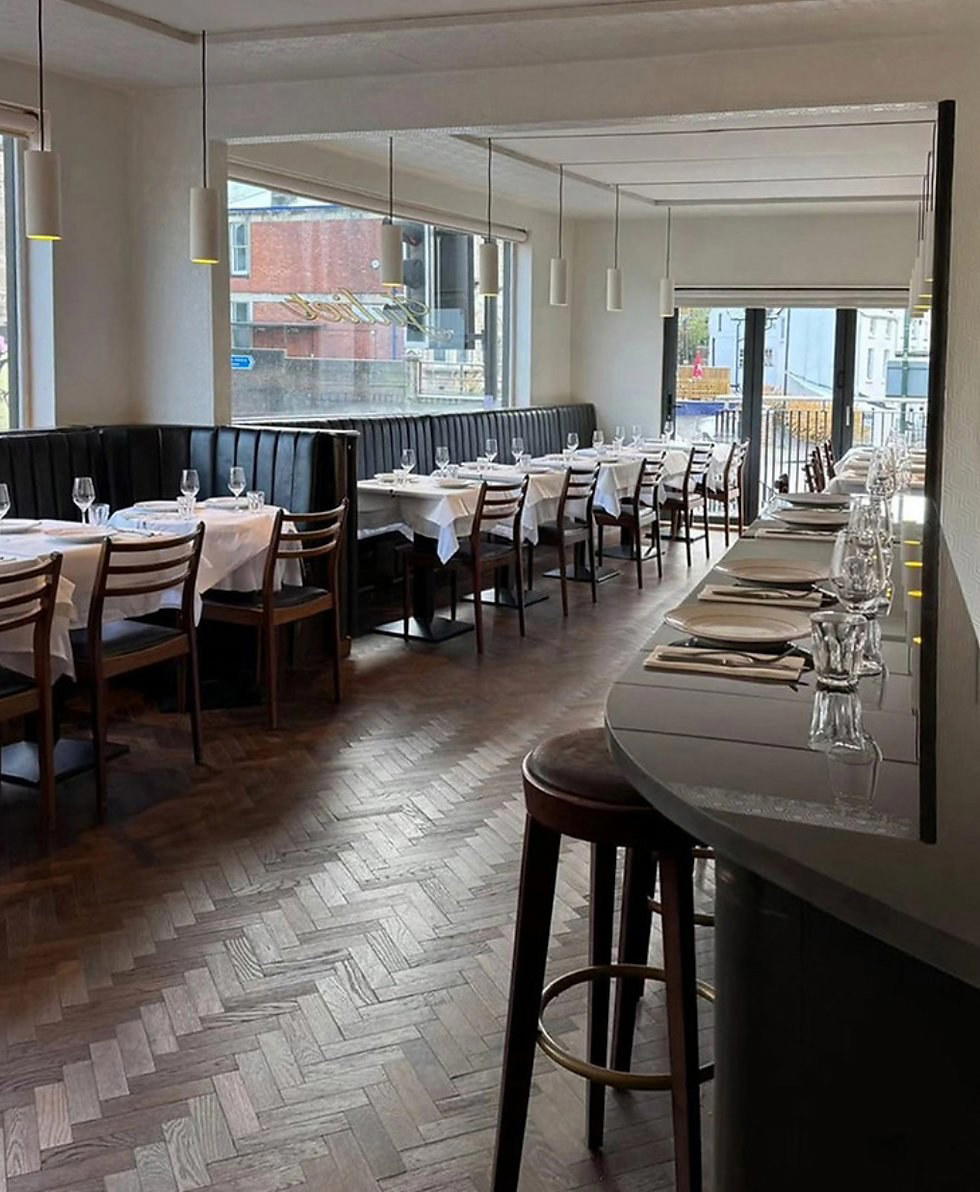
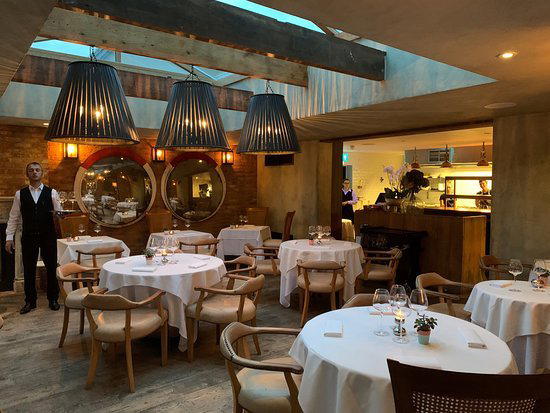
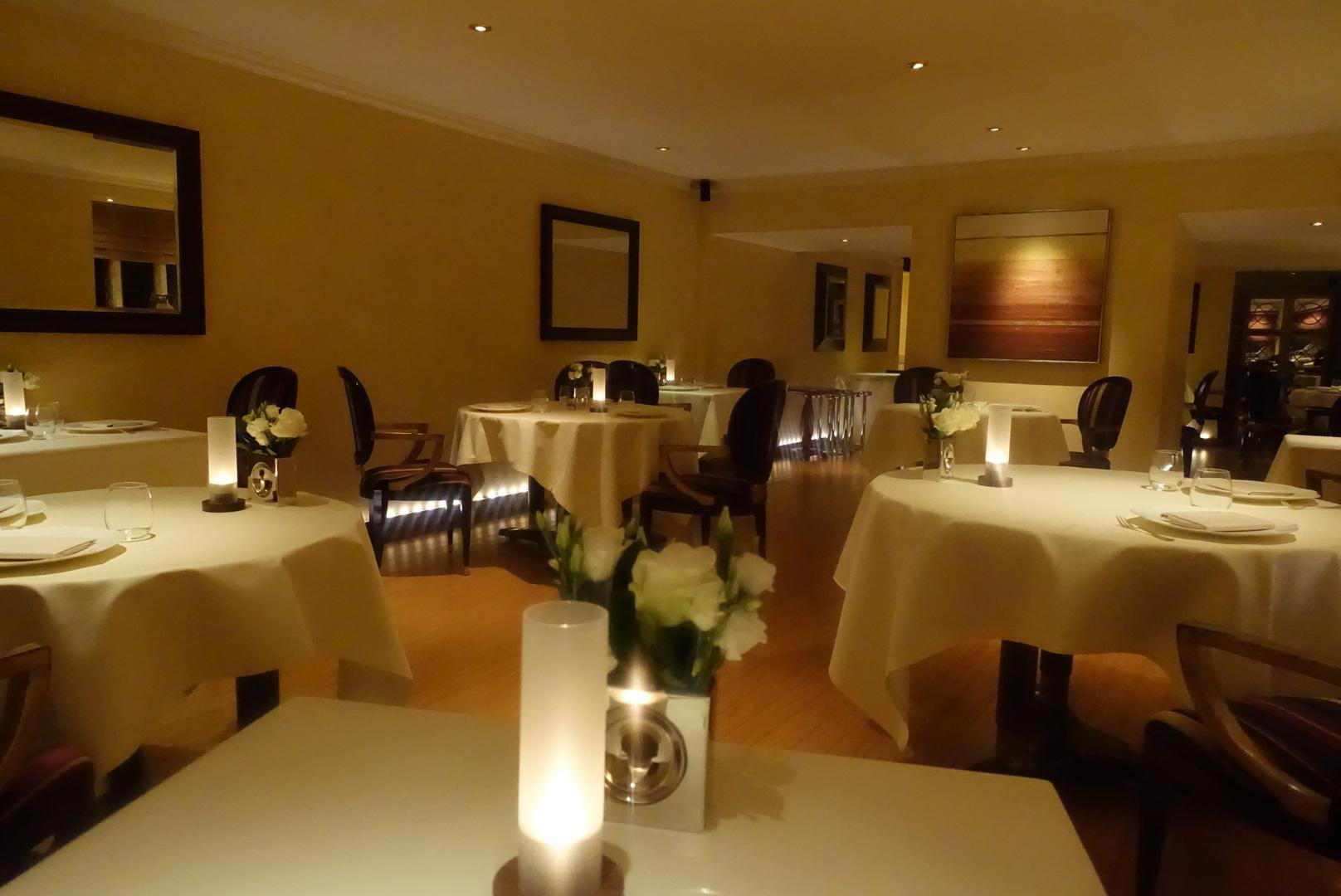
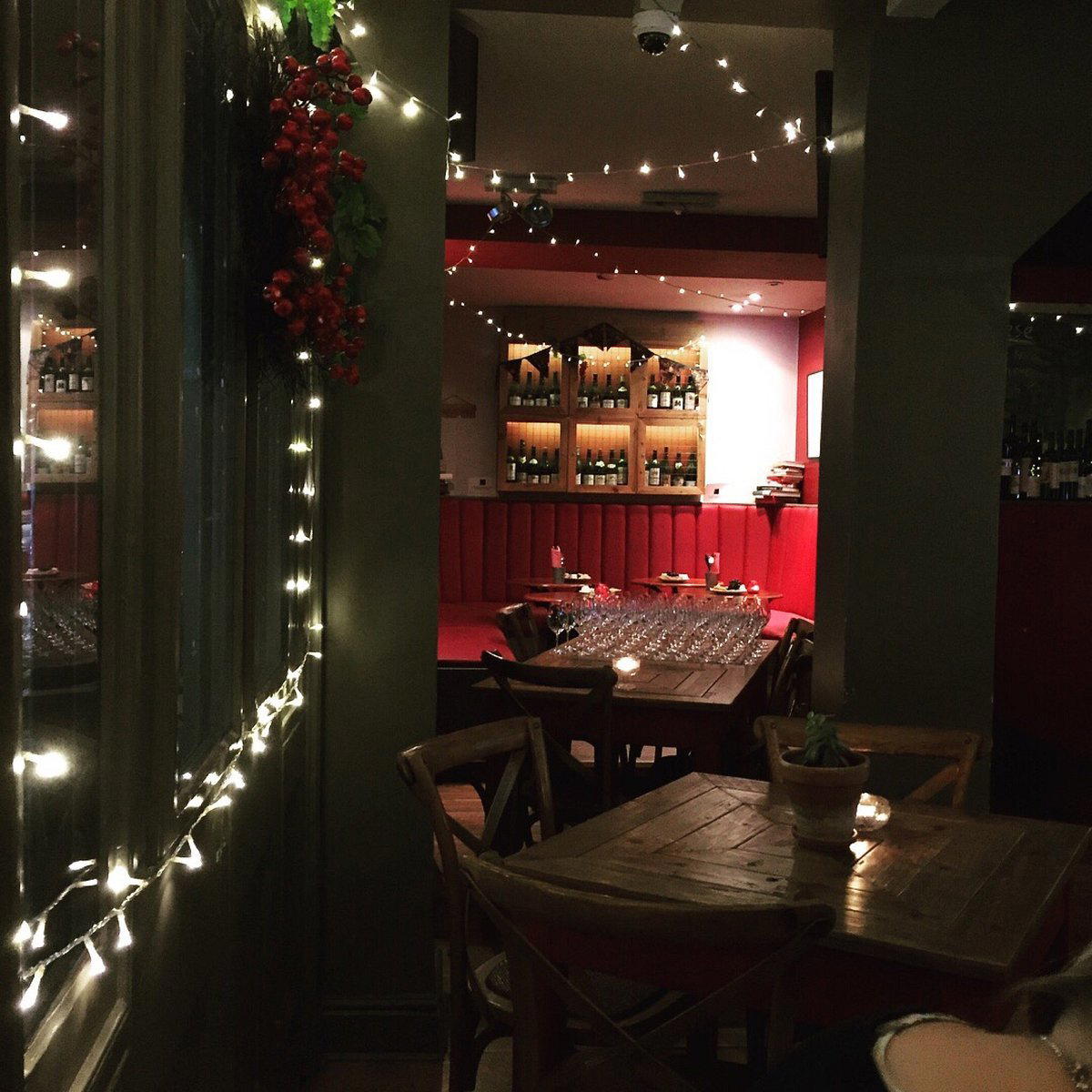
The room is long and narrow, with large windows pulling enough light into the space to make the white walls feel open rather than clinical. Linen-covered tables, black leather banquettes, rich mahogany sideboards, and a parquet floor set a tone that reads as old-world French without crossing into pastiche. The effect is of something considered rather than decorated, a room that takes the bistro template seriously enough to execute it well. The private Piano Bar, bookable for special occasions, adds a live musical dimension that the main dining room doesn't offer.
Service is handled by a team described as young and passionate, and the overall atmosphere trends toward animated rather than hushed. This is not a venue where tables are widely spaced and conversation is kept to a murmur. The energy is social, the room fills, and the noise level reflects that.
Ingredient Sourcing as the Kitchen's Central Logic
The most editorially interesting thing about Juliet's kitchen is its relationship to a specific piece of land. Salad leaves and other produce come from the walled garden at Lypiatt Park, the property of owner Dan Chadwick, located nearby in Gloucestershire. This is not farm-to-table as a marketing position, it is a literal supply chain connecting ownership, land, and plate. The kitchen at Juliet is working with ingredients that are, in some cases, grown on land connected directly to the business.
This matters for how the food tastes and how the menu is structured. Dishes built around sustainably sourced local ingredients are constrained in productive ways: the menu follows availability rather than imposing a fixed repertoire, which explains why the dish of the day is worth particular attention. A rotating daily special, cavatelli with lamb ragù is cited as one example, captures what the kitchen is working with at the moment rather than what it has committed to serving year-round. The chefs Will Rees, formerly head chef at Wilsons in Bristol, and Oliver Gyde bring a demonstrable understanding of how to handle this kind of sourcing; Bristol's restaurant scene has been one of the more consistent champions of local and sustainable procurement in England over the past decade, and that background shows in the approach taken here.
The liberal use of grass-green olive oil, not locally produced, and the kitchen does not pretend otherwise, threads through many dishes and adds a visual element against the white plates. It is a small but telling detail: the menu does not confine itself to a strict locavore doctrine. It sources locally where it can, brings in quality ingredients from further afield where it should, and does not apologise for either decision. That kind of pragmatism produces better cooking than rigid rules.
The Format and What to Order
The menu is arranged as sharing plates of escalating size, brought in sequence. The structure moves logically from snacks, an oyster, an oeuf mayonnaise, through more substantial dishes in the middle register, such as clams with Tropea onion and asparagus or beef tartare with pommes allumettes, toward final plates that function as conventional main courses in terms of portion size. A butterflied mackerel with agretti and bottarga is noted as an example of the larger-format dishes.
Portions are described as generous rather than refined and dainty, which aligns with the bistro register the kitchen is working in. The dessert section is short; the apple tarte tatin, caramelised with commitment and served with crème fraîche, is singled out as the standout.
The wine list emphasises low-intervention and artisanal producers. For guests planning to work through it properly, Stroud train station is within direct walking distance of London Road, which removes a practical obstacle to doing so.
Juliet's Relationship to Its Sibling and Its Scene
Juliet is described as the sophisticated relation to the Woolpack Inn in the nearby village of Slad, both operating under the same ownership. The Woolpack has its own character as a village pub; Juliet represents the more formal, all-day bistro expression of the same sensibility. Together, they suggest an ownership group with a coherent point of view about how to serve a community that values good food without requiring the full apparatus of destination dining.
Within our full Stroud restaurants guide, Juliet occupies the upper end of the accessible-bistro tier. It is not competing with destinations like Gidleigh Park in Chagford or Le Manoir aux Quat' Saisons for the same customer. It is competing for the diner who wants skilled, ingredient-led cooking in a genuinely enjoyable room, at a price point that allows for a full evening with wine.
For those exploring Stroud beyond its restaurants, our Stroud hotels guide, bars guide, wineries guide, and experiences guide cover the broader area.
Planning Your Visit
Juliet is located at the Old Music Centre, 49 London Road, Stroud GL5 2AD. For celebrations or private occasions, the Piano Bar can be booked separately and includes a live musician. Stroud railway station is a short walk away, making an evening focused on the wine list a practical rather than aspirational plan. Given the venue's popularity, noted across multiple critical references, booking ahead is the sensible approach, particularly on weekends.
Frequently asked questions
Is Juliet okay with children?
The sharing-plates format and sociable noise level make Juliet more relaxed than a formal restaurant. That said, the Old Music Centre setting on London Road and the all-day bistro programming skew toward an adult crowd, so younger children may find the pacing and format less accommodating than a traditional family dining room.
Is Juliet better for a quiet night or a lively one?
Lively, without question. The room runs long and narrow with large windows and an animated service team, and the escalating sharing-plates format is built for table conversation rather than quiet contemplation. If you want a private occasion with more control over the atmosphere, the Piano Bar can be booked separately and includes a live musician.
Has Juliet won any awards?
Juliet has received recognition including: Imagine dropping a French bistro into the Cotswolds and you’ve got something a lot like Juliet. Combining a buzzy vibe with an enthusiastic and affable team, plus delightful dishes from beyond France’s borders, it’s easy to see why the plac….
What's the must-try dish at Juliet?
Critics single out the apple tarte tatin from the dessert menu: caramelised assertively and served with crème fraîche, it is described as decidedly grown-up in its execution. Among the savoury courses, the dish of the day is worth tracking, past versions have included cavatelli with lamb ragù.
At-a-Glance Comparison
| Venue | Cuisine | Price | Awards | Notes |
|---|---|---|---|---|
| JulietThis venue (the venue you are viewing) | French-Italian Bistro | $30–50 | Michelin Plate · SquareMeal UK Top 100 Restaurants #32 | Not listed |
| The Ledbury | Modern British Fine Dining | $300–500 | 3 Michelin Stars · World's 50 Best #42 | Modern European, Modern Cuisine |
| Sketch, The Lecture Room and Library | Modern French Fine Dining | $200–300 | 3 Michelin Stars · World's 50 Best #18 | Modern French |
| CORE by Clare Smyth | Modern British Fine Dining | $150–200 | 3 Michelin Stars · World's 50 Best #97 | Modern British |
| Restaurant Gordon Ramsay | French Fine Dining | $200–300 | 3 Michelin Stars · World's 50 Best #13 | Contemporary European, French |
| Dinner by Heston Blumenthal | Modern British, Traditional British | Not listed | Michelin 2 Star | Not listed |
Recognition history
Dated appearances from independent guides and award organizations, with the underlying list record or original source where available.
Michelin Plate
Michelin
SquareMeal UK Top 100 Restaurants #32
SquareMeal
The Good Food Guide Good Food Guide Best Local Restaurant
The Good Food Guide
Full recognition history (4 entries)
The Good Food Guide GFG Good
The Good Food Guide
Juliet
Featured Guides

Continue exploring
More in Stroud
Restaurants in Stroud
All restaurants in Stroud →

Details
- Relaxed
- Cozy
- Elegant
- Intimate
- Date Night
- Special Occasion
- Open Kitchen
- Extensive Wine List
- Small Plates
- Allergy Accommodating
Current opening hours
- Monday
- 9:30 AM–11 PM
- Tuesday
- 9:30 AM–11 PM
- Wednesday
- 9:30 AM–11 PM
- Thursday
- 9:30 AM–11 PM
- Friday
- 9:30 AM–11 PM
- Saturday
- 9:30 AM–11 PM
- Sunday
- Closed
Hours can change for holidays and private events. Hours as of .
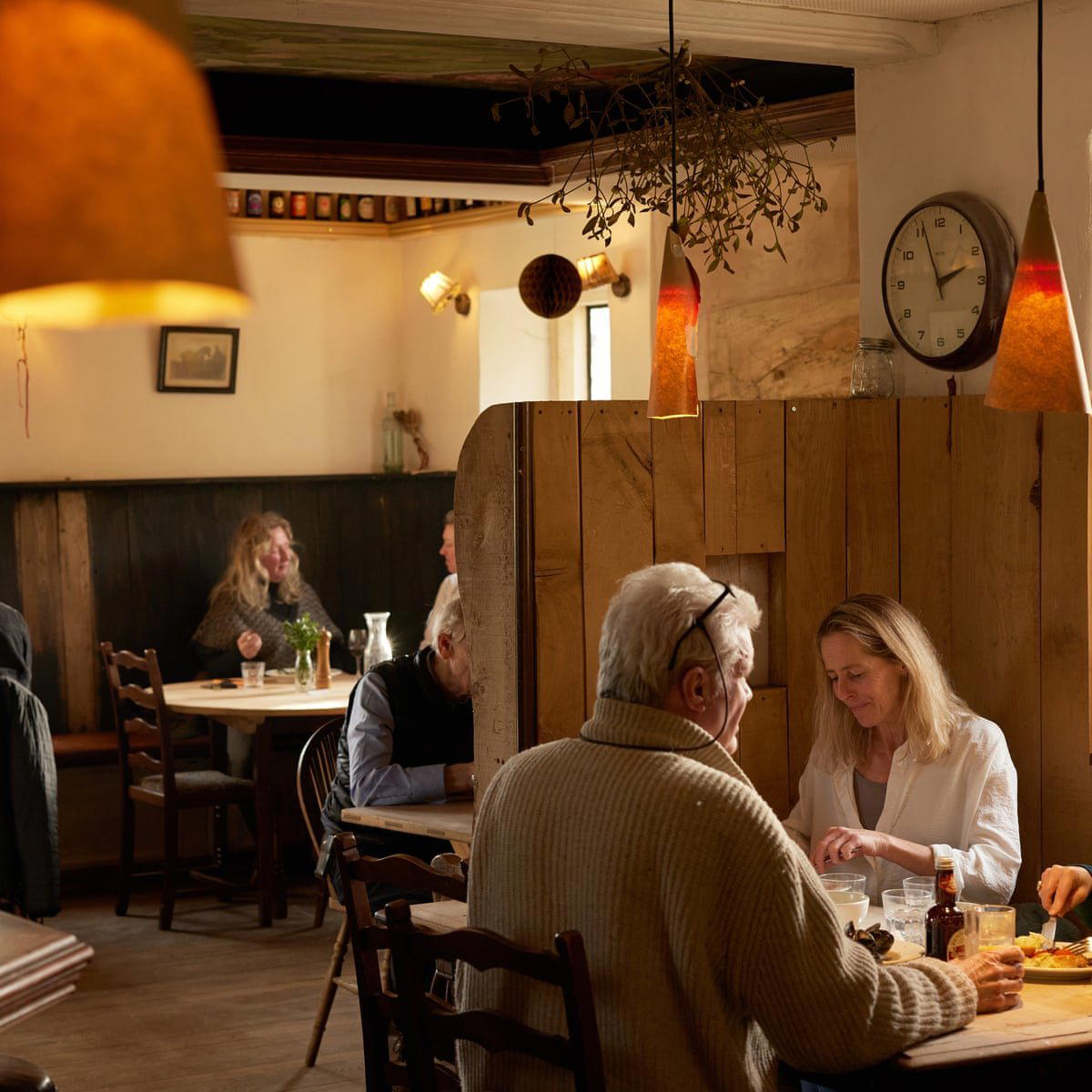
Relaxed and pleasant with soft leather banquettes, a buzzy vibe, and happy hum of diners.