Lumière




1 Michelin Star · AA Rosettes 4 Rosettes · The Good Food Guide GFG Very Good
Our verdict
Cheltenham's sole Michelin-starred restaurant, Lumière sits on Clarence Parade in a deliberately understated townhouse that has held a single star since 2024. Jon Howe's seasonal tasting menus draw on produce from his own smallholding, placing classical technique alongside a playful edge. With just a handful of evening services each week, it operates at the quieter, more intimate end of the Cotswolds fine-dining tier.

Pearl is the En Primeur Club membership app — saves, bookings, and concierge access live there. Same editors, same standards.
- Address
- Clarence Parade, Cheltenham GL50 3PA, United Kingdom
- Phone
- +44 1242 222200
- Hours
- Mon–Tue ClosedWed–Thu 7–11 PMFri–Sat 12:30–4 PM, 7–11 PMSun Closed
- Website
- lumiererestaurant.co.uk
- Directions
- Get directions
- Booking
- Book on OpenTable
A Spa Town with Serious Culinary Ambitions
Cheltenham occupies an interesting position in England's fine-dining geography. It is neither a metropolitan centre with the density of London nor a destination village built around a single celebrated kitchen, as Cartmel is around L'Enclume. Instead, it is a Regency spa town that has quietly accumulated a tier of serious cooking across a small number of addresses. At the top of that tier sits Lumière, the town's only Michelin-starred restaurant, awarded in 2024. Its position on Clarence Parade, a Georgian terrace in the central part of the town, is both geographically and symbolically apt: understated architecture, measured ambition, and a refusal to announce itself beyond what the food requires.
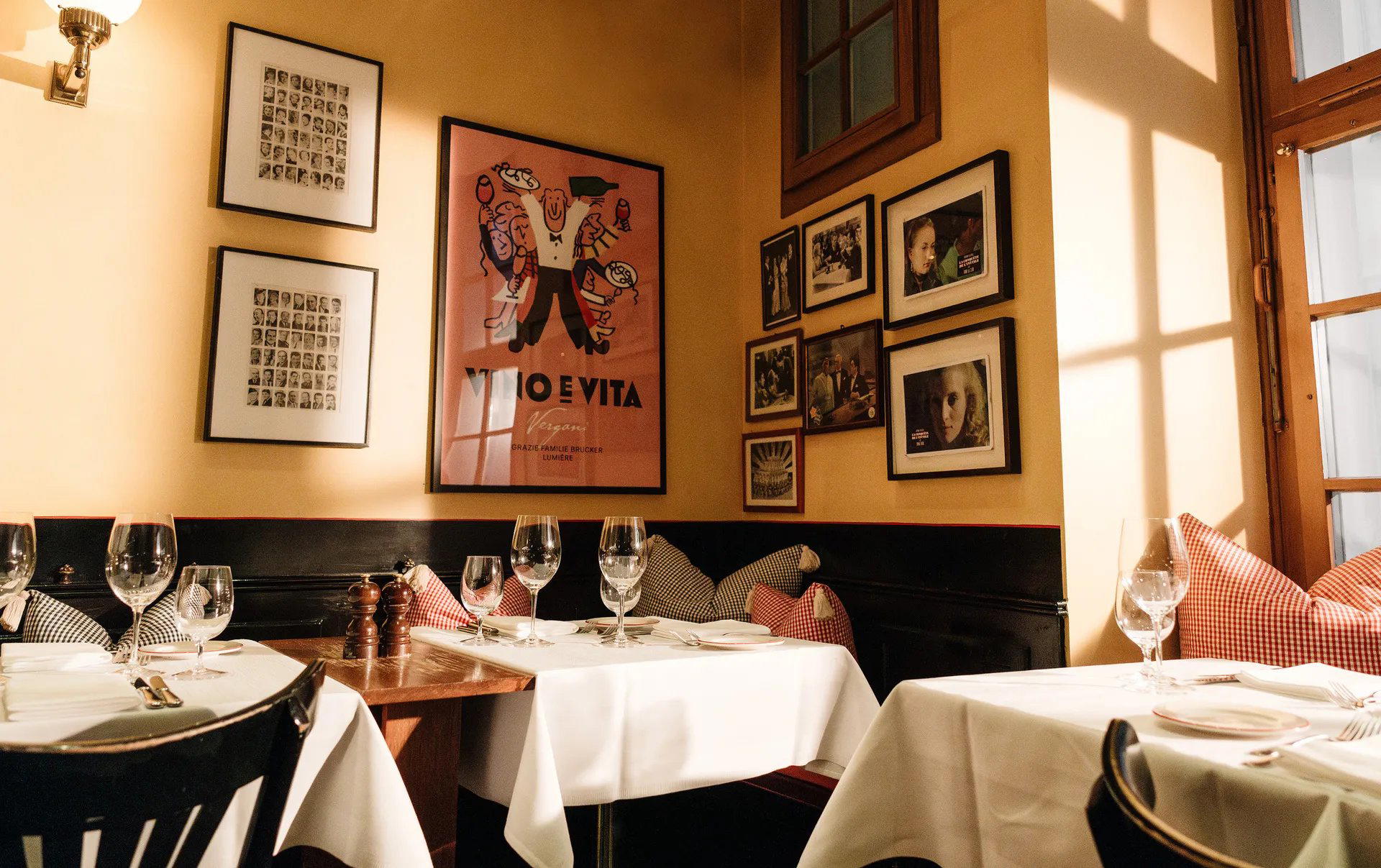
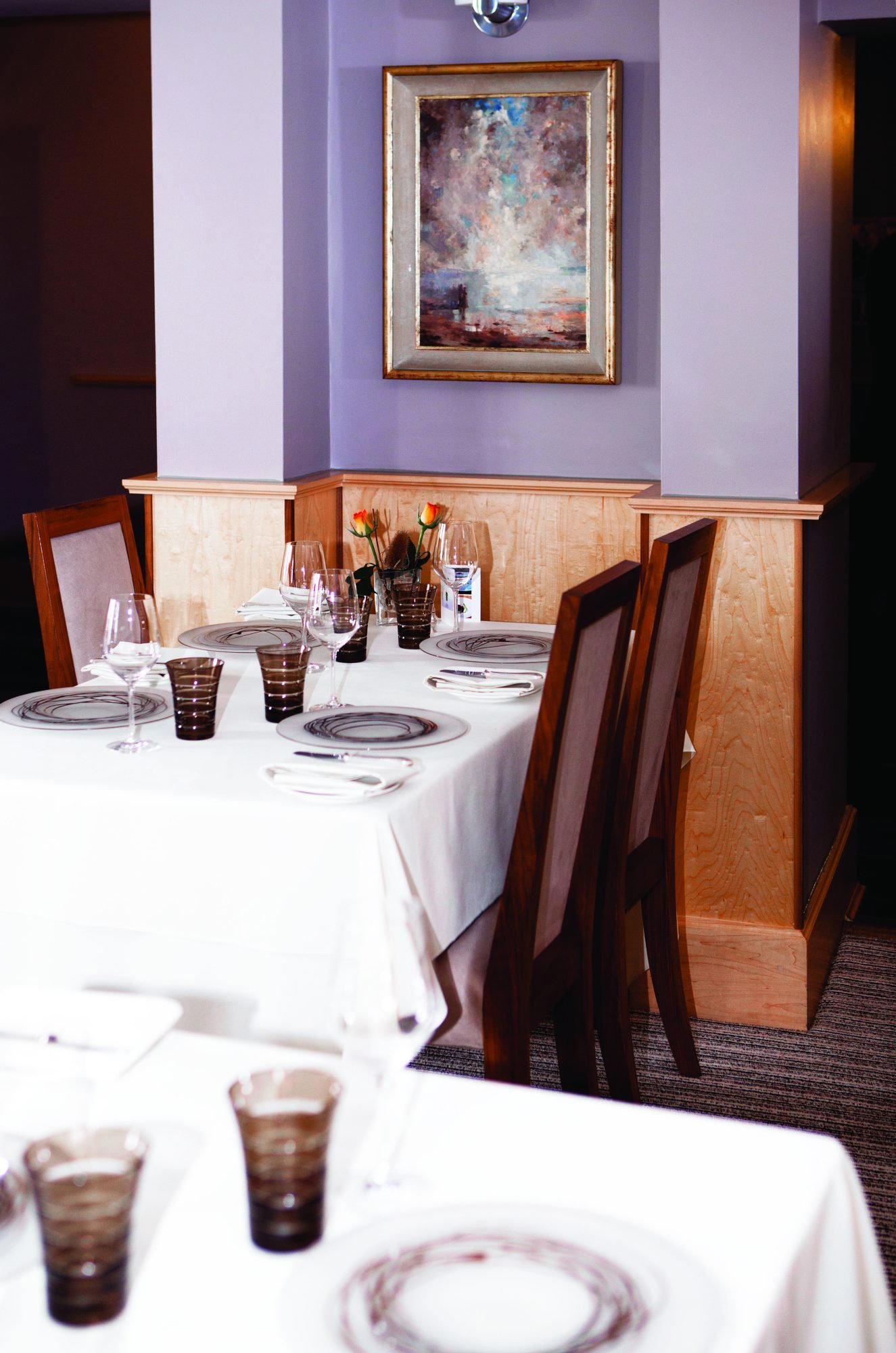
That physical restraint is deliberate. The signage is minimal enough that first-time visitors walking along the parade can miss it entirely. What lies behind the façade is a dining room finished in tones of grey, with damask-covered tables, statement mirrors, and silverware that catches the light without ostentation. The room's sobriety functions as a frame, directing attention toward the plate rather than the décor. For a town that can lean toward the ornate in its architecture, the interior registers as a considered counterpoint.
What the Cotswolds Fine-Dining Tier Looks Like
The Cotswolds and surrounding Gloucestershire have produced a narrow but credible group of high-end kitchens. Le Champignon Sauvage, long one of Cheltenham's most discussed addresses, operates in the same Contemporary French and Modern Cuisine bracket at the same ££££ price tier, giving the town an unusual depth for its size. Beyond Cheltenham, the region connects to a broader circuit of destination restaurants in England's rural fine-dining category: places like Gidleigh Park in Chagford and Moor Hall in Aughton that attract diners willing to travel for a meal in a non-urban setting.
Lumière fits that pattern but at a more contained scale. It does not function as a hotel-dining destination or a large-format tasting-menu theatre. The kitchen operates on a restricted weekly schedule: service runs Wednesday through Saturday evenings, with Friday and Saturday lunch added. Comparable operations at the high end of England's regional scene, including Hand and Flowers in Marlow, share this approach of deliberate capacity management outside the major cities.
Farm Supply, Seasonal Cooking, and What the Menu Signals
The farm-to-table model has become a shorthand for a certain kind of fine dining across Britain, deployed with varying degrees of commitment. At Lumière, the connection to source has a specific operational basis: during lockdown, the chef took on his own smallholding, which has since shifted the kitchen's relationship to seasonal produce from procurement to cultivation. That distinction matters in terms of what it enables on the plate: shorter supply chains, produce harvested closer to service, and a menu that can respond to what's actually growing rather than what's available from a supplier list.
The cooking that results is described by Michelin assessors as demonstrating classical technique with a playful register. The two coexist in ways that reflect a kitchen confident enough in its fundamentals to experiment. Venison with a red wine sauce represents the classical end: a dish built on stock-making, precise timing, and reduction. The signature 'Tequila Slammer' sorbet represents the other register entirely, and the fact that it has become a crowd-pleasing signature suggests the kitchen understands how to sequence a tasting menu's emotional arc as much as its flavours.
Three tasting menus are offered, and menu notes accompanying each course are delivered on a tablet at the table, explaining the provenance and thinking behind each dish. That degree of transparency about sourcing and technique is increasingly common at one-star level across Britain, but the specificity here, tied to a named smallholding, gives it more traction than a generic provenance statement would.
The wine programme runs to 265 selections with a total inventory depth of 2,385 bottles. The list draws primarily from France, Italy, Spain, California, and Mexico, and is structured to offer flight options alongside by-the-glass and by-the-bottle choices. For non-drinkers or drivers, the kitchen produces a range of homemade herbal preparations designed to pair with the menu in place of wine, a detail that reflects how seriously the kitchen treats the full table experience, not just the food component.
Service and the Hosting Model
At restaurants of this scale and price point, the front-of-house dynamic carries weight that's disproportionate to its visibility. The dining room at Lumière is managed with a hosting approach rather than a formal service model, with warmth and personal attention as explicit priorities rather than courtly distance.
Prithvi, Bhoomi Kitchen, and Memsahib's Lounge, which gives the town a mid-market dining breadth that Lumière sits above. The gap between those price tiers is significant in both format and expectation. Lumière's tasting-menu structure, restricted service schedule, and Michelin recognition place it in a different decision category for diners: this is a destination meal planned in advance, not a spontaneous evening out. That positioning is reinforced by the address itself, which is central and walkable from Cheltenham's hotels but not embedded in the casual dining traffic of the main shopping streets.
Placing Lumière in a Wider Critical Frame
One-star Michelin restaurants outside London and without a hotel infrastructure represent a specific and increasingly pressured category in British fine dining. Operating costs, restricted covers, and a reliance on destination diners create a business model that demands consistency over a narrow service window. The restaurants that sustain this model long-term, Lumière celebrated its 15th year of operation in 2024, tend to do so by building a local and regional loyalty base rather than relying on destination traffic alone.
At the further end of the Modern Cuisine spectrum internationally, kitchens like Frantzén in Stockholm or its Dubai counterpart FZN by Björn Frantzén represent the multi-star, high-production end of what seasonal modern cooking can become at scale. Lumière operates in none of those registers of scale or spectacle, but fifteen years of consistent critical recognition in a mid-sized English spa town carries its own argument. For comparison, the structural ambitions of The Fat Duck in Bray or The Ledbury in London exist in a separate tier entirely, operating with resources and profiles that regional one-star kitchens cannot replicate and, arguably, do not need to.
What Lumière represents for Cheltenham specifically is an anchor point for the town's culinary identity, a signal that serious cooking exists here at Michelin-recognised level, and that the spa-town character of the place does not preclude the kind of ambition the food shows. For more on what the town offers across dining, drinking, and hospitality, see our full Cheltenham restaurants guide, along with guides to Cheltenham hotels, bars, wineries, and experiences. For broader context on the Cheltenham scene, JOURNEY is another address worth tracking as the town's dining profile continues to develop.
Planning Your Visit
Lumière opens Wednesday through Saturday for dinner (from 7 PM), with Friday and Saturday lunch service beginning at 12:30 PM. Sunday and Monday are closed. The ££££ price tier and tasting-menu format make advance booking an operational necessity rather than a courtesy: at this service volume, tables turn slowly and availability is limited. The address on Clarence Parade is central within Cheltenham, accessible on foot from the main hotel cluster in the town centre, which removes any logistical friction for those staying locally. The kitchen does not publish a website or phone number through standard directories, so reservations are most reliably managed through the restaurant directly or through third-party booking platforms.
Frequently asked questions
Is Lumière expensive?
Pricing at Lumière is listed as ££££.
When can I go to Lumière?
Hours at Lumière: Monday closed Tuesday closed Wednesday 7 PM-11 PM Thursday 7 PM-11 PM Friday 12:30 PM-4 PM 7 PM-11 PM Saturday 12:30 PM-4 PM 7 PM-11 PM Sunday closed.
The Minimal Set
| Venue | Cuisine | Price | Awards | Notes |
|---|---|---|---|---|
| LumièreThis venue — the venue you are viewing | Modern Seasonal Fine Dining | $150–200 | 1 Michelin Star · AA Rosettes 4 Rosettes | Not listed |
| Le Champignon Sauvage | Classic French Fine Dining | $100–150 | 1 Michelin Star · La Liste Top Restaurants | Contemporary French, Modern Cuisine |
| Bhoomi Kitchen | Modern Southern Indian (Kerala) | $30–50 | Michelin Plate | Indian |
| Memsahib's Lounge | Modern Indian Fine Dining | $50–100 | Michelin Plate | Indian |
| Purslane | Modern British Seafood | $50–100 | Michelin Plate | Modern British |
| JOURNEY | Modern Creative Fusion | $150–200 | Michelin Plate | Not listed |
Recognition history
Dated appearances from independent guides and award organizations, with the underlying list record or original source where available.
Michelin 1 Star
Michelin
AA Rosettes 4 Rosettes
AA Rosettes
The Good Food Guide GFG Very Good
The Good Food Guide
Wine Spectator Award of Excellence
Wine Spectator
Full recognition history (6 entries)
Michelin 1 Star
Michelin
Michelin 1 Star
Michelin
Continue exploring
More in Cheltenham
Restaurants in Cheltenham
Browse all →
Bars in Cheltenham
Browse all →

Details
- Intimate
- Elegant
- Sophisticated
- Cozy
- Date Night
- Special Occasion
- Celebration
- Standalone
- Extensive Wine List
- Local Sourcing
- Tasting Menu
- Allergy Accommodating
Current opening hours
- Monday
- Closed
- Tuesday
- Closed
- Wednesday
- 7–11 PM
- Thursday
- 7–11 PM
- Friday
- 12:30–4 PM, 7–11 PM
- Saturday
- 12:30–4 PM, 7–11 PM
- Sunday
- Closed
Hours can change for holidays and private events. Last verified .
Elegantly stylish with tasteful yet relaxed decor, good lighting, nicely spaced tables creating an intimate, comfortable, and welcoming atmosphere.