

Michelin Plate · Star Wine List
Our verdict
Jhol brings India's southern and coastal culinary traditions to Sukhumvit Soi 18 with a menu that sidesteps the expected, ghee-roast crab and coastal-style curries replace the familiar tandoor standards. Holding a Michelin Plate in both 2024 and 2025, it sits among a small group of Bangkok Indian restaurants operating at this level of regional specificity. The Indian and Thai-influenced cocktail program matches the kitchen in ambition.

Pearl is the En Primeur Club membership app, where members save venues, book tables and use the concierge.
The menu
What to order
- Pani Puri
- Patrani Machi
- Chettinad Lamb Shank
- Menu progression tasting menu
Where Bangkok's Indian Dining Gets Serious About the Coast
Bangkok has built one of Southeast Asia's most credible Indian restaurant scenes, and the reasons aren't hard to identify: a large resident Indian community, serious ingredients infrastructure, and a dining public that expects cooking to carry weight rather than comfort alone. Within that scene, a clear tier has emerged, venues that go beyond the subcontinental generalist model and commit to a specific regional argument. Jhol, on Sukhumvit Soi 18, occupies that tier, with a menu structured around India's southern coastline rather than the pan-Indian greatest-hits format that still dominates the mid-market.
That regional focus has practical consequences. The flavours arriving at the table are built on coconut, tamarind, curry leaf, and coastal spice logic, closer to the fish markets of Kerala and the Chettinad kitchens of Tamil Nadu than to the cream-rich north. It is a distinct culinary geography, and Jhol treats it as such, using it to anchor both the à la carte and the tasting menu format available to guests.
A Menu That Maps Rather Than Samples
The most instructive way to read Jhol's menu is as a geographic document. The à la carte and tasting menus are organised around the logic of India's southern coastline, its bold, layered flavours, its reliance on spice depth rather than spice heat alone, and its tradition of cooking proteins with precision rather than simmering them into submission. Butter chicken and naan don't appear here, which is less a statement of attitude than a statement of editorial discipline: those dishes belong to a different regional tradition and would sit incoherently alongside ghee-roast crab and coastal-style curries.
This is where the thali philosophy becomes relevant as a frame. The traditional thali communicates a meal's logic through balance and contrast, something sharp next to something rich, something textured beside something smooth, a regional coherence binding all of it. Jhol's tasting menu operates on a similar principle, building across courses in a way that communicates the internal grammar of coastal Indian cooking rather than simply presenting a sequence of dishes. Vegetarian options are available on request, which means the regional argument can be made equally through the vegetable traditions of the south.
Street food reinterpretations also appear on the menu, approached in a way that foregrounds technique without erasing the original reference point. This is the more difficult balance in contemporary Indian cooking globally: venues in the same category in Dubai (see Trèsind Studio) and Birmingham (see Opheem) have navigated it with different results. At Jhol, the reinterpretations are described as playful, which suggests a light editorial hand rather than heavy deconstruction.
The Space and the Drinks
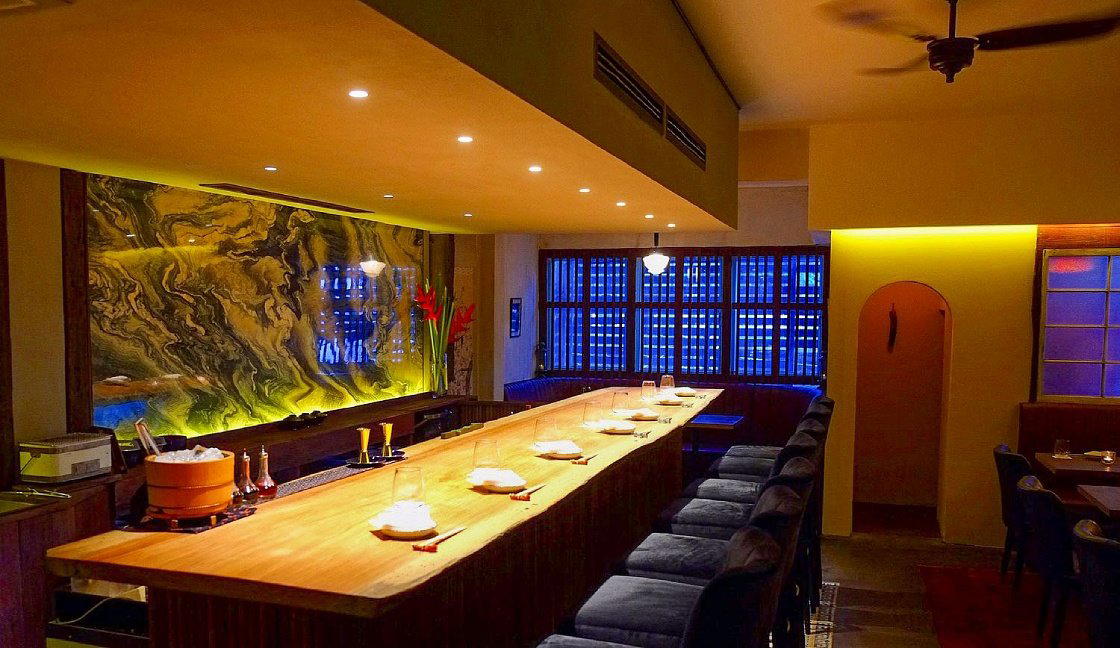
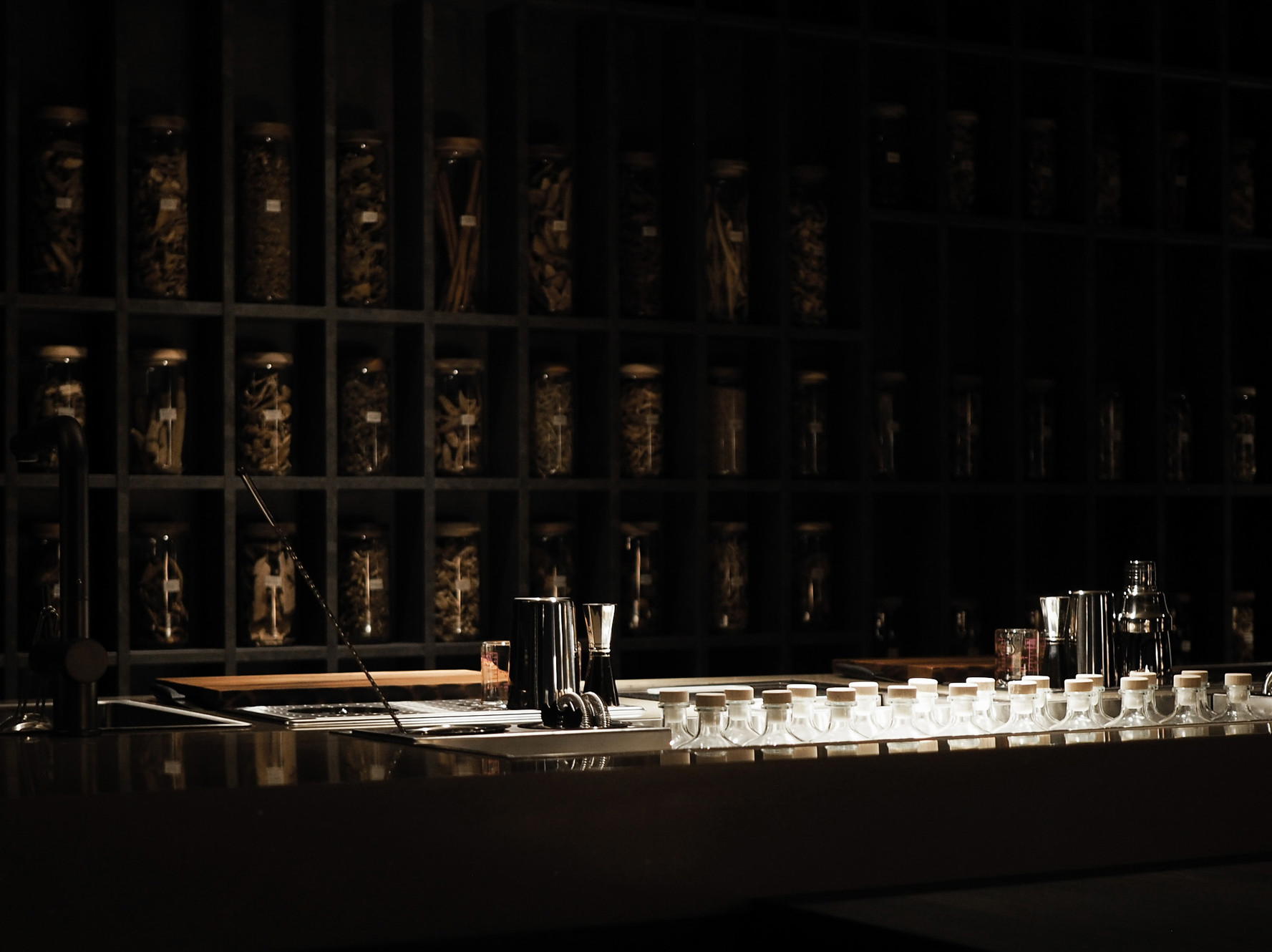
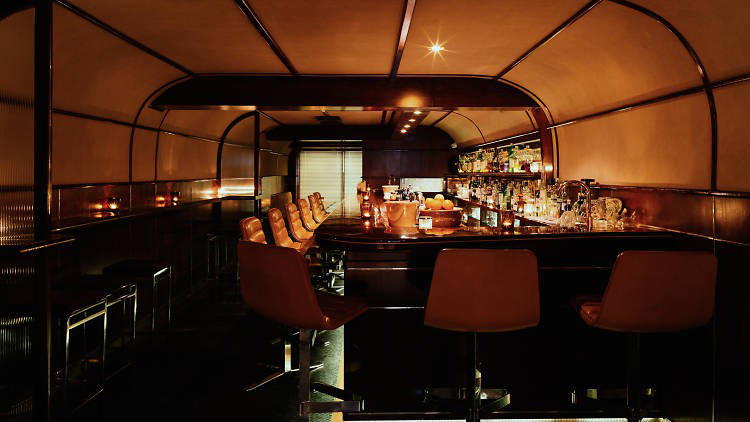
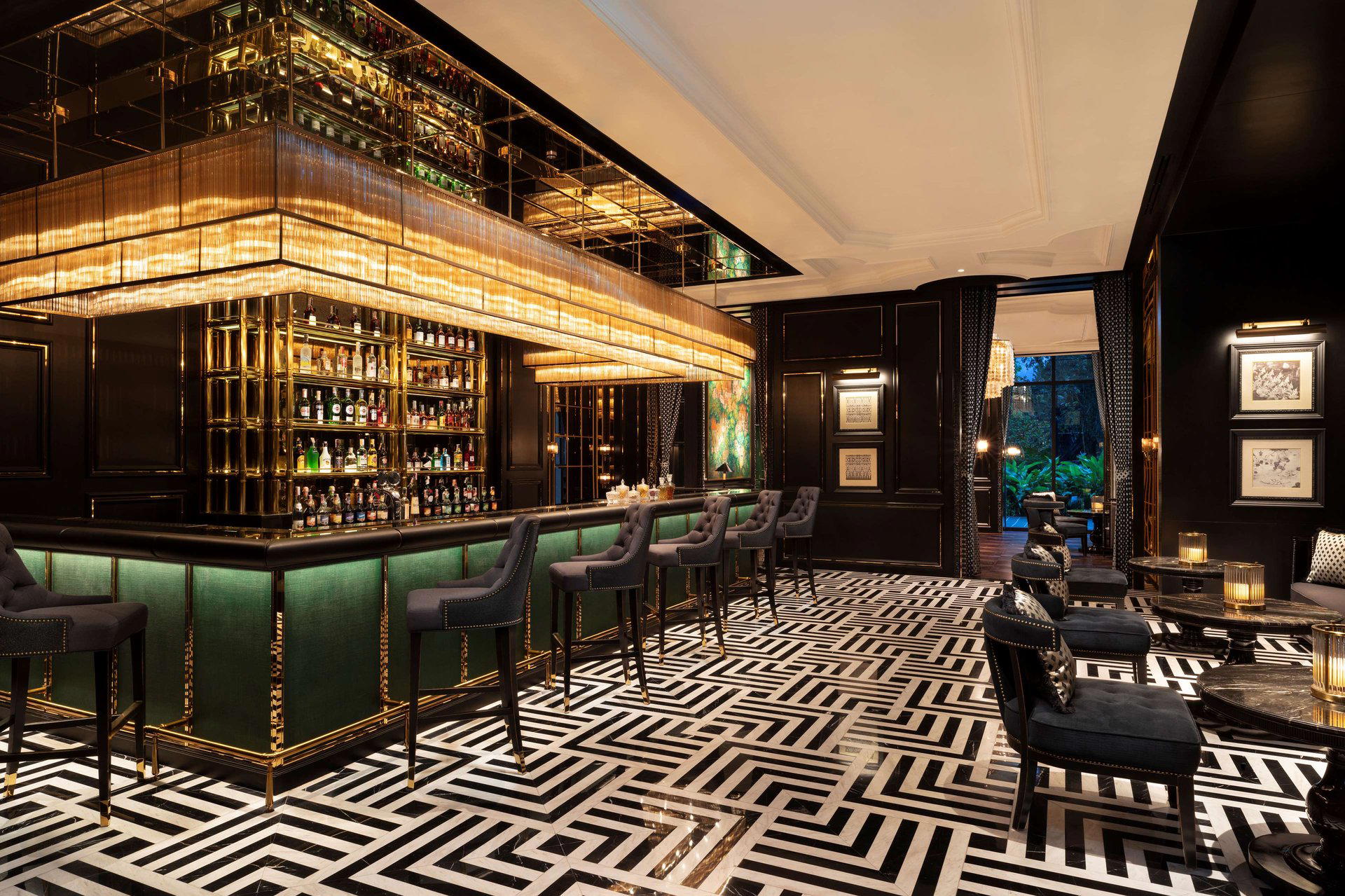
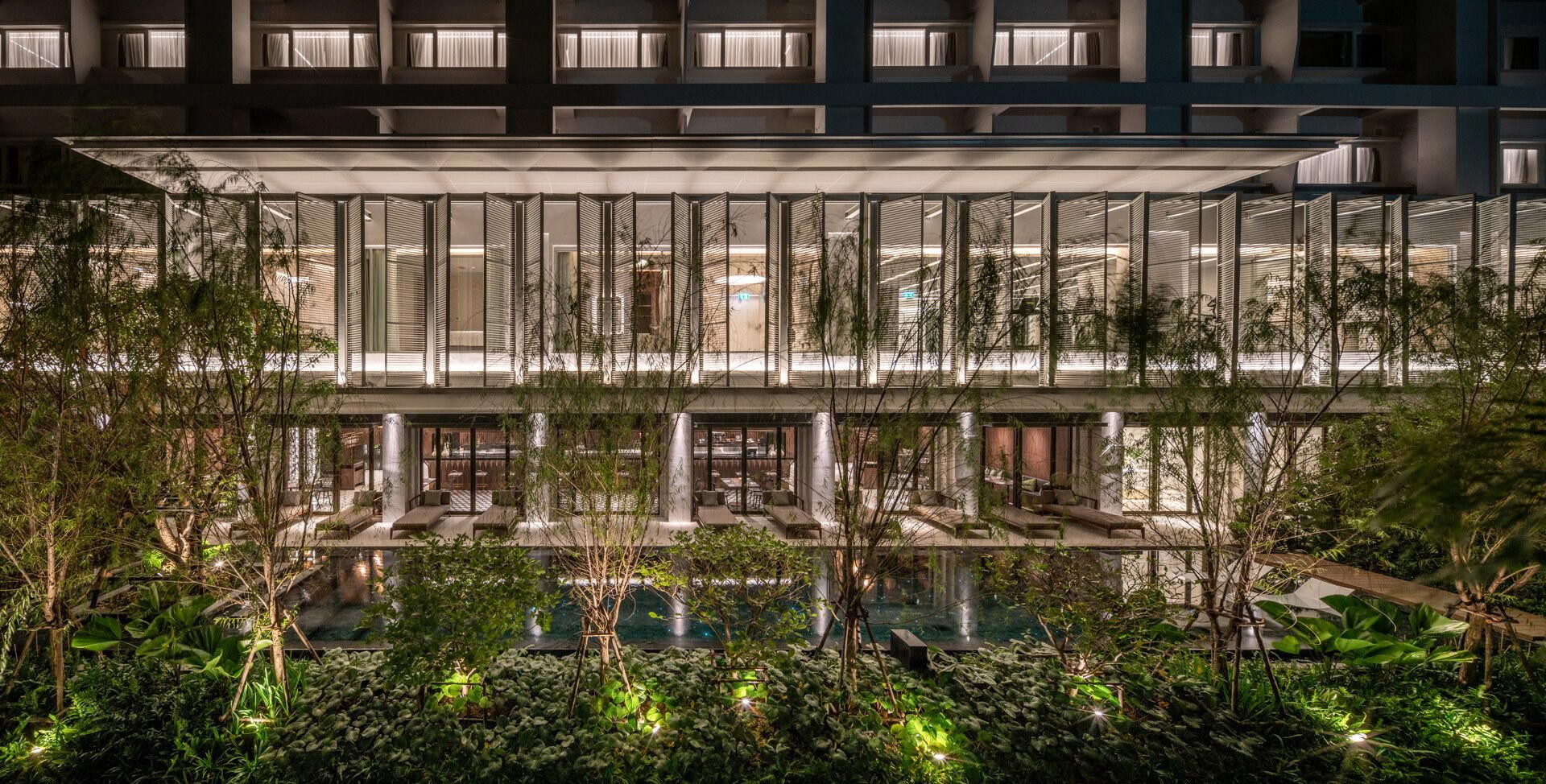
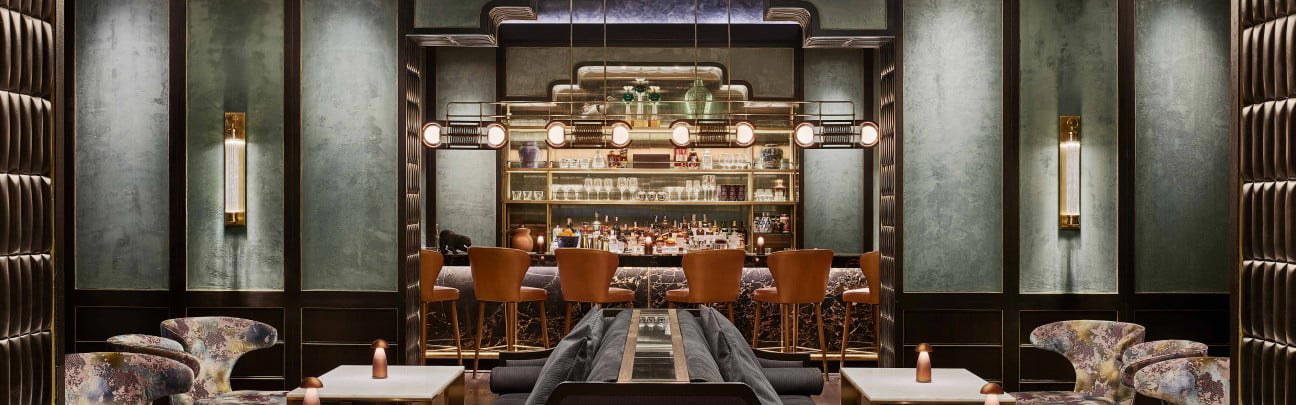
The room at Jhol arrives with what the venue describes as vintage refinement meeting contemporary elegance, which, in practical terms, means a space that doesn't read as either a traditional Indian dining room or a stripped-back modernist box. That middle position is deliberate. It gives the cooking room to carry the identity rather than leaning on decor signalling to do the regional work.
The cocktail program carries equal editorial intent. Indian and Thai-influenced drinks appear alongside the food menu, which is a meaningful choice in a city where cocktail programs at serious restaurants often default to either a European fine-dining template or a Thai-tropical formula. The dual influence reflects Bangkok's position as a point of encounter between those two culinary traditions, and it signals that the drinks list is designed to sit beside coastal Indian food rather than merely accompany it.
Where Jhol Sits in Bangkok's Indian Scene
Bangkok's Indian restaurant offering has deepened considerably in recent years. Haoma works a sustainability-led modern Indian model with Michelin recognition. Gaa, holding two Michelin stars, operates in the modern Indian fine-dining tier at ฿฿฿฿ pricing. INDDEE, Ms. Maria & Mr. Singh, Indus, and Punjab Grill each represent different points on the spectrum from casual to formal, north Indian to broader subcontinental. Jhol's position is defined by its coastal southern specificity and its ฿฿฿ pricing, which places it above the mid-market but below the ฿฿฿฿ fine-dining tier where Gaa operates.
The Michelin Plate in 2024 and again in 2025 is the relevant trust signal here. A Michelin Plate denotes quality cooking that inspires inspectors to return, it is not a star, but it is a formal Michelin recommendation and places Jhol within the recognised tier of Bangkok's serious dining options. In a city where Michelin has documented the dining scene with unusual depth (three-star restaurants like Sorn, two-star properties including Gaa and Baan Tepa), appearing on the Michelin list at any level carries weight. Jhol has held that recognition across two consecutive guide cycles.
For context on what the broader Bangkok dining scene looks like beyond Indian cooking, our full Bangkok restaurants guide maps the city across cuisines and price points. Those planning a longer stay can also consult our Bangkok hotels guide, our Bangkok bars guide, and our Bangkok experiences guide. Elsewhere in Thailand, the regional dining conversation extends to venues like PRU in Phuket, AKKEE in Pak Kret, Aeeen in Chiang Mai, Agave in Ubon Ratchathani, and Angeum in Phra Nakhon Si Ayutthaya. For those whose itinerary extends to Koh Samui, The Spa in Lamai Beach is also worth noting. A Bangkok wineries guide is available for those interested in the city's wine scene.
The Editorial Case
What distinguishes Jhol within Bangkok's Indian tier is the decision to refuse generalism. The coastal southern Indian framework is not a half-measure, it requires sourcing, technique, and menu logic that a pan-Indian format doesn't demand. Dishes like ghee-roast crab are coastal Tamil and Karnataka cooking with specific preparation traditions; executing them at a level that earns Michelin attention in Bangkok, a city that takes its own food seriously, is a meaningful result.
Know Before You Go
- Address: 7/2 Sukhumvit Soi 18, Khlong Toei, Bangkok 10110
- Price range: ฿฿฿ (mid-upper; below the ฿฿฿฿ fine-dining tier)
- Awards: Michelin Plate 2024 and 2025
- Dietary options: Vegetarian available on request
- Menu format: À la carte and tasting menu
- Getting there: Sukhumvit Soi 18 is a short walk from Asok BTS station or Sukhumvit MRT station
Frequently asked questions
What dish is Jhol famous for?
Jhol's ghee-roast crab has drawn the most consistent editorial attention as a signature dish, sitting within a menu framework built around India's southern coastline rather than the pan-Indian staples found at most competitors. The menu is structured as an à la carte and tasting format, with coastal-style curries and reinterpreted street food alongside it. Jhol has held the Michelin Plate in both 2024 and 2025, which aligns with its positioning as one of Bangkok's more focused Indian kitchens.
Is Jhol more mid-range or high-end?
Pricing at Jhol is listed as ฿฿฿.
Where exactly is Jhol?
Jhol is located at 7 2 Sukhumvit Soi 18, Khwaeng Khlong Toei, Khlong Toei, Bangkok 10110, Thailand, Bangkok.
In Context: Similar Options
| Venue | Cuisine | Price | Awards | Notes |
|---|---|---|---|---|
| JholThis venue (the venue you are viewing) | Modern Coastal Indian | Not listed | Michelin Plate · Star Wine List | Not listed |
| Sorn | Fine Southern Thai | $200–300 | 3 Michelin Stars · World's 50 Best #12 | Southern Thai, ฿฿฿฿ |
| Côte by Mauro Colagreco | Riviera Mediterranean Fine Dining | $200–300 | 2 Michelin Stars · World's 50 Best #91 | Mediterranean, Modern Cuisine, ฿฿฿฿ |
| Baan Tepa | Creative Thai Fine Dining | $150–200 | 2 Michelin Stars · World's 50 Best #53 | Thai contemporary, ฿฿฿฿ |
| Gaa | Modern Indian Fine Dining with Thai Influences | $150–200 | 2 Michelin Stars · World's 50 Best #95 | Modern Indian, Indian, ฿฿฿฿ |
| Sühring | Modern German Fine Dining | $200–300 | 3 Michelin Stars · World's 50 Best #18 | German, ฿฿฿฿ |
Recognition history
Dated appearances from independent guides and award organizations, with the underlying list record or original source where available.
Michelin Plate
Michelin
Star Wine List
Star Wine List
Full recognition history (4 entries)
Michelin Plate
Michelin
Michelin Plate
Michelin
Continue exploring
More in Bangkok
Restaurants in Bangkok
All restaurants in Bangkok →
Bars in Bangkok
All bars in Bangkok →
Details
- Modern
- Elegant
- Trendy
- Lively
- Cozy
- Date Night
- Group Dining
- Special Occasion
- Open Kitchen
- Craft Cocktails
- Local Sourcing
- A La Carte
- Tasting Menu
- Small Plates
- Craft Cocktails
- Vegetarian Friendly
- Vegan Options
Current opening hours
- Monday
- 12–2:30 PM, 5:30–9:30 PM
- Tuesday
- 12–2:30 PM, 5:30–9:30 PM
- Wednesday
- 12–2:30 PM, 5:30–9:30 PM
- Thursday
- 12–2:30 PM, 5:30–9:30 PM
- Friday
- 12–2:30 PM, 5:30–9:30 PM
- Saturday
- 12–2:30 PM, 5:30–9:30 PM
- Sunday
- 12–2:30 PM, 5:30–9:30 PM
Hours can change for holidays and private events. Hours as of .
Relaxed yet refined atmosphere with soft lighting, modern elegance blended with subtle Indian heritage, semi-open kitchen adding energy, and a mix of lively during busy times and intimate when quieter.