Jerusalem Kebab occupies a quiet address at Gåsgränd 2 in Stockholm's Old Town, sitting at a distance from the city's high-profile tasting-menu circuit while drawing from a tradition of Middle Eastern grill cooking that has found durable footing across Scandinavian capitals. The kitchen operates in a category where team coordination between grill, counter, and service defines the pace and consistency of the plate.
Pearl is the En Primeur Club membership app — saves, bookings, and concierge access live there. Same editors, same standards.
- Address
- Gåsgränd 2, 111 27 Stockholm, Sweden
- Phone
- +46 8 20 40 35
- Website
- facebook.com
- Directions
- Get directions
 Saves & bookings on Pearl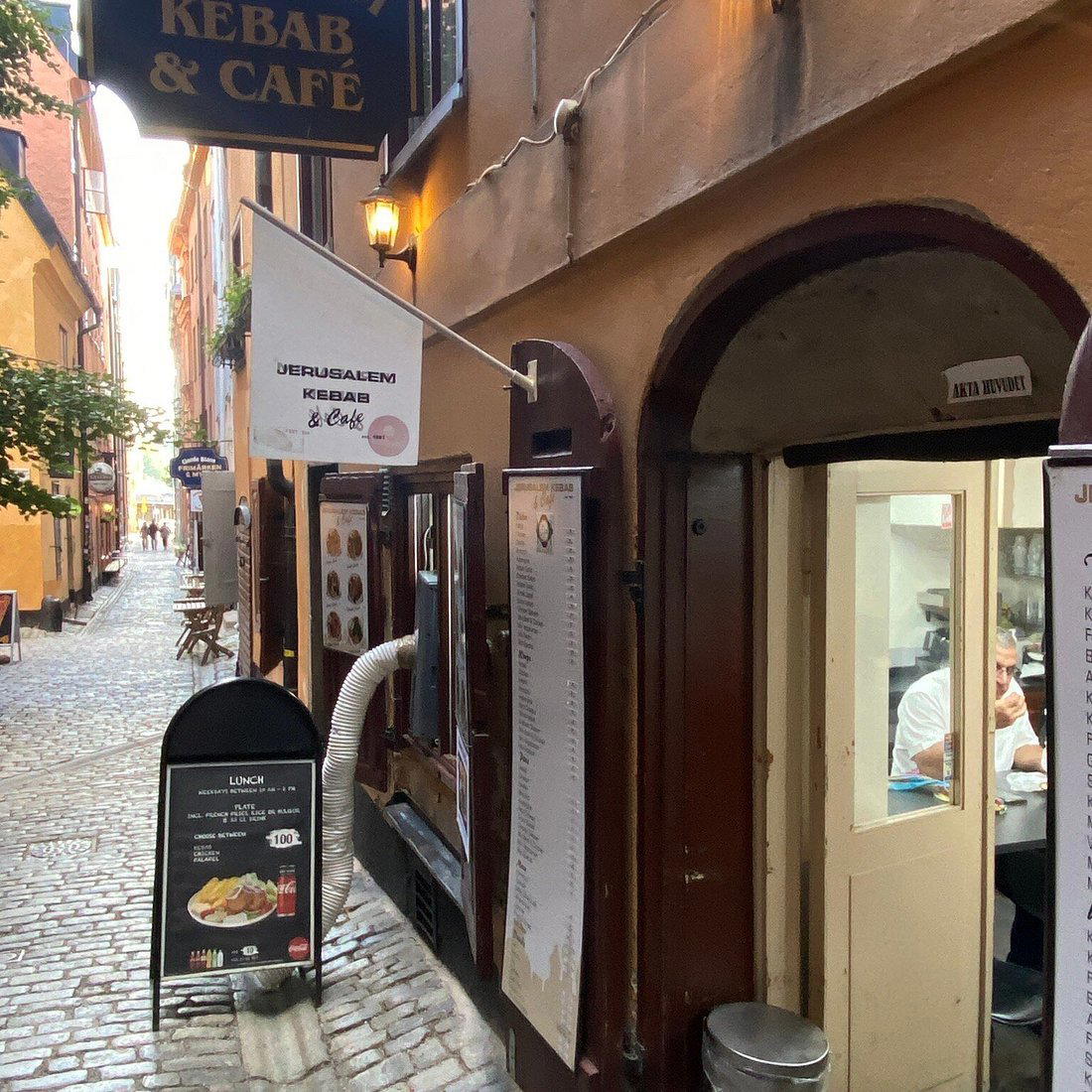
Where Old Town Stockholm Meets the Middle Eastern Grill Tradition
Stockholm's Gamla Stan has long operated as a neighbourhood of two distinct registers: the tourist-facing current that flows along Västerlånggatan, and the quieter residential streets where address numbers tell you more than any review. Gåsgränd, a narrow lane in the heart of the Old Town, belongs firmly to the latter. It is the kind of street where the signage is small, the foot traffic is local, and the reasons to seek a place out tend to travel by word of mouth rather than algorithm. Jerusalem Kebab sits at number two on that lane, and its position in the city's dining conversation reflects the character of its postcode: not amplified, but present in the way that consistent neighbourhood places accumulate a following over time.
The broader context matters here. Stockholm's dining scene is structurally divided between a well-documented fine dining tier, anchored by institutions like Frantzén and Operakällaren, and a wider informal tier where the Middle Eastern grill format has carved out a consistent presence over the past two decades. Kebab and shawarma houses in Scandinavian capitals have moved, in many cases, well beyond the late-night fast-food category that once defined them in the public imagination. The better operators in this segment are defined by sourcing discipline, grill technique, and the kind of front-of-house steadiness that keeps a small room running without friction. Jerusalem Kebab operates within that pattern.
The Register of the Room
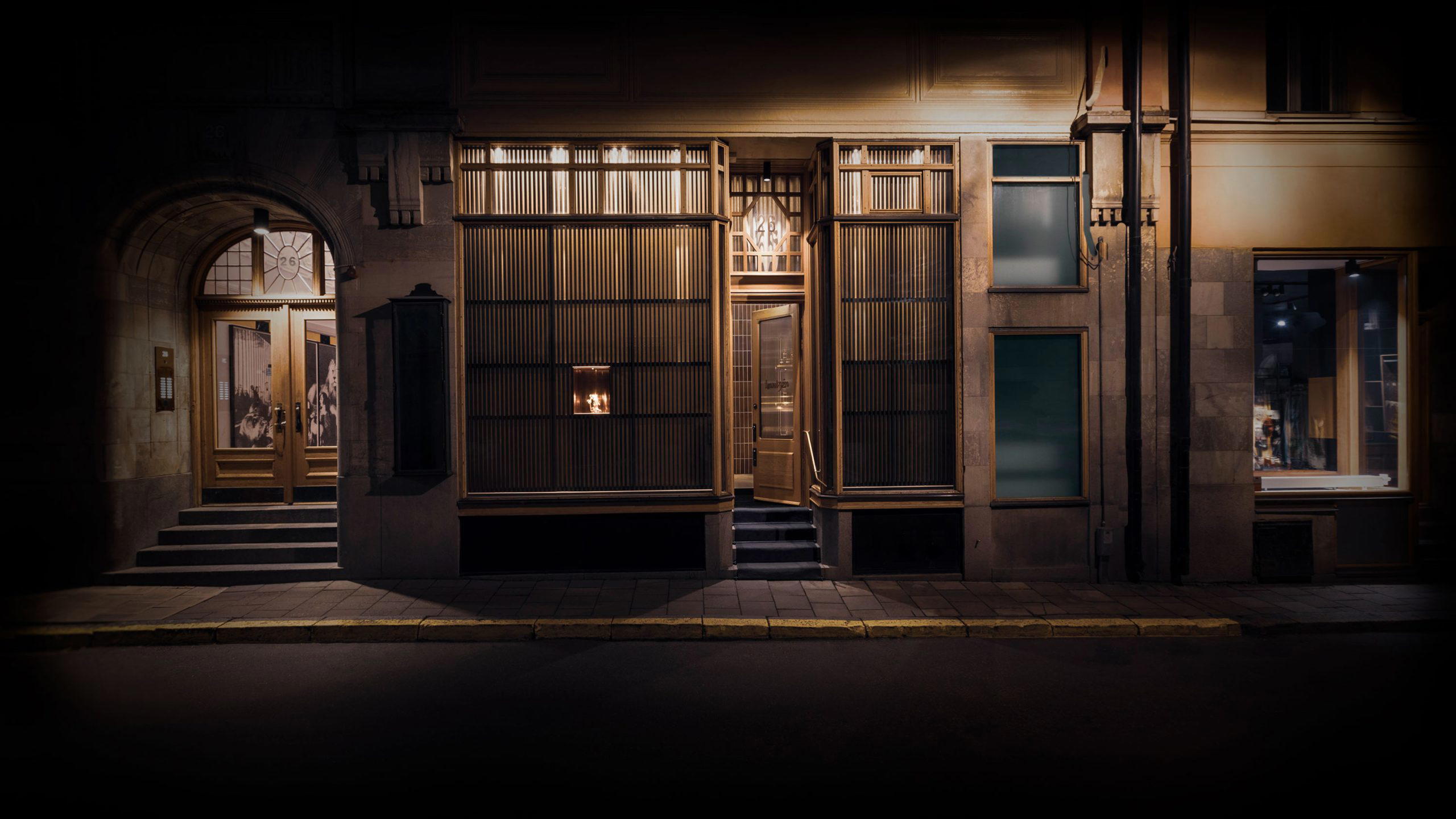
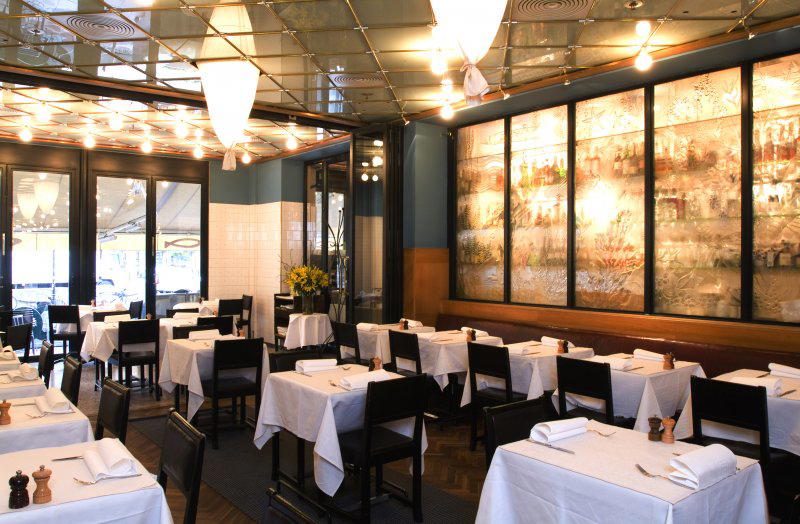
Approaching from the cobblestones of Gamla Stan, the physical environment signals restraint before anything else. Old Town Stockholm is a district where the buildings do most of the talking: medieval street plans, narrow facades, the ambient echo of stone underfoot. A grill kitchen in this setting functions as a counterpoint to the architectural formality around it, with the warmth and smoke of live-fire cooking creating a domestic register that the neighbourhood's more polished venues rarely attempt. The Middle Eastern grill tradition relies on exactly this quality, the cooking process is partly the atmosphere, the smell of charred meat and spiced fat carrying its own form of welcome.
That tradition is worth placing in wider context. The kebab format that spread through European cities from the 1970s onward drew on Anatolian, Levantine, and Persian grill cultures, each with distinct techniques and spice frameworks. The Jerusalem-style reference in the name points toward a Levantine orientation: the seasoning vocabulary of cumin, allspice, and sumac, the preference for lamb and chicken over beef as primary proteins, and a cooking style that prizes the crust and char of direct heat over the slower indirect methods associated with other regional traditions. In cities like Stockholm, where the dominant grill tradition runs toward open-fire Scandinavian cooking (exemplified at the higher end by venues like those in our full Stockholm restaurants guide), a kitchen grounding itself in Levantine grill technique occupies a distinct and specific position.
Team Dynamics in a Small Kitchen Format
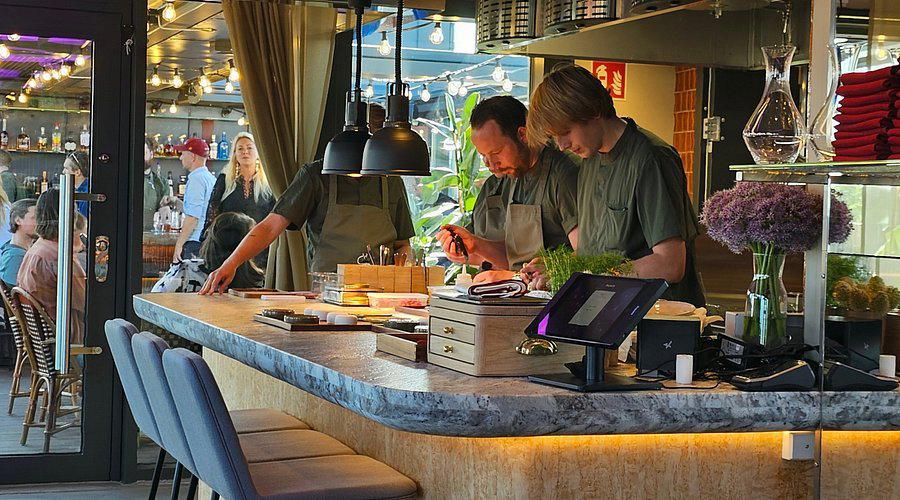
The Middle Eastern grill format is, operationally, a team exercise at close quarters. The coordination between whoever manages the grill, whoever handles prep and sauces, and whoever runs the service side of a small room determines whether the food arrives at pace and temperature or collapses under the weight of a busy service. This is not incidental, in a kitchen where the cooking happens quickly and at high heat, the margin for miscoordination is narrow. The venues in this category that build lasting reputations tend to be the ones where those roles are stable and practiced, where the person reading the grill and the person managing the counter have developed a rhythm that holds under pressure.
Stockholm's broader restaurant culture has increasingly recognised this dynamic across categories. The city's most celebrated addresses, from AIRA to Aloë to Adam / Albin, all operate with clearly articulated front-of-house and kitchen team structures that are treated as central to the dining proposition. The principle scales down. In a neighbourhood grill kitchen, the equivalent is the coordination between fire and floor, and the consistency of that coordination is what separates a place with a reliable following from one that fluctuates with staffing.
The Middle Eastern Grill in Scandinavia: A Broader Pattern
Across Sweden, the geography of interesting eating has shifted considerably over the past decade. The concentration of Michelin attention in Stockholm and Malmö has tended to draw editorial focus toward those cities, while a parallel story has been developing in smaller cities and rural settings. Places like Vollmers in Malmö, VYN in Simrishamn, and ÄNG in Tvååker represent one strand of that shift, focused on Nordic produce and tasting-menu formats. But the informal tier has its own geography, and the Middle Eastern grill tradition is part of it, present in cities and neighbourhoods where the fine dining vocabulary is not the relevant frame.
In Stockholm specifically, the informal grill sector has benefited from a population with established familiarity with Levantine and Middle Eastern food, and from a wider cultural appetite for casual eating that delivers genuine cooking craft rather than volume throughput. The distinction between a kebab shop operating on speed and margin and one operating on technique and consistency is visible in the food, and Stockholm diners have become reasonably effective at locating the latter. Jerusalem Kebab's address in Gamla Stan, away from the high-traffic corridors where volume operations tend to cluster, suggests an orientation toward the local and the repeat customer rather than the tourist sweep.
Placing Jerusalem Kebab in Its comparable set
The relevant peer comparison for the restaurant is not the tasting-menu tier represented by venues like Hoze in Gothenburg or Signum in Mölnlycke, nor the destination rural format of Knystaforsen in Rydöbruk. It sits in the neighbourhood grill category, where the competitive set is defined by consistency, technique, and the ability to build a local following in a city where eating options are dense and attention moves quickly. In that frame, the address on Gåsgränd is itself a signal: this is a place that has positioned itself for the resident and the returning visitor, not the first-timer navigating a city on a single weekend.
For readers building a broader Sweden itinerary that moves through different price points and formats, the range from a Gamla Stan grill stop to a full progression through places like PM & Vänner in Växjö, Bistro Jarlen in Halmstad, or Claesgatan 8 in Malmo maps a country whose eating culture extends well beyond its Michelin-starred headline acts. The restaurant occupies the informal end of that range, in a tradition with its own technical demands and its own standards of quality.
Planning Your Visit
The restaurant is located at Gåsgränd 2, 111 27 Stockholm, in the Gamla Stan district. The Old Town is accessible on foot from both Gamla Stan T-bana station and Slussen, making it a natural stop when covering that part of the city. Walk-in visits suit the casual format, and checking availability in advance is sensible for groups. Comparing the pricing and format against Stockholm's wider informal dining tier, alongside international reference points like Le Bernardin in New York City or Lazy Bear in San Francisco, illustrates how different a neighbourhood grill proposition is in scale and intent from destination dining, while making the case that craft and consistency matter equally across those formats.
Price and Positioning
Comparable venues nearby, for context on price, style, and recognition.
| Venue | Cuisine | Price | Notes |
|---|---|---|---|
| Jerusalem KebabThis venue — the venue you are viewing | Not listed | $ | Not listed |
| Falafel Bar | Riddarholmen, Falafel Bar | $$ | Not listed |
| 800 Grader | Vasastan, Authentic Neapolitan Pizza | $$ | Not listed |
| Restaurang Kvarnen | Not listed | $$ | Södermalm, Traditional Swedish Husmanskost |
| Ai Ramen Klara | Norrmalm, Japanese Ramen | $$ | Not listed |
| Nalle & Kroppkakan | Not listed | $$ | Aspudden, Traditional Swedish Husmanskost - Kroppkaka Specialists |
Continue exploring
More in Stockholm
Restaurants in Stockholm
Browse all →
Bars in Stockholm
Browse all →

At a Glance
- Cozy
- Casual Hangout
- Late Night
- Terrace
- Street Scene
Current opening hours
- Monday
- 10 AM–9 PM
- Tuesday
- 10 AM–9 PM
- Wednesday
- 10 AM–9 PM
- Thursday
- 10 AM–9 PM
- Friday
- 10 AM–9 PM
- Saturday
- 10 AM–9 PM
- Sunday
- 10 AM–9 PM
Hours can change for holidays and private events. Last verified .
Casual and cute with terrace seating in a charming location.