
Jaén has a growing case for serious dining beyond its olive-oil heritage, and Izakaya Ajhito on Calle Atarazanas makes that case through a Japanese izakaya format planted firmly in Andalusian soil. The combination of a convivial, share-everything structure with locally sourced ingredients marks it as a distinct proposition in a city where modern Japanese concepts remain rare.
Pearl is the En Primeur Club membership app — saves, bookings, and concierge access live there. Same editors, same standards.
- Address
- C. Atarazanas, 1, 23004 Jaén, Spain
- Phone
- +34681943828
- Website
- ajhito.com
- Directions
- Get directions
 Saves & bookings on Pearl
Japanese Izakaya Format in an Unlikely Andalusian Setting
Calle Atarazanas cuts through the older commercial fabric of Jaén, a city most travellers associate with olive groves and Renaissance architecture rather than Japanese dining culture. That context matters when reading Izakaya Ajhito. The izakaya format, Japan's closest equivalent to a neighbourhood tavern, is built around shared plates, informal pacing, and a menu that moves between snacks and more substantial dishes without a fixed tasting structure. Transplanted into inland Andalusia, that format creates an interesting editorial question: what does an izakaya look like when its pantry is Jaén province rather than the Tsukiji supply chain?
Across Spain, cities like Madrid and San Sebastián host a generation of restaurants rethinking Japanese technique through Spanish ingredients. DiverXO in Madrid and Arzak in San Sebastián operate at an entirely different scale and price tier, but the broader pattern of East-meets-Iberian-produce is well established in those cities. Izakaya Ajhito operates at the other end of the formality spectrum, where the same instinct expresses itself through a convivial, lower-threshold format. In Jaén specifically, this positions the venue alongside KA-ORŪ SUSHIBAR & COCKTAIL as one of the few addresses in the city working within a Japanese culinary register.
What Ingredient Sourcing Means in Jaén's Context
Jaén province produces roughly twenty percent of the world's olive oil, a statistic that frames every serious discussion of the region's food culture. The province's olive varieties, Picual dominant among them, carry a herbaceous intensity that differs substantially from the milder profiles found in Seville or Córdoba. Any kitchen operating in this territory with attention to provenance has access to particularly characterful cooking fats in European cuisine, alongside mountain-raised pork, game, and seasonal vegetables from the Sierra Morena and Sierra de Cazorla.
The izakaya format is well suited to ingredient-forward cooking precisely because its structure is flexible. Unlike a formal tasting menu, where the sequence is fixed and the sourcing narrative is embedded in printed cards, an izakaya menu shifts by season and supply. Dishes come when they are ready. That operational rhythm fits a kitchen drawing on market produce and short supply chains. Compared to Jaén's more conventional modern-Spanish addresses, including Casa Antonio and Bagá, which work within a recognisably Andalusian culinary frame, Izakaya Ajhito applies a different structural logic to similar raw materials.
Jaén's Dining Scene and Where This Fits
Jaén is not a city that appears often in Spain's mainstream restaurant conversation, which tends to concentrate on El Celler de Can Roca in Girona, Mugaritz in Errenteria, and the Basque and Catalan circuits. Yet the city has been building a quiet case for itself. Bagá, Pedro Sánchez's progressive modern restaurant, holds a Michelin star and operates at a level that would be credible in any Spanish city. Malak, Radis, and Bomborombillos represent a younger tier of modern-cuisine addresses filling in the mid-range. The restaurant contributes something different to that picture: a format with a different cultural grammar, one that prioritises informality, sharing, and a menu structure defined by what is available rather than what a fixed concept demands.
For readers accustomed to Japanese dining at the technical end, from omakase counters to the kaiseki-adjacent formats found at venues like Atomix in New York City, an izakaya in provincial Andalusia reads as a specific and deliberate choice of format over spectacle. The izakaya's social contract is different: it asks less of the guest in terms of ritual knowledge and more in terms of openness to sharing and spontaneous ordering. That suits Jaén, a city where dining remains a genuinely communal activity rather than a performance.
The Address and Getting There
The restaurant is located at Calle Atarazanas 1, in the central district of Jaén, a short walk from the city's cathedral quarter. Jaén is connected by road to Granada, roughly an hour to the southeast, and to Córdoba, roughly ninety minutes to the west. The Calle Atarazanas address places the restaurant within the denser commercial centre of the city, accessible on foot from most central accommodation.
How It Reads Against the Broader Izakaya Tradition
The izakaya emerged in Japan as a format defined by accessibility: affordable plates, alcoholic drinks, long evenings. Its modern international versions range from faithful reconstructions to loose interpretations that keep the sharing structure while localising everything else. In Spain, the format has found traction in larger cities, where Japanese communities and a cosmopolitan dining public support the concept. In a smaller city like Jaén, the same format operates in a different social context, one where the novelty of the format is still part of its appeal, and where the sourcing of local ingredients into a Japanese-inflected structure carries more legibility as a deliberate editorial choice by the kitchen.
For travellers building a multi-day itinerary around Andalusia's less-visited cities, the restaurant represents a useful break from the regional format. After Casa Antonio or a meal at one of Jaén's more traditional addresses, an evening of shared small plates in a different register is a reasonable pivot.
Fast Comparison
Comparable venues nearby, for context on price, style, and recognition.
| Venue | Cuisine | Price | Awards | Notes |
|---|---|---|---|---|
| IZAKAYA AJHITOThis venue — the venue you are viewing | Jaénponesa Izakaya | $$$ | Not listed | Not listed |
| Casa Pepe | Traditional Spanish Homemade | $$ | Not listed | Jaén |
| Restaurante Capilla 21 | Modern Mediterranean with Jaén Regional Influences | $$$ | Not listed | Jaén city center |
| KA-ORŪ SUSHIBAR & COCKTAIL | Authentic Japanese Sushi with Jaén Influences | $$$ | Michelin Plate | centro histórico |
| MangasVerdes | Modern Mediterranean Fusion | $$ | Michelin Plate | Centro |
| Bomborombillos | Modern Andalusian Tapas | $$$ | Michelin Plate | Centro |
Recognition history
Dated appearances from independent guides and award organizations, with the underlying list record or original source where available.
Macarfi 6.9 Food Rating
Macarfi
Continue exploring
More in Jaén
Restaurants in Jaén
Browse all →
At a Glance
- Cozy
- Modern
- Trendy
- Date Night
- Special Occasion
- Open Kitchen
- Sake Program
- Local Sourcing
Current opening hours
- Monday
- Closed
- Tuesday
- Closed
- Wednesday
- 1:30–3 PM, 8:30–10 PM
- Thursday
- 1:30–3 PM, 8:30–10 PM
- Friday
- 1:30–3:30 PM, 8:30–10:30 PM
- Saturday
- 1:30–3:30 PM, 8:30–10:30 PM
- Sunday
- 1:30–3 PM
Hours can change for holidays and private events. Last verified .
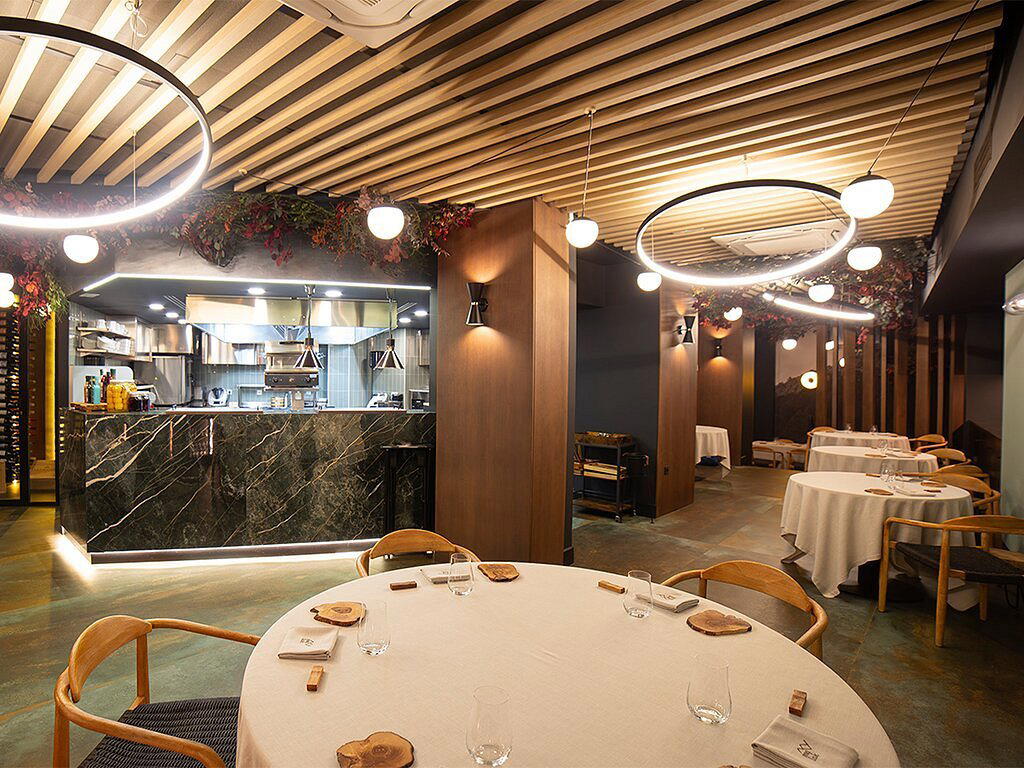
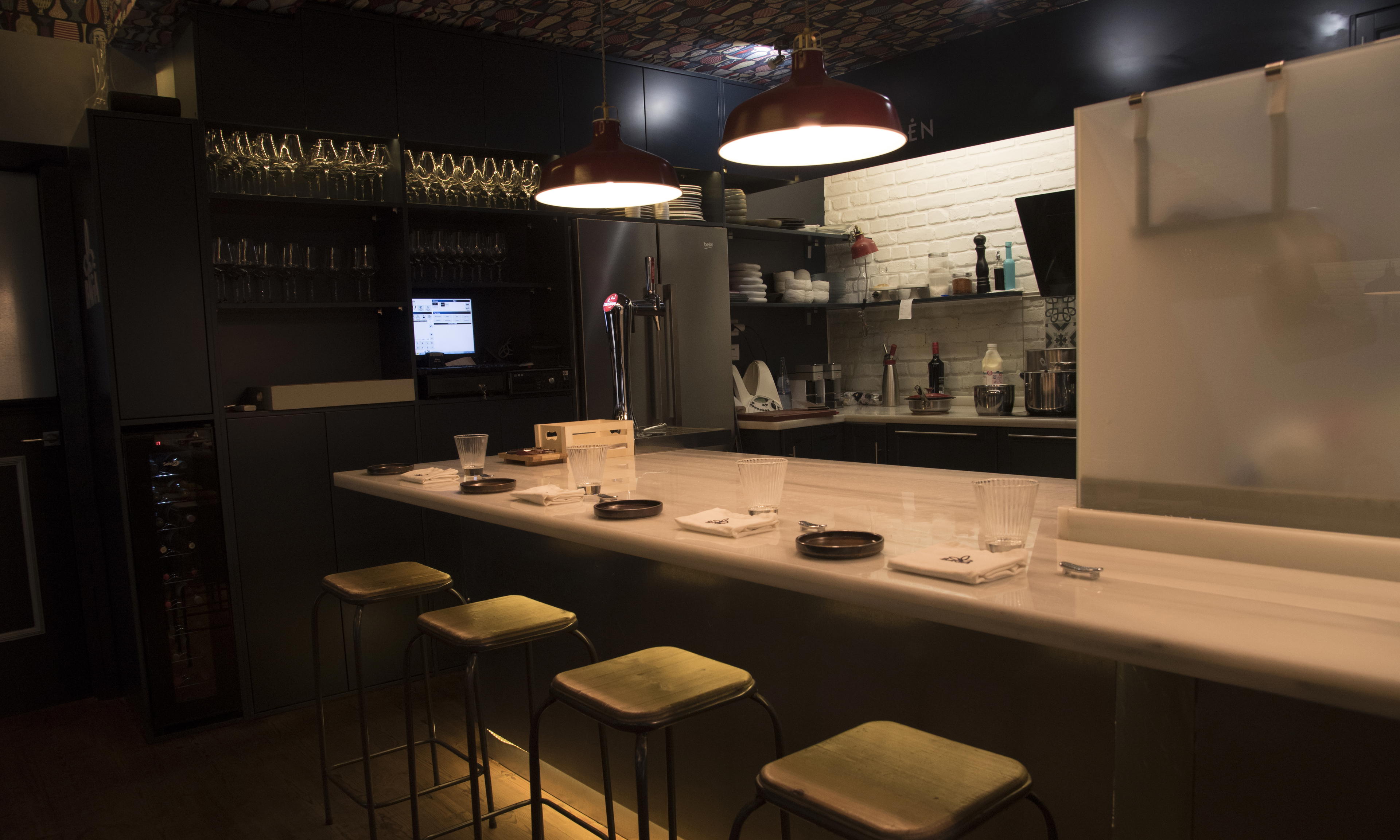
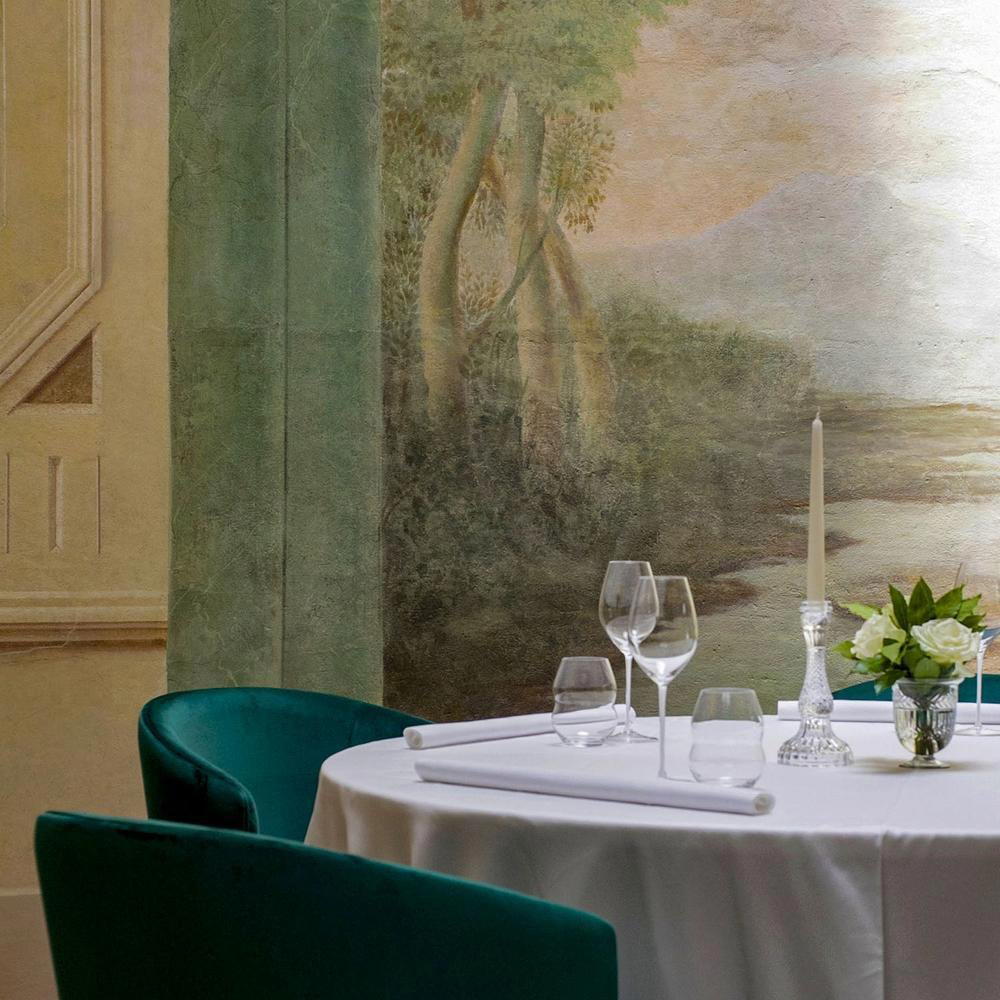
Cozy interior with open kitchen fostering casual conversation and immersion in the culinary process.