
Ishinoue belongs to Osaka’s quieter bread culture rather than its flashier dining circuits: a Sakai bakery and sandwich shop recognized in Tabelog’s Bread WEST 100 selections for 2020 and 2022. The point here is not ceremony, but the low-cost, high-frequency bakery format that Japanese cities do unusually well, where repeat custom matters as much as awards.
Pearl is the En Primeur Club membership app — saves, bookings, and concierge access live there. Same editors, same standards.
- Address
- 3 Chome-10 Mozuumemachi, Kita Ward, Sakai, Osaka 591-8032, Japan
- Phone
- +81 72-254-3608
- Website
- tabelog.com
 Saves & bookings on Pearl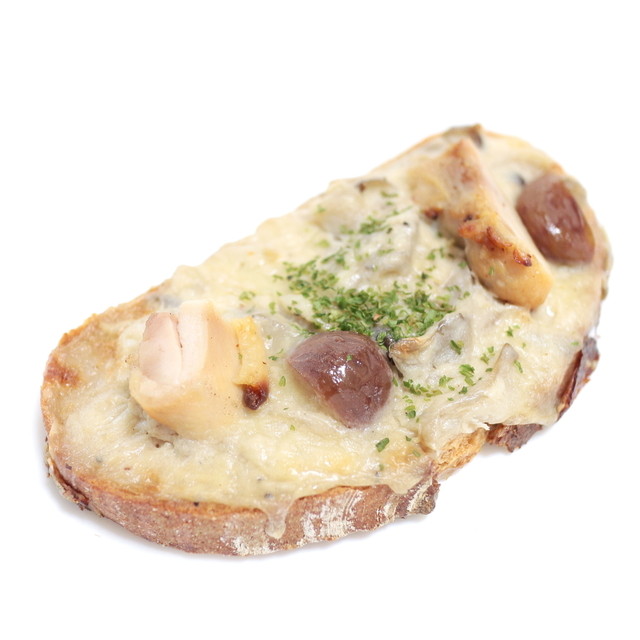
In Sakai, the bakery experience sits closer to daily rhythm than destination dining: a compact room, takeaway service, the visual pull of bread and sandwiches rather than a plated sequence, and a pace built around choosing, paying, and carrying food back into the day. Ishinoue fits that grammar. Its recognition in Tabelog’s Bread WEST 100 in 2020 and 2022 places it inside a category Japan takes seriously: small bakeries judged not by dining-room theatre, but by consistency, local demand, and bread disciplined enough to survive counter-level scrutiny.
Sakai's bread culture runs on repeat visits, not spectacle
Osaka food writing often defaults to downtown energy: takoyaki queues, kushikatsu counters, department-store basements, late-night drinking districts. Sakai changes the tempo. South of central Osaka, neighbourhood food is less about one dramatic meal than routines folded into commutes, school runs, and weekend errands. Bread shops suit that pattern because they ask for little ceremony and reveal much about standards. A bakery with sandwiches is judged quickly: texture, timing, turnover, and whether shelves make sense for solo buyers and families.
That is why Tabelog’s Bread WEST 100 recognition matters. It is not a luxury-award signal in the Michelin sense, and should not be read that way. It is more useful as a filter for bakeries that have earned attention in western Japan’s dense field of pastry, shokupan, filled breads, and sandwich counters. Ishinoue’s 2020 and 2022 selections put it in a narrower conversation than a casual price point suggests. In Osaka, value and seriousness often share space; the city has little patience for expensive food that cannot justify itself, and even less for modest food that coasts.
Within the supplied Osaka comparison group, price tier clarifies the role. Gelateria Rikarika sits in a similar low-spend bracket, Aji no Mise Ichiban and Dotou Zeniya occupy a slightly higher everyday range, while Kuku Hanare belongs to a formal dining tier. Ishinoue is not competing with a long dinner or chef-led tasting counter. It competes with quick decisions before lunch, after school, or on the way home, where convenience works only if quality brings people back.
Bread and sandwiches as Osaka's quieter craft category
Japan’s bakery culture is unusually hybrid. French technique, local sandwich habits, convenience-store precision, and regional preferences sit together without much anxiety. In Kansai, bread can be breakfast, snack, gift, office lunch, or family provisioning. The category rewards shops that understand range without cluttering the counter. A bread-and-sandwich format has to read instantly: what is for now, what travels, what suits children, what can anchor a light meal.
Ishinoue is listed in the bread and sandwich category, with takeaway service and a non-smoking setting. Those details sound ordinary until placed against Japanese bakery culture. The experience is brief, but not careless. A successful neighbourhood bakery has to manage visual order, speed, and freshness signals in a small footprint, because customers often decide in seconds. There is no sommelier, tasting-menu explanation, or long arc of service to recover from a weak first impression. The counter is the critique.
The family-friendly note is also telling. In premium editorial terms, it does not make the shop less serious. It points to quality that has to work across ages and occasions. Osaka’s dining scene is often described through intensity, but some of its more revealing habits are domestic and portable: steamed buns from 551 Horai (551蓬莱), casual slices at 99 Pizza Napoletana Gourmet, neighbourhood coffee and sweets at .cafe, and specialist baking at 52CHO-ME BAKERY. The common thread is not cuisine type, but the city’s talent for making quick-service formats serious eating.
How to read Ishinoue in a wider Osaka itinerary
For travellers, approach Ishinoue as part of Osaka’s broader food map, not as a replacement for a major dinner. Pairing a bakery stop with a day in Sakai makes more editorial sense than forcing it into a central-Osaka restaurant crawl. This address explains how residents eat between headline meals, and counters the city’s richer evening formats, from Italian kitchens such as a canto (Italian) to higher-spend Japanese dining elsewhere in the prefecture.
The practical stance is simple: treat the recognition as a quality signal, not a promise of luxury infrastructure. The absence of parking and the cash-only payment pattern common to small Japanese food shops shape the rhythm, as does takeaway service. This is food to fold into movement, not a room designed for lingering. Expectations matter. Readers looking for a polished evening should scan Our full Osaka restaurants guide; readers building a complete city plan can cross-reference Our full Osaka hotels guide, Our full Osaka bars guide, Our full Osaka wineries guide, and Our full Osaka experiences guide.
Japan’s casual specialists deserve the same analytical respect as formal counters because they reveal different pressures: price discipline, repeat traffic, and the ability to communicate quality without ceremony. That logic extends beyond Osaka, from -Grilled beef Sukiyaki- KAMAKURA TANUKIAN 鎌倉 たぬき庵 in Kamakura and. 鮪と炭火焼き うお炭 秋葉原店 in Tokyo to.know in Kumamoto, (Shoku) Vietnam in Kawasaki, [Curry Senmon Ten] Maruyama Kyoju. in Sapporo, and [ki:] in Kyoto. Even outside Japan, compact formats such as Jōdo Saké Bar in Los Angeles and Onigiri Time in Pasadena show how narrow concepts carry cultural weight when execution is tight.
Ishinoue’s appeal is not that it turns bread into fine dining. It is more interesting than that. It shows how a modest bakery in Sakai can enter a regional awards conversation while staying tied to everyday use. For Osaka, that balance is familiar: seriousness without ceremony, local loyalty before spectacle, and food that earns attention through repetition rather than performance.
Comparison Snapshot
Comparable venues at similar price and category levels.
| Venue | Cuisine | Price | Notes |
|---|---|---|---|
| IshinoueThis venue — the venue you are viewing | Artisanal bakery and sandwich shop | $ | Not listed |
| Gelateria Rikarika | Gelato & Ice Cream Cafe | $ | Mikunigaoka |
| trois 3 | Artisanal bakery & cafe | $ | Hirano |
| Mole & hosoi coffees | Japanese kissaten-style coffee shop | $ | Chūō |
| 52CHO-ME BAKERY | Japanese Bakery | $ | Chūō |
| La Fournee | Artisan bakery and cake shop | $ | Nishi |
Recognition history
Dated appearances from independent guides and award organizations, with the underlying list record or original source where available.
Tabelog 100 #54 · No. 54
Tabelog · Tabelog 100 - Bread - WEST - 2022
Continue exploring
More in Osaka
Restaurants in Osaka
Browse all →




Bars in Osaka
Browse all →


Hotels in Osaka
Browse all →



Wineries in Osaka
Browse all →
At a Glance
- Cozy
- Modern
- Solo
- Family
- Casual Hangout
- Standalone
Current opening hours
- Monday
- Closed
- Tuesday
- Closed
- Wednesday
- 11 AM–7 PM
- Thursday
- 11 AM–7 PM
- Friday
- 11 AM–7 PM
- Saturday
- 11 AM–7 PM
- Sunday
- 11 AM–7 PM
Hours can change for holidays and private events. Last verified .
A small, stylishly designed bakery with a modern yet cozy feel; guests line up for freshly baked items in a bright, clean space that functions primarily as a take‑away shop rather than a sit‑down restaurant.