Irazu

On Milwaukee Avenue in Bucktown, Irazu occupies a specific corner of Chicago's dining map: the kind of neighborhood spot where the physical space and the food speak the same unpretentious language. The restaurant draws a loyal local following and represents a strain of Chicago dining that operates well outside the tasting-menu circuit favored by spots like Alinea or Kasama.
Pearl is the En Primeur Club membership app — saves, bookings, and concierge access live there. Same editors, same standards.
- Address
- 1865 N Milwaukee Ave, Chicago, IL 60647
- Phone
- +17732525687
- Website
- irazuchicago.com
- Directions
- Get directions
 Saves & bookings on Pearl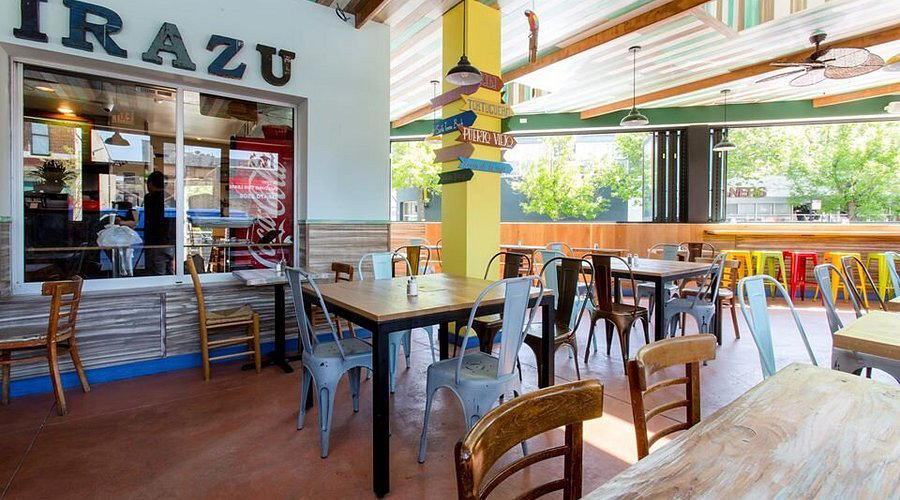
Milwaukee Avenue and the Spaces That Resist Spectacle
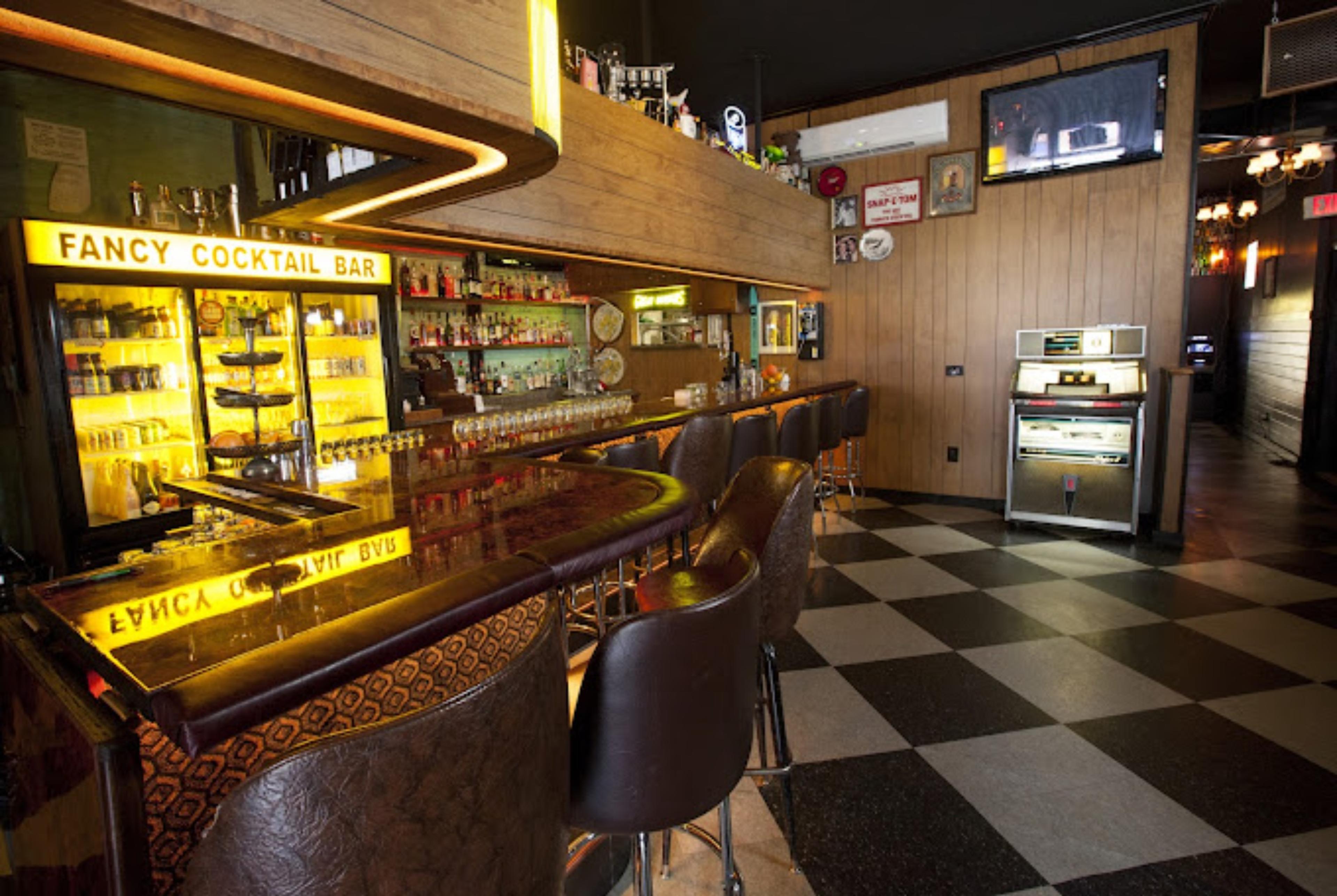
There is a category of Chicago restaurant that never announces itself. No valet stand, no tasting-menu theater, no laminated press coverage framed near the host stand. The dining rooms in this category tend to be compact, worn at the edges in ways that feel intentional rather than neglected, and calibrated to neighborhood rhythms rather than destination-dining ambitions. Irazu, at 1865 N Milwaukee Ave in Bucktown, belongs firmly to that category. The address puts it on one of the city's most character-dense corridors, a stretch of Milwaukee Avenue that has absorbed waves of demographic change without losing its structural honesty — narrow storefronts, flat facades, sidewalks that carry actual foot traffic rather than curated pedestrian experience.
The physical container here is part of the argument. Chicago's premium dining tier — represented by spots like Alinea, Smyth, and Oriole, invests heavily in designed environments where the room itself signals aspiration. The counter-logic, which Irazu embodies, is that a stripped-back space can carry more cultural honesty than a composed dining room ever could. This is not a design failure. It is a design position.
The Architecture of Informality
Bucktown's restaurant stock skews toward the kind of interiors that arrived already slightly lived-in. The neighborhood developed its dining identity through independent operators working with limited capital and high conviction, a pattern visible across the stretch of Milwaukee between the Kennedy Expressway and Western Avenue. Irazu fits that lineage: a room scaled for the neighborhood it serves, not for a reservation list drawn from across the metropolitan area.
This spatial informality has a functional logic. When a dining room is not asking you to perform occasion-dining, the food carries a different kind of pressure. It has to hold attention on its own terms, without theatrical plating or a tasting menu's sequenced narrative to lean on. That dynamic produces a different kind of loyalty than the one Michelin recognition generates. The regulars at this kind of restaurant are returning because the food is reliable on an ordinary Tuesday, not because they secured a reservation three months out the way one would for Next Restaurant or Kasama.
Chicago's dining identity has always accommodated both registers, the table at Alinea that costs several hundred dollars per person and the neighborhood counter where the regulars know the staff by name. The city's food culture is not monolithic. Understanding it means reading both ends of the spectrum, and the middle registers in between. Irazu operates in that middle-to-lower register without apology.
What the Bucktown Location Signals
Bucktown's identity as a dining neighborhood has shifted over the past two decades, moving from a zone of emerging spots to an established residential neighborhood where the leading operators tend to be those who figured out early how to serve the community rather than the destination-dining audience. The restaurants on this stretch of Milwaukee that have lasted are the ones that solved a local problem: somewhere reliable to eat without the friction of reservation systems, prix-fixe commitments, or rooms designed to intimidate.
The location at 1865 N Milwaukee also places Irazu within easy reach of Wicker Park, one of the city's more restaurant-dense neighborhoods, where the competitive pressure from newer, trendier openings is constant. Surviving in that proximity for any sustained period is itself a credential, a form of Tier E trust signal that does not show up in awards databases but is legible to anyone familiar with how Chicago neighborhoods function as dining ecosystems.
For comparison, consider how the country's most decorated dining destinations, The French Laundry in Napa, Blue Hill at Stone Barns in Tarrytown, or Single Thread Farm in Healdsburg, are defined by their remove from urban density, their controlled environments, and the deliberate scarcity of their booking windows. The opposite condition, a restaurant on a busy city avenue with walk-in accessibility and neighborhood familiarity, produces a completely different relationship between the room and the people who use it. That relationship is worth taking seriously on its own terms, not as a consolation prize for venues that did not achieve fine-dining recognition.
Situating Irazu in Chicago's Broader Map
Chicago's dining map rewards visitors who read it at multiple registers simultaneously. The city has the full complement of destination-dining anchors: Michelin-starred counters, creative tasting menus, chef-driven concepts with national recognition. It also has a dense network of neighborhood restaurants that carry decades of community trust. Our full Chicago restaurants guide maps both registers.
Irazu sits at a particular intersection of the map: a Bucktown address, a space that does not perform ambition, and a long enough operating history to have become genuinely local rather than aspirationally so. For visitors comparing Chicago's neighborhood dining to what they know from other cities, whether Lazy Bear in San Francisco, Emeril's in New Orleans, or Providence in Los Angeles, the frame of reference matters. Irazu is not competing in that tier. It is doing something categorically different, and the distinction is architectural as much as culinary.
The restaurants that occupy the opposite end of Chicago's ambition spectrum, Addison in San Diego, Atomix in New York City, 8½ Otto e Mezzo Bombana in Hong Kong, The Inn at Little Washington, or Bacchanalia in Atlanta, invest heavily in the room as a signal of what is coming. Irazu's room signals something different, and reading that signal correctly is the first step to understanding what the restaurant actually offers. And Le Bernardin in New York City has long demonstrated how space can be a component of the culinary argument, Irazu makes a counter-argument with equal conviction.
Planning a Visit
Given that the venue data available is limited, the practical details below are framed comparatively rather than as confirmed specifics. Verify current hours, booking policies, and pricing directly before visiting.
| Detail | Irazu | Kasama (peer: neighborhood, $$$$ ticket) | Next Restaurant (peer: destination, $$$$) |
|---|---|---|---|
| Location | Bucktown, Milwaukee Ave | East Ukrainian Village | West Loop |
| Format | Neighborhood restaurant | Filipino, tasting menu tier | Concept-driven, prix-fixe |
| Booking friction | Likely low (walk-in probable) | High (advance reservation) | High (advance reservation) |
| Price register | Neighborhood scale (unconfirmed) | $$$$ | $$$$ |
| Room character | Informal, residential-scale | Design-forward | Theatrical, concept-driven |
How Irazu Chicago compares with similar nearby venues.
| Venue | Cuisine | Price |
|---|---|---|
| Kyōten | Sushi | $$$$ |
Recognition history
Dated appearances from independent guides and award organizations, with the underlying list record or original source where available.
Diners, Drive-Ins and Dives Featured Restaurant
Diners, Drive-Ins and Dives · 2026 Diners, Drive-Ins and Dives Featured Restaurants

At a Glance
- Lively
- Cozy
- Rustic
- Casual Hangout
- Family
- Standalone
- Byob
Current opening hours
- Monday
- Closed
- Tuesday
- 11 AM–9 PM
- Wednesday
- 11 AM–9 PM
- Thursday
- 11 AM–9 PM
- Friday
- 11 AM–9 PM
- Saturday
- 11 AM–9 PM
- Sunday
- Closed
Hours can change for holidays and private events. Last verified .
Know Before You Go
- Getting there
- 1865 N Milwaukee Ave, Chicago, IL 60647